
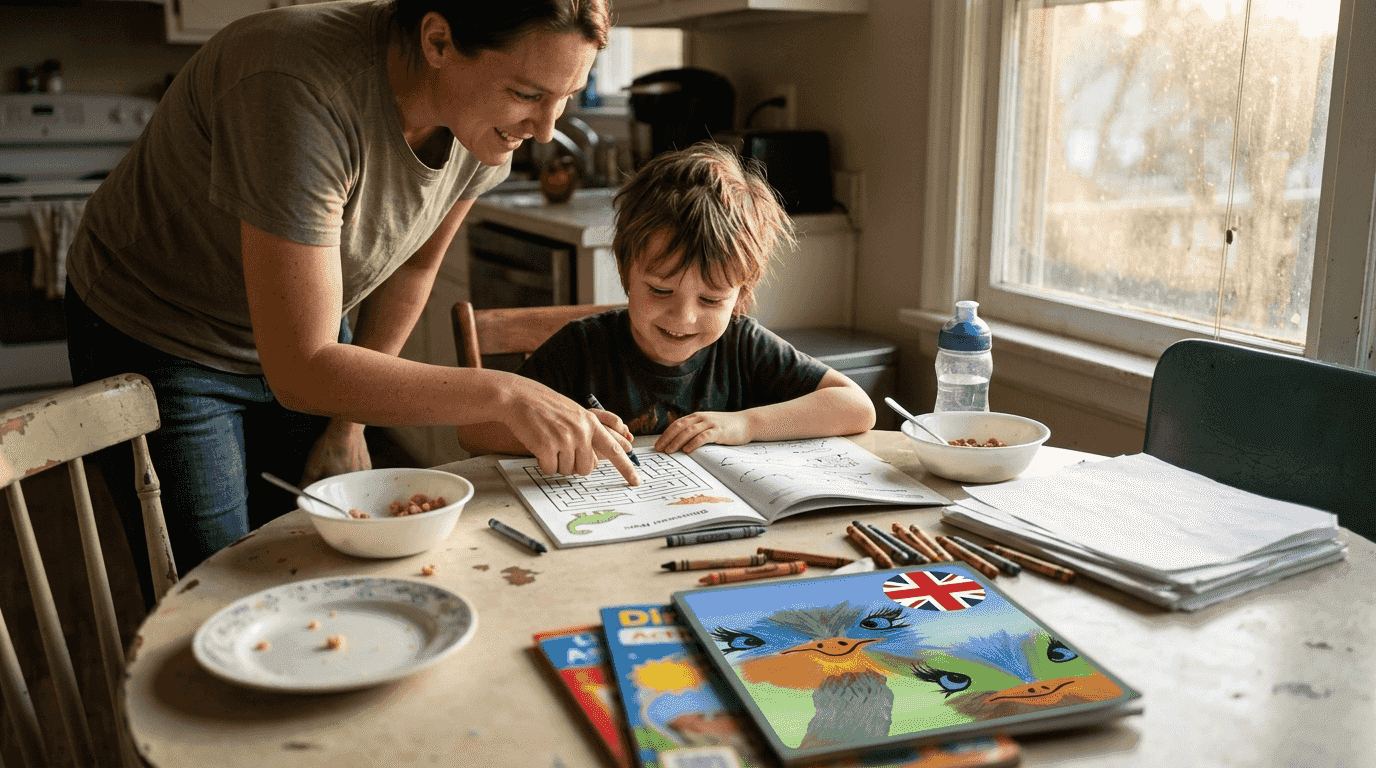
Choosing the right activity book for your child can feel overwhelming with countless options promising educational value. Parents often struggle to find books that truly engage while supporting developmental milestones. A structured checklist simplifies this process by helping you evaluate age appropriateness, material quality, and skill-building potential. This guide walks you through essential criteria, showcases top options for different age groups, and provides a comparison framework to make confident decisions that enhance your child's learning and creativity at home.
Table of Contents
- How To Evaluate Children's Activity Books: Essential Checklist Criteria
- Top Children's Activity Books To Consider For Different Age Groups
- Comparing Features And Benefits: A Checklist Comparison Table
- Making The Final Choice: Matching Your Child's Needs And Interests
- Explore Quality Children's Activity Books At MunkterProducts.com
- Frequently Asked Questions
Key takeaways
| Point | Details |
|---|---|
| Activity books develop critical skills | They foster fine motor abilities, problem solving, and creative thinking through hands-on engagement. |
| Age-appropriate selection matters | Matching content to developmental stages ensures optimal learning without frustration or boredom. |
| Material safety is non-negotiable | Non-toxic inks, durable paper, and sturdy construction protect children during repeated use. |
| Diverse activities support holistic growth | Books combining puzzles, tactile elements, and storytelling address multiple developmental areas simultaneously. |
| Strategic choices boost empathy and cognition | Thoughtful book selection paired with reading routines enhances emotional intelligence and creative capacity. |
How to evaluate children's activity books: essential checklist criteria
Selecting an effective activity book requires more than browsing colorful covers. You need a systematic approach to ensure the book aligns with your child's current abilities and growth trajectory. Start by identifying your child's developmental stage, as choosing the right busy book depends on age and corresponding skills. A two year old needs large tactile elements for sensory exploration, while a four year old benefits from puzzles that challenge emerging literacy.
Material quality directly impacts both safety and longevity. Prioritize books with durable paper and non-toxic inks that withstand enthusiastic handling. Cheap construction leads to torn pages and potential choking hazards from loose pieces. Check binding strength and paper thickness before purchasing.
Evaluate the specific skills each book targets:
- Fine motor development through lacing, buttoning, or tracing activities
- Cognitive challenges via matching games, sequencing, or problem solving exercises
- Creative expression through coloring, storytelling prompts, or open ended projects
- Early literacy and numeracy foundations with letter recognition or counting tasks
Design features matter as much as content. Look for clear instructions, appropriately sized elements, and visual layouts that guide without overwhelming. A cluttered page confuses young learners, while overly simplistic designs fail to engage curious minds.
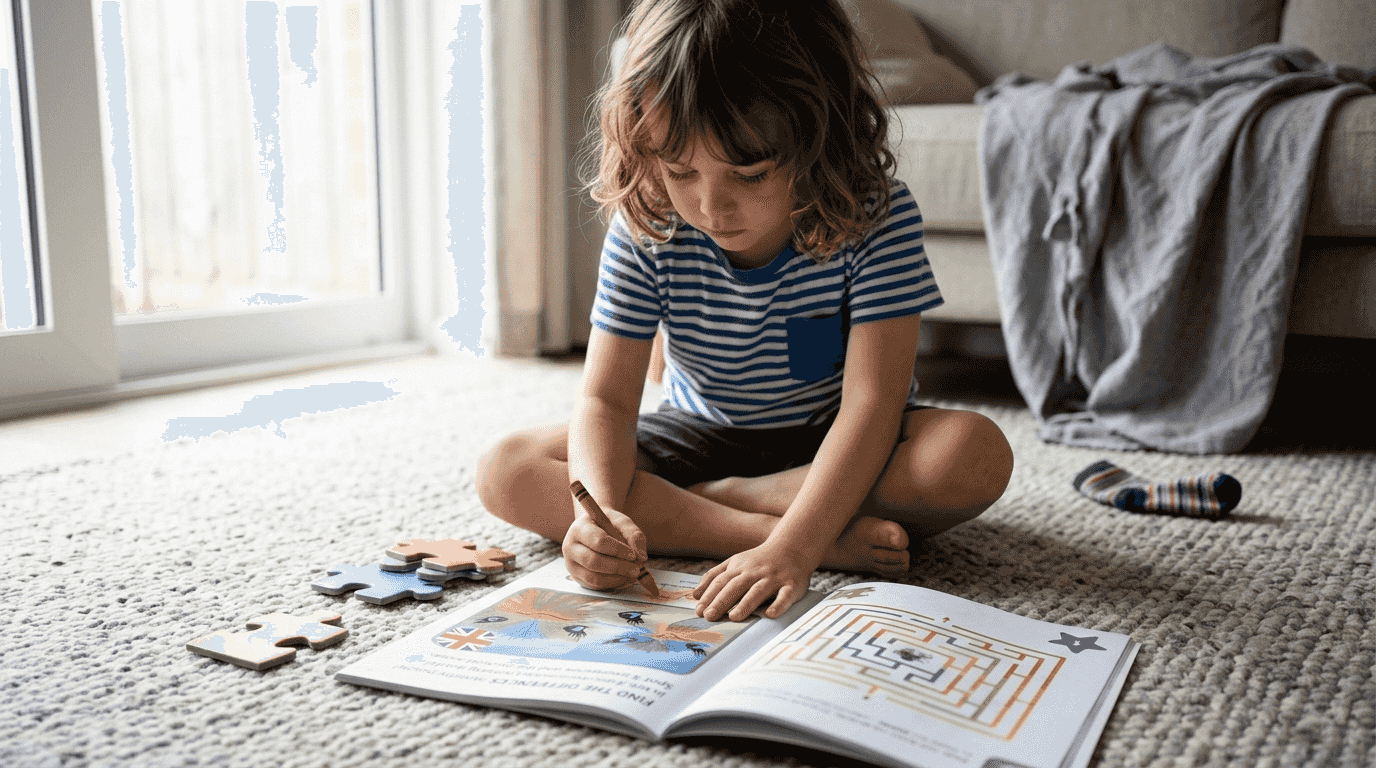
Pro Tip: Test a single page with your child before committing to an entire book series. Their immediate reaction reveals whether the difficulty level and activity style match their interests and abilities.
Top children's activity books to consider for different age groups
Real world options demonstrate how evaluation criteria translate into smart purchases. For children ages 1 to 3, busy books with large, soft elements provide ideal introductions to structured play. These books typically feature oversized buttons, zippers, and velcro attachments that toddlers can manipulate without frustration. The tactile variety keeps attention spans engaged while building hand strength and coordination.
Toddler focused options excel when they incorporate multiple sensory experiences. Books combining textures, simple puzzles, and basic color recognition activities support holistic development. Activities like lacing and buttoning directly enhance fine motor skills essential for future writing and self-care tasks.
For ages 3 to 4, complexity increases appropriately:
- Letter and number recognition books with tracing guides
- Simple maze and pattern matching activities
- Storytelling prompts that encourage verbal expression
- Basic science concepts presented through interactive flaps or wheels
Preschool activity books should balance structure with creative freedom. The best options present clear objectives while allowing personal interpretation. A coloring page with suggested colors still permits experimentation, teaching both following directions and artistic choice.
Books integrating narrative elements provide bonus value by boosting children's creativity through character driven scenarios. When a puzzle involves helping a story character solve a problem, children engage more deeply than with abstract exercises alone.
Pro Tip: Rotate activity books every few weeks to maintain novelty and prevent boredom. Store completed books for later revisiting, as children often enjoy mastering familiar activities with increased speed and confidence.
Comparing features and benefits: a checklist comparison table
Side by side evaluation clarifies which books deliver the most value for your specific needs. This comparison highlights how different activity books address various developmental priorities while maintaining quality standards.
| Book Type | Age Range | Primary Skills | Material Quality | Special Features |
|---|---|---|---|---|
| Sensory Busy Book | 1 to 3 years | Fine motor, tactile exploration | Fabric pages, reinforced stitching | Removable pieces, washable materials |
| Preschool Activity Book | 3 to 4 years | Early literacy, problem solving | Thick paper, non-toxic inks | Stickers, tracing guides |
| STEM Discovery Book | 4 to 6 years | Critical thinking, science concepts | Laminated pages, spiral binding | Interactive experiments, parent guides |
| Creative Arts Book | 3 to 6 years | Artistic expression, color theory | Heavy weight paper, perforated pages | Mixed media prompts, display-ready projects |
| Montessori Skills Book | 2 to 5 years | Independence, practical life skills | Wood elements, cotton fabric | Real-world task simulations |
The table reveals clear patterns in how age correlates with complexity and material choices. Younger children require more durable, safety focused construction, while older kids benefit from sophisticated paper quality that supports detailed work. Busy books boost cognitive abilities by encouraging problem solving across all age ranges, but the specific challenges must match current capabilities.
STEM focused options introduce scientific thinking earlier than many parents realize. Even preschoolers grasp cause and effect relationships through simple experiments presented in age appropriate formats. These books often include parent guides that explain how to extend activities beyond the page.
Consider total activity count and variety when comparing similar books. A book with 20 diverse activities provides more sustained engagement than one with 40 repetitive exercises. Quality trumps quantity in maintaining interest and delivering genuine skill development.
Books supporting educational growth and personal development integrate multiple learning domains simultaneously. The most effective options combine cognitive challenges with emotional or social skill building, preparing children for comprehensive school readiness.
Making the final choice: matching your child's needs and interests
Your child's unique personality and developmental trajectory should guide final selection. Observe which activities naturally capture their attention during free play. A child who constantly builds with blocks likely thrives with spatial reasoning puzzles, while one who narrates imaginary scenarios benefits from storytelling prompts.
Skill level assessment goes beyond chronological age. Some three year olds demonstrate four year old fine motor control, while others need continued practice with foundational tasks. Choose books that offer slight challenge without causing frustration. The sweet spot lies in activities your child can complete with minimal assistance, building confidence through independent success.
Consistent bedtime reading enhances empathy and creativity in young children, making activity books valuable components of evening routines. Pair structured activity time with open ended reading to support both skill development and emotional growth. This combination addresses the reality that older children show lower creative originality than younger ones, suggesting early intervention maximizes creative potential.
Strategic selection considerations include:
- Current developmental priorities: Does your child need fine motor practice or cognitive challenge?
- Interest alignment: Will the theme sustain engagement over multiple sessions?
- Skill progression: Does the book offer activities that grow with your child?
- Complementary learning: How does it integrate with other educational activities?
Monitor engagement levels after purchase. If your child avoids a book despite your enthusiasm, the mismatch teaches valuable lessons about their preferences. Respect these signals rather than forcing completion.
"The best activity book is one your child reaches for independently, returning to it because the activities genuinely captivate their curiosity and provide satisfying challenges."
Adapt your approach as interests evolve. A children's creativity workflow incorporates regular assessment and adjustment, ensuring materials remain relevant and stimulating.
Pro Tip: Create an activity book library with varied difficulty levels and themes. Let your child choose daily, fostering decision making skills while ensuring they work at their optimal challenge zone.
Explore quality children's activity books at MunkterProducts.com
Finding trusted activity books that meet rigorous safety and educational standards becomes effortless when you shop curated collections. MunkterProducts.com specializes in handcrafted and carefully selected educational materials designed specifically for developing minds. Each product undergoes evaluation for material quality, age appropriateness, and genuine learning value.

The platform offers diverse options supporting fine motor development, cognitive growth, and creative expression across multiple age ranges. Whether you need sensory busy books for toddlers or STEM activity books for preschoolers, the collection addresses varied developmental needs with durable, safe materials. Browse confidently knowing every item aligns with the checklist criteria outlined in this guide. Straightforward purchasing and included postage simplify the process of bringing quality educational resources into your home. Start building your child's activity book library today with materials that transform learning into engaging play.
Frequently asked questions
What age should I start using activity books with my child?
You can introduce simple busy books as early as 12 months when babies develop pincer grasp and object permanence. Start with fabric books featuring large tactile elements they can safely explore. By 18 months, board books with basic matching or sorting activities become appropriate.
How many activity books does a child need?
Three to five books rotated regularly provide sufficient variety without overwhelming. Focus on quality over quantity, selecting books that address different skill areas. Rotation every two to three weeks maintains novelty and sustained interest.
Are digital activity apps better than physical books?
Physical books offer irreplaceable tactile experiences crucial for fine motor development and spatial reasoning. While apps provide value, young children benefit most from manipulating real objects. Reserve screen time for age six and older when foundational skills are established.
How do I know if an activity book is too advanced?
Watch for signs of frustration: your child avoids the book, requires constant assistance, or completes activities incorrectly without recognizing errors. Activities should challenge slightly but allow independent success within a few attempts.
Can activity books replace preschool learning?
Activity books supplement but cannot fully replace social interaction and teacher guidance in preschool settings. They excel for home learning reinforcement and skill practice between formal educational experiences. Combine both approaches for comprehensive development.
What should I do with completed activity books?
Store them for future revisiting, as children enjoy demonstrating mastery of previously challenging tasks. Some books with removable elements can be refreshed with new materials. Consider donating gently used books to libraries or community centers.