
TL;DR:
- Most adults abandon coloring projects quickly due to lack of structure rather than talent. A phased workflow, from preparation to reflection, transforms coloring into a relaxing and confidence-building practice. Incorporating proper materials, a personalized color dictionary, and technology like AI can enhance skill development and enjoyment.
Most adults who pick up a coloring book start with enthusiasm and quit within three sessions. Not because they lack talent, but because they lack structure. A well-designed creative workflow for adult coloring transforms what feels like aimless filling-in into something genuinely satisfying. It's the difference between coloring as a chore and coloring as a practice. This guide walks you through every phase of building a coloring workflow that supports relaxation, builds confidence, and produces results you're proud of — no drawing skills required.
Table of Contents
- Key takeaways
- Your creative workflow for adult coloring starts here
- The phase-based workflow that changes everything
- Using technology to expand your creative process
- Common challenges and how to get past them
- The real benefits of a structured coloring practice
- My honest take on making this a real practice
- Take your coloring further with Munkterproducts
- FAQ
Key takeaways
| Point | Details |
|---|---|
| Preparation beats inspiration | Setting up your materials and workspace before each session removes friction and keeps momentum alive. |
| Phase-based workflow works | Breaking sessions into design, structure, and rendering phases produces better results and prevents burnout. |
| Art trauma is real and beatable | Structured coloring gives anxious creatives a framework that relieves pressure and rebuilds confidence. |
| Color experimentation pays off | Building a personal color dictionary beats relying on generic theory and unlocks your unique style. |
| Technology is a genuine ally | AI-assisted page generation and digital tools expand your creative options without replacing the meditative hands-on experience. |
Your creative workflow for adult coloring starts here
Before you ever pick up a pencil, your setup determines how the session will feel. Chaotic materials lead to chaotic thinking. A little preparation turns your coloring time into something you actually look forward to.
Choosing the right materials
Not all coloring supplies are equal, and the gap between a frustrating session and a satisfying one often comes down to paper weight and tool quality. Here's what matters most when you're building your kit:
- Paper: Look for pages with a weight of at least 90gsm. Thinner paper bleeds, buckles, and tears under markers, which kills the experience fast.
- Colored pencils: Wax-based pencils like Prismacolor blend smoothly. Oil-based pencils like Faber-Castell Polychromos hold detail well. Both are worth owning.
- Markers: Alcohol-based markers give vibrant flat color but bleed through light paper. Use them on designated thick-stock pages.
- Blending tools: A colorless blender pencil, blending stumps, and a small amount of odorless mineral spirits open up rendering possibilities that most beginners don't know about.
Building your color dictionary
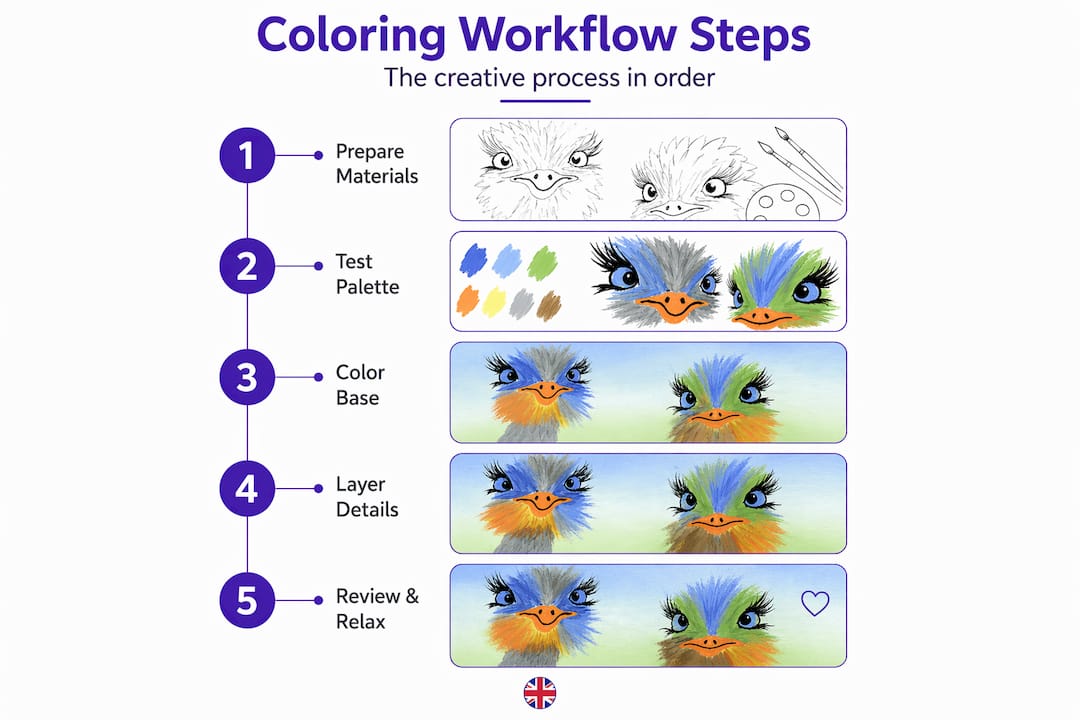
Cool tones stimulate imaginative thinking while warm tones enhance focus on fine detail. That's not just theory. It's practical information that changes how you plan each session. Rather than guessing, a personalized color swatch book teaches you exactly how your specific pencils and markers behave on the paper you use. Spend twenty minutes swatching before your first real session. Label every swatch with the tool name and the result. You'll reference this more than any YouTube tutorial.
Pro Tip: Create a dedicated "test zone" on the back of each coloring page. Use it to swatch your intended palette before committing. This single habit prevents the most common frustration: getting halfway through a piece and hating the color combination.
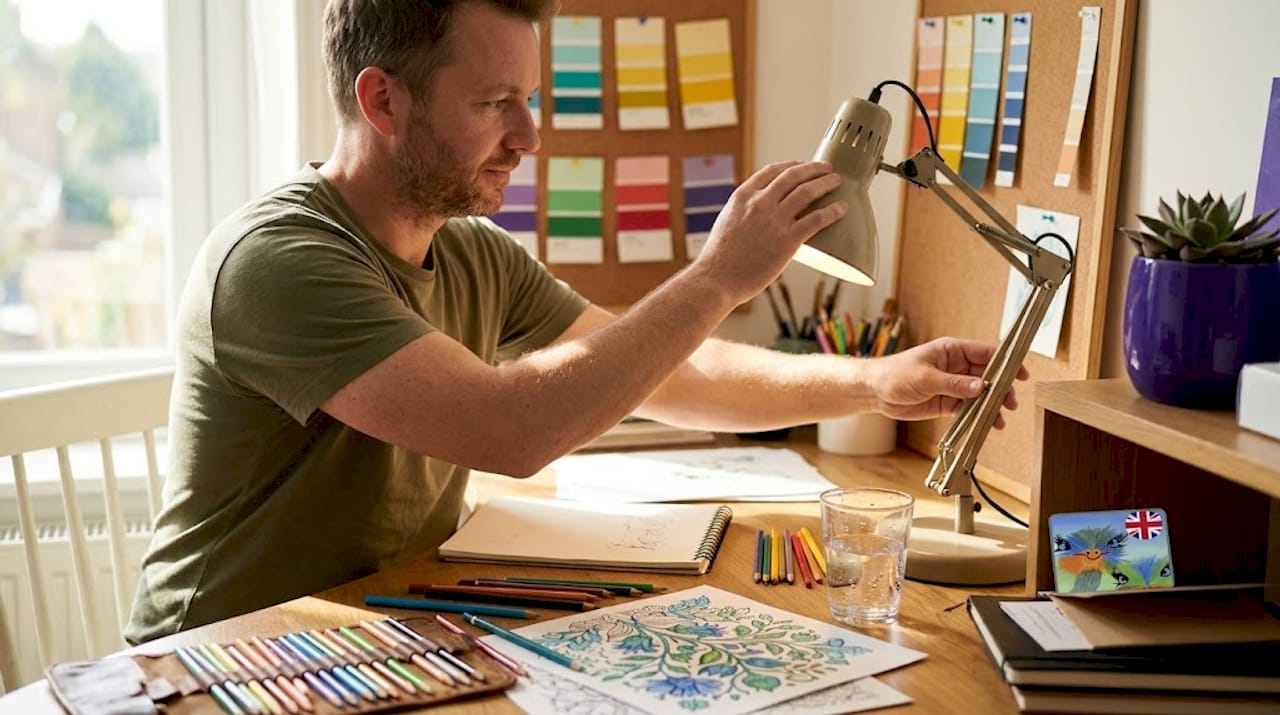
Your workspace matters just as much as your materials. Good lighting (natural or daylight-balanced bulbs), a flat surface, and everything within arm's reach removes the micro-interruptions that break your focus. Think of it less like setting up a craft table and more like setting up a meditation space with art supplies.
The phase-based workflow that changes everything
The structured workflow model used by professional colorists breaks every session into three phases. Following them sounds rigid but actually creates more creative freedom, not less.
-
Warm-up (3 to 5 minutes). Before touching your actual page, do ghosted lines on scrap paper. Draw slow, controlled strokes across the page without lifting your wrist. This loosens your hand, calibrates your pressure, and signals to your brain that creative mode is starting. Think of it as the equivalent of stretching before a run.
-
Design phase (10 to 15 minutes). Choose your theme and set an intention for the session. Are you coloring for pure relaxation, or are you pushing a new technique? Select your palette here, not in the middle of rendering. Exploring adult coloring themes before committing to a palette saves a lot of second-guessing mid-session.
-
Structure phase (15 to 20 minutes). Block in your lightest values first. Identify where your light source would be if this were a real object, and leave those areas nearly untouched at this stage. This is the phase most beginners skip. They go straight to their favorite colors and wonder why the piece looks flat. Value mapping is what separates work that pops from work that looks like a filled-in coloring page.
-
Rendering phase (30 to 60 minutes). Layer colors from light to dark. Burnishing, which means applying heavy pressure with a light pencil over layered colors, seals the tooth of the paper and produces a smooth, almost painted appearance. When using solvent blending with mineral spirits, let layers dry for 5 to 10 minutes before applying the next coat. Rushing this step tears paper and muddies colors.
-
Review and rest (5 minutes). Step back. Literally. Look at the piece from two feet away. This is not optional. You'll see contrast issues, muddy areas, and opportunities you can't see up close.
Pro Tip: Cap your rendering sessions at 60 to 90 minutes max. Coloring is both mentally and physically fatiguing. Your fine motor control deteriorates after about an hour, which means your layering gets sloppier even as you feel like you're focused. Short, consistent sessions beat marathon efforts every time.
Using technology to expand your creative process
Digital tools have changed what's possible for adult colorists, and not just for people who own drawing tablets. AI-assisted coloring page generation lets you create custom pages tailored to your interests, skill level, and aesthetic preferences. AI tools for page creation typically accept photo or text inputs and apply style presets like Mandala, Botanical, or Minimalist Outline to generate print-ready files in JPG or PNG format.
The catch is prompt quality. Vague inputs produce generic outputs. Specific prompts like "a single large owl perched on a branch, bold outlines, no cross-hatching, white background, coloring book style" produce clean line art you can actually use. Consistent style guides locked in from the start prevent the visual inconsistency that makes a collection of pages feel disjointed.
Here's how traditional and digital approaches compare for different workflow needs:
| Workflow need | Traditional approach | Digital approach |
|---|---|---|
| Page variety | Buy or print ready-made books | Generate unlimited custom pages on demand |
| Theme control | Limited to published options | Fully customizable to your interests |
| Skill development | Develops hand-eye coordination | Allows focus on color technique without line work |
| Cost over time | Ongoing book purchases | One-time or subscription tool fee |
| Meditative quality | High. Tactile and focused | Lower. Requires screen time before hands-on work |
The smart move is not choosing one or the other. Use AI generation to build a custom page library on topics you love, then apply your full hands-on workflow to those pages. You get the personalization of digital tools with the meditative benefits of physical coloring.
Pro Tip: Experimenting with bold, unexpected colors is one of the fastest ways to break perfectionism. Try coloring a leaf orange or a sky green. The deliberate rule-breaking trains your brain to see color as a creative choice, not a correctness test.
Common challenges and how to get past them
The most common reason adults abandon coloring is not boredom. It's anxiety. Art trauma affects a significant number of adults who were shamed or graded on their artistic output as children. The critical inner voice that says "you're coloring outside the lines" or "that color combination is wrong" is a learned response, not a truth.
Structured coloring is, in part, therapy for that voice. The pre-drawn lines act as a framework for creative freedom, removing the blank-page anxiety while still allowing full expression in color, value, and texture.
Here are the most common workflow pitfalls and what to do about them:
- Over-detailing early. Adding heavy pressure and dark colors in the first layer is the number one technical mistake. It removes your ability to blend or correct. Start light. Always.
- Skipping warm-ups. Jumping straight into a page without warming up your hands leads to inconsistent pressure and choppy strokes, especially in large gradient areas.
- Perfectionism paralysis. If you find yourself staring at the page instead of coloring it, set a timer for five minutes and commit to filling in one section, any section, before the timer ends.
- Ignoring drying time. Wet or recently blended areas need time. Waiting 5 to 10 minutes before adding more layers is not wasted time. It's the difference between rich layering and muddy smearing.
- Irregular sessions. Coloring once a month produces no skill development and no relaxation habit. Aim for two to three sessions per week, even if each one is only thirty minutes.
"The goal isn't a perfect page. The goal is a practiced mind and a calmer nervous system."
Pro Tip: If you've had a frustrating session, don't close the book and walk away. Spend three minutes doing simple color swatching on scrap paper. Ending on a low note breaks the habit. Ending on a small win keeps you coming back.
The real benefits of a structured coloring practice
When your creative process for coloring becomes a repeatable workflow rather than a guessing game, something shifts. The benefits accumulate, and they're measurable in ways that surprise most people.
- Mood improvement. Regular coloring sessions reduce reported stress and anxiety by shifting cognitive focus away from rumination and toward present-moment sensory engagement.
- Creative confidence. Completing pieces, even simple ones, rebuilds the creative self-image that art trauma dismantled. Each finished page is evidence that you can make something.
- Skill growth. Consistent practice in layering, value mapping, and color technique produces visible improvement within four to six weeks. You will notice it.
- Mindfulness. The coloring for relaxation benefit is real and well-documented. The combination of repetitive hand movement, color decision-making, and visual focus creates a state of soft concentration that mirrors meditation.
- Productivity spillover. Many colorists report that regular structured sessions improve focus and patience in other areas of their work and personal lives. The discipline of phases and patience transfers.
Tracking your progress matters. Photograph completed pages. Note what palettes worked and which techniques felt natural. Over time, you'll see a creative voice emerging that is distinctly yours.
My honest take on making this a real practice
I've watched people start coloring with every intention of making it a regular habit, and I've watched most of them quit. Not because the activity isn't worth it. Because they treated it like a casual pastime instead of a practice.
What I've learned is that the workflow isn't just about producing better-looking pages. It's about creating a container for your creative energy. When I started being deliberate about my warm-ups and planning my palettes before sessions instead of during them, everything changed. The work got better, yes. But more importantly, the sessions stopped feeling like something I had to figure out every time.
The art trauma piece is real. I've spoken with colorists who would freeze up in front of a blank coloring page because a teacher or parent told them they weren't artistic. The structure of a defined workflow is what got them past that. It's not a crutch. It's a scaffold. You use it until you don't need it, and then it's just how you naturally work.
My honest advice: don't optimize too fast. Spend your first month just getting consistent. Show up, warm up, color. The refinements come naturally once the habit is established.
— Mark
Take your coloring further with Munkterproducts

If you're ready to put this workflow into practice, your starting point matters. Munkterproducts offers a curated range of adult coloring books designed specifically for adults who want a quality, satisfying coloring experience. The themes cover confidence, self-expression, and relaxation, which means you're working with pages built around the psychology of adult coloring, not repurposed children's content.
Every book is crafted with bold outlines and page weights that hold up to layering and blending, so your technique has room to grow. Whether you're building your first workflow or expanding an existing practice, Munkterproducts gives you the right pages to work with. Browse the full collection at Munkterproducts and find the book that fits where you are right now.
FAQ
What is a creative workflow for adult coloring?
A creative workflow for adult coloring is a repeatable, phase-based process that guides you from material setup through warm-up, design, value mapping, and rendering. It removes decision fatigue and makes each session more productive and enjoyable.
How do I get started if I have art anxiety?
Structured coloring is one of the most effective tools for overcoming art anxiety because the pre-drawn lines remove the pressure of blank-page creation. Start with simple designs, short warm-up exercises, and low-pressure palette choices to rebuild creative confidence gradually.
What adult coloring techniques should beginners focus on first?
Beginners benefit most from learning consistent pressure control, light-to-dark layering, and basic value mapping before moving to advanced adult coloring techniques like burnishing or solvent blending. Mastering these foundations makes every other technique easier.
How long should a coloring session be?
Sessions of 45 to 90 minutes are ideal for most adults. Shorter than 30 minutes rarely allows enough time to enter a focused state, and sessions longer than 90 minutes often lead to fatigue-related mistakes and reduced enjoyment.
Can AI tools genuinely improve my coloring workflow?
Yes, particularly for page variety and customization. AI coloring page generators let you create personalized designs matched to your skill level and interests, which keeps inspiration for coloring projects fresh and removes the limitation of what's commercially available.