
TL;DR:
- Choosing an educational coloring book requires matching content complexity and subject focus to a child's developmental stage and interests. Expert-driven, age-appropriate books with clear learning objectives promote fine motor skills and active engagement, especially when used in short, regular sessions. Balancing structured content with creative open-ended activities fosters sustained motivation and supports overall learning growth.
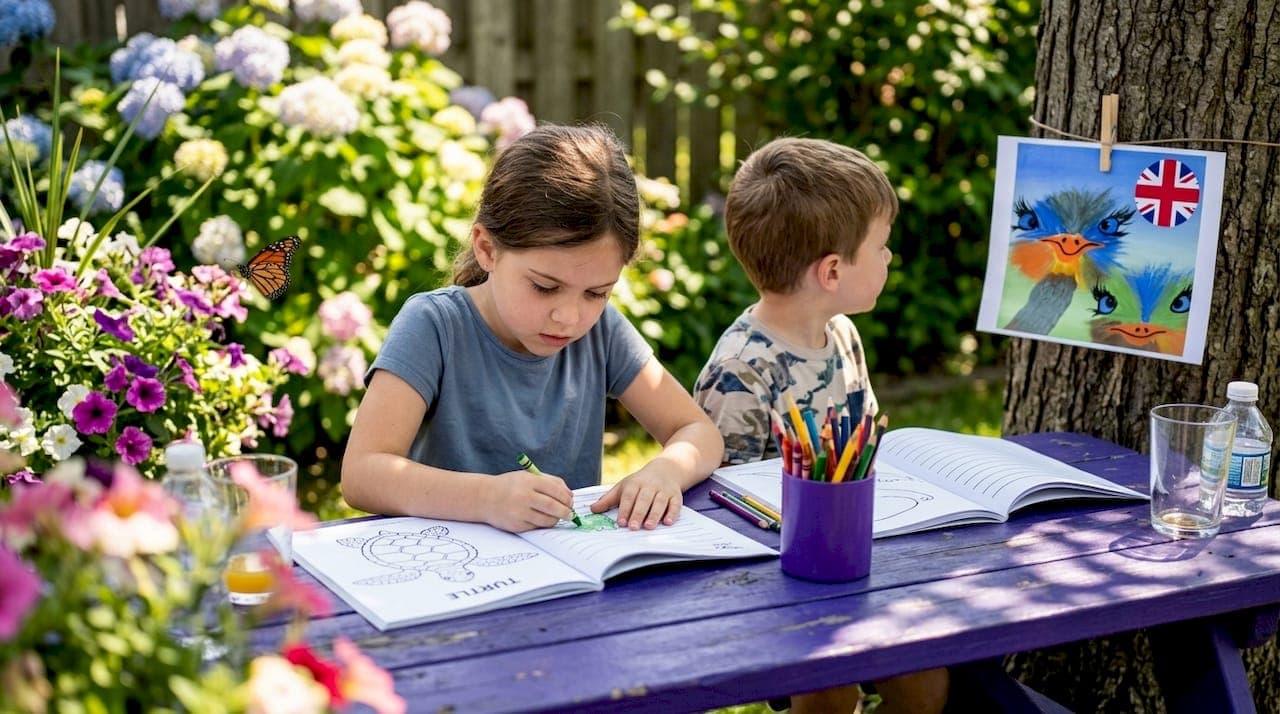
Choosing a coloring book for a child might seem simple, but finding one that genuinely supports learning, builds fine motor skills, and keeps kids engaged is a real challenge. Not every brightly colored cover translates into meaningful development. Fine motor development in preschool-aged children showed measurable improvement through structured coloring activities, which means what you pick actually matters. This article walks through evaluation criteria, highlights standout examples, and offers side-by-side comparisons to help parents and educators make confident, informed choices.
Table of Contents
- What makes a great educational coloring book?
- Top educational coloring book examples for kids
- Educational coloring books: Comparison by learning focus
- Tailoring coloring book choices for different needs
- Why the best educational coloring books balance structure, creativity, and moderation
- Discover more tools to enrich your child's learning journey
- Frequently asked questions
Key Takeaways
| Point | Details |
|---|---|
| Tailor book complexity | Choose coloring books that match your child’s current fine-motor and learning stage for best results. |
| Blend learning and play | The top books use expert notes and structure without sacrificing creativity and enjoyment. |
| Regular sessions matter | Short, consistent coloring times offer greater development than longer, occasional use. |
| Consider special needs | Children needing extra support benefit from simpler images, thicker lines, and paired motor activities. |
| No one-size-fits-all | Mix open-ended and structured activities so each child can thrive and enjoy learning to the fullest. |
What makes a great educational coloring book?
Before highlighting actual titles, it's important to understand the framework for what makes a coloring book genuinely educational. Not every book with animals and alphabet letters qualifies. The best options are built on solid learning principles, matched carefully to the child's developmental stage, and structured to make each coloring session count.
Age-appropriate complexity is the first thing to check. A page crammed with tiny, intricate patterns overwhelms a four-year-old. A page with only two large shapes bores an eight-year-old who is ready for more challenge. The sweet spot depends on the child's current fine motor control and cognitive development. Lines that are too thin make coloring frustrating. Designs that are too abstract disconnect from learning. Matching the visual complexity of the book to where the child actually is, not just where their age suggests they should be, is the starting point.
Expert-driven content gives coloring books a serious educational edge. Books aligned with museum collections, STEM institutions, or Montessori pedagogy bring in verified, structured information. Instead of random animal outlines, a well-designed educational book might pair an illustration with a fact, a vocabulary word, or a skill-building prompt. This turns passive coloring into an active learning conversation between the child and the page.
Research confirms that brief, regular sessions produce the best outcomes for fine motor development, far more effectively than occasional long sessions. This has practical implications for how parents and teachers should schedule coloring activities. Ten to fifteen minutes, three or four times a week, outperforms a single hour-long session on the weekend.
- Look for books that organize content into short, self-contained pages rather than sprawling multi-page projects
- Check whether the book provides guidance, prompts, or educational notes alongside illustrations
- Prioritize books that combine visual learning with readable text, even if that text is brief
- Consider whether the book's binding allows it to lie flat, making it easier for small hands to navigate
- Review the learning objectives stated on the back cover or inside flap
"A great educational coloring book is not just a collection of pictures to fill in. It is a structured tool that uses color, image, and information to scaffold real learning."
For a broader look at how coloring fits into a wider learning toolkit, the educational books guide covers the full landscape of children's learning materials. You can also explore the types of educational books that spark creativity alongside structured skill-building.
Pro Tip: Read the introduction or teacher notes in the book before handing it to a child. Many excellent educational coloring books include session guides, vocabulary highlights, or conversation starters that dramatically increase the learning value of each page.
Top educational coloring book examples for kids
Armed with evaluation criteria, let's look at some of the best educational coloring book examples making an impact today. These span museum collections, NASA-backed science content, naturalist illustration, and Montessori-aligned skill development. Each one brings something distinct to the table.
-
Smithsonian Birds of North America Coloring Book. Published in partnership with the Smithsonian Institution, this book combines detailed bird illustrations with expert notes on each species. Children learn anatomy, habitat, and behavior while coloring. The detail level makes it best suited for ages eight and up, and the illustrations are accurate enough to serve as informal field guide introductions. Parents report that children often follow up a coloring session by looking for real birds outside, turning art into science observation.
-
NASA Sun Coloring Book (UAF/NASA collaboration). Produced with real scientific input, this book introduces children to solar science through illustration. It covers sunspots, solar flares, and the structure of our star in a format accessible to ages six and up. The combination of real NASA imagery inspiration and coloring activities makes STEM feel immediate and exciting rather than abstract. Educational coloring books that span NASA and STEM institution formats demonstrate exactly how credible scientific organizations can make complex content accessible.
-
Journey Through the Heliosphere (NASA/HEAT). This free resource from NASA's Heliophysics Education Activation Team introduces the Sun-Earth system through illustrated coloring pages. Each page includes scientific explanations written for young readers, making it one of the most content-rich free educational coloring resources available. It works beautifully in classroom settings where teachers can build entire lessons around the illustrations.
-
What's Inside a Garden? by Rachel Ignotofsky (Penguin Random House). Ignotofsky is known for her richly detailed, scientifically accurate illustrations of nature. This book introduces children to garden ecosystems, from pollinators to soil organisms, through pages that reward close attention. The artistic quality is genuinely high, which means children often return to pages multiple times, reinforcing the educational content through repeated engagement.
-
ColorMe Magic Water Coloring Book (Montessori-aligned). Water-reveal coloring books that align with Montessori principles offer a sensory dimension that standard coloring books cannot. The surprise of color appearing builds anticipation and focus, both important early learning traits. These are especially effective for younger children ages three to five who need high-engagement formats to stay on task.
-
Montessori Basic Skills Volume 11. This structured workbook-style coloring resource pairs color-by-number and tracing activities with early numeracy and literacy concepts. The Montessori approach means the book guides children toward self-directed discovery rather than simply telling them what to color. Science-themed coloring books and skill-based formats like this one introduce STEM and foundational concepts in playful ways, but work best as supplements to hands-on learning experiences.
Pro Tip: If you are using a coloring book in a classroom, laminate one copy for display and use the original as a reference. Children benefit from seeing a fully colored example before starting their own, which activates creative thinking and sets clear expectations.
For seasonal learning options, holiday activity books offer a strong complement to year-round educational coloring. You can also use the activity book checklist to evaluate any new title before purchase. If you are comparing several options side by side, coloring book alternatives rounds out the selection with additional formats worth considering.
Educational coloring books: Comparison by learning focus
With individual examples in mind, compare their core attributes to make an informed choice. This table breaks down the key variables parents and educators need to match a book to a specific child's developmental stage and interests.
| Book title | Subject focus | Best age range | Unique learning element |
|---|---|---|---|
| Smithsonian Birds of North America | Nature/science | 8 and up | Expert species notes, real taxonomy |
| NASA Sun Coloring Book | STEM/space science | 6 and up | NASA-verified solar science content |
| Journey Through the Heliosphere | STEM/space systems | 7 and up | Full Sun-Earth system explanation |
| What's Inside a Garden? | Nature/ecology | 6 and up | Ecosystem and pollinator science |
| ColorMe Magic Water Book | Sensory/early skills | 3 to 5 | Water-reveal sensory engagement |
| Montessori Basic Skills Vol. 11 | Foundational skills | 4 to 7 | Self-directed, literacy and numeracy |
The comparison makes a few patterns clear. Montessori formats that pair coloring with structured learning concepts tend to work best for younger children still developing foundational literacy and numeracy. STEM-focused books perform well with children aged six and up who are ready to process brief factual content alongside illustrations. Nature-themed books like the Ignotofsky title span a wide age range because the visual richness appeals at multiple developmental stages.
Matching the subject focus to the child's current interests is just as important as matching the age range. A six-year-old fascinated by birds will engage far more deeply with the Smithsonian title than an eight-year-old who has no interest in wildlife. Interest-driven selection consistently outperforms purely age-bracket selection. For books connected to broader growth and motivation themes, the personal growth books resource offers additional perspective on how print learning tools support children's development over time.
Tailoring coloring book choices for different needs
Every child is different, and matching books to specific needs ensures the best outcomes. Generic recommendations work as a starting point, but thoughtful tailoring produces significantly better engagement and developmental results.
Adjusting for fine motor ability is the most common and most important adaptation. Children who are still developing grip strength and hand coordination need:
- Thicker outline lines that are forgiving when coloring slightly outside borders
- Larger image areas that require less precision
- Fewer small details in each illustration
- Smooth, good-quality paper that does not bleed, reducing frustration
For children who need extra fine motor support, advice from practitioners and parents consistently points toward books with thicker outlines and simpler compositions, paired with complementary activities like clay modeling, threading beads, or cutting with scissors to build overall hand strength. The evidence for specific print styles is still developing, but the practical value of simplified, larger-format designs is well established in occupational therapy settings.
| Child profile | Recommended feature | Why it helps |
|---|---|---|
| Age 3 to 4, early motor skills | Large areas, thick lines | Reduces frustration, builds confidence |
| Age 5 to 6, developing precision | Medium complexity, simple backgrounds | Challenges without overwhelming |
| Age 7 plus, strong fine motor | Detailed illustrations, fine lines | Builds precision and sustained focus |
| Children needing extra support | Minimal detail, thick borders | Accommodates grip and coordination challenges |
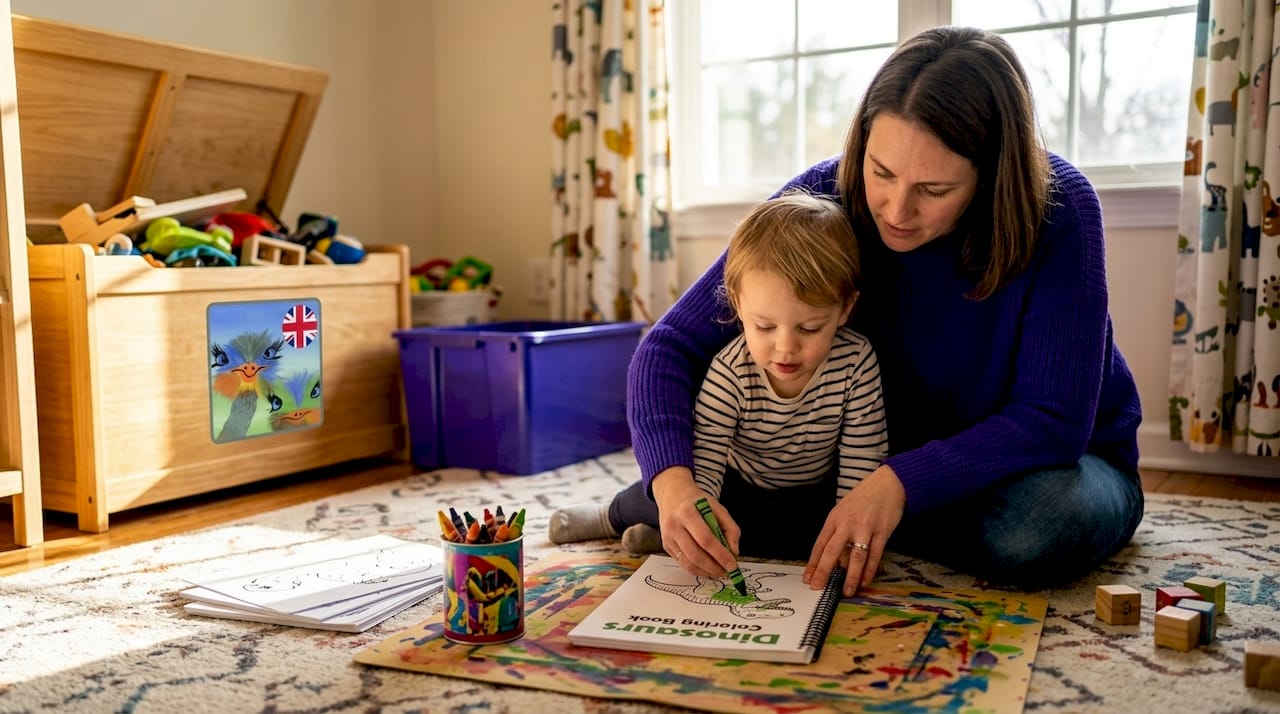
Inclusive practice means thinking beyond age brackets. A seven-year-old with fine motor challenges may need the same type of book as a four-year-old, and that is completely appropriate. Frame the choice around ability and engagement, not age-grade matching. Educators using coloring books in mixed-ability classrooms often select two or three different complexity levels so every child has a page that works for them.
Understanding the limits is equally important. Coloring supports visual-motor integration and attention, but research is clear that benefits extend well beyond the page only when coloring is one part of a varied, multisensory learning program. Coloring books should supplement hands-on building, outdoor exploration, reading aloud, and open-ended play, not replace any of them.
"No single tool develops the whole child. Coloring books work best when they sit comfortably inside a rich, varied daily learning routine."
Pro Tip: After a coloring session, ask the child one question about what they colored. "What do you think that bird eats?" or "Why do you think the sun is so hot?" This simple habit connects the coloring activity to verbal reasoning and memory consolidation, amplifying the learning value of every session. The creating activity books guide offers more strategies for building active learning into every page.
Why the best educational coloring books balance structure, creativity, and moderation
Here is something the standard recommendation lists rarely say out loud: more coloring is not always better. The research is consistent that short, regular sessions outperform long sporadic ones, and yet the instinct of many well-meaning parents and teachers is to load up on books and push for extended coloring time. That approach actually undermines the goal.
The most effective coloring programs we see in early childhood settings share a common trait. They treat coloring as one node in a learning network, not the whole network. Science-themed coloring books support learning and development most powerfully when they form part of a broader hands-on strategy that includes experimentation, physical activity, and free creative play.
There is also a tension worth naming directly. Highly structured educational coloring books, the kind with labeled diagrams, vocabulary boxes, and step-by-step color instructions, are excellent for specific knowledge transfer. But they can crowd out the intrinsic creative motivation that makes art-based learning sustainable over the long term. A child who only ever colors within prescribed educational frameworks may lose the joy of picking up a pencil for its own sake.
The answer is not to choose one type over the other. It is to maintain variety. Use structured, content-rich books intentionally for learning goals. Keep a few open-ended, imaginative coloring books available for pure creative play. And build in time every week when no book, structured or otherwise, is involved at all. That balance, structure plus creativity plus time away, is what produces children who are genuinely engaged learners. Exploring coloring book journaling is one way to bridge the gap between structured coloring and reflective creative expression.
Discover more tools to enrich your child's learning journey
Ready to go deeper than a single book recommendation? Finding resources that combine quality educational content with genuine creative engagement is exactly what we focus on at Munkter Products. Our curated collection brings together children's activity books, educational titles, and coloring resources selected for real learning value, not just visual appeal.

Whether you are a parent building a home learning library or an educator sourcing classroom tools, Munkter Products offers a range of handcrafted and curated books designed to support fine motor development, spark curiosity, and keep children genuinely engaged. From holiday activity books to structured skill-builders, every title is chosen with purpose. Browse the full collection at munkterproducts.com and find the right fit for every child in your life.
Frequently asked questions
How do educational coloring books help with fine motor skills?
Regular coloring sessions train the precise hand and finger movements children need for writing and other detailed tasks, with statistically significant fine motor improvements documented in preschool-aged children through structured coloring programs.
Are science-themed coloring books effective for STEM learning?
They are excellent at introducing concepts and building curiosity, but science coloring books work best as supplements to hands-on experiments and real-world exploration rather than standalone STEM education.
What should I look for when choosing an educational coloring book?
Prioritize age-appropriate complexity, clear learning objectives, and expert-driven content. Educational formats from museum, STEM institution, and Montessori sources consistently deliver the strongest combination of accuracy and child-friendly structure.
Can coloring help children with special fine motor needs?
Yes, especially when you choose books with thicker outlines, larger coloring areas, and simpler compositions. Children with fine motor challenges benefit most when coloring is paired with other strengthening activities like clay work or threading exercises.