

TL;DR:
- Owning the right stationery items, including quality pens, paper, and storage solutions, improves productivity. Organizing supplies with dedicated homes and regular audits prevents clutter and decision fatigue, making tools easier to use. Proper storage and labeling ensure long-term preservation and quick access, maximizing the value of your stationery collection.
Must-have stationery items are the core tools that keep students and professionals organized, creative, and productive every day. A solid stationery essentials checklist covers three broad categories: writing instruments, paper goods, and desk accessories. The 11-category office supply framework used by procurement teams confirms that gaps in any one category create daily friction. The right selection is not about owning more. It is about owning the right things and knowing where they live.
1. What are the top writing instruments every desk needs?
The best writing tools combine smooth ink delivery, durability, and comfort for long writing sessions. The 2026 Pentel Ultimate School Essentials bundle covers the core range: liquid gel pens at 0.7mm, retractable rollerballs, and mechanical pencils with break-resistant HB lead. That single bundle addresses the three most common writing scenarios: note-taking, signing, and drafting.
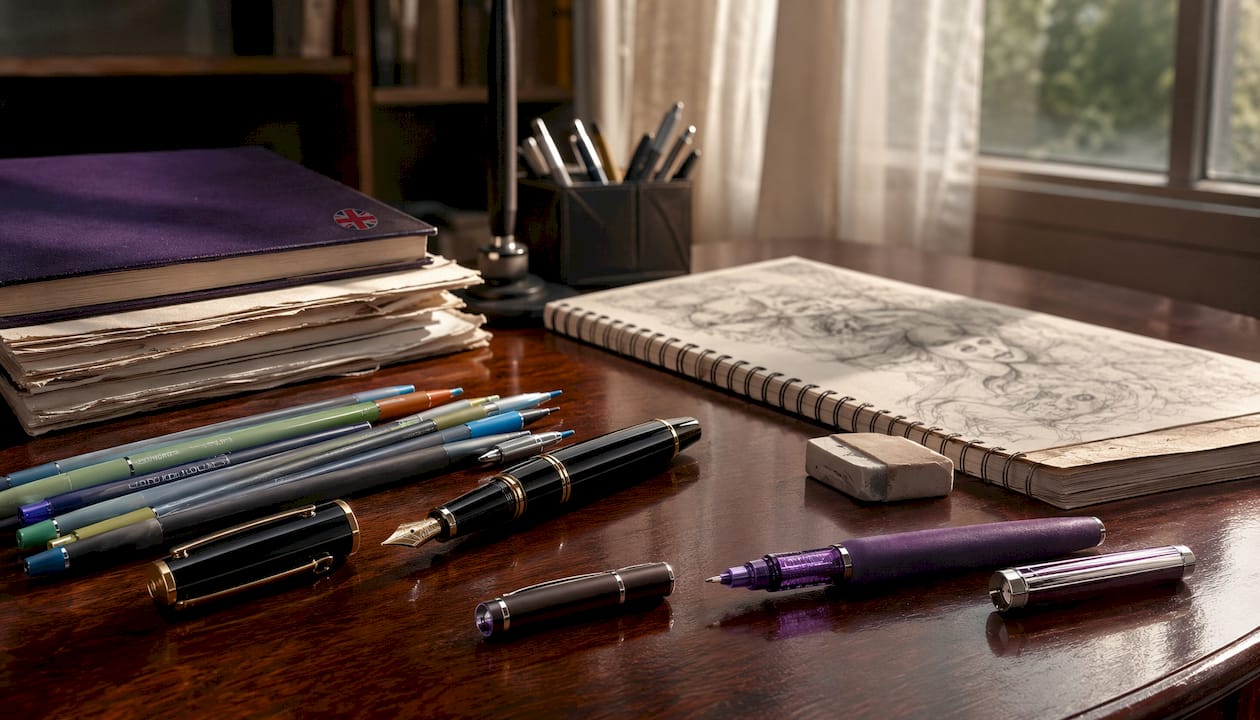
Gel pens remain the top choice for students because they write smoothly on most paper weights without bleeding. For speed and durability, low-viscosity ballpoints are the better pick. The Uni Jetstream 0.5mm is a standout example. It delivers gel-level smoothness with ballpoint dry time, making it ideal for left-handed writers and anyone working fast.
Mechanical pencils with break-resistant leads outperform wooden pencils for precision work. They never need sharpening, and the line width stays consistent. Fine liners and erasable pens round out a complete writing kit for students who annotate, sketch, or plan.
Key features to look for in writing instruments:
- Gel pens: smooth flow, no skipping, quick dry on coated paper
- Ballpoints: long-lasting ink, reliable in cold or humid conditions
- Mechanical pencils: consistent line width, no sharpening needed
- Fine liners: precise tip for diagrams, annotations, and bullet journals
- Erasable pens: friction-based erasing without paper damage
Pro Tip: Test every pen in your collection monthly. Discard anything that skips or drags. A drawer full of dried-out pens wastes time and creates frustration every time you reach for one.
2. Which paper products belong in your stationery collection?
Paper weight determines how a sheet performs under different writing tools and conditions. Standard 20lb bond paper suits everyday printing and note-taking. Heavier stocks, from 60lb text up to 100lb cardstock, handle markers, watercolors, and heavy ink without bleed-through. Choosing the right weight for the task prevents wasted supplies and ruined work.
Notebook format matters as much as paper quality. Spiral-bound notebooks open flat and work well for active note-taking. Thread-bound notebooks, like the MIDORI MD Notebook, use a stitched binding that holds up to daily use and lays flat without cracking. Grid and dot-grid formats suit bullet journaling and technical sketching. Blank notebooks give artists and free-form thinkers the most flexibility. For a wider look at formats, unique notebooks for creative expression covers options worth considering in 2026.
| Paper type | Weight | Best use |
|---|---|---|
| Bond paper | 20lb | Everyday printing, note-taking |
| Text weight | 60–80lb | Journals, sketchbooks, planners |
| Cover stock | 90–100lb | Cards, covers, heavy markers |
| Cardstock | 100lb+ | Crafts, mixed media, stamping |
| Archival paper | Acid-free | Long-term storage, letters |
For storage, vertical magazine files outperform stacked paper trays. Stacking creates an avalanche risk and makes it hard to pull a single sheet without disturbing the pile. Metal or thick book-board files keep heavy cardstock stable and upright. For long-term preservation, acid-free and lignin-free archival boxes protect paper for decades without yellowing or brittleness.
Pro Tip: Store paper by weight in separate vertical files. Label each file by stock type so you grab the right sheet without sorting through the whole collection.
3. What essential desk accessories improve stationery organization?
Desk accessories determine whether your stationery gets used or forgotten. The core principle, as author Felice Cohen emphasizes, is that dedicated homes for each item reduce friction and encourage consistent use. A pen that lives in a clear holder gets picked up. A pen buried in a drawer does not.
The two-zone storage strategy separates active supplies from archived ones. Active visible storage sits near the desk and holds daily-use items: pens, scissors, tape, and sticky notes. Archive storage handles backstock, received letters, and seasonal supplies. This split prevents clutter without hiding things you actually need.
Specific accessories that make the biggest difference:
- Clear acrylic pen holders: visibility prevents ink from drying out and turns pens into desk decor
- Shallow trays: keep flat items like rulers, erasers, and paper clips accessible without digging
- Labeled linen boxes: store backstock neatly while keeping the desk surface clear
- Drawer organizers: divide small items like binder clips, push pins, and correction tape by type
- Apothecary jars: hold small collectibles, washi tape rolls, or novelty clips in a visible, attractive way
Avoid deep, dark pen holders where caps get lost and ink dries out. Clear acrylic drawers solve both problems at once. For ideas on personalizing your workspace layout, personalizing your office space offers practical guidance on matching storage to workflow.
Ergonomic placement matters too. Keep the items you reach for most within arm's length and at eye level. Anything that requires standing up or opening a cabinet will get used far less often.
4. How to organize stationery for long-term use
Organizing stationery is not a one-time task. It requires a regular maintenance routine to stay functional. The first step is always an audit. Discard all dried-out pens and mystery markers before grouping anything. Organizing around broken tools wastes space and creates confusion.
After the audit, apply frequency-based zoning. The three-zone system works like this:
- Zone A (daily use): Place at eye level or on the desk surface. Pens, pencils, scissors, tape, and sticky notes belong here.
- Zone B (weekly use): Store below waist height or in a nearby drawer. Bulk paper, extra notebooks, and spare ink go here.
- Zone C (rare access): Place above head height or in a cabinet. Archival boxes, seasonal supplies, and specialty tools live here.
This frequency-based zoning approach keeps the most-used items accessible without crowding the workspace. Zone C items stay out of the way but remain findable when needed.
Labeling is the next step. Use discreet labels on the inside or back of containers rather than the front face. This keeps the visual presentation clean while still making retrieval fast. Separate paper supplies by acid content. Acidic paper stored next to archival stock will accelerate yellowing in both.
For professionals and students managing large collections, inventory management expert Craig Wallace recommends setting reorder systems for high-turnover items at the start of the academic or office year. Estimating quantities early prevents both shortages and overspending. A simple reorder threshold, such as restocking A4 paper when the ream drops below half, removes the guesswork entirely.
Key Takeaways
The most effective stationery setup combines quality writing tools, the right paper for each task, and a storage system built around how often you actually use each item.
| Point | Details |
|---|---|
| Start with writing instruments | Choose gel pens, a low-viscosity ballpoint, and a mechanical pencil as your core three. |
| Match paper weight to the task | Use 20lb bond for printing, 60–80lb for journals, and acid-free stock for long-term storage. |
| Apply two-zone storage | Keep active supplies visible and archive backstock out of sight but still labeled. |
| Audit supplies regularly | Discard dried pens and unusable items before organizing to prevent clutter buildup. |
| Set reorder thresholds | Establish restocking triggers for high-turnover items at the start of each term or quarter. |
What I have learned from years of stationery obsession
Most people treat stationery as an afterthought. They buy supplies in bulk, dump them in a drawer, and wonder why they never use half of what they own. The real problem is not the supplies. It is the system around them.
The single biggest shift I made was giving every item a permanent, visible home. Once a pen has a specific spot in a clear holder on my desk, I use it. Once it disappears into a cup with 30 others, it might as well not exist. Felice Cohen's point about dedicated homes is not just organizational advice. It is the difference between a stationery collection you love and one you ignore.
I also stopped chasing quantity. A desk stocked with three excellent pens, two notebook formats, and one solid paper storage system outperforms a desk buried in options. Decision fatigue is real. When you reach for a pen and have to choose between 40, you slow down. When you have five great ones in a clear holder, you just write.
The one thing I wish someone had told me earlier: invest in your storage before you invest in more supplies. A beautiful journal sitting in a pile gets ignored. The same journal standing upright in a labeled slot on a shelf gets opened. Organization is not the boring part of stationery. It is the part that makes everything else work.
— Mark
Curated stationery and journals at Munkterproducts
Good stationery only delivers value when you actually use it. The right notebook, pen, or planner sitting in a disorganized drawer does nothing for your productivity or creativity.

Munkterproducts carries a curated selection of journals, planners, and novelty stationery designed for students and professionals who want quality without the search. Every item ships with postage included, and the catalog covers everything from self-help journals to adult coloring books and creative notebooks. If you want stationery that earns a permanent spot on your desk, Munkterproducts is worth a look.
FAQ
What are the most important stationery items for students?
The core three are a quality gel pen, a mechanical pencil with break-resistant lead, and a lined or dot-grid notebook. The Pentel Ultimate School Essentials bundle covers all three writing instrument types in one purchase.
How do I organize stationery at my desk?
Use the two-zone method: keep daily-use items in visible, accessible storage on or near your desk, and move backstock to labeled archive storage. Frequency-based zoning places the most-used items at eye level and less-used items below waist height or above head height.
What paper weight should I use for journaling?
Text-weight paper in the 60–80lb range handles most pens and markers without bleed-through. For heavier ink or mixed media, move up to 90–100lb cover stock.
How often should I audit my stationery supplies?
A monthly audit works well for active collections. Test every pen, discard dried-out markers, and remove non-functional items before they create clutter. Professionals managing office supplies benefit from a quarterly review tied to reorder thresholds.
What is the best way to store paper long-term?
Use acid-free, lignin-free archival boxes and store paper vertically in rigid magazine files rather than in stacked piles. Separating paper by acid content prevents yellowing and preserves quality for years.