

TL;DR:
- Literary stationery features themed writing materials centered on authors, books, and literary history. It transforms routine writing into a deliberate act that fosters creativity, reflection, and emotional connection. Its design emphasizes storytelling and personality, making it meaningful for personal use or gifting to book lovers.
Literary stationery is defined as writing materials themed around authors, books, and literary history, designed to enrich handwritten communication and personal creativity. The term sits within the broader category of novelty or specialty stationery, but it carries a distinct identity rooted in storytelling and the written word. Whether you are a devoted reader, a journaling enthusiast, or searching for a gift that feels genuinely personal, literary stationery offers something that a generic notebook simply cannot. It transforms the act of writing into a small, deliberate ritual.
What is literary stationery and how does it differ from regular stationery?

Stationery refers to writing and office materials including paper, notebooks, envelopes, and pens. The word itself traces back to medieval stationers, merchants who operated from fixed locations and sold books alongside writing supplies. That origin matters because it ties the very concept of stationery to literature from the start.
A quick note on spelling: stationery (with an "e") refers to writing materials, while stationary (with an "a") means not moving. The two are among the most commonly confused words in English, and the distinction is worth knowing before you shop.
Stationery has evolved from a practical necessity into a medium of personal style and meaningful communication. Categories now include writing instruments, paper goods, desk organization, and presentation supplies, each reflecting a lifestyle identity. Literary stationery is a specialized subset within this broader world. It layers literary themes, author motifs, and book culture onto functional writing items, giving each piece a narrative dimension that standard office supplies lack.
The key distinction is intent. A plain spiral notebook serves a task. A journal embossed with a Virginia Woolf quote or packaged in a keepsake box styled after a classic hardbound book invites you to slow down and think about what you are writing. That shift in intent is what separates literary stationery from general writing stationery.
Pro Tip: When shopping for literary stationery, look for items that reference specific authors, literary periods, or book titles rather than generic "bookish" patterns. Specificity signals quality and makes the piece more meaningful as a gift.
What are the main types of literary stationery?
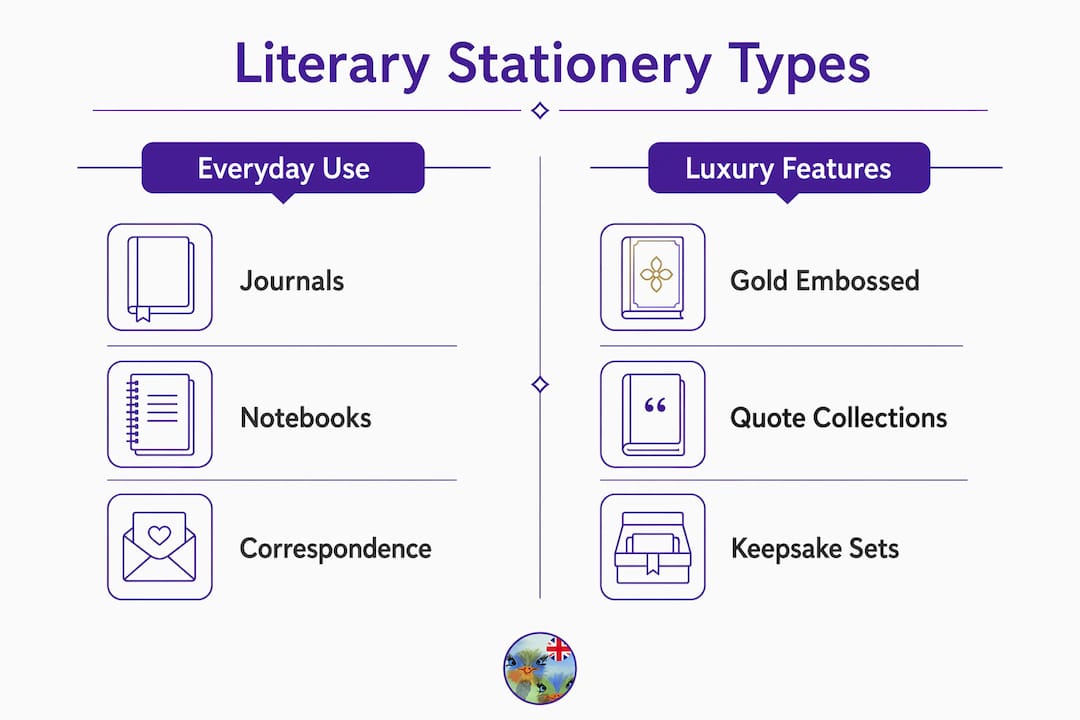
Literary stationery covers a wide range of physical formats. The most common items include:
- Notebooks and journals themed around specific authors, literary movements, or classic titles
- Writing paper and correspondence sets featuring quotes, manuscript-style borders, or period typography
- Note cards and envelopes with author portraits, book cover art, or literary motifs
- Planners and self-help journals that incorporate writing prompts drawn from literary traditions
- Keepsake sets packaged in boxes designed to resemble classic hardbound books
Design is where literary stationery earns its name. Modern literary stationery often mimics heritage packaging by presenting items in keepsake boxes that resemble classic hardbound books. That packaging choice is not decorative for its own sake. It signals that the contents are worth preserving, not just using and discarding.
Luxury features vs. everyday formats
Luxury literary sets come with high-end gold embossed seals and curated quote collections, but the right choice depends on your writing habits. Branded paper with literary motifs suits someone who writes occasional notes or letters. A premium blank journal with quality paper stock is the better choice for daily writing practice. Matching the format to the habit is the difference between a beautiful object that sits unused and one that becomes part of your routine.
The table below shows how the main types of literary stationery align with different uses.
| Type | Best for | Defining feature |
|---|---|---|
| Themed journal | Daily writing and reflection | Prompts, author quotes, quality paper |
| Correspondence set | Letter writing and gifting | Matching envelopes, literary motifs |
| Note cards | Short personal messages | Author portraits, book art |
| Keepsake box set | Gifting and collecting | Heritage packaging, curated contents |
| Planner with prompts | Goal setting and creativity | Structured pages, literary inspiration |
Pro Tip: If you are buying literary stationery as a gift, choose a keepsake set over a single item. The packaging alone communicates that the gift was chosen with care, which is part of the message.
Why use literary stationery? The real benefits
Handwriting on quality literary stationery encourages slower, more reflective communication, enhancing creativity and emotional expression. The sensory experience of good paper and a well-weighted pen turns writing into an intentional act. That is something a text message or email cannot replicate.
The psychological benefits are concrete. Structured stationery like notebooks with prompts reduces the psychological barrier to starting a creative writing task. The blank page is one of the most common obstacles writers face. A journal that opens with a literary quote or a structured prompt removes the intimidation of that blankness and gives you a starting point.
Stationery functions as a "power move" in communication, marking deliberate attention in an age of digital immediacy. A handwritten letter on literary paper signals that the writer chose to slow down. That signal is received. Handwritten notes are more emotionally memorable than digital messages precisely because they require more effort and intention.
The benefits extend across several areas:
- Mindfulness: Writing by hand on beautiful paper slows your thinking and keeps you present.
- Creativity: Literary themes and author quotes prime your mind for expressive, thoughtful writing.
- Emotional connection: A handwritten note on literary stationery carries weight that a typed message does not.
- Identity and self-expression: Your choice of stationery communicates something about who you are and what you value.
"Stationery acts as a bridge of emotional connection in a fast-paced digital world, making handwritten notes a cherished communication form." — The New York Times
Explore how stationery inspires creativity at a deeper level if you want the science behind these effects.
How to use literary stationery personally and as a gift
Literary stationery works across a wide range of personal and social contexts. The most common personal uses are:
- Daily journaling: A themed journal with writing prompts supports consistent reflection and creative practice.
- Letter writing: Correspondence sets make handwritten letters feel like an event, not just a task.
- Note-taking: Literary notebooks bring personality to study sessions, meetings, or reading notes.
- Creative writing: Blank journals with quality paper give writers a physical space that matches the seriousness of their craft.
- Collecting: Keepsake sets and limited-edition literary items appeal to book lovers as objects worth owning.
As a gift, literary stationery works for a specific and enthusiastic audience. Book lovers, writers, students in humanities programs, and anyone who values handwritten correspondence will appreciate a well-chosen set. The key is matching the literary theme to the recipient's interests. A journal referencing a beloved author lands far better than a generic "books and coffee" design.
Themed notebooks for writers and students serve a practical purpose beyond aesthetics. They signal to the user that this is a space for serious, intentional writing. That psychological framing matters.
Customization adds another layer of value. Many literary stationery sets can be paired with personalized stamps or packaging to create a gift that feels genuinely one of a kind. Personalised packaging stamps are one practical way to add that finishing touch to a stationery gift set.
Pro Tip: For gifting, pair a literary journal with a quality pen and a handwritten note explaining why you chose that particular theme. The combination turns a product into a personal gesture.
Handmade journals for mindful creativity are worth exploring if you want to take your personal writing practice further.
Key Takeaways
Literary stationery is a specialized category of writing materials that uses literary themes, author motifs, and quality design to transform routine writing into a deliberate, emotionally meaningful practice.
| Point | Details |
|---|---|
| Definition is specific | Literary stationery is themed around authors, books, or literary history, not just decorative paper. |
| Origins matter | The word stationery traces to medieval book merchants, connecting writing materials to literature from the start. |
| Format should match habit | Choose branded paper for occasional notes and premium journals for daily writing practice. |
| Psychological value is real | Structured literary journals reduce the barrier to starting creative writing tasks. |
| Gifting requires intention | Match the literary theme to the recipient's interests for a gift that feels personal, not generic. |
Why literary stationery still matters in a screen-heavy world
I have spent years writing by hand and by screen, and the difference is not just tactile. It is cognitive. When I sit down with a well-made journal, my thinking slows in a way that a laptop never produces. The page asks something of me. A screen just waits.
What strikes me most about literary stationery specifically is the storytelling dimension. Designers describe "storytelling through paper" as the central aim of literary stationery, calling it a conscious luxury that complements rather than rejects technology. That framing is exactly right. Nobody is arguing that you should write all your emails by hand. The argument is that some communication deserves more than a screen can give it.
The readers and writers I know who use literary stationery regularly are not nostalgic. They are deliberate. They have decided that certain moments, a letter to a friend, a journal entry about something that mattered, a note tucked into a book you are lending, deserve a physical form. Literary stationery gives those moments a container worthy of their weight.
If you have never tried writing on paper that was chosen with care, the difference will surprise you. The right journal does not just hold your words. It changes how you write them.
— Mark
Munkterproducts literary stationery for every reader and writer
Munkterproducts carries a curated selection of notebooks, journals, planners, and novelty stationery items designed for readers and writers who want their writing materials to mean something.

Whether you are building a personal writing practice or looking for a gift that will genuinely resonate with a book lover, the collections at Munkterproducts are worth browsing. Each item is chosen with the same attention to theme and quality that literary stationery demands. Visit Munkterproducts to find journals, notebooks, and stationery sets that bring literary culture into everyday writing.
FAQ
What is literary stationery exactly?
Literary stationery is writing materials, including journals, notebooks, note cards, and correspondence sets, themed around authors, books, or literary history. It is a specialized subset of stationery designed to enrich the experience of handwritten communication.
How is literary stationery different from regular writing stationery?
Regular writing stationery is functional. Literary stationery adds a thematic layer drawn from book culture, author motifs, or literary history, making each piece an expression of identity as well as a writing tool.
What types of literary stationery make the best gifts?
Keepsake sets packaged in book-style boxes, themed journals with writing prompts, and correspondence sets with matching envelopes are the strongest gift choices. Matching the literary theme to the recipient's favorite author or genre makes the gift more personal.
Why do writers prefer literary stationery over plain notebooks?
Structured literary journals reduce the psychological barrier to starting creative writing tasks. The prompts, quotes, and quality paper signal that the journal is a serious space for writing, which helps writers show up more consistently.
Where does the word stationery come from?
The term originates from medieval stationers who sold books and writing materials from fixed shop locations. That historical link between stationery and books is part of why literary stationery feels like a natural category today.