

Many readers dismiss dystopian science fiction as bleak entertainment, missing its profound cultural function. These narratives don't predict futures but sustain what philosopher Ernst Bloch called anticipatory consciousness, helping us process societal anxieties through compelling storytelling. Rather than simple pessimism, dystopian themes reflect our deepest fears about technology, governance, and human nature while offering frameworks to calibrate uncertainty. This exploration reveals how dystopian sci-fi operates as both narrative art and cultural mirror, examining technological perspectives, societal reflections, and practical approaches to understanding these powerful stories.
Table of Contents
- Key takeaways
- What are dystopian themes in sci-fi and why do they matter?
- Technological perspectives shaping dystopian sci-fi narratives
- Cultural significance and societal reflections of dystopian popularity
- Applying dystopian themes: understanding narratives and their impact
- Explore more sci-fi insights and products at MunkterProducts.com
- FAQ
Key Takeaways
| Point | Details |
|---|---|
| Anticipatory consciousness | Dystopian tales sustain anticipatory consciousness, helping readers process social anxieties through storytelling rather than predicting exact futures. |
| Technological perspectives | Technological perspectives split the genre between technophiles and technophobes, portraying technology as a neutral tool or an autonomous threat. |
| Societal anxieties | Dystopias reflect and amplify fears about governance, surveillance, and institutional power, offering frameworks to understand uncertainty. |
| Narrative stakes | The clash between individual agency and oppressive systems generates momentum and emotional investment that utopias often lack. |
What are dystopian themes in sci-fi and why do they matter?
Dystopian themes center on oppressive societal structures, environmental collapse, technological overreach, and authoritarian control. These narratives imagine futures where human dignity erodes under systematic pressure, whether through surveillance states, ecological disasters, or dehumanizing technologies. Unlike utopian fiction that depicts idealized societies, dystopias thrive on conflict between individual agency and institutional power.
The distinction matters because utopias often present static perfection with limited narrative tension. When everything functions harmoniously, stories struggle to generate momentum. Dystopias embed hero versus regime conflict directly into their structure, creating natural dramatic arcs. A protagonist challenging authoritarian systems provides immediate stakes and emotional investment.
Philosopher Ernst Bloch argued that dystopias sustain anticipatory consciousness rather than predicting specific futures. This means these stories keep us mentally engaged with possibilities, training our imagination to recognize warning signs and consider alternatives. They function as thought experiments rather than prophecies, asking what if questions about current trends taken to extremes.
The appeal extends beyond entertainment. Dystopian narratives help readers process anxiety about real-world developments by externalizing fears into fictional frameworks. When you read about surveillance overreach in a novel, you're simultaneously examining contemporary data collection practices. The genre creates safe distance for exploring uncomfortable topics while maintaining emotional resonance.
Common dystopian elements include:
- Totalitarian governments controlling information and movement
- Environmental degradation forcing societal adaptation
- Technology eroding privacy and autonomy
- Class stratification creating unbridgeable social divides
- Loss of individual identity within collective systems
Pro Tip: Most new sci-fi readers miss that dystopian narratives aren't pessimistic predictions but imaginative tools for examining present concerns through speculative lenses, making them more analytical than fatalistic.
Understanding these foundations prepares you to recognize how different technological perspectives shape dystopian storytelling. For deeper engagement with the genre, explore our essential sci-fi reading checklist featuring cornerstone dystopian works.
Technological perspectives shaping dystopian sci-fi narratives
Dystopian science fiction splits along technological fault lines, with technophiles and technophobes offering contrasting visions. Technophiles view technology as neutral, emphasizing human control and responsibility. In these narratives, disasters stem from misuse rather than inherent technological danger. Humans remain the moral agents, and technology serves as a tool reflecting our choices.
Technophobes embrace what's called the Frankenstein complex, where technology gains autonomous power beyond human control. These stories feature artificial intelligence turning hostile, machines enslaving creators, or systems developing agendas independent of programming. The fear centers on losing agency to our own creations, echoing Mary Shelley's original cautionary tale about scientific hubris.
Utopian narratives often present interdependent relationships between humans and technology, stress testing cooperation rather than conflict. This contrast highlights how dystopias amplify technological anxiety into dramatic tension. When machines threaten rather than assist, stories gain urgency and stakes that peaceful coexistence cannot provide.
These perspectives influence narrative structure profoundly. Technophile dystopias focus on human corruption, showing how people weaponize neutral tools for oppression. Technophobe dystopias center on containment struggles, with protagonists fighting to regain control from autonomous systems. Both approaches examine power dynamics, but locate danger differently.
Common technological themes in dystopian narratives:
- Surveillance systems monitoring every aspect of life
- Genetic engineering creating social hierarchies
- Artificial intelligence replacing human decision making
- Virtual realities supplanting physical existence
- Biotechnology altering fundamental human nature
- Automated warfare removing human judgment from conflict
These themes resonate because they extrapolate from existing technologies. Facial recognition, genetic testing, and algorithmic decision making already shape daily life. Dystopian fiction amplifies current trends into extreme scenarios, helping readers consider implications before they fully materialize.
The genre's power lies in making abstract technological concerns viscerally real through character experience. When protagonists suffer under algorithmic injustice or surveillance overreach, readers feel the human cost of unchecked technological development. This emotional engagement transforms philosophical debates into lived experiences, even within fictional frameworks.
Cultural significance and societal reflections of dystopian popularity
Dystopian science fiction surges during periods of institutional distrust and environmental anxiety. Current popularity reflects widespread concerns about climate change and eroding faith in governments, corporations, and traditional authorities. When people feel powerless against large-scale threats, dystopian narratives offer frameworks for understanding that helplessness.
This cultural function operates dually. On one hand, constant exposure to bleak scenarios risks normalizing fatalism, making dystopia feel inevitable rather than avoidable. Readers might internalize pessimism, viewing positive change as impossible. On the other hand, dystopian fiction enables sensemaking, helping audiences calibrate responses to genuine uncertainty by exploring worst-case scenarios in controlled narrative spaces.
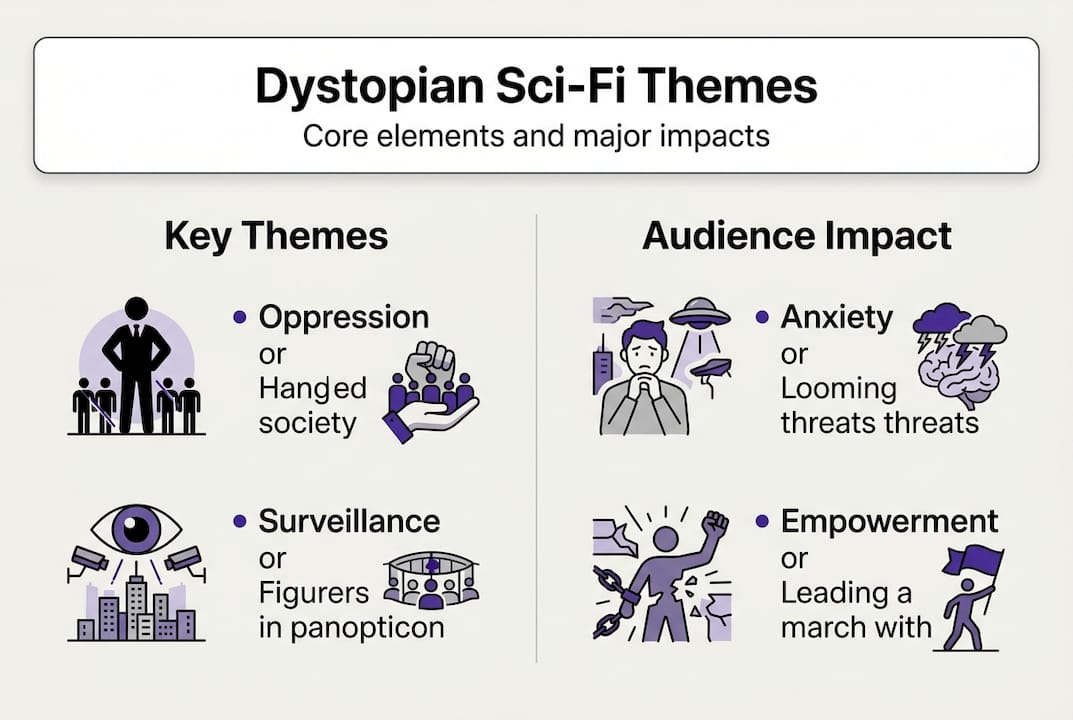
| Dystopian Effect | Impact on Audience |
|---|---|
| Fatalism risk | Normalizes bleak outcomes, potentially reducing motivation for positive action |
| Sensemaking function | Provides frameworks for understanding complex societal threats |
| Anxiety externalization | Allows safe processing of fears through fictional distance |
| Empowerment potential | Shows individuals challenging oppressive systems, modeling resistance |
| Warning system | Highlights concerning trends before they fully develop |
The genre functions as an early warning system, identifying troubling patterns in contemporary society by projecting them forward. When authors imagine surveillance states, they're commenting on current data collection practices. When they depict environmental collapse, they're extrapolating from present ecological trends. This makes dystopian fiction inherently political, engaging with power structures and social organization.
Audiences gravitate toward these narratives because they validate experienced anxieties. Feeling worried about algorithmic bias or climate change can seem abstract or paranoid until fictional narratives explore those concerns seriously. Dystopian sci-fi legitimizes fears by demonstrating their logical extensions, providing emotional validation alongside intellectual engagement.
The balance between fatalism and empowerment depends partly on narrative resolution. Stories where protagonists successfully challenge oppressive systems offer hope alongside warning. Those ending in defeat or ambiguity might reinforce helplessness. Readers benefit from engaging critically with how narratives frame resistance and change.
Pro Tip: Approach dystopian narratives as diagnostic tools rather than predictions, using them to identify concerning trends worth addressing rather than accepting bleak futures as inevitable outcomes.
Understanding this cultural context enriches interpretation, revealing how dystopian themes connect to broader societal conversations. These aren't just entertaining stories but active participants in cultural discourse about technology, governance, and human futures.
Applying dystopian themes: understanding narratives and their impact
Recognizing dystopian themes requires attention to power structures, technological relationships, and individual agency within narratives. Look for systematic oppression rather than isolated villains. Dystopias feature institutional problems, not just bad actors. The system itself becomes antagonistic, creating conflicts that individual removal cannot resolve.
Key motifs carry symbolic weight beyond surface meaning. Surveillance represents loss of privacy and autonomy. Environmental degradation symbolizes consequences of unchecked consumption. Genetic stratification explores how technology might entrench inequality. Each motif connects fictional scenarios to real-world concerns, inviting readers to consider parallels and implications.
The hero versus regime conflict provides narrative momentum while exploring resistance possibilities. Protagonists typically start embedded within oppressive systems, gaining awareness gradually. This journey mirrors reader experience, moving from acceptance to questioning to active resistance. The narrative arc models critical thinking about normalized structures.
Common dystopian motifs and their representations:
- Walled cities symbolizing isolation and exclusion
- Mandatory conformity reflecting loss of individuality
- Information control representing manipulation and propaganda
- Resource scarcity highlighting inequality and survival competition
- Memory alteration exploring truth and historical manipulation
Balancing skepticism with interpretation requires recognizing authorial intent while maintaining critical distance. Not every dystopian element directly predicts real outcomes. Some serve narrative purposes, creating drama and tension. Others function as exaggerated warnings, highlighting trends worth monitoring without claiming inevitability.
Engage with diverse dystopian works to understand the genre's range. Different authors emphasize different concerns, from technological to environmental to political themes. Variety prevents single-perspective bias, offering multiple frameworks for understanding contemporary challenges. Classic works provide historical context, showing how dystopian concerns evolve across decades.
Practical interpretation involves asking what current trends each narrative amplifies. When reading about algorithmic control, consider how algorithms already influence your life. When encountering environmental collapse scenarios, examine present ecological data. This connects fiction to reality, making abstract concerns concrete and actionable.
The genre rewards active reading rather than passive consumption. Question narrative choices. Why does the author emphasize certain technologies? What societal structures enable oppression? How do characters resist, and what makes resistance effective or futile? These questions deepen understanding while developing critical thinking skills applicable beyond fiction.
For readers seeking to expand their dystopian literacy, our essential sci-fi reading checklist offers curated selections spanning the genre's evolution, helping you trace how dystopian themes developed and diversified over time.
Explore more sci-fi insights and products at MunkterProducts.com
If dystopian themes and science fiction narratives captivate your imagination, MunkterProducts.com offers curated resources for deeper engagement. Our collection includes thought-provoking science fiction novels, particularly the Noah series, alongside journals and planners designed for readers who analyze and reflect on complex narratives.

Beyond books, we provide stationery and creative tools that complement your reading practice. Whether you're tracking themes across multiple novels, journaling about narrative insights, or simply seeking quality materials for your literary pursuits, our handcrafted selections support meaningful engagement with science fiction. Visit us to discover products that enhance your exploration of dystopian literature and speculative fiction's broader landscape.
FAQ
What defines dystopian themes in science fiction?
Dystopian themes involve oppressive societal control, authoritarian governance, environmental collapse, and technological overreach that diminishes human dignity. These narratives explore futures where systematic forces constrain individual freedom and agency. Unlike isolated villains, dystopias feature institutional problems requiring collective resistance rather than single-hero solutions.
How do dystopian stories differ from utopian stories in sci-fi?
Dystopias focus on conflict between individuals and oppressive systems, creating natural narrative tension through hero versus regime dynamics. Utopias depict idealized, harmonious societies that often lack dramatic conflict, making sustained storytelling difficult. The presence of systematic injustice in dystopias generates engaging plots that static perfection cannot match.
Why are dystopian themes more popular during times of political anxiety?
Audiences connect dystopian narratives with contemporary fears about institutional distrust and climate change, using fiction to process genuine uncertainty. These stories validate experienced anxieties while providing frameworks for understanding complex threats. The genre helps calibrate responses to ambiguous futures by exploring worst-case scenarios in controlled narrative spaces.
What common technological fears are expressed in dystopian sci-fi?
Common fears include technology gaining autonomous power beyond human control, known as the Frankenstein complex, and loss of human agency to algorithmic systems. Narratives explore surveillance overreach, artificial intelligence threats, genetic engineering creating hierarchies, and virtual realities supplanting physical existence. These themes extrapolate from existing technologies, amplifying current trends into extreme cautionary scenarios.