

Many people assume sci-fi series are just space adventures with laser guns and aliens, but that's a common misconception. True science fiction has distinct hallmarks rooted in speculative science and technological plausibility, not just futuristic window dressing. Understanding what separates genuine sci-fi from fantasy or action adventures will deepen your appreciation for the genre and help you identify compelling narratives. You'll discover the core criteria that define sci-fi series, explore storytelling techniques that make them captivating, and learn how to distinguish between subgenres and hybrid forms that blur traditional boundaries.
Table of Contents
- Key takeaways
- Defining characteristics of sci-fi series
- Storytelling techniques unique to sci-fi series
- Hard sci-fi versus soft sci-fi: understanding the spectrum
- Dealing with genre boundaries: sci-fi, fantasy, and hybrids
- Iconic sci-fi series and what they teach us about the genre
- Explore sci-fi-inspired products and gifts
- What defines a sci-fi series? Frequently asked questions
Key Takeaways
| Point | Details |
|---|---|
| Plausible science | Science fiction relies on speculative elements grounded in scientific plausibility rather than magic or fantasy. |
| Diverse settings and tech | The genre features futuristic environments, advanced technology, alien encounters, and alternate histories anchored to conceivable science. |
| Ethical focus | Ethical and societal questions raised by technology drive plot, character conflict, and thematic exploration. |
| Worldbuilding consistency | Storytelling in sci fi builds large scale worlds and maintains internal consistency while revealing details gradually through character interactions. |
Defining characteristics of sci-fi series
Science fiction series distinguish themselves through speculative elements grounded in scientific plausibility rather than magic or pure fantasy. This foundation separates the genre from related forms of storytelling. While fantasy relies on supernatural forces, sci-fi demands that extraordinary events have technological or scientific explanations, even if those explanations stretch current understanding.
The genre encompasses diverse settings and themes. Futuristic environments, advanced technologies, alien encounters, and alternate histories form the typical backdrop for sci-fi narratives. Space travel, artificial intelligence, genetic engineering, and time manipulation appear frequently, but always with some anchor to conceivable science. These elements create the playground where writers explore human nature under extraordinary circumstances.
Ethical and societal questions triggered by technology form the heart of compelling sci-fi series. When a show introduces faster than light travel, it must also address the social implications of that breakthrough. How do civilizations interact across vast distances? What happens to planetary economies when interstellar trade becomes possible? These questions drive plot development and character conflict in ways that pure action or adventure cannot.
The format spans multiple media, from television to literature, but all share this speculative science focus. Whether you're watching a streaming series or reading a novel sequence, the commitment to exploring technological and scientific possibilities remains constant. This consistency helps fans identify quality sci-fi regardless of presentation format.
What separates sci-fi from other speculative genres:
- Scientific or technological explanations for extraordinary events
- Plausible extrapolation from current knowledge and trends
- Focus on how innovation reshapes society and individuals
- Internal consistency within established rules of the fictional universe
"The best science fiction doesn't predict the future, it prevents it by making us think about consequences before they arrive."
For readers seeking deeper engagement with the genre, exploring an essential sci-fi reading checklist provides foundational works that exemplify these characteristics. Understanding how book publishing shapes sci-fi merchandise also reveals the commercial ecosystem supporting genre development.
Storytelling techniques unique to sci-fi series
Science fiction series build narratives around speculative 'what if' scenarios and internal consistency that distinguish them from conventional drama. Writers start with a premise that challenges reality, then rigorously explore its implications. What if humans could upload consciousness to machines? What if we discovered we're living in a simulation? These questions become the engine driving plot and character development.
Worldbuilding in sci-fi operates on a different scale than most genres. Creators must construct entire civilizations, technologies, and physical laws, then maintain consistency throughout the series. This information reveals itself gradually through character interactions and plot events rather than exposition dumps. Viewers piece together how the fictional universe works by observing consequences and connecting details across episodes.
Character arcs intertwine with technological conflicts, creating dilemmas that test moral frameworks and personal values. A scientist might face the choice between saving lives through unethical experimentation or letting people die while pursuing proper protocols. These conflicts have no easy answers, forcing characters to evolve as they navigate impossible situations. The technology isn't just a backdrop, it's an active force shaping human behavior and relationships.

Sci-fi series employ both episodic and serialized story structures to develop complex plots over time. Episodic formats allow exploration of different speculative scenarios each week while maintaining consistent characters and settings. Serialized narratives build toward larger revelations about the universe or humanity's place within it. Many modern series blend both approaches, using standalone episodes to develop characters while advancing overarching mysteries.
How sci-fi series construct compelling narratives:
- Establish a speculative premise that challenges current reality
- Build detailed, internally consistent worlds that support the premise
- Create characters whose personal stakes connect to technological or scientific elements
- Layer information gradually to reward attentive viewers
- Use episodic or serialized structures to balance immediate satisfaction with long-term investment
Pro Tip: The strongest sci-fi series make technology a character itself, with agency that influences plot direction and forces human adaptation rather than simply serving as a cool visual element.
Layered storytelling enhances audience investment by rewarding close attention and analysis. Fans discuss theories, spot foreshadowing, and debate implications between episodes. This engagement transforms passive viewing into active participation. Writers who understand this dynamic craft stories that operate on multiple levels, offering surface entertainment while hiding deeper themes and connections.
For creators developing their own narratives, a storytelling workflow guide provides frameworks applicable across genres, including the unique demands of speculative fiction.
Hard sci-fi versus soft sci-fi: understanding the spectrum
The science fiction genre splits into two broad categories based on scientific rigor and thematic focus. Hard sci-fi emphasizes precise scientific principles, often grounding stories in physics, engineering, and mathematics. Writers in this subgenre research extensively to ensure technological elements align with current scientific understanding or plausible extrapolations. The Martian exemplifies this approach, detailing realistic survival techniques on Mars using actual chemistry and physics.
Soft sci-fi prioritizes social sciences, human behavior, and speculative ideas over technical accuracy. These stories explore psychology, sociology, and political structures in speculative settings without obsessing over scientific precision. The focus shifts from how technology works to how it affects people and societies. Ursula K. Le Guin's works often fall into this category, examining gender, culture, and power through speculative lenses.
This divide influences plot complexity and character focus significantly. Hard sci-fi plots often revolve around solving technical problems, with characters demonstrating expertise and ingenuity. Tension builds from realistic constraints and the challenge of working within physical laws. Soft sci-fi plots center on relationships, ethical dilemmas, and social dynamics, using speculative elements as catalysts for human drama rather than puzzles to solve.
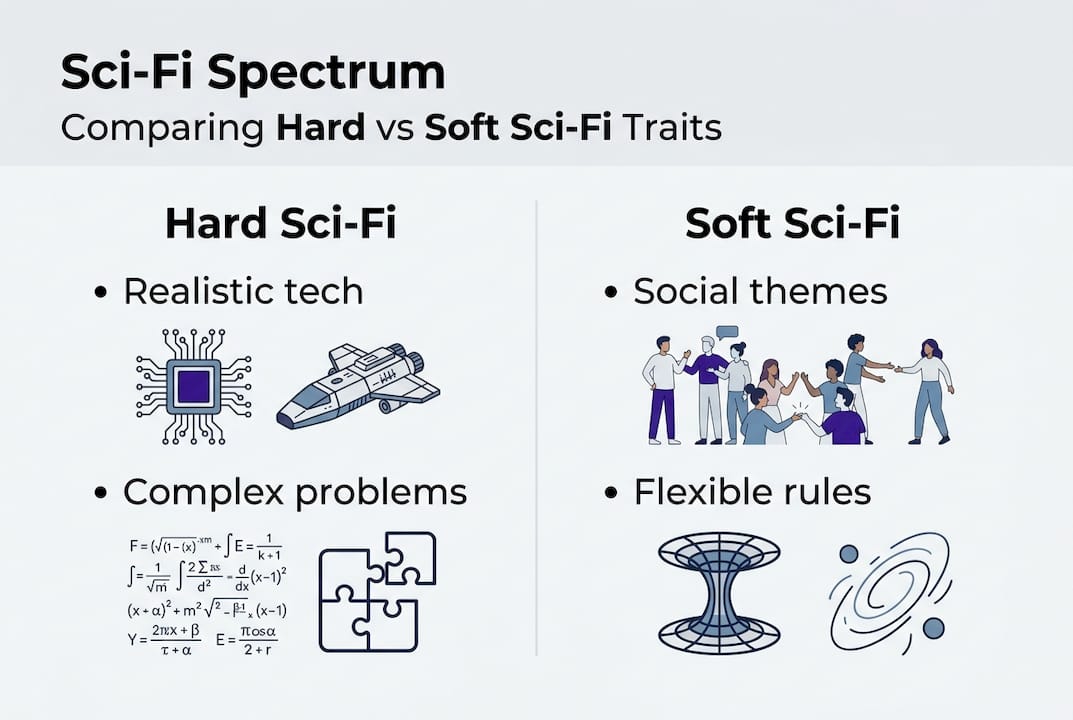
Fan communities debate these distinctions passionately, sometimes treating them as quality markers rather than stylistic choices. Some readers dismiss soft sci-fi as insufficiently rigorous, while others find hard sci-fi emotionally cold. Both perspectives miss the point that each approach serves different storytelling goals and appeals to different audiences.
| Aspect | Hard Sci-Fi | Soft Sci-Fi |
|---|---|---|
| Scientific accuracy | High priority, detailed technical explanations | Lower priority, focuses on plausibility over precision |
| Primary themes | Problem-solving, technological innovation, survival | Social dynamics, ethics, human nature |
| Character types | Engineers, scientists, technical experts | Diplomats, explorers, everyday people |
| Plot drivers | Technical challenges, scientific mysteries | Relationships, moral choices, cultural conflicts |
| Example series | The Expanse, The Martian | Star Trek, Doctor Who |
Series like Dune challenge binary classifications, illustrating genre fluidity by combining detailed ecological science with mystical elements and social commentary. Frank Herbert grounded his desert planet in realistic ecology and resource management while exploring prescience and religious manipulation. This blend demonstrates that the hard versus soft distinction exists on a spectrum rather than as rigid categories.
Pro Tip: Don't let subgenre labels limit your exploration. Many acclaimed series blend hard and soft elements, using technical accuracy to establish credibility while exploring human themes that give the story emotional weight.
Understanding this spectrum helps viewers appreciate different narrative approaches and find series matching their preferences. Readers seeking diverse examples can explore sci-fi reading recommendations spanning both categories.
Dealing with genre boundaries: sci-fi, fantasy, and hybrids
Science fiction and fantasy occupy neighboring territory in speculative fiction, but clear criteria separate them. Sci-fi relies on technological or scientific explanations for extraordinary events, while fantasy depends on supernatural forces and magic without scientific basis. A character might gain superhuman abilities in both genres, but sci-fi attributes this to genetic engineering or cybernetic enhancement, while fantasy invokes magical bloodlines or divine intervention.
This distinction matters because it shapes how stories develop and resolve conflicts. Sci-fi maintains internal consistency with established scientific principles, even fictional ones. If a series introduces energy shields, it must explain their limitations and power requirements. Fantasy can simply declare that magic works because it does, without mechanistic justification. Both approaches are valid, but they create different narrative expectations.
Space operas and science fantasy blur these boundaries deliberately. Star Wars mixes technological aesthetics with mystical Force powers, creating a hybrid that feels like sci-fi but operates on fantasy logic. The lightsabers and starships suggest science fiction, but the Force functions as magic without scientific grounding. These hybrids appeal to broader audiences by combining the visual spectacle of futuristic technology with the emotional resonance of mythic storytelling.
Identifying whether a series leans sci-fi or fantasy requires examining the source of extraordinary elements and how the narrative treats them. Does the story explain phenomena through science, even speculative science? Or does it embrace the inexplicable as inherently magical? This analysis helps viewers categorize ambiguous series and set appropriate expectations.
Key criteria distinguishing sci-fi from fantasy:
- Origin of powers: technological/scientific versus supernatural/magical
- Explanation style: mechanistic versus mystical
- Internal logic: follows physical laws versus operates on narrative necessity
- Problem-solving approach: technical solutions versus magical intervention
Some series intentionally straddle the line to explore both possibilities. Doctor Who features a scientifically advanced alien who travels through time and space, but individual episodes might involve ghosts, demons, or other fantasy elements. The show maintains its sci-fi identity by framing even supernatural encounters through a lens of misunderstood science or alien technology.
| Element | Science Fiction | Fantasy | Hybrid (Space Opera) |
|---|---|---|---|
| Power source | Technology, science | Magic, supernatural | Mix of both |
| Explanation needed | Yes, even if speculative | No, inherent to world | Selective |
| Setting | Future, alternate reality | Mythical, medieval-inspired | Futuristic with mythic elements |
| Conflict resolution | Technical ingenuity | Magical ability | Combination |
Understanding these boundaries enhances appreciation for how different series approach speculative storytelling. Fans exploring these distinctions can find guidance through resources on sci-fi versus fantasy characteristics that clarify genre conventions.
Iconic sci-fi series and what they teach us about the genre
Examining landmark series reveals how diverse approaches can all qualify as science fiction while serving different audiences and purposes. The Twilight Zone pioneered the anthology format, presenting standalone speculative scenarios each episode. Rod Serling used science fiction premises to explore social issues, human psychology, and moral questions in ways that direct commentary couldn't achieve in 1960s television. The format demonstrated that sci-fi works as a vehicle for examining contemporary concerns through speculative distance.
Star Trek exemplifies space opera with its episodic adventures exploring strange new worlds while promoting humanist values. Gene Roddenberry created a future where humanity had overcome its worst impulses, using alien encounters to reflect on prejudice, war, and cooperation. The series balanced optimism about human potential with realistic conflicts, showing that sci-fi can inspire as well as warn.
Battlestar Galactica offers character-driven storytelling within a hard sci-fi framework, examining survival, identity, and what makes us human when faced with extinction. The 2004 reboot grounded its space warfare in realistic physics and military procedure while exploring religious faith, political corruption, and the cycle of violence. This combination proved that technical accuracy and emotional depth aren't mutually exclusive.
The Expanse focuses on realistic physics in a serialized narrative spanning multiple seasons. The show depicts space travel with attention to thrust gravity, orbital mechanics, and the physical toll of acceleration on human bodies. This commitment to scientific accuracy creates visceral tension because viewers understand the real dangers characters face. The political intrigue between Earth, Mars, and the Belt adds layers of complexity that reward sustained attention.
What these landmark series teach about sci-fi diversity:
- Anthology formats allow exploration of varied speculative premises without ongoing continuity constraints
- Episodic adventures can balance standalone satisfaction with gradual character development
- Character-focused narratives use sci-fi settings to examine universal human experiences under extreme conditions
- Serialized plotting enables complex worldbuilding and long-term story arcs that deepen investment
- Scientific accuracy and emotional resonance both contribute to compelling storytelling
These examples demonstrate that no single approach defines quality science fiction. The genre accommodates optimistic visions and dystopian warnings, hard science and social speculation, episodic variety and serialized complexity. What unites them is commitment to exploring how scientific and technological change affects humanity.
Viewers seeking to expand their genre knowledge can explore recommended sci-fi series that represent different eras and approaches to speculative storytelling.
Explore sci-fi-inspired products and gifts
Now that you understand what makes science fiction series compelling, you can celebrate your favorite stories through curated products that bring speculative worlds into daily life. Whether you're seeking journals for plotting your own sci-fi narrative, novels from the Noah series that exemplify genre conventions, or unique gifts for fellow enthusiasts, the right items deepen your connection to the stories you love.

Discover carefully selected books, stationery, and creative materials at MunkterProducts.com that reflect the imagination and innovation central to science fiction. From handcrafted journals perfect for worldbuilding notes to novels that demonstrate masterful speculative storytelling, each product supports your engagement with the genre. High-quality items celebrate the creativity and vision that make sci-fi series unforgettable, offering tangible ways to express your enthusiasm for speculative narratives.
What defines a sci-fi series? Frequently asked questions
What's the main difference between sci-fi and fantasy series?
Science fiction explains extraordinary events through technology or scientific principles, even speculative ones, while fantasy relies on magic and supernatural forces without mechanistic justification. Sci-fi maintains internal consistency with physical laws, whereas fantasy operates on mythic logic where magic simply exists because the story requires it.
What makes hard sci-fi unique compared to other sci-fi series?
Hard sci-fi prioritizes scientific accuracy and technical detail, grounding stories in realistic physics, engineering, and mathematics. Plots typically revolve around solving technical problems within realistic constraints, with characters demonstrating expertise and ingenuity rather than relying on convenient technological solutions.
How does worldbuilding impact sci-fi series quality?
Compelling worldbuilding creates internally consistent universes where technology, society, and physical laws interact logically. Quality series reveal this information gradually through character actions and plot consequences rather than exposition, rewarding attentive viewers who piece together how the fictional world operates and invest in long-term narratives.
What should new viewers look for to identify genuine sci-fi series?
Look for speculative premises grounded in scientific or technological plausibility, explanations for extraordinary events that reference science rather than magic, and exploration of how innovation affects individuals and society. Genuine sci-fi asks 'what if' questions about technology and rigorously explores the implications rather than using futuristic settings as mere backdrop for conventional drama.