

TL;DR:
- Aspiring coloring book creators must focus on understanding market demand and buyer needs before design. Validating ideas through research, theme planning, and style consistency increases the likelihood of success. Producing high-quality files and a buyer-centered approach ensures a sustainable, profitable coloring book business.
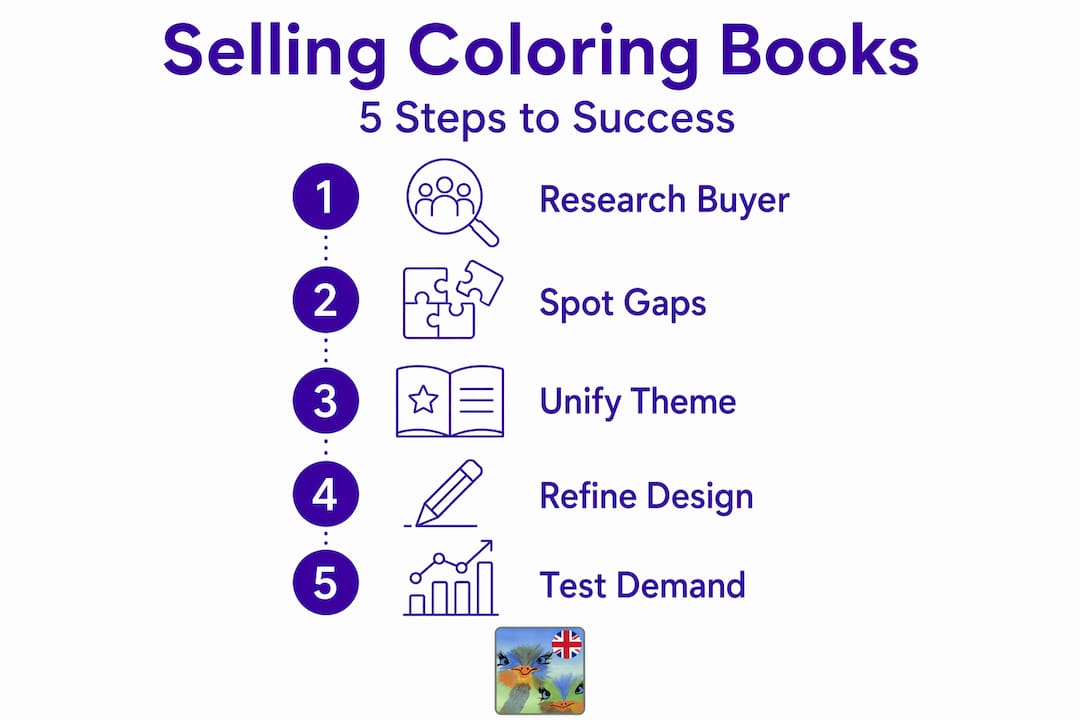
Most aspiring illustrators hit the same wall: they have artistic talent but no clear system for figuring out how to develop coloring book ideas that actually connect with buyers. Drawing beautiful pages is only half the equation. The other half is understanding what people want to color, why they buy, and how your concept fits into a real market. This guide walks you through the full process, from identifying your audience and brainstorming themes, to designing pages that work and validating your idea before you spend weeks creating it.
Table of Contents
- Key takeaways
- How to develop coloring book ideas that sell
- Brainstorming and building your theme
- Design principles every illustrator needs to know
- Validate your idea before you commit
- Getting your book ready to publish
- My honest take on what actually matters
- Explore creative coloring books at Munkterproducts
- FAQ
Key takeaways
| Point | Details |
|---|---|
| Validate before creating | Check Amazon autocomplete and customer reviews to confirm demand before investing significant time. |
| Design for playability | Leave negative space and vary complexity so users feel invited to explore, not overwhelmed. |
| Consistency builds trust | Uniform line weight and art style across all pages signal professionalism and improve buyer confidence. |
| Single-sided pages matter | Adult coloring book buyers expect single-sided layouts to prevent marker bleed and negative reviews. |
| Market signals guide themes | Bestseller rankings and review patterns reveal exactly what buyers want and what gaps exist in the market. |
How to develop coloring book ideas that sell
Before you sketch a single line, you need to know who you are drawing for. This is where most creative people skip a step. They assume that a great idea is enough. It rarely is.
Start by defining your buyer. Are you creating for kids aged four to eight who need simple shapes and bold outlines? Educators looking for curriculum-aligned activity pages? Adults seeking stress relief through intricate botanical or geometric designs? Each group has different needs, tolerances for complexity, and buying motivations.
Once you know your buyer, research actual demand. Here is how:
- Search Amazon with phrases like "coloring book for adults" or "dinosaur coloring book for kids" and study the autocomplete suggestions. Those suggestions reflect real searches.
- Browse Etsy for coloring book listings and filter by most popular. Look at what themes dominate and which seem underserved.
- Open Amazon Best Seller pages in the coloring book category. A BSR below 100,000 indicates a title is selling consistently.
- Read one and two star reviews on competing books. These tell you exactly what buyers are frustrated about, which is your opportunity.
- Check if buyers are looking for themes tied to relaxation, education, nostalgia, or gifting. Emotional motivations drive purchases more than subject matter alone.
Pro Tip: Build a simple spreadsheet tracking five to ten competitor titles: their theme, page count, price, BSR, and top complaints. Patterns emerge fast, and gaps become obvious.
The goal here is not to copy what exists. It is to spot where buyer demand is real but supply is thin or low quality. That intersection is where your idea has the best chance.
Brainstorming and building your theme
With market data in hand, the actual creative development becomes much more directed. You are not staring at a blank page. You are solving a specific puzzle.
Here are five brainstorming methods that work well for coloring book concept development:
- Mind mapping: Write your central theme in the middle of a page (say, "forest animals") and branch out into sub-themes. Seasons, moods, folklore versions, educational labels, and baby versus adult complexity levels can each become a distinct book.
- Trend spotting: Search Pinterest and TikTok for coloring content. Themes like cottagecore, dark fantasy, and affirmation-based designs have all surfaced as buyers moved ahead of publishers.
- Cross-pollination: Combine two things that do not usually appear together. A mindfulness coloring book for teenage athletes. A floral coloring journal for adults processing grief. These hybrids carve niches that feel fresh.
- Series planning: Think in volumes from the start. If your idea can only sustain 30 pages, it may struggle as a standalone product but work perfectly as a short series. Planning ahead lets you build a catalog.
- Audience interviews: Ask three to five people in your target group what they would love to color but cannot find. Their answers are concept gold.
Evergreen themes tend to perform reliably year-round: mandalas, botanicals, animals, fantasy landscapes, and seasonal holiday books. Trending themes spike and fade, so mixing one trending concept with an evergreen base gives you both buzz and staying power.
Thematic cohesion matters too. A book titled "Enchanted Garden" should feel unified from page one to page forty. Every illustration should look like it belongs to the same world. This is what separates a collection of drawings from a real book. You can explore how coloring and self-reflection connect when building themes designed for adult audiences specifically.

Pro Tip: Give your book a point of view, not just a subject. "Mindful Botanicals" and "Coloring for Calm" both feature plants, but one sells a philosophy. The philosophy sells faster.
Design principles every illustrator needs to know
Good coloring book design tips are not about making each page look impressive in isolation. They are about making the entire book work as a usable, satisfying product. These are the standards that separate amateur from professional output.
Line weight and art style
Inconsistent art styles feel unprofessional to buyers. If your first ten pages have thin, delicate lines and your last ten have bold graphic outlines, the book feels unfinished. Decide on your visual language early and stick to it across every page.
Resolution and file specs
| Specification | Standard Requirement | Why It Matters |
|---|---|---|
| Resolution | 300 DPI minimum | Below 300 DPI causes blurry print output and possible file rejection |
| Color mode | CMYK (not RGB) | RGB files shift color when converted for print |
| Page size | 8.5 x 11 inches standard | Matches most home printers and print-on-demand specs |
| Bleed | 0.125 inches on all sides | Prevents white edges after trimming |
| Binding | Saddle stitch preferred | Allows pages to lay flat, making coloring much easier |
Playability over complexity
This is the concept most new illustrators miss. Over-detailing creates micro-textures that fill in when printed, which frustrates users. Negative space is not emptiness. It is an open invitation for the colorist to participate. Pages that make buyers feel creative are the ones that get shared on social media.
Think about what materials your audience uses. Broad marker users need large fills. Fine-tip pen enthusiasts want intricate detail. A children's book needs chunky shapes. Designing with the tool in mind changes every decision you make.
Single-sided printing and cover design
Adult coloring books are expected to be single-sided, and many buyers include test pages for color swatching. Violating this expectation in an adult book generates immediate negative reviews.
For the cover, show finished color previews of your interior illustrations. A strong cover communicates topic, audience, and quality in a thumbnail. It is the entire sales pitch compressed into one image. Take it as seriously as any interior page.
Validate your idea before you commit
Validating coloring book ideas before full creation prevents wasting effort on unprofitable niches. This step is not optional if you want to build a real creative business.
Run your idea through this quick checklist before producing a full book:
- Amazon autocomplete test: Type your theme into Amazon's search bar. Does it autocomplete to something specific? That signals real buyer intent.
- Competitor gap scan: Find the top five books in your niche. Are they all basically the same? Or is there a clear gap in complexity level, style, or audience subset?
- Cover concept test: Mock up two or three rough cover designs and show them to five people in your target audience. Ask which they would click on. Their reasoning tells you more than their choice.
- Review mining: Dig through reviews on the best-selling titles. Complaints about "too detailed," "not enough pages," or "images repeated" are direct briefs for your improved version.
Pro Tip: If you are designing for kids specifically, look at what educational coloring books do well in terms of combining learning outcomes with visual engagement. That combination commands premium pricing and repeat purchases.
One underrated validation method: check whether the category has active fan communities on Reddit or Facebook. If parents and teachers are actively recommending coloring books to each other in those spaces, that is a healthy market with organic distribution potential.
Getting your book ready to publish
Once your concept is validated and your design approach is locked in, production becomes a workflow question. Here is a practical sequence:
- Choose your creation tools. Adobe Illustrator and Procreate are industry standards for vector and raster illustration respectively. If you want to explore AI-assisted line art, know that AI-generated art needs refinement including vector tracing and style normalization before it meets print standards.
- Build a page template. Set up your document at 8.5 x 11 with correct bleed and margins from day one. Retrofitting specs onto finished art is painful and error-prone.
- Batch create, then review. Complete all pages before reviewing any of them. Reviewing page by page causes style drift because your eye recalibrates with each judgment.
- Assemble and proof. Print a physical proof copy before submitting to any platform. Screen proofing misses print-specific issues like ink pooling and page registration.
- Choose your sales channel. Amazon KDP suits volume sellers who want passive income. Etsy suits limited editions and custom orders. Direct sales through your own site preserve the highest margin. Many successful creators use all three, starting with KDP for validation and building direct sales as their audience grows.
For adult themes, look at what relaxation-focused designs currently resonate with buyers. This category is resilient and sees steady demand year-round with spikes around gifting seasons.
My honest take on what actually matters
I've watched a lot of talented illustrators pour months into creating stunning coloring books that never sold. In my experience, the single biggest mistake is treating a coloring book like a portfolio piece. It is not. A portfolio shows off your skill. A coloring book is a product that solves a buyer's problem.
What I've learned is that the illustrators who build sustainable coloring book businesses share one trait: they start with the buyer's experience, not their own artistic satisfaction. They ask "Will this page feel satisfying to color at 10 p.m. after a long day?" not "Does this page showcase my line work?"
The second thing I've seen undermine otherwise good projects is inconsistency at scale. Keeping a style unified across 50 pages is genuinely hard. The creators who handle it best either use strict reference sheets, work within limited tool sets, or build template workflows that constrain variation rather than trying to replicate it by hand.
My take: start smaller than you think you should. A 24-page validated niche book beats a 60-page passion project that nobody searched for. Get feedback early. Iterate fast. The first book teaches you more than any guide will.
— Mark
Explore creative coloring books at Munkterproducts
If you are at the stage where seeing what professional coloring book design looks like in practice would sharpen your own creative direction, Munkterproducts has a curated range worth exploring.

The collection at Munkterproducts includes adult coloring books built around confidence and creativity, children's activity books that pair education with engagement, and artistic stationery that shows how themed design translates into real products buyers love. Whether you are building a reference library for inspiration or looking for models to study before you create your own, browsing a thoughtfully assembled selection is one of the fastest ways to sharpen your instincts. You can also find examples of how cover design, theme cohesion, and page variety work together at a professional level.
FAQ
What makes a coloring book idea marketable?
A marketable coloring book idea addresses a specific buyer's emotional need, whether relaxation, education, nostalgia, or creative expression, and fills a gap in what currently exists at scale. Themes tied to real search demand and backed by competitor gaps consistently outperform ideas based on personal preference alone.
How many pages should a coloring book have?
Most successful coloring books range from 30 to 60 single-sided pages. Children's books often run shorter while adult coloring books tend toward 40 or more pages to justify the price point.
What resolution do coloring book files need to be?
Files must be at least 300 DPI to meet print quality standards. Lower resolution results in blurry output and can cause file rejection from print-on-demand platforms.
How do I find a niche for my coloring book?
Use Amazon autocomplete, category bestseller rankings, and review mining to identify what buyers want but are not fully getting from current offerings. A BSR below 100,000 on Amazon signals a niche with real purchase activity.
Can I use AI to illustrate a coloring book?
Yes, but AI-generated art typically requires vector tracing and significant style editing to achieve the consistency and print quality that professional coloring books need. AI works best as a drafting tool rather than a finished illustration source.