
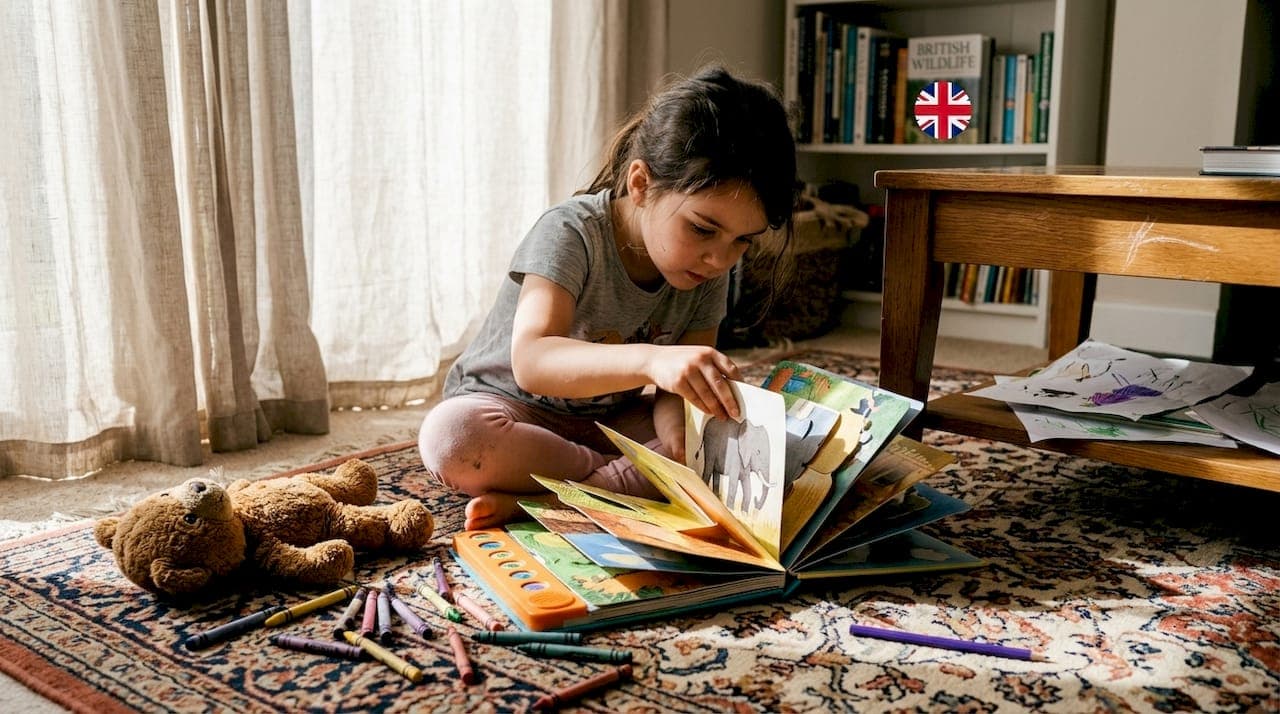
Getting a young child to sit still for a story can feel like a small miracle. Traditional picture books are wonderful, but many parents notice their preschooler's attention drifting after just a few pages. Interactive books for kids are designed to solve exactly that problem, and the research behind them is genuinely compelling. Interactive books enhance engagement and concentration for young children, making them more likely to stay involved with reading materials longer, especially for reluctant readers. This article breaks down what interactive books actually are, what the evidence says about their benefits, and how you can use them at home to build real learning skills.
Table of Contents
- What are interactive books for kids?
- How interactive books enhance engagement and learning
- Why language and comprehension skills thrive with interactive books
- Design matters: What features help (and what to avoid))
- When are interactive books most effective?
- Practical tips: How to get the most from interactive books
- Find the perfect interactive book for your child
- Frequently asked questions
Key Takeaways
| Point | Details |
|---|---|
| Boosts engagement | Interactive books keep kids interested and focused longer than traditional books. |
| Improves language skills | These books significantly improve vocabulary and comprehension, especially when parents participate. |
| Supports all learners | Interactive features make reading accessible and enjoyable for reluctant, bilingual, and diverse learners. |
| Choose wisely | Well-designed, story-aligned interactivity enhances learning while poorly designed features can distract. |
| Parent involvement matters | Co-reading interactive books maximizes benefits for your child's growth and enjoyment. |
What are interactive books for kids?
Interactive books are reading materials that require the child to do something beyond just listening or looking at pictures. That action can be physical or digital, and the variety is wider than most parents expect.
Physical interactive books include:
- Lift-the-flap books where children reveal hidden images or words
- Pop-up books with three-dimensional scenes that spring to life
- Touch-and-feel books with textured patches that match story elements
- Sound books with buttons that play audio tied to the narrative
Digital interactive books go further, offering clickable hotspots, animated characters, augmented reality (AR) overlays, and branching story choices. However, not all interactive features are equally useful. Story-aligned interactions support comprehension, while mini-games and unrelated hotspots often disrupt the reading flow according to multimedia learning theory.
The key difference from a traditional picture book is participation. A child who lifts a flap to find a hidden animal is actively predicting and confirming, which is a genuine cognitive act. Before you start shopping, reviewing an activity book checklist can help you identify which features actually serve your child's learning goals.
How interactive books enhance engagement and learning
With a foundation on what interactive books are, let's dig into what makes them so powerful for your child's engagement and cognitive development.
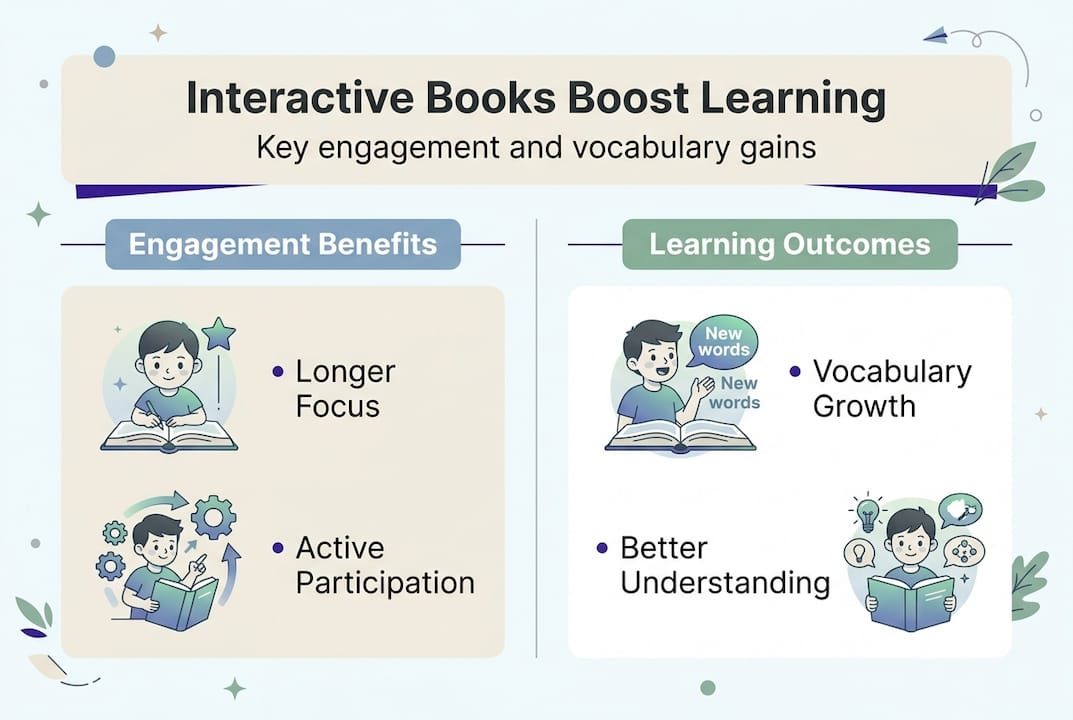
The most immediate benefit is attention. Physical interactions like turning a wheel or pressing a sound button give children a reason to stay focused on the page. Interactive books boost engagement and concentration, particularly for children who struggle to connect with standard books. That longer reading session translates directly into more exposure to vocabulary, story structure, and ideas.
Cognitive gains go beyond attention. When a child makes a choice in a branching story or predicts what is under a flap, they practice cause-and-effect reasoning and decision-making. These are foundational thinking skills that carry into math, science, and social situations. Interactive digital picture books enhance elementary students' creative thinking, including fluency, flexibility, and originality.
| Skill area | Benefit from interactive books | Evidence level |
|---|---|---|
| Attention and focus | Longer reading sessions, less distraction | Strong |
| Vocabulary | More word exposure and context | Strong |
| Creative thinking | Higher fluency, flexibility, originality | Moderate to strong |
| Cause-and-effect reasoning | Improved through story choices | Moderate |
| Reading motivation | Especially for reluctant readers | Strong |
"Interactive books make reading feel like play, which is exactly how young children learn best. When a child is having fun, their brain is wide open to new information."
You can also use interactive books to boost children's creativity by encouraging them to invent their own endings after the story is done. Pairing interactive books with strong reading habits for book enjoyment creates a routine that compounds over time.
Why language and comprehension skills thrive with interactive books
Understanding general learning gains leads us to an often-overlooked benefit: how interactive books supercharge language and comprehension skills.
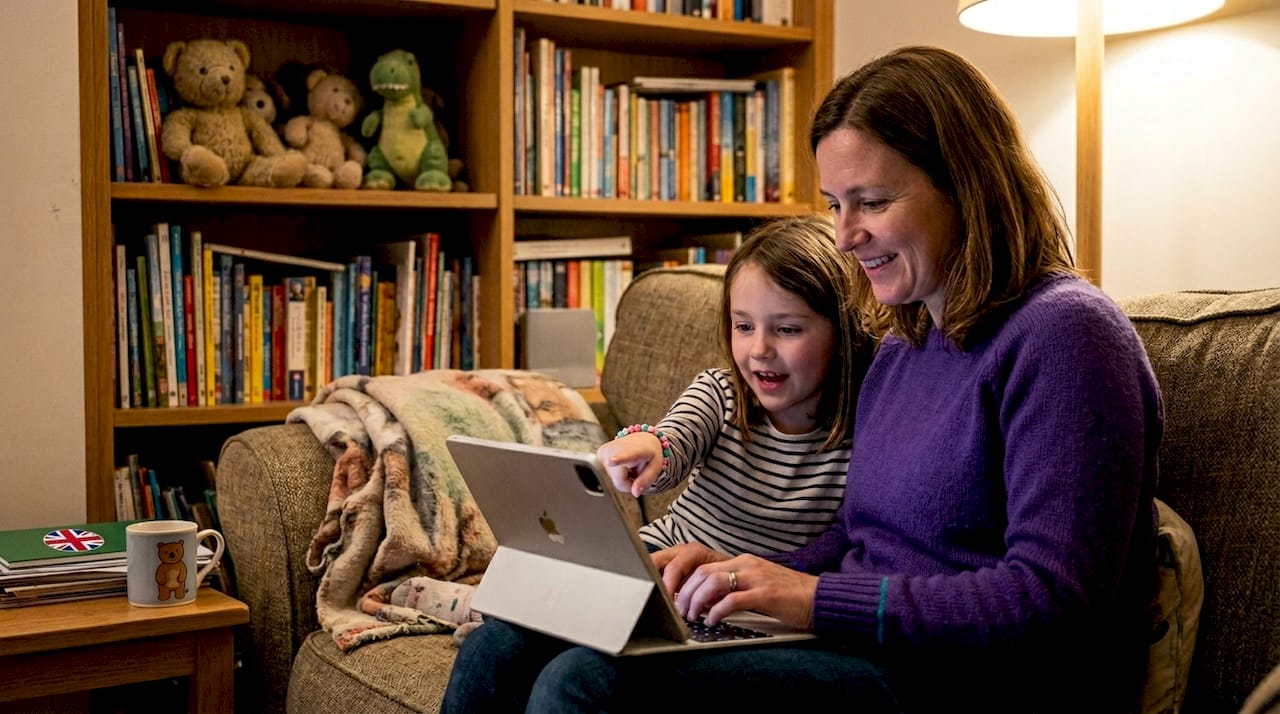
Dialogic reading (pronounced die-ah-LAH-jik) is a technique where the adult and child take turns talking about the book rather than just reading it straight through. Interactive books are built for this. Prompts, questions, and story choices naturally turn reading into a two-way conversation. Interactive books support language skills, vocabulary growth, and comprehension by encouraging discussions, questions, and active participation.
The numbers are striking. A recent meta-analysis found that digital interactive books boost vocabulary learning significantly over print, with an effect size of g+ = 0.660, and also provide a slight advantage for story comprehension (g+ = 0.242) in preschoolers. That vocabulary gap matters enormously because children who enter kindergarten with larger vocabularies consistently outperform peers throughout their school years.
Print vs. digital interactive books: A quick comparison
| Feature | Print interactive | Digital interactive |
|---|---|---|
| Vocabulary boost | Moderate | High (g+ = 0.660) |
| Comprehension gain | Moderate | Slight advantage |
| Screen time concern | None | Requires management |
| Parent involvement needed | Helpful | Essential |
| Durability | High | Depends on device |
Here is how to maximize language benefits during a reading session:
- Pause before revealing a flap or pressing a button and ask, "What do you think is hiding there?"
- After an interactive moment, ask your child to retell what just happened in their own words.
- Connect new vocabulary words to real objects or experiences your child already knows.
- Let your child lead the interaction while you narrate what they are doing.
- Revisit the same book multiple times. Repetition deepens word learning.
Pro Tip: Choose books where the interactive element directly relates to a new word. If the book introduces the word "camouflage," a touch-and-find feature that makes the child search for a hidden animal is far more effective than a random sound button.
For a broader look at how books support personal growth with educational books, the same principles of active engagement apply at every age.
Design matters: What features help (and what to avoid)
Knowing that not all interactive books are created equal, let's get practical: how do you select ones that actually help, not hinder, your child's growth?
Research is clear that design quality makes or breaks the experience. Poor design with distracting mini-games can actively hinder comprehension, even in books marketed as educational. The problem is that a flashy game pulls attention away from the story, and the child ends up remembering the game, not the words or plot.
Mini-games and arbitrary hotspots break immersion and hurt learning, while story-aligned interactions reinforce it. Here is what to look for and what to avoid:
Features that support learning:
- Interactions that mirror a character's action in the story
- Sound effects that match the narrative moment
- Questions embedded in the text that prompt prediction
- Vocabulary highlights that define words in context
- AR features that extend the story world without replacing it
Features to avoid:
- Mini-games that are unrelated to the plot
- Autoplay animations that remove the child's agency
- Excessive sound effects that compete with the narration
- Hotspots placed randomly just to add interactivity
Pro Tip: Before buying a digital interactive book, watch a short demo or preview. If the interactive moments feel like interruptions rather than natural parts of the story, put it back. The best books make you forget the technology is even there.
For seasonal options that combine fun and learning, holiday activity books are a great way to introduce interactive reading during special occasions.
When are interactive books most effective?
Beyond the mainstream, certain situations make interactive books an even better fit. Let's look at when and for whom they are most powerful.
Interactive books are highly effective for reluctant readers, bilingual learners, and economically disadvantaged children who benefit from inquiry-based interaction. The multi-sensory nature of these books lowers the barrier to entry for children who find traditional reading frustrating or boring.
AR storybooks with embedded interactive tasks significantly improve reading engagement, story retelling, and comprehension compared to multimedia-only versions. The key is that the tasks are embedded in the story, not bolted on as extras.
Situations where interactive books shine brightest:
- Reluctant readers who resist sitting down with a book
- Bilingual households where interactive prompts support both languages
- Children with shorter attention spans who need physical engagement to stay focused
- Shared reading sessions where a parent and child explore together
- Classroom or library settings where group interaction is possible
The AAP and Head Start endorse shared interactive reading from birth for brain development, bonding, and literacy. Co-viewing is especially vital for digital books to match the benefits of print. Understanding the broader book publishing cultural impact helps explain why access to quality books in any format matters so much for child development.
Practical tips: How to get the most from interactive books
Ready to put these insights into action? Here are practical ways you can ensure interactive books actually boost learning in your home.
Shared interactive reading endorsed by the AAP is most effective when parents are active participants, not just supervisors. Your presence changes the experience completely.
- Co-read every session. Sit beside your child rather than handing them the book. Your reactions and questions model how to engage with a story.
- Pause and predict. Before any interactive moment, ask what your child thinks will happen. This builds anticipation and comprehension at the same time.
- Talk about the story after. Spend two or three minutes discussing what happened, what surprised them, and what they would change.
- Rotate formats. Alternate between physical and digital interactive books to keep things fresh and develop different skills.
- Build a routine. A consistent reading habits guide approach, same time each day, signals to your child that reading is a valued part of life.
- Follow your child's lead. If they want to press the same button ten times, let them. Repetition is how young children consolidate learning.
The goal is not to turn every reading session into a lesson. Keep it playful, keep it warm, and the learning will follow naturally.
Find the perfect interactive book for your child
If you are inspired to introduce or expand interactive reading in your family, the right starting point matters. A well-chosen book can spark genuine excitement about reading that lasts for years.

At MunkterProducts, you will find a curated collection of handcrafted and carefully selected books designed to engage young minds at every stage. From tactile activity books for toddlers to richly illustrated educational titles for early elementary learners, every pick is chosen with real learning value in mind. Not sure where to begin? The activity book checklist is a great first step to matching the right book to your child's current interests and learning style. Postage is included, so getting started is as simple as finding the title that makes your child's eyes light up.
Frequently asked questions
What age range benefits most from interactive books?
Shared interactive reading from birth is endorsed by the AAP for brain development and literacy, but interactive books are especially powerful for preschool and early elementary children ages two through eight.
Are digital or print interactive books better for learning?
Both formats work well, but digital interactive books significantly boost vocabulary (g+ = 0.660) and slightly improve comprehension over print, particularly when a parent reads alongside the child.
Do interactive books help reluctant readers?
Yes. Interactive features boost engagement and motivation, making reading feel accessible and fun for children who typically resist sitting down with a traditional book.
How much parental involvement is needed with interactive books?
For digital books especially, parental co-reading is essential. Co-viewing is vital for digital formats to deliver the same developmental benefits as print, according to AAP and Head Start guidelines.