
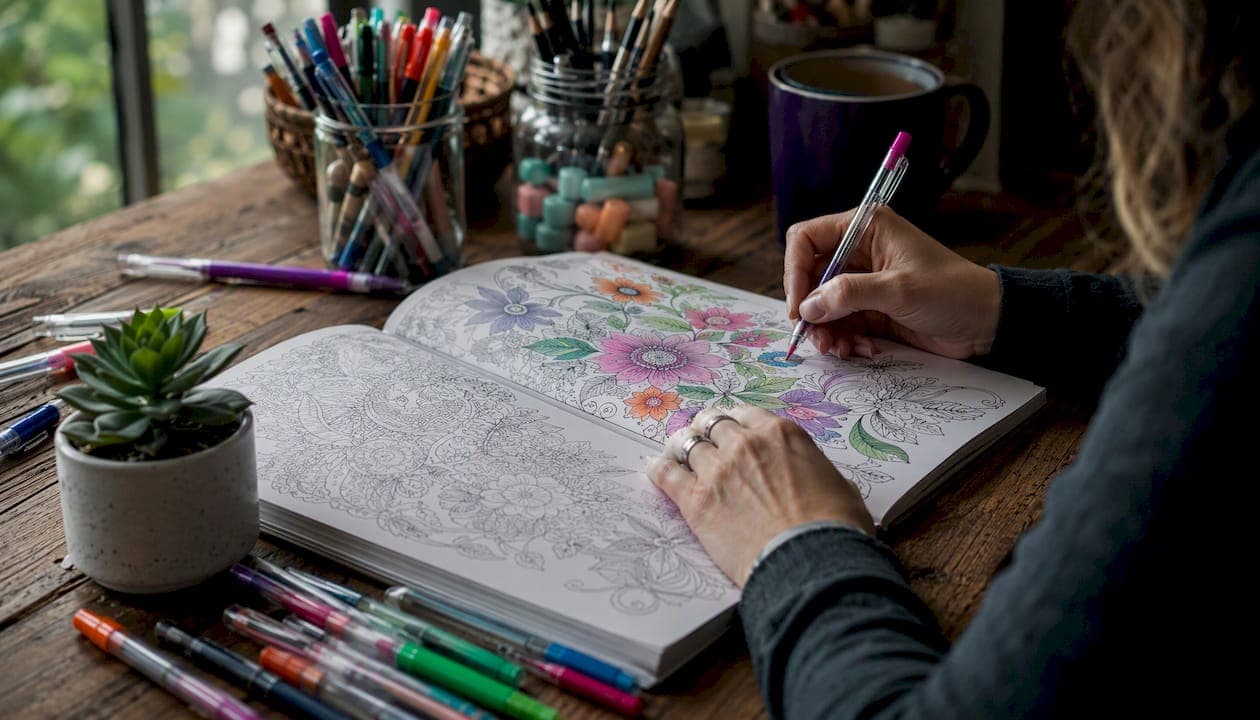
The best artistic coloring books for adult colorists right now are the MunkterProducts curated adult artistic coloring collection, Johanna Basford's Lost Ocean, Enchanted Forest, and Secret Garden, Kerby Rosanes's Animorphia, Millie Marotta's Tropical Wonderland / Wild Savannah, and Lacy Mucklow and Angela Porter's Color Me Calm. Each earns its place for a specific reason:
- MunkterProducts curated adult artistic coloring collection — quality-checked paper, single-sided pages, and sample previews available before you buy; the most reliable option for US buyers who want guaranteed paper weight and direct checkout
- Intricate line-art nature & mandala collection — very detailed flora, fauna, and mandala line art built for long, absorbing sessions and gallery-worthy finished pages
- Cozy/simple shapes collection — bold outlines and large color fields for quick, low-effort unwinding; no commitment to a two-hour session
- Fantasy & creature illustration collection — complex creature and fantasy scenes that reward patience with layered, richly textured results
- Art nouveau / vintage romance line-art collection — flowing, period-inspired decorative motifs for colorists who want displayable, elegant finished pages
- Lost Ocean (Johanna Basford) — intricate underwater line art; Basford's signature hand-drawn style, widely available at US retailers
- Enchanted Forest (Johanna Basford) — forest and fairy-tale imagery; one of the most consistently rated adult coloring books across community lists
- Secret Garden (Johanna Basford) — the book that restarted the adult coloring wave; dense botanical detail, treasure-hunt format
- Animorphia (Kerby Rosanes) — animals morphing into other animals; highly imaginative, extremely detailed, best for long creative sessions
- Tropical Wonderland / Wild Savannah (Millie Marotta) — delicate, nature-forward line art with a lighter, airier feel than Basford's work
- Color Me Calm (Lacy Mucklow & Angela Porter) — structured, therapy-informed designs explicitly built for anxiety relief; medium complexity
Key Takeaways
The single most important buying decision for artistic coloring books is paper quality combined with single-sided printing — everything else follows from matching complexity to your actual session length.
| Point | Details |
|---|---|
| Paper and printing matter most | Single-sided, quality-checked paper protects finished work and handles most media without bleed-through. |
| Match complexity to session length | 20–30 minutes suits medium-complexity pages; intricate designs like Basford or Rosanes reward 60+ minute sessions. |
| Mandala and structured patterns reduce anxiety | Research shows repetitive, symmetrical designs lower cortisol and amygdala activity regardless of artistic skill. |
| Always preview before buying | Check at least three interior pages for line thickness, white space, and colorable area size before committing. |
| MunkterProducts curated collection | Quality-checked GSM, single-sided options, and sample previews make it the most reliable curated choice for US buyers. |
Table of Contents
- What are the top artistic coloring books, and how do they compare?
- How to choose an artistic coloring book: 6 criteria that actually matter
- Why artistic coloring works: what the research actually shows
- What I actually look for when curating coloring books
- The MunkterProducts curated collection is worth a closer look
- Sources
What are the top artistic coloring books, and how do they compare?
Picks were selected on four signals: paper GSM and bleed resistance, single-sided printing, illustrator reputation, and the availability of sample or preview pages. Every title below is available through US retail or direct online checkout.
Price range: Most traditional bound titles run $12–$20 on Amazon. The MunkterProducts curated collection is available with direct checkout and US shipping included.
Basford's three titles (Lost Ocean, Enchanted Forest, Secret Garden) share a hand-drawn, pen-and-ink aesthetic that photographs beautifully once colored. Rosanes's Animorphia is a step up in complexity: the morphing-animal concept means every page tells a small visual story, which keeps long sessions from feeling repetitive. Marotta's work (Tropical Wonderland, Wild Savannah) features lighter line weight, which suits watercolor pencils and brush pens better than heavy marker work. Color Me Calm sits in its own lane — it was designed with occupational therapy principles in mind, making it the most deliberate choice for stress management rather than artistic display.
How to choose an artistic coloring book: 6 criteria that actually matter
Matching a book to your goals takes about 60 seconds if you know what to look for. Here are the six things worth checking before you commit:
- Paper GSM and bleed resistance. Heavier paper (90 GSM and above) handles wet media like brush pens and watercolor without bleeding through. Lighter paper works fine for colored pencils. Check the product listing or publisher's page for GSM; if it isn't listed, that's a signal the paper is standard book stock. Printable pages let you choose your own paper weight, which is worth knowing if you use wet media regularly.
- Single-sided vs double-sided printing. Double-sided pages mean bleed-through ruins the page underneath. Single-sided printing, like the options in the MunkterProducts curated collection, protects your work and makes finished pages easy to frame or display.
- Image complexity and time per page. A very intricate page (Rosanes, Basford's Secret Garden) can take several hours. A cozy, simple-shapes page takes 15–20 minutes. Neither is better — they serve different moods. Psychology research separates these clearly: simple pages favor quick relaxation, while intricate designs drive deeper absorption and flow.
- Theme and illustrative style. Mandalas and symmetrical patterns are the most studied for anxiety relief. Nature and botanical themes tend to feel calming without requiring the same geometric precision. Fantasy and creature art rewards colorists who want narrative engagement over pure relaxation.
- Binding and page removal. Spiral-bound books lie flat, which matters for long sessions. Perfect-bound books are harder to open fully and can crack the spine. If you want to frame finished pages, check whether the binding allows clean removal or whether you'd need to cut pages out.
- Sample pages and preview availability. Never buy a coloring book without seeing at least three interior pages. Amazon's "Look Inside" feature, publisher websites, and the MunkterProducts preview system all give you enough to judge line thickness, white space, and the size of colorable areas — the three visual cues that predict whether a book suits your session style.
Pro Tip: When previewing a page online, zoom in on a small section and ask: "Could I color this area in 10 minutes?" If yes, the book suits quick sessions. If the detail would take 30 minutes just for that patch, you're looking at a long-session book. Match that honestly to how you actually sit down to color.
Why artistic coloring works: what the research actually shows
Research published on PubMed confirms that structured coloring with repetitive patterns reduces anxiety by lowering amygdala activity, slowing heart rate, and reducing cortisol levels. Critically, these effects appear regardless of prior artistic experience — the benefit comes from the rhythmic, repetitive act itself, not from any skill the colorist brings.
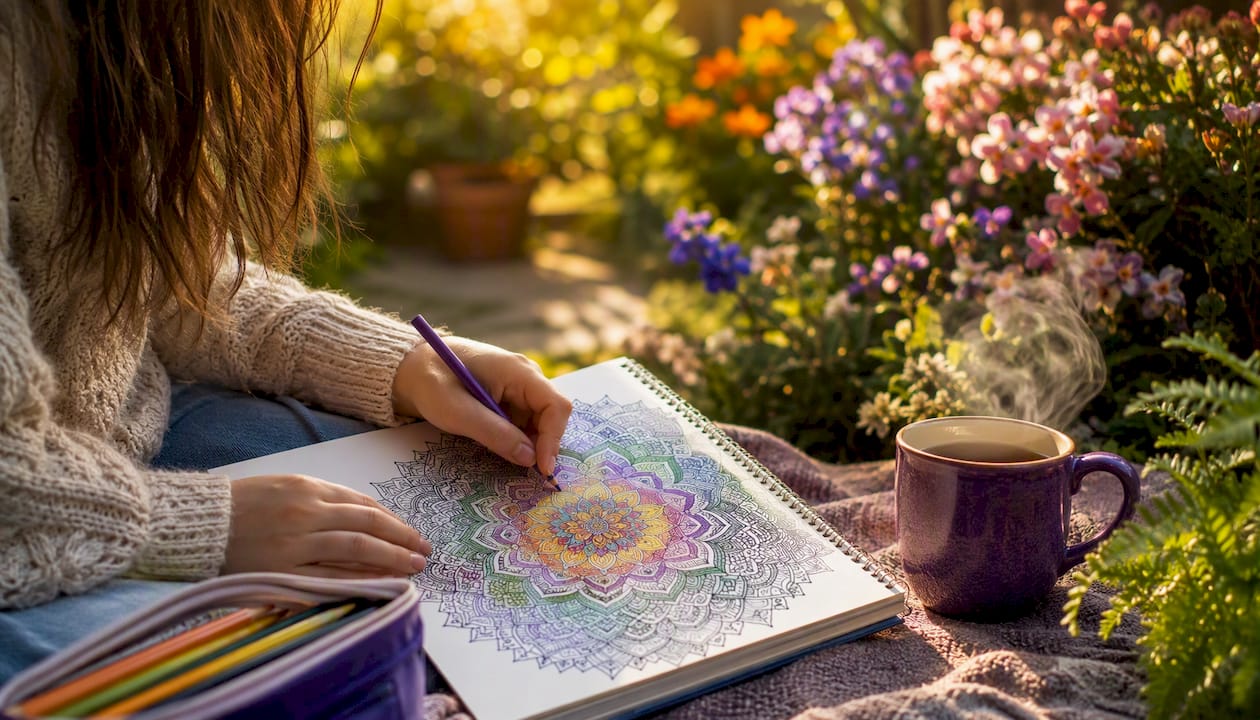
Practitioners working with coloring sessions lasting an appropriate amount of time report visible relaxation effects even in first-time users, particularly when the phone is off and the session is treated as a deliberate break. That time window maps well to mandala and medium-complexity pages, which are long enough to enter a focused state but short enough to finish something satisfying.
The neuroscience angle is worth taking seriously: mandala and symmetry-based designs produce better anxiety reduction than unstructured drawing, because the defined boundaries reduce decision fatigue while still engaging the visual cortex. That's why Color Me Calm and the intricate mandala collections consistently appear at the top of community-rated lists for stress relief specifically.
The adult coloring resurgence isn't nostalgia. It's a behavioral response to cognitive overload — coloring creates a low-demand ritual that restores focus without requiring emotional labor. That also explains why coloring works as a parallel social activity: two people can color together quietly, without conversation, and both leave the session calmer. For matching complexity to attention span, the practical guidance is straightforward:
- 20–30 minute sessions, medium complexity: best for anxiety relief and daily wind-down
- 60+ minute sessions, high complexity: best for deep focus, creative absorption, and flow states
- 10–15 minute sessions, simple/cozy designs: best for quick comfort between tasks or before sleep
- Mandala and symmetrical patterns: the most studied format for measurable stress reduction
What I actually look for when curating coloring books
Paper feel is the first filter. A book that bleeds through on the second page with a standard colored pencil isn't worth recommending regardless of how beautiful the cover art looks. After that, it's the line quality — whether the illustrator's linework holds up at the scale of a printed page, whether there's enough white space to breathe, and whether the design rewards the colorist rather than just the illustrator.
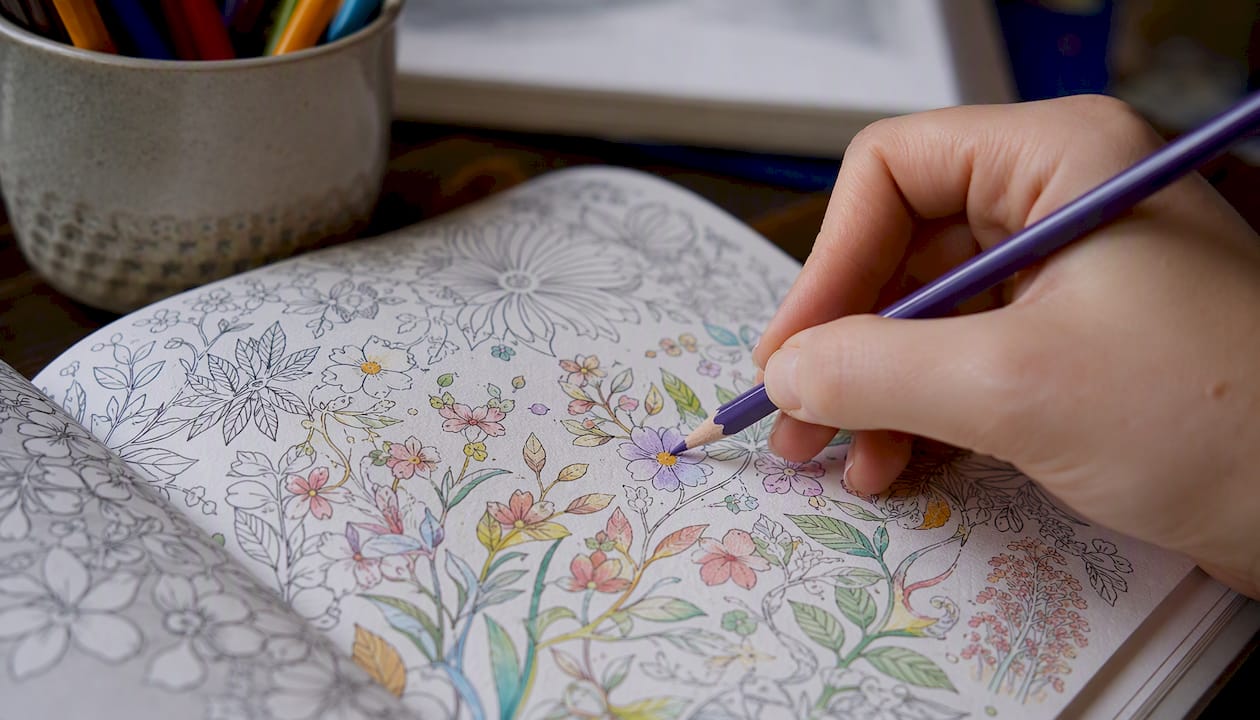
The one-page test is the most useful thing I can suggest: before committing to a full book, find a sample page online or in-store and color one small section completely. Not a sketch — actually finish it. You'll know within five minutes whether the complexity matches your attention span and whether the paper handles your preferred medium. That single test has saved more disappointing purchases than any review.
The MunkterProducts curated collection is worth a closer look
If you've spent time reading reviews and comparing paper weights only to end up more uncertain than when you started, the MunkterProducts curated adult artistic coloring books collection cuts through that. Each title in the collection has been checked for paper GSM, single-sided printing, and artistic quality before it's listed — so you're not gambling on a product description that omits the GSM or shows only the cover.

The collection covers multiple artistic themes, from intricate nature and mandala line art to cozy comfort designs and art nouveau styles, with sample previews available so you can assess the linework before buying. US shipping is included at checkout, and the direct purchase process means no third-party marketplace guesswork. Browse the Munkterproducts and use the preview pages to run your own one-page test before you order.
Sources
These are the primary sources used in this article, each worth visiting directly if you want to verify claims, see sample art, or read the underlying research:
- PubMed
- Best Adult Coloring Books
- 10 Benefits of Coloring pages for Adults: What Science Says
- The Psychology Behind Why Adults Love Coloring
- The Science of Art Therapy for Stress: Adult Coloring Pages
- The Return of the Coloring Book Isn’t Nostalgia. It’s Neuroscience.
On the Munkterproducts blog: Best Adult Coloring Themes for Relaxation and Confidence pairs well with the theme section above, and Adult Coloring for Stress Relief: What the Science Says goes deeper on the research. For readers new to the hobby, Step-by-Step Adult Coloring: A Beginner's Guide covers tools, paper testing, and pacing. For color psychology and calming palette choices, Calming Colors for Kids: Best Hues for Peaceful Rooms from ToylandEU offers a useful companion perspective on how hue selection affects mood during a session.