
TL;DR:
- Adult coloring calms the brain by redirecting attention from anxious thoughts to a focused, low-stakes task.
- Regular coloring activates the parasympathetic nervous system, reducing stress hormones and improving mood.
How coloring actually calms your brain
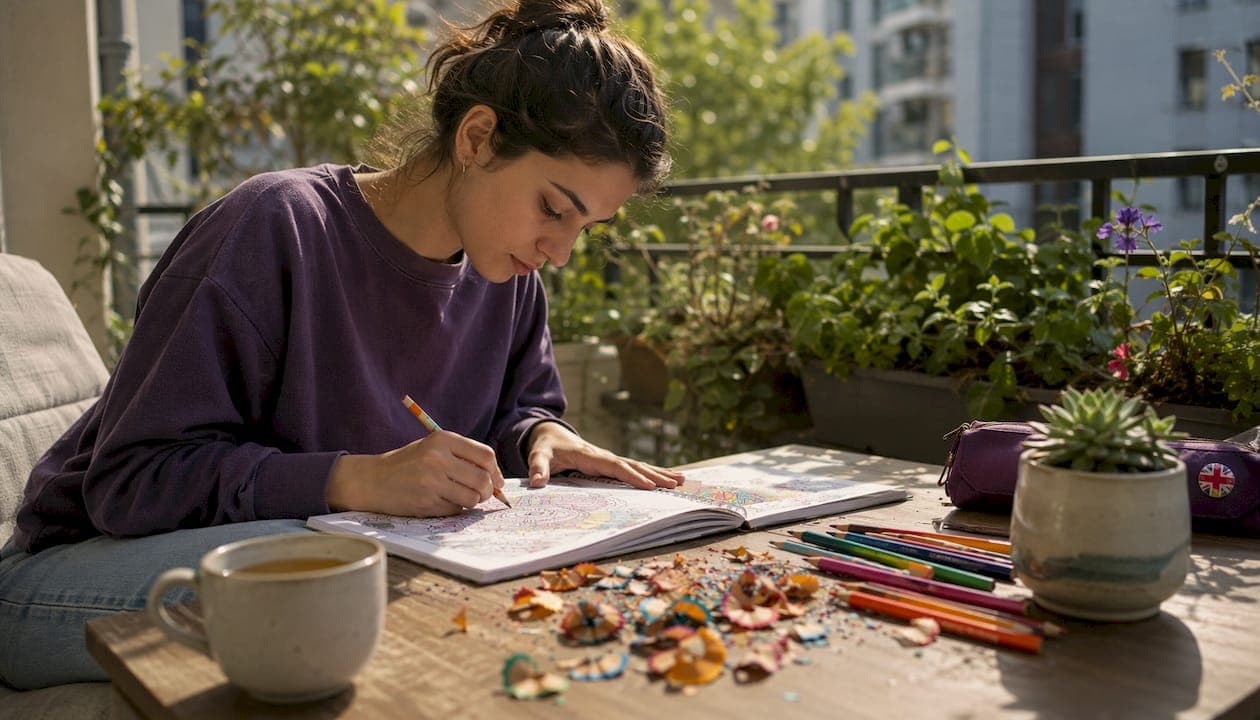
Adult coloring for stress relief works, and the science behind it is more interesting than most people expect. Coloring redirects your attention from anxious, looping thoughts onto a focused, low-stakes task, and that shift alone is enough to quiet the nervous system. Controlled studies show that coloring intricate designs decreases both anxiety scores and heart rate in measurable ways. It is not a placebo, and it is not just nostalgia.
Here is what coloring does for you in practice:
- Pulls attention away from ruminative thinking and onto a concrete visual task
- Activates the parasympathetic nervous system, slowing heart rate and breathing
- Reduces cortisol, the body's primary stress hormone
- Creates a low-pressure creative outlet where mistakes carry no real consequence
- Produces mood-lifting dopamine as part of the body's rest-and-digest response
- Delivers measurable stress changes within as little as 15 minutes of a session
The barrier to entry is almost zero. You need a book and something to color with. That accessibility is a big part of why coloring has become a genuine tool in adult wellness routines, not just a trend.
Why your brain responds so well to coloring
The neurological explanation comes down to where your attention goes. When you color, your brain shifts activity away from the default mode network, the region associated with mind-wandering, self-criticism, and rumination. Focused coloring occupies just enough of your cognitive bandwidth to interrupt that cycle without overwhelming you.
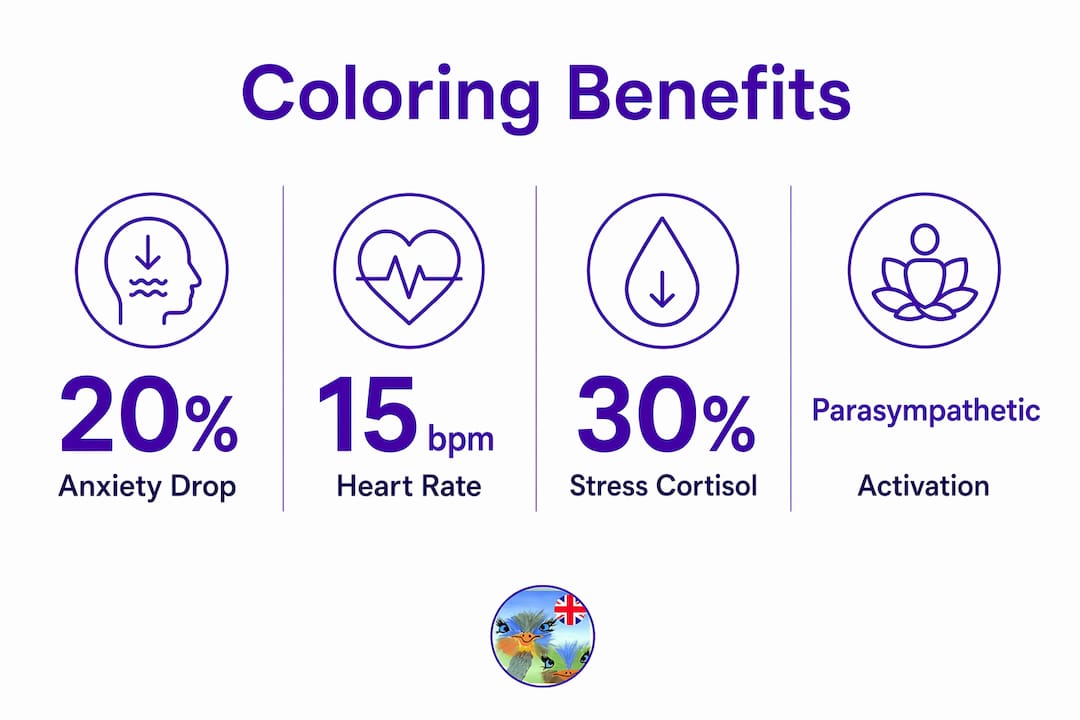
At the physiological level, coloring increases respiratory sinus arrhythmia, a marker of parasympathetic nervous system activation that signals genuine calm, not just distraction. The repetitive hand-and-eye rhythm of filling in a design supports neurological calm in a way that scrolling through a phone simply cannot replicate.
| Mechanism | What happens in the body |
|---|---|
| Attention redirection | Brain exits default mode network; rumination decreases |
| Parasympathetic activation | Heart rate slows; breathing deepens |
| Cortisol reduction | Stress hormone levels drop during and after sessions |
| Dopamine release | Mood lifts as the brain rewards focused, completing activity |
| Amygdala calming | Threat-response center becomes less reactive |
Mandala patterns specifically show up repeatedly in peer-reviewed research. Structured mandalas reduce anxiety more than free drawing or coloring unstructured forms, likely because the circular, repetitive geometry guides attention without demanding creative decisions.
What consistent coloring actually does for your mental health
The benefits extend well beyond a single calm session. Regular coloring practice produces changes that compound over time, touching sleep, mood, and emotional regulation.
- Reduced anxiety: Coloring lowers cortisol and transitions the nervous system into a rest-and-digest state, with physiological effects comparable to breathing exercises.
- Better focus: Short coloring sessions sharpen present-moment attention, which carries over into other tasks.
- Improved mood: Dopamine release during coloring creates a mild but real lift that does not require caffeine or screens.
- Emotional regulation: The low-stakes nature of coloring gives the nervous system practice at staying calm under mild engagement, which builds tolerance for stress over time.
- Sleep support: Coloring before bed, particularly with cool-toned palettes, can serve as a wind-down ritual that signals the brain to shift out of high-alert mode.
Research published in a generalized anxiety study found that coloring therapy produced measurable reductions in anxiety among adult patients. The benefits of adult activity books for relaxation go beyond simple distraction. They engage the brain in a way that builds genuine emotional resilience when practiced consistently.
Practical techniques for getting the most out of coloring
Getting results from coloring is less about artistic skill and more about how you set up the practice. A few deliberate choices make a real difference.
Choosing your materials
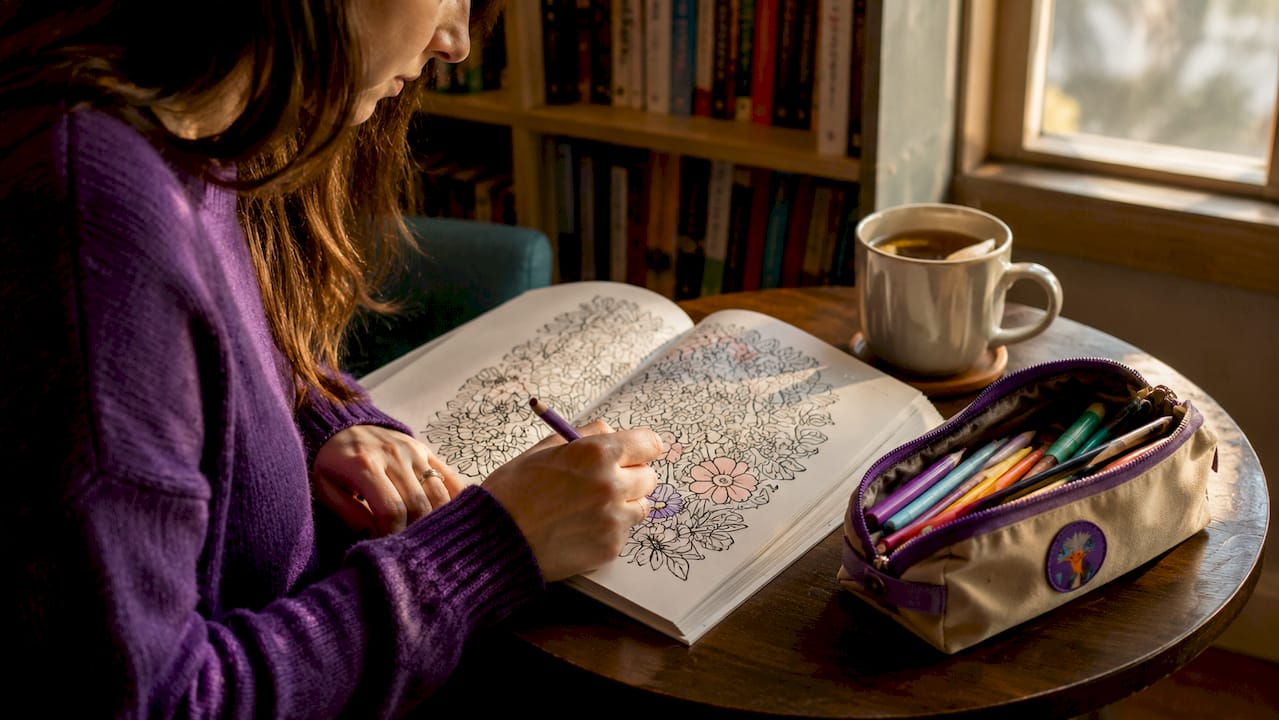
Colored pencils offer the most control and are forgiving for beginners. They blend well and allow you to work slowly, which supports a meditative pace. Gel pens produce vivid, satisfying lines and work especially well for intricate patterns. Markers cover large areas quickly, which suits people who find slow, detailed work frustrating rather than calming.
Selecting designs that actually relax you
Mandalas, medium-complexity mosaics, and open landscape patterns consistently outperform highly intricate micro-detail designs for stress relief. The goal is absorption, not challenge. Tiny, densely packed patterns can tip from calming into frustrating, which defeats the purpose entirely. For coloring themes that support relaxation, look for designs with open areas, flowing lines, and repeating geometric or natural motifs.
Session length and frequency
- Start with brief sessions. Research shows mood and stress changes can appear during a session.
- Aim for daily practice rather than long occasional sessions. Consistency anchors the habit and produces better long-term results than sporadic marathon coloring.
- Pick a fixed time, such as after dinner or before bed, so the activity becomes automatic rather than something you have to decide to do.
- Gradually extend sessions if you find yourself naturally wanting more time.
Pro Tip: Resist the urge to judge your coloring. The moment you start evaluating whether it looks "good," you have shifted from relaxation mode into performance mode. The whole point is that there are no stakes here.
What experts say about coloring as a wellness tool
Dr. Scott M. Bea of the Cleveland Clinic has been one of the clearest voices on why coloring works for adults specifically. His framing centers on attention: coloring gives the mind a structured place to rest without requiring the kind of effortful focus that work or problem-solving demands.
Kaimal's observation points to something the mindfulness research confirms: coloring is a "doing" mindfulness activity, meaning it achieves a meditative state through action rather than stillness. For adults who find traditional seated meditation difficult, this is a practical alternative that does not require training or a quiet room.
The analog quality of coloring also matters more than it might seem. Tactile engagement with physical materials signals safety to the nervous system in a way that screen-based activities do not. Pencil on paper, the slight texture of the page, the sound of coloring: these sensory details collectively communicate "you are not in danger" to a brain that has spent the day in digital overdrive.
Here is how practitioners typically recommend building coloring into a wellness routine:
- Pair coloring with an existing daily habit, such as morning coffee or an evening wind-down, to reduce friction.
- Keep your coloring materials visible and accessible rather than stored away.
- Use it alongside other relaxation methods like light stretching or calming music.
- Treat it as a complement to therapy or medication if you manage clinical anxiety, not a replacement.
- Explore coloring book journaling as a way to combine creative expression with self-reflection for deeper emotional processing.
Munkterproducts offers adult coloring books designed specifically with themes of confidence and relaxation, giving you a starting point that is already calibrated for stress relief rather than artistic challenge.
How to build coloring into your daily stress-management routine
The most common reason people stop coloring is not that it stops working. It is that they never built a real habit around it. A few structural choices fix that.

Anchor your coloring time to something you already do every day. Brewing tea, waiting for dinner to cook, or the 20 minutes before bed are all natural attachment points. When coloring follows an existing behavior automatically, you stop relying on motivation to start. Motivation is unreliable; routine is not.
Keep your setup simple. A single coloring book and a small set of pencils or pens on a side table or nightstand removes the friction of getting started. The more steps between you and the activity, the less likely you are to do it on a hard day, which is exactly when you need it most.
Pair the practice with a sensory cue that reinforces calm. A meditation corner at home does not need to be elaborate: a comfortable chair, soft lighting, and a small dedicated space tell your brain that this time is different from the rest of the day. Cool colors like blue and green tend to feel soothing to most people, though personal preference matters more than any general rule.
One important caveat: coloring does not work for everyone equally. People who have no positive associations with coloring from childhood, or who find the activity boring rather than absorbing, may not experience the same stress relief. If coloring feels like a chore, that friction itself creates tension. Try a different design style or medium before concluding it is not for you.
Key Takeaways
Adult coloring reduces stress by redirecting attention away from anxious thoughts and activating the parasympathetic nervous system, with measurable effects appearing within 15 minutes of a session.
| Point | Details |
|---|---|
| Science-backed stress relief | Coloring lowers heart rate, reduces cortisol, and decreases anxiety in controlled studies. |
| Mandalas work best | Structured, repetitive patterns like mandalas reduce anxiety more than free drawing or unstructured designs. |
| A short session is enough to produce mood and stress changes. | |
| Consistency beats duration | Daily short sessions produce better long-term results than occasional long ones. |
| Not universal | Coloring works best for people who find it genuinely absorbing; try different styles if it feels like effort. |
Coloring is not a trend. It is a tool.
The wellness industry loves a new thing, and adult coloring had its moment as a trend. That framing did it a disservice. What the research actually shows is a low-cost, low-barrier activity that produces real neurological and psychological effects, backed by peer-reviewed studies and endorsed by clinical psychologists at institutions like the Cleveland Clinic and researchers published in indexed medical journals.
What I find most compelling about coloring is not the science itself, but what the science reveals about how the mind works. We do not need elaborate interventions to calm a stressed brain. We need something that occupies attention without demanding performance. Coloring does exactly that, and it does it with a pencil and a page.
The mistake most people make is treating coloring as something they will do when they have time. That framing guarantees it never happens. The people who get consistent benefit from it treat it the way they treat brushing their teeth: a non-negotiable five to fifteen minutes that happens regardless of how busy the day was.
Pair it with other practices, whether that is journaling, light movement, or simply stepping away from screens. Coloring is not a complete wellness routine on its own, but as one piece of a deliberate self-care practice, it earns its place. The creative workflow matters less than the commitment to showing up for it regularly.