
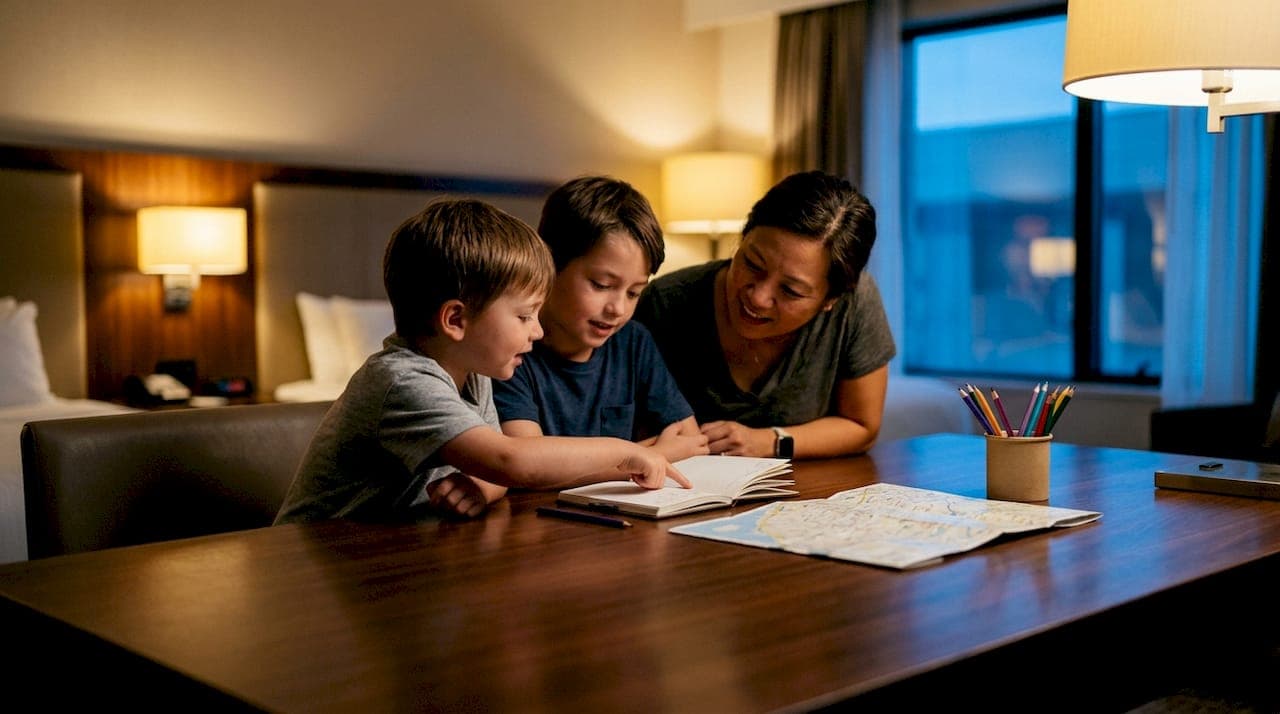
Choose a guided, child-friendly travel journal with prompts, blank space, and a pocket for keepsakes. It works better than a blank notebook because prompts remove the "what do I write?" freeze that stalls most kids after day two. This format suits families with kids roughly ages four to twelve, and it's exactly what Munkterproducts builds into its own travel journal line, making it a direct, ready-to-buy answer instead of a DIY project.
TL;DR:
- Prompted journals are most effective for children aged four to eight, as they increase the likelihood of completing entries by guiding their writing.
- A sturdy, lay-flat binding and a durable cover are essential to prevent the journal from falling apart during travel activities.
- Including a keepsake pocket for tickets and mementos significantly enhances the journal’s long-term value as a family memory box.
- Limiting journaling sessions to five to ten minutes daily, attached to existing routines, encourages consistent participation without fatigue.
- Combining physical journals with digital photos creates a hybrid system that preserves memories and suits families with older kids or tech preferences.
Table of Contents
- Which Travel Journal Format Works Best for Your Family?
- What Should You Look for When Choosing a Journal?
- How Do You Actually Use a Travel Journal on a Trip?
- How Do You Keep Kids Journaling Consistently on a Trip?
- How Do You Involve Kids Who Aren't Writers Yet?
- Should You Try a Digital or Hybrid Travel Journal?
- How Do You Personalize a Family Travel Journal?
- How Long Should a Family Journal Habit Actually Last?
- Why Travel Journals Matter More Than People Realize
- Get the Travel Journal Built for Real Family Trips
- Sources
- FAQ
Which Travel Journal Format Works Best for Your Family?
Three formats dominate the market, and each solves a different problem.
Prompted journals give kids specific fill-in-the-blank pages: "Today I saw..." or "My favorite food was..." These work because prompted pages with fill-the-blank sections make a child far more likely to actually finish an entry instead of staring at a blank page and giving up. They fit preschoolers and early readers best, since the structure does the thinking for them.
Repeated-template journals use the same layout every day (a spot for the date, weather, a drawing, three sentences). Kids learn the rhythm fast, which builds a habit, but the sameness can bore an eight-year-old who wants more room to write.
Blank notebooks offer total freedom and appeal to older kids and teens who already write comfortably. The catch: a mix of guided prompts and open space is consistently viewed as less intimidating than pure blank pages, and a totally blank book often just... doesn't get used.
Family keepsake journals are built for group use rather than one child. Parents and kids take turns, and the book doubles as a scrapbook with room for photos and tickets.
- Prompted: Best for ages 4 to 8; light and portable; wears well since pages are short.
- Repeated-template: Best for ages 6 to 10; middling durability depending on binding; easy to pack in a backpack.
- Blank notebook: Best for ages 10 and up; durability depends entirely on the cover; heavier if it's hardbound.
- Family keepsake: Best for mixed-age groups; usually the bulkiest option, but the sturdiest cover for repeated handling.
Pro Tip: If you have kids spanning a wide age range, skip trying to find one perfect format. Buy a family keepsake journal for shared entries and hand a small prompted notebook to your youngest for solo scribbles.
What Should You Look for When Choosing a Journal?
A good travel journal for families earns its spot in the suitcase by meeting five practical tests. Here's the checklist to run through before you buy or pack:
- Match the format to writing level. A nonreader needs pictures and stickers, not lines to fill. A ten-year-old wants more open space and fewer baby prompts.
- Check the binding and cover. Lay-flat binding matters more than people expect. A journal that won't stay open while your kid draws in a moving car gets abandoned fast. Look for a stiff or laminated cover that survives a spilled juice box.
- Look at the prompts themselves, not just their existence. Prompts like "draw the weirdest thing you ate today" beat generic ones like "describe your day," because specific questions produce specific, memorable answers.
- Prioritize a keepsake pocket. A pocket or envelope for tickets, stickers, and small mementos turns a notebook into an actual memory box, which is often the single feature that makes parents happiest a year later.
- Set a budget around durability, not size. A slightly pricier journal with archival paper and a sewn binding will survive a two-week road trip. A flimsy dollar-store notebook usually won't survive the first spilled water bottle.
Size matters too. A journal that fits in a backpack side pocket gets used far more than one that stays buried in a suitcase.
How Do You Actually Use a Travel Journal on a Trip?
The journal only works if it fits into your trip's actual rhythm, not some imagined ideal version of family bonding.
Start with a five-minute end-of-day recap. Right before dinner or bedtime, ask each kid one question: best moment, weirdest thing seen, funniest quote from a sibling. Short, structured routines like this hold up well on long drives without turning into a chore anyone dreads.
For games, try a scavenger hunt page (find something red, something older than grandma, an animal) or a "taste tracker" where kids rate every new food on a scale of one to five. Both give restless kids something to do at a restaurant table.
For kids who can't write yet, scribe for them. Ask what they want to say, write it in their own words, and let them add the drawing or sticker. This keeps the entry authentic instead of turning it into your journal about their trip.
- Store ticket stubs and small souvenirs directly in the journal's pocket, not loose in a bag where they'll get crushed.
- Tape or glue photos in during a hotel downtime rather than waiting until you're home. You'll never actually do it once you're home.
- Date every entry, even a one-line one. Dates turn a scrapbook into a real timeline later.
Pro Tip: Keep every session under ten minutes. The goal is a habit, not a homework assignment. A journal that feels like punishment gets left in the car by day three.
How Do You Keep Kids Journaling Consistently on a Trip?
Consistency beats ambition. A family that fills in three lines every single day ends up with a richer keepsake than one that plans an elaborate hour-long session and manages it twice.
Anchor journaling to something that already happens daily, like the drive back to the hotel or the wait for food at dinner. Attaching it to an existing routine means you don't have to remember to schedule it separately.
Keep a small reward loop running. A sticker for every completed page, or letting the journal-keeper pick the next day's snack, gives younger kids a reason to stick with it past day two, when the novelty wears off.
Let kids see the payoff early. Read yesterday's entry out loud before writing today's. Hearing their own words repeated back is often what convinces a reluctant seven-year-old that this thing is actually fun, not homework.
Don't punish skipped days. If day four gets missed because everyone's exhausted, pick it back up on day five without a lecture. A trip journal with a couple of gaps is still a real keepsake. A trip journal abandoned entirely because a kid felt guilty about missing a day is not.
Rotate who "runs" the session. If one parent always asks the questions, it starts to feel like an assignment from that parent specifically. Swap the job around the table.
How Do You Involve Kids Who Aren't Writers Yet?
A family journal fails fast if it only works for the kid who already writes fluently. The fix is giving every family member, including toddlers and non-readers, a real job in the process.
Younger kids can draw instead of write. A blank corner or full page for a drawing of "the best thing today" gives a four-year-old the same sense of contribution as a paragraph from their older sibling.
An adult can scribe for a child who can't write yet, asking a simple question and transcribing the answer word for word. This keeps the entry in the kid's actual voice rather than a parent's polished summary.
Stickers and stamps work for kids who find writing frustrating. Rate-the-day sticker charts, weather stamps, or a sticker for every new food tried to give a non-writer a way to mark the day without a pen in hand.
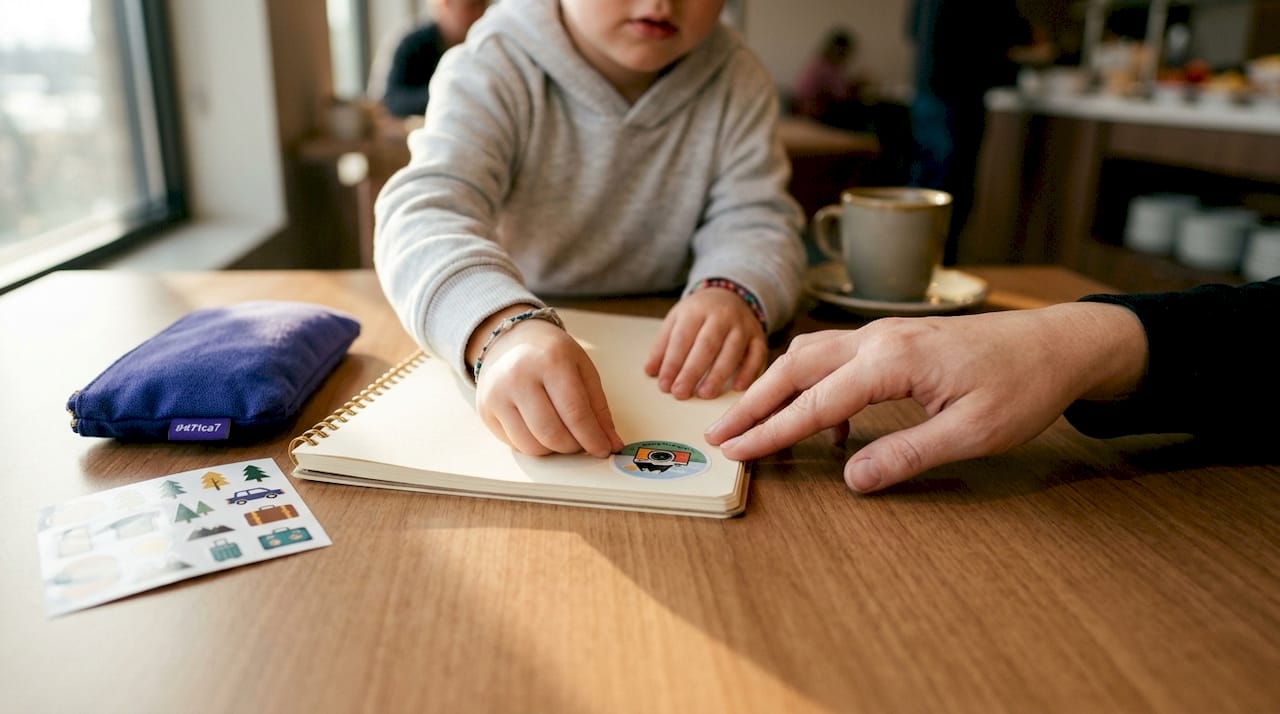
Give teenagers an editorial role instead of a participation one. Ask an older kid to interview a younger sibling for the journal, or to pick which photo goes on which page. That reframes journaling as a job with some authority attached, not a babyish activity they've outgrown.
Even a parent who "doesn't really journal" can contribute one line: what they were most grateful for that day. A shared journal that includes every voice in the family, not just the kids', becomes a genuinely different kind of keepsake.
Should You Try a Digital or Hybrid Travel Journal?
Physical journals still win for younger kids because paper doesn't run out of battery and can't get locked behind a forgotten passcode. But digital and hybrid approaches solve real problems, especially for photo-heavy families or teens who'd rather type than write.
A hybrid approach works well: keep the physical journal for daily entries, drawings, and mementos, and use a phone to snap photos you'll print or paste in later. This avoids the trap of a "digital scrapbook" that never actually gets assembled once you're home.
For teenagers, a simple voice memo or notes app can capture a quick daily thought when a notebook feels too juvenile, and you can transcribe highlights into the family journal later as a joint activity.
The risk with fully digital journals is momentum. Photos pile up in a camera roll and never turn into anything a kid can hold. A physical journal for families, especially one with a keepsake pocket for tickets and printed photos, tends to get revisited on a rainy afternoon years later in a way a phone folder rarely does.
If your family already leans digital, use it as a feeder system: photograph everything, then spend fifteen minutes twice a week transferring the best moments into the paper journal by hand.
How Do You Personalize a Family Travel Journal?
A generic journal gets used. A personalized one gets treasured. Small customizations turn a store-bought book into something that feels built for this specific trip.
Write the destination and dates on the cover before you leave, either handwritten or with letter stickers. This turns an anonymous notebook into "Our Italy Trip 2026" before a single page gets filled in.
Match prompts to your family's actual interests. A food-obsessed family can add a "rate this meal" page to every stop. A family of hikers can add a spot to log trail names and mileage. You don't need a specialized journal for every theme; a few extra lines added by hand does the job.
Let each kid decorate their own section or claim a color of pen as "theirs" throughout the trip. This small ownership move makes reluctant writers noticeably more willing to pick up the book.
Theme entries around trip milestones rather than just calendar days: first flight, first time trying a new food, the day it rained the whole time. These become the entries families reread most, more than the routine "we went to the museum" pages.
If you want a running list of prompt ideas to adapt for your family's interests, a resource like this list of journaling prompts gives you a starting bank to pull from rather than inventing new questions every night of the trip.
How Long Should a Family Journal Habit Actually Last?
Match your expectations to the actual length and shape of the trip, not to some idealized version of daily journaling.
For a long weekend, aim for one entry total, done together on the drive home while memories are still fresh. Trying to journal every single day of a three-day trip usually backfires; there's barely time to live the trip, let alone write about it constantly.
For a one to two week vacation, three to four entries a week is realistic and sustainable. Daily journaling sounds nice in theory but collapses under trip fatigue by day five for most families.
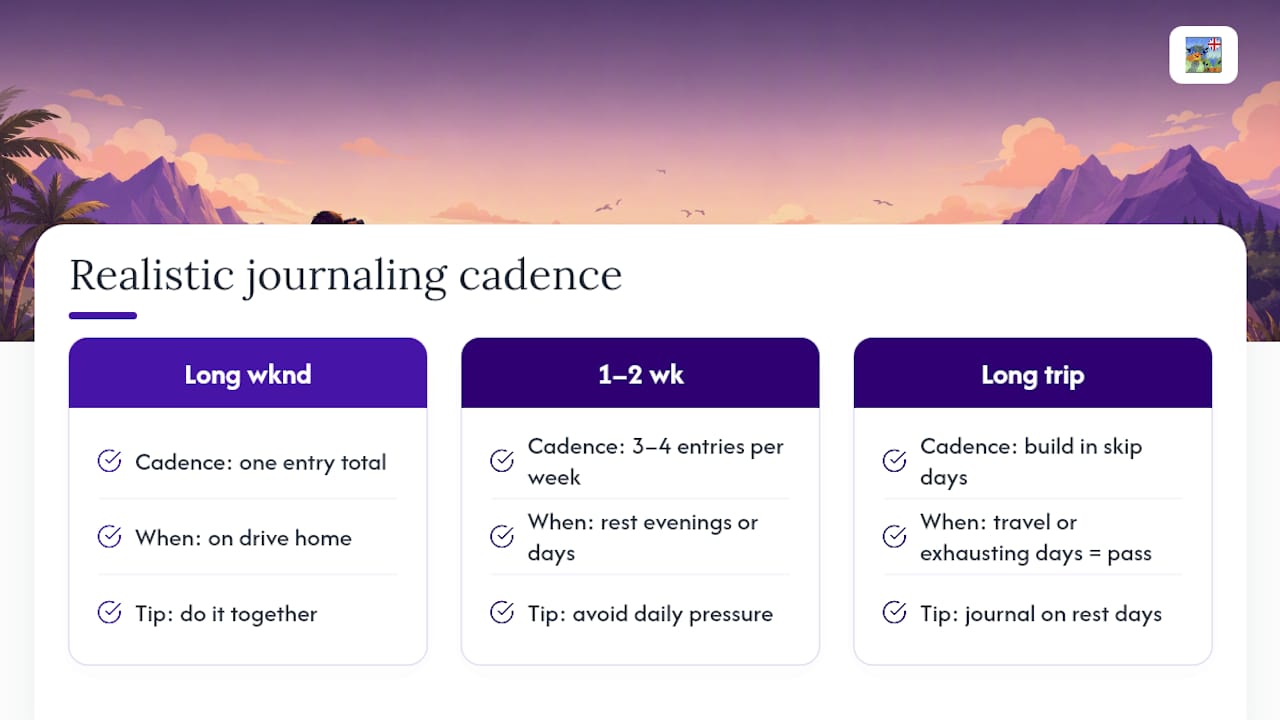
For a longer trip, like a three-week road trip or an extended visit abroad, build in deliberate skip days. Treat travel days or exhausting theme-park days as automatic passes, and journal on rest days or evenings at a hotel instead.
For families with very young kids, judge success by participation, not word count. A toddler who points at a sticker and says one word for a scribe to write down has still journaled. Don't measure a four-year-old's page against a ten-year-old's paragraph.
The honest goal for any trip length is a book that gets finished and reread, not a perfect daily record. A journal that's two thirds full of real, specific memories beats one with daily entries that all say "it was fun" because everyone was too tired to write anything more.
Why Travel Journals Matter More Than People Realize
Most advice on family travel journals treats them as a nice-to-have activity for the car. I think that undersells what's actually happening. A kid who fills in a prompt like "the weirdest food I tried" is practicing description, sequencing, and reflection, the same muscles teachers spend a school year building, except the kid doesn't notice because it's wrapped in a vacation.
The prompt structure matters more than parents give it credit for. A blank page asks a child to generate both content and form at once, which is genuinely hard even for adults. A good prompt strips out the form problem entirely, so a five-year-old can focus purely on the memory. That's not a shortcut. That's just good instructional design applied to a suitcase-sized notebook.
Some journals are built around that exact idea, pairing structured prompts with room for a family's own voice, which is why the format shows up again and again across products aimed at parents who want engagement without a fight.
— Mark
Get the Travel Journal Built for Real Family Trips
There are travel journals for families who want a ready answer, not a DIY project assembled from a stack of printables. The travel journal is sized for a backpack or carry-on, includes guided prompts alongside open space for drawing, and has room for the tickets and small mementos that usually end up crumpled in a coat pocket instead.

It fits kids roughly ages four to twelve, with prompts simple enough for a scribing parent and open enough for an older kid to take over solo. Pair it with a pack of stickers and a couple of colored pens, and you've got everything needed for the five-minute end-of-day routine covered earlier in this guide. For families who want more format options or activity pairings, the full activity and puzzle books collection rounds out the packing list. Grab one before your next trip and let the first entry happen on the drive to the airport.
Sources
- The Children's Travel Journal – New York Review Books
- Family Adventure Journal | Kids Travel Memory Book & Keepsake – Time and Treasure
- Family Road Trip 2026 - Malinda D Just
FAQ
What Age Is Best for Starting a Travel Journal?
Kids as young as four can participate with drawings and stickers, and by age six or seven most kids can handle simple guided prompts on their own.
Should I Buy a Journal With Prompts or a Blank Notebook?
Prompts work better for most families because fill-in-the-blank pages make kids far more likely to actually complete entries instead of freezing at a blank page.
How Do I Journal for a Child Who Can't Write Yet?
Ask the child what they want to say and write it down in their own words, letting them add a drawing or sticker to keep the entry personal.
What Should Go in a Family Travel Journal Besides Writing?
Ticket stubs, small souvenirs, and photos glued in during hotel downtime turn the journal into a genuine keepsake rather than just a diary.
Is a Digital Travel Journal Better Than a Paper One?
Paper works better for younger kids and holds up as a keepsake, though a hybrid approach using phone photos alongside a physical journal like Munkterproducts' travel journal covers both needs well.