
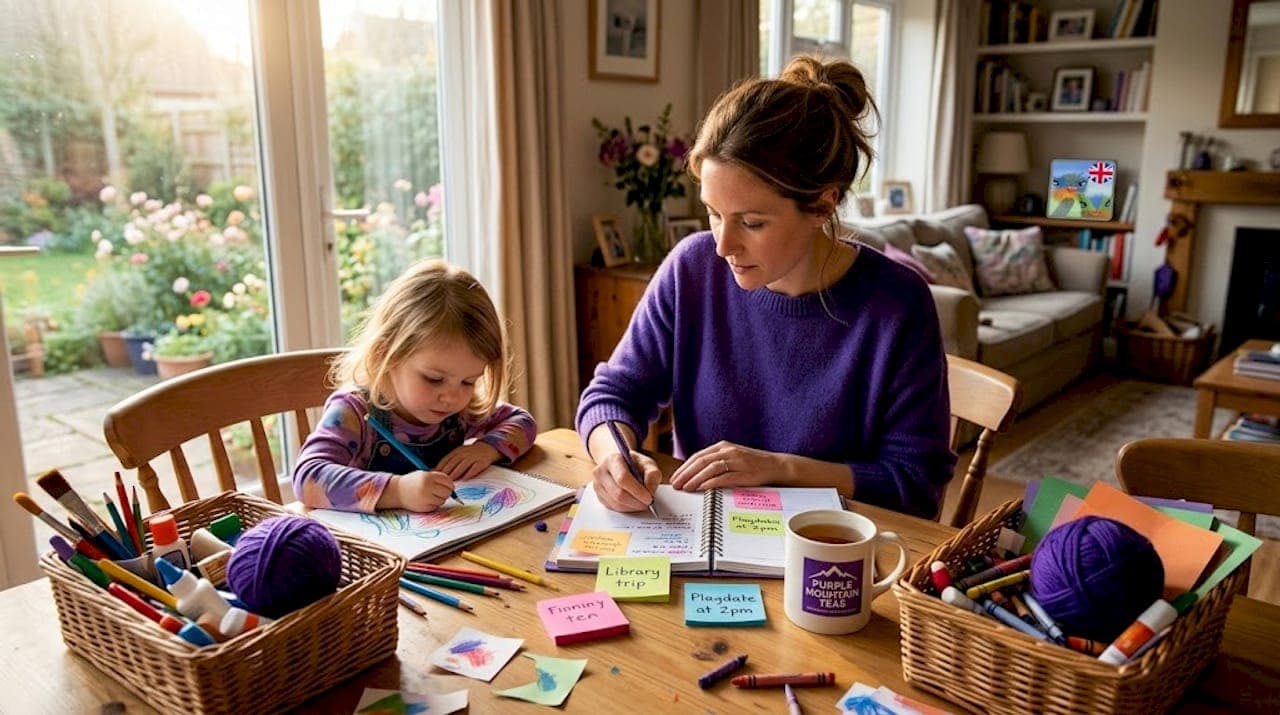
TL;DR:
- Planning children's activities requires clear goals, age-appropriate design, and inclusive environments that foster genuine engagement.
- Balancing structured and unstructured play, encouraging child-led exploration, and preparing materials in advance enhance meaningful learning experiences.
Planning activities for kids sounds simple until you're standing in the kitchen at 3 p.m. with a bored seven-year-old, a pile of craft supplies, and absolutely no idea where to start. The real challenge isn't finding ideas — it's finding activities that are genuinely fun, actually build skills, work for your child's specific age and ability, and don't require a degree in early childhood education to pull off. This guide walks you through a research-backed, step-by-step approach to planning kids' activities that hit all three goals: learning, engagement, and inclusivity, without turning playtime into a lesson plan.
Table of Contents
- Setting a foundation: Goals, age, and preparation
- Step-by-step planning: Indoor, outdoor, and routine-based activities
- Making activities inclusive and accessible
- Balancing structure and flexibility for school-age kids
- What most guides miss: Letting kids lead and supporting with structure
- Take the next step: Find resources and activity materials
- Frequently asked questions
Key Takeaways
| Point | Details |
|---|---|
| Set clear activity goals | Choose a single skill or learning target for each activity to guide planning and materials. |
| Blend structure and flexibility | Offer a mix of structured and free play with variety to meet school-age children’s needs. |
| Ensure accessibility | Plan for inclusive spaces, use visual supports, and adapt tasks so all children can participate. |
| Integrate daily routines | Embed play into everyday moments like meal prep and cleaning for easy, meaningful family connection. |
| Let kids lead | Support your child’s agency with light adult scaffolding for maximum engagement and learning. |
Setting a foundation: Goals, age, and preparation
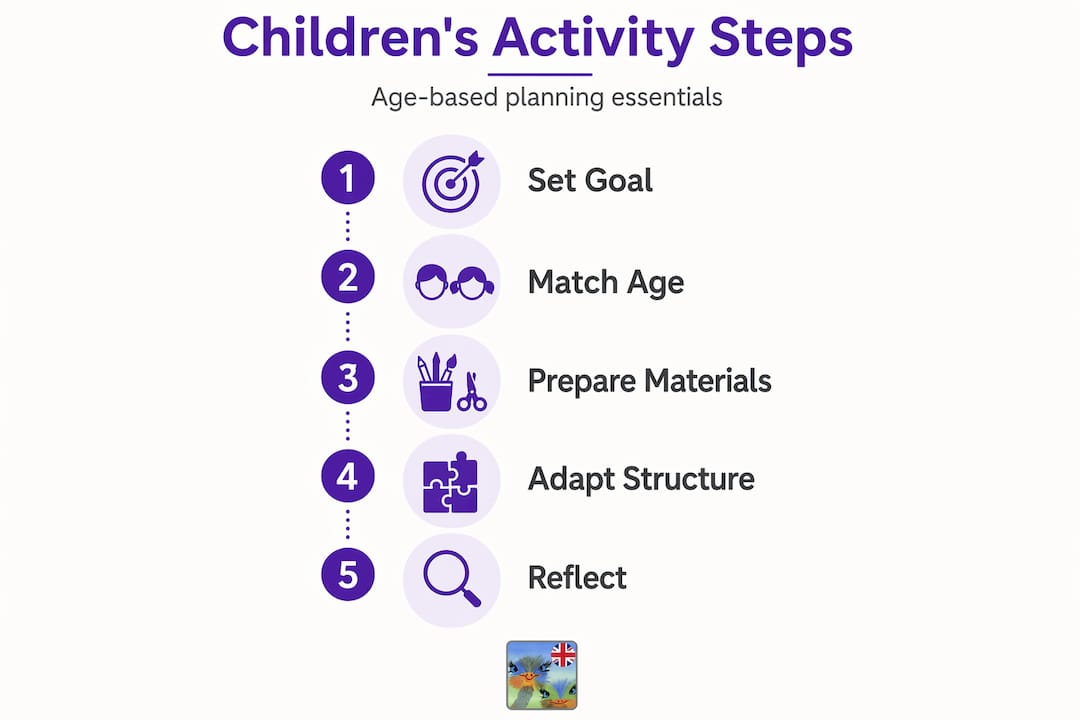
Every great activity starts with a simple question: what do you want your child to get out of this? Not in a rigid, academic way, but in a practical "what would be cool for them to practice today" way. That could be fine motor skills through cutting and gluing, social skills through a group game, or language development through storytelling. Picking one clear goal keeps you focused and stops activities from becoming overwhelming for both you and your child.
Age appropriateness is not just about keeping things safe. It's about matching the activity to where your child actually is developmentally. For toddlers and preschoolers, CDC milestone guidance can be used to select age-appropriate play targets, like pressing buttons, stacking blocks, or pointing to named objects. When you align activities with real developmental milestones, you give your child something achievable that still stretches them just enough to grow.
Key planning benchmarks by age
| Age group | Focus area | Example activity |
|---|---|---|
| 1 to 2 years | Sensory and motor | Water play, stacking cups |
| 3 to 5 years | Language and imagination | Storytelling, dress-up |
| 6 to 8 years | Literacy and problem-solving | Puzzles, journaling |
| 9 to 12 years | Collaboration and creativity | Group projects, craft challenges |
Preparation is the step most parents skip, and it's the one that makes everything else easier. A play-based planning method involves picking one goal, one spot, and a small set of materials, then using simple prompts and brief reflection to guide the activity without over-directing. That's it. You don't need an elaborate setup — you need a clear intention and the right tools on the table.
Before you begin, check your activity book checklist to make sure you have everything on hand. And if you're still figuring out which books or printed resources work best, this guide on choosing children's books gives a clear breakdown by age and interest.
Pro Tip: Start with what your child already loves, then layer in a light learning goal. If they love dinosaurs, a counting activity with plastic dinosaurs beats a plain number worksheet every single time.
Key materials to gather in advance:
- Paper, crayons, and glue for open-ended art
- Age-appropriate books or activity books for guided reading
- Simple household objects for sensory bins or sorting games
- A timer or visual schedule to help kids track activity phases
Step-by-step planning: Indoor, outdoor, and routine-based activities
Once you have your goals and materials ready, it's important to tailor your approach to different settings. Indoor activities, outdoor adventures, and everyday routine moments each come with their own planning logic, and mixing them across the week keeps things fresh.
Planning indoor activities
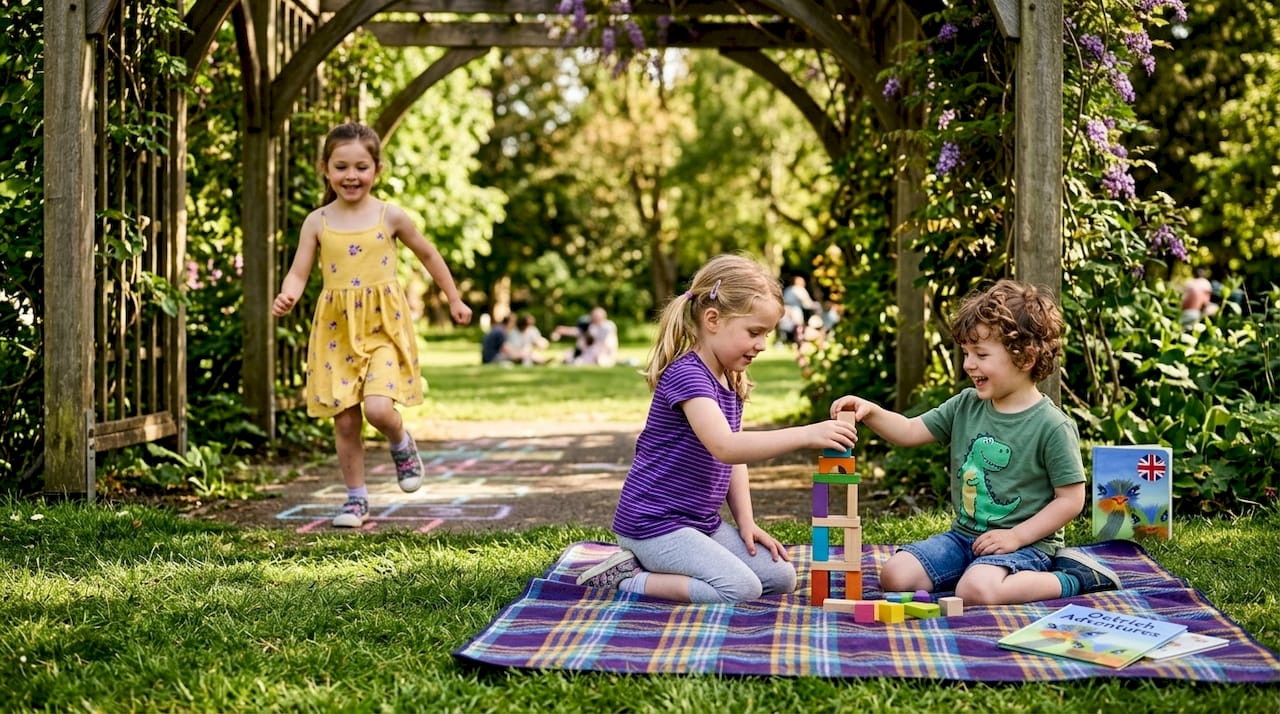
Indoor play can be embedded into everyday routines to build connection while supporting skill development. Think about the natural rhythms of your day. Cooking together builds math skills through measuring. Folding laundry develops sorting and categorization. Even cleaning up toys can become a color or shape sorting game. The key is to frame these moments intentionally rather than letting them slip by.
For a structured indoor activity session, follow these steps:
- Choose a theme or skill focus that connects to your child's current interests or developmental stage.
- Gather all materials before inviting your child to the activity space — interruptions break momentum.
- Set up the space so your child can see everything laid out and ready to go.
- Introduce the activity with a simple prompt like "Can you build a house for this bear?" rather than a set of instructions.
- Step back and observe — resist the urge to take over. Let your child explore.
- Wrap up with a brief conversation about what they made or learned. One or two questions is enough.
This approach is detailed further in this activity book creation guide, which shows how structured activities can become genuinely flexible experiences.
Planning outdoor activities
Outdoor play adds a whole layer of sensory richness, physical challenge, and natural curiosity that indoor settings simply can't replicate. For outdoor activity planning, families should build safety procedures into the plan and use weather and air quality tools for heat and other hazards.
Safety first: Before any outdoor session, check your local heat risk forecast and air quality index. On hot days, schedule outdoor time for early morning or late afternoon. Inspect playground equipment for sharp edges, splinters, or unstable surfaces before kids use them.
For inspiration on what to do once you're outside, this roundup of creative home activities includes plenty of ideas that work equally well in a backyard or at a local park.
Indoor vs. outdoor: A quick comparison
| Factor | Indoor | Outdoor |
|---|---|---|
| Weather dependency | None | High |
| Sensory variety | Moderate | Very high |
| Physical activity | Low to moderate | High |
| Safety prep needed | Low | Moderate to high |
| Creativity potential | High | Very high |
| Routine integration | Very easy | Requires scheduling |
Routine-based activities are the unsung heroes of children's learning. A quick nature walk to the mailbox, a five-minute counting game at dinner, or a bedtime story with questions woven in can deliver real cognitive benefits without eating into your schedule.
Making activities inclusive and accessible
Having covered basic planning, let's ensure every child can participate fully, regardless of ability or support needs. Inclusivity in activity planning goes far beyond accessibility ramps. It means thinking about the sensory environment, the social dynamics, and the physical layout of your activity space.
Inclusive planning involves assessing the physical layout and ensuring accessible pathways and inclusive equipment so children with different needs can participate alongside their peers. If your child uses a wheelchair, for example, a craft table at the right height matters just as much as the craft itself. If your child has sensory sensitivities, a noisy, visually busy space might shut them down before the activity even begins.
Here are practical ways to create an inclusive activity environment:
- Clear pathways: Make sure kids can move through the activity space without obstacles, especially for children who use mobility aids.
- Sensory adjustments: Offer noise-canceling headphones, fidget tools, or alternative textures if your child has sensory processing needs.
- Visual instructions: Use picture cards or simple illustrated steps instead of relying only on verbal instructions.
- Flexible pacing: Allow children to take breaks without losing their place in the activity.
- Choice within structure: Offer two or three options within the activity so every child has some agency over their experience.
For children who benefit from predictability and structure, chunking activities into distinct, predictable phases and using visual supports can reduce overload and improve clarity. A simple Kanban board, which divides tasks into "to do," "doing," and "done," works beautifully for kids with executive function challenges. Even a hand-drawn version on a sticky note can make a big difference.
Visual calendars are another powerful tool. When a child can see the sequence of their day, including when the activity starts and ends, anxiety drops and engagement rises. Use icons, drawings, or printed images rather than words for younger children or those who are still developing reading skills.
Pro Tip: Always walk through the physical setup of an activity from your child's perspective before starting. Get down to their eye level, check for obstacles, and make sure all materials are within easy reach. A small adjustment can be the difference between full participation and frustration.
This storytelling workflow offers a great model for how to sequence a creative activity in stages that work for children with varying support needs.
Balancing structure and flexibility for school-age kids
Inclusivity brings everyone into the activity. Now it's time to customize structure for school-age kids' needs, because too much structure can backfire just as easily as too little.
Research consistently shows that school-age children benefit most from a planning approach that balances variety and mostly unstructured time with limited structured after-school activities, often just one or two per week. This isn't a license to do nothing — it's a reminder that free play, imaginative games, and self-directed exploration are not wasted time. They are where some of the deepest learning happens.
Stat callout: Studies show that children who have time for unstructured play alongside structured activities demonstrate stronger problem-solving skills, better emotional regulation, and higher creativity scores than children whose schedules are packed with organized programs.
Ways to offer meaningful variety during the week:
- Unstructured time: Let kids choose their own activity with minimal adult direction for at least 30 to 60 minutes daily.
- Themed play: Organize one session per week around a theme, like space, animals, or cooking, and let your child drive the direction within it.
- Collaborative projects: Pair siblings or friends for an activity that requires teamwork, like building a cardboard city or putting on a puppet show.
- Creative print activities: Activity books, coloring books, and puzzle books give kids a satisfying structure to follow at their own pace.
For themed ideas that work especially well during holidays and school breaks, the top holiday activity books roundup is a great starting point. And if you're building a longer-term library of learning materials, this educational books guide helps you match books to your child's current stage and interests.
What most guides miss: Letting kids lead and supporting with structure
Here's something most activity planning guides won't tell you: the most carefully planned activity often loses to the one your child invented themselves. That's not a failure of planning. It's actually the goal.
The strongest activity plans usually start from the child's agency, which means self-directed play, then add light adult scaffolding such as a goal prompt, a materials set, and a brief reflection, rather than turning play into rigid instruction. The moment you over-structure an activity, you take the joy out of it. And without joy, there's no real engagement, and without engagement, there's no learning worth having.
Most parents over-direct because they're worried the child isn't "getting enough" from the activity. But children learn through experimentation, repetition, and self-correction in ways that no worksheet or guided craft can fully replicate. Your job is to set the stage, offer the right materials, and then genuinely step back.
The "goal prompt, material set, reflection" framework is the lightest scaffold you can use. It works like this: before the activity, you share one open-ended prompt ("I wonder what we could build with these boxes"). During the activity, you stay nearby but avoid taking over. Afterward, you ask one or two genuine questions about what they made or discovered. That's the whole structure. Everything else is your child's.
This approach works especially well when paired with creative educational books, which give children a starting point without dictating where they end up. A good activity book opens a door. What your child does once they walk through it is entirely up to them.
The uncomfortable truth is that children who are given genuine agency in their play tend to stick with activities longer, return to them more often, and transfer what they learn more effectively to new situations. Structure supports growth. But it's the child's ownership of the experience that makes growth stick.
Take the next step: Find resources and activity materials
You now have a solid framework for planning activities that actually work: clear goals, age-appropriate design, inclusive spaces, the right balance of structure and freedom, and a child-led approach that keeps learning authentic.

When you're ready to put this into practice, having the right materials on hand makes everything easier. At Munkter Products, you'll find a curated range of activity books, educational resources, coloring books, puzzles, and creative journals designed specifically for children and families. Whether you need a quick holiday activity book to fill a rainy afternoon or a thoughtfully structured educational resource to build skills over time, the collection is designed to support exactly the kind of purposeful, joyful learning this guide describes. Browse the full range and find something your child will actually want to open.
Frequently asked questions
How can I quickly select age-appropriate activities for my toddler?
Use CDC milestone guidance to choose activities that match your child's developing skills, such as playing with toys in simple ways, stacking objects, or pressing buttons. Match the challenge to where your child is right now, not where you hope they'll be.
What's the best way to ensure outdoor activities are safe for kids?
Always check weather and air quality before heading outside, and follow CDC outdoor play guidelines for heat and equipment safety. Have a backup indoor plan ready for days when conditions aren't suitable.
How should I adapt activities for children with sensory or executive function needs?
Break activities into distinct phases and use visual supports like picture cards or a simple task board to improve clarity and reduce overwhelm. Predictability and visual cues are two of the most effective tools available.
Is it better to have more structured activities or more free play?
Balance is the answer. Planning should prioritize mostly unstructured time alongside one to two structured activities per week for school-age children, giving them both guidance and freedom to grow.
What's the easiest way to involve my child in everyday activities for learning?
Integrate play into daily routines like cooking or cleaning by pairing tasks with simple questions and themed toys. HealthyChildren.org recommends involving children in mealtime prep and tidy-up as a natural, low-prep way to build real-world skills daily.