
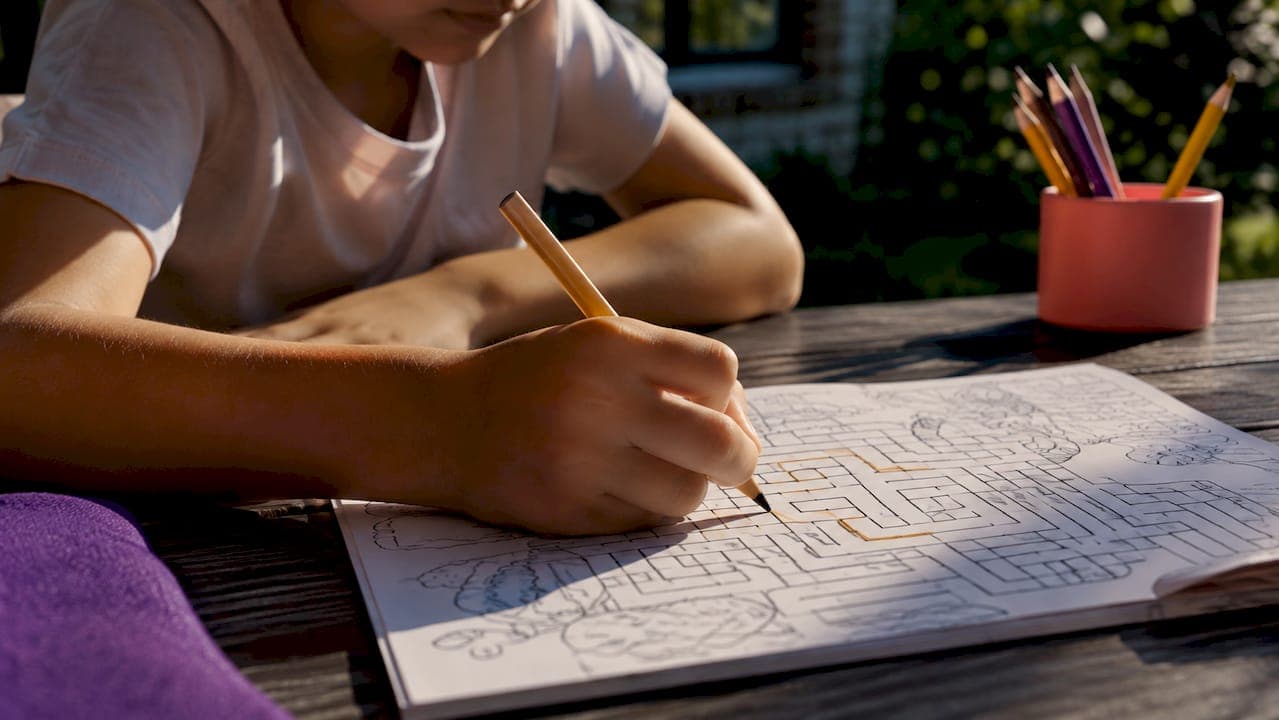
Pick a compact, age-appropriate activity book that mixes short skills practice, puzzles, and a reflection or journal page. That combination fights summer learning slide without turning vacation into school, and it holds a child's attention far longer than a workbook full of repetitive drills. Munkter Products sells exactly this kind of handcrafted activity and puzzle book, making it a solid place to start looking.
TL;DR:
- Choose activity books that combine short skills practice with puzzles and reflection pages to prevent boredom and promote both learning and reflection.
- Match the book format to the child's activity setting, using daily practice workbooks for academic goals and puzzle books for fun without pressure.
- Inspect sample pages online to confirm difficulty level and skill balance, and prefer books with durable binding suited for short, daily sessions.
- Use a simple routine based on age, such as 10 minutes after breakfast for younger children or a mix of skills and puzzles for older kids, to build consistency.
- Pair core activity books with printable packs and diversify activities to avoid burnout while maintaining engagement throughout summer.
Table of Contents
- Types of Summer Activity Books and When Each One Works
- A Quick Checklist Before You Buy
- How to Actually Use a Summer Activity Book
- Why These Recommendations Hold Up
- Fitting Activity Books Into a Bigger Summer Plan
- What Actually Matters When You Cut Through the Noise
- Ready to Pick One Out?
- Sources
Types of Summer Activity Books and When Each One Works
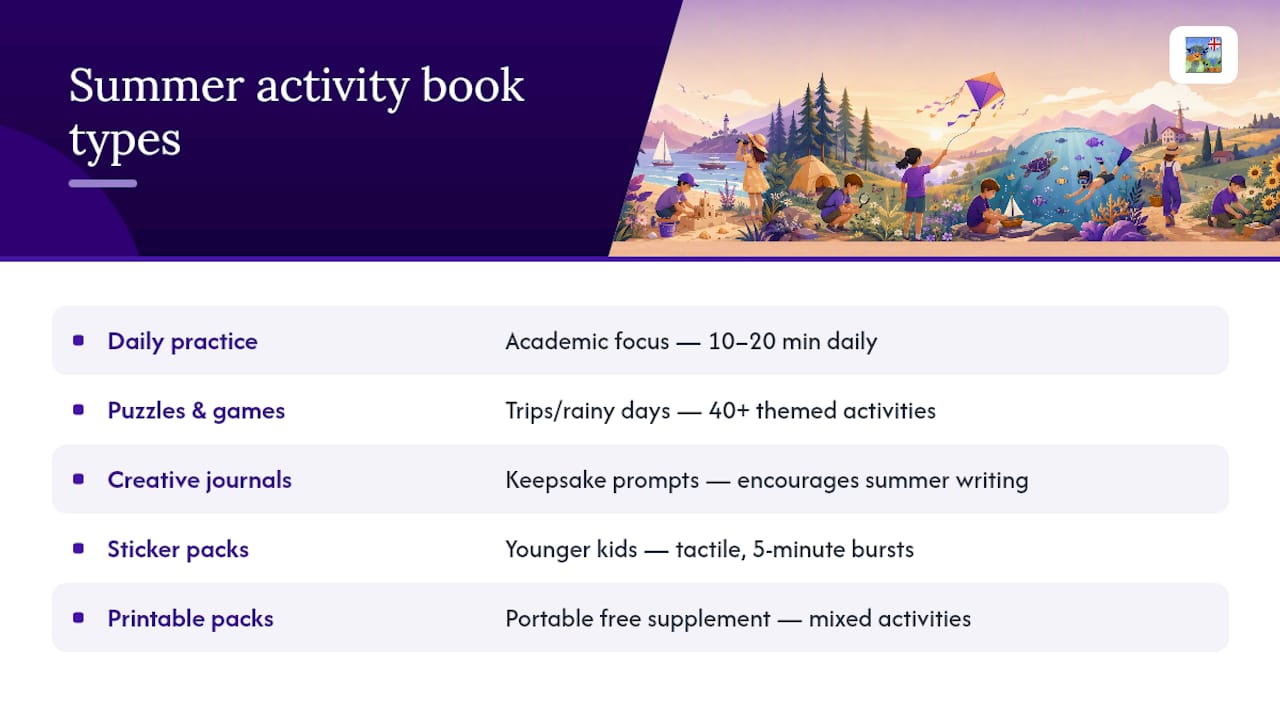
Not every activity book solves the same problem, and buying the wrong type is the most common mistake parents make. A dense 100-page workbook meant for a structured eight-week program will bore a child who only wants something to do in the back seat of a car. Matching the format to the moment matters more than matching it to the grade level printed on the cover.
Daily practice workbooks work best when the goal is genuinely academic. These typically contain short math and English pages designed for 10 to 20 minutes of daily use, and some grade-based summer packs run anywhere from 40 to over 100 pages depending on the age bracket, often built around an eight-week structure that mirrors a school term. They're the right tool for a family that wants a real dent made in reading fluency or times tables before September.
Puzzle-and-games books solve a different problem: keeping a bored kid occupied without any academic pressure at all. Mazes, word searches, and spot-the-difference puzzles build pattern recognition and fine motor control while feeling like pure fun. Publishers commonly pack 40 or more themed activities into a single seasonal edition, which makes these ideal for long car rides, plane trips, or rainy afternoons at a grandparent's house.
Creative journals and reflection books are the most overlooked category, and arguably the most valuable. A few short writing prompts and a keepsake page or two do more for writing stamina than another round of grammar worksheets, because kids write more willingly when the topic is their own summer rather than an assigned essay.
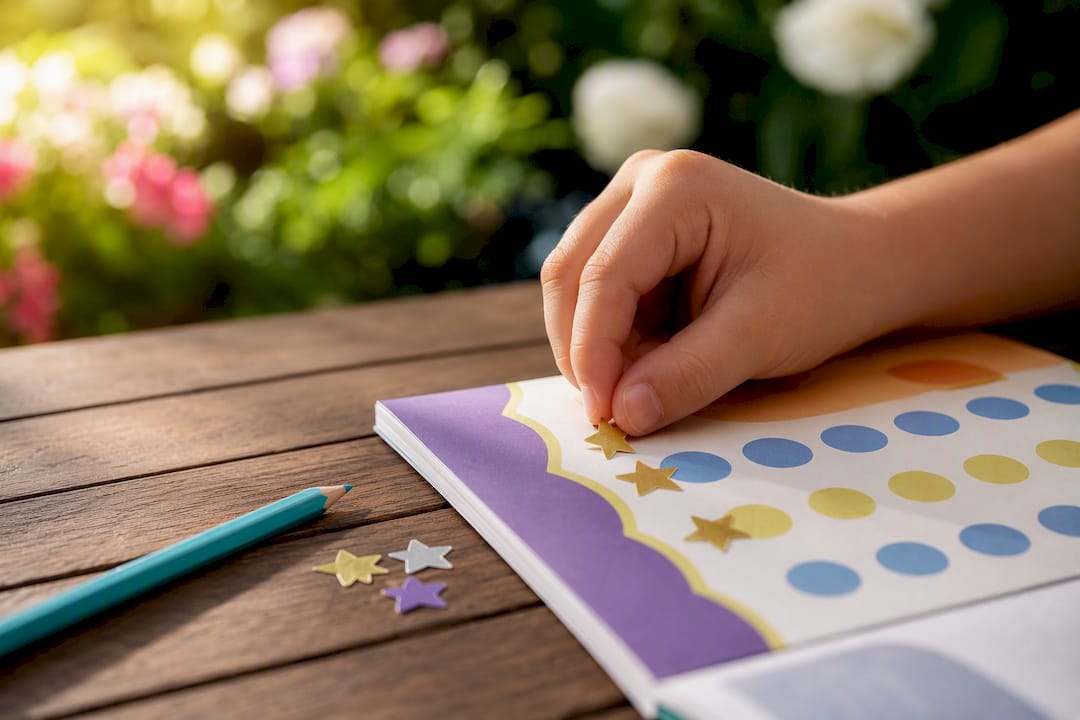
Sticker and mixed-activity packs suit younger children who aren't ready for multi-step puzzles yet. Hands-on tasks with tactile elements, like sticker placement or simple coloring, hold attention in five-minute bursts rather than twenty.
Printable packs fill the gaps between purchases. PBS offers a free downloadable summer activity book built for portability, and one widely shared printable pack mixes coloring pages, mad libs, word searches, charades, and a closing journal page. They're a smart low-cost supplement, though they rarely replace a well-made bound book for daily structure.
A Quick Checklist Before You Buy
Buying an activity book online means judging quality from a few sample pages and a product description, so it helps to know exactly what to check before adding it to your cart.
- Confirm the age or key-stage fit. Look at the sample pages rather than trusting the age range printed on the cover; some books run harder or easier than advertised.
- Check for skill balance. A good book mixes math, reading, handwriting, and creative pages rather than drilling one skill for 60 pages straight.
- Inspect the format and durability. Spiral binding lies flatter for writing, staple binding travels better in a bag, and thicker paper stock matters if crayons or paint are involved.
- Match length to daily use. A book that breaks cleanly into 10 to 20 minute chunks gets finished; a book demanding 45 minutes a sitting usually gets abandoned by week two.
- Look for trust signals. Sample pages, clear postage terms, and visible contact information on the product page are small details that separate a serious seller from a low-effort listing.
Pro Tip: Buy one puzzle-heavy book and one skills-practice book at the same time. Rotating between the two prevents the "one more page" fatigue that kills most summer routines by mid-July.
Free printables are worth grabbing as a supplement, but they rarely replace a bound book you can hand a child and walk away from.
How to Actually Use a Summer Activity Book
The book itself matters less than the routine built around it. A great activity book sitting untouched on a shelf does nothing; a mediocre one used consistently for 15 minutes a day beats it every time.
A simple micro-routine works better than an ambitious schedule that collapses after four days. Try this by age:
- Ages 5 to 7: 10 minutes right after breakfast, one page, done. Keep it before screen time, not after.
- Ages 8 to 10: 15 to 20 minutes, alternating a skills page one day and a puzzle page the next.
- Ages 11 and up: 20 minutes with more independence, letting them choose which section to tackle that day.
A weekly planner helps too: two days of short writing or math practice, two days of puzzles, one day of a creative or craft page, and one day left completely open. Variety is what keeps the book from feeling like homework in disguise.
Gamification helps more than most parents expect. Sticker charts, a family challenge to finish a set number of pages before a certain date, or "travel checkpoints" tied to a road trip all turn a chore into something closer to a game. Adding a single journal prompt near the end of the book, a short "what I did this summer" page, shifts the whole object from workbook to keepsake, which is exactly why we'd argue it's worth prioritizing over pure drill content.
For teachers, these books make sensible optional holiday homework precisely because they're low pressure and self-directed. A hands-on mix of puzzles and short writing prompts tends to hold a child's attention far better than a long, dense workbook, since the format itself keeps switching before boredom sets in. That short-burst structure is the mechanism doing most of the work against summer slide, more than any single subject drilled in isolation.
Why These Recommendations Hold Up
Munkter Products builds its reputation on handcrafted activity and puzzle books sold directly to parents, with postage included and contact details listed plainly for anyone with a question before or after ordering. That kind of transparency is worth checking for on any product page, not just Munkter's own, because it's one of the clearest signals a seller is small enough to actually respond if something's wrong with an order.
A few things worth knowing before you buy anywhere:
- Sample pages on a product listing tell you more about difficulty level than the age range printed on the cover.
- Mark, who writes for the Munkter blog, has broken down how activity books are actually designed, which is useful reading if you want to understand why certain page layouts work better than others.
- Related guides, including a roundup of top holiday activity books, offer further picks if one book isn't quite the right fit for a specific child.
Expect straightforward ordering, visible sample pages, and a real person to contact if a page count or age range doesn't match what arrived.
Fitting Activity Books Into a Bigger Summer Plan
A single activity book rarely needs to carry the whole summer alone. Most families get more value pairing one core book with a rotation of other activities: a library reading log, a week of day camp, and a couple of printable packs for slow afternoons. The book becomes the anchor that travels in the car or the backpack, while everything else fills in around it.
Summer camps and community programs increasingly lean on this same logic. A camp might hand out a puzzle book for downtime between activities, or a teacher might send one home as optional, ungraded practice rather than assigned work. Neither context asks the book to do everything; it just needs to hold attention in the gaps where structured activity isn't happening.
For homeschool-adjacent summers or families juggling multiple kids at different ages, matching book to child matters more than matching book to plan. A ten-year-old and a six-year-old rarely benefit from the same pages, so a "one book per child" approach, even if the books are thin, tends to outperform a single shared book everyone fights over. If crafting is part of the household's summer rhythm already, browsing creative activity ideas built for kids' projects can round out a book with hands-on tasks that don't require a single printed page.
What Actually Matters When You Cut Through the Noise
Most advice on this topic obsesses over academic content, page counts, curriculum alignment, and skips the one variable that actually predicts whether a book gets finished: whether the child wants to open it. A beautifully aligned math workbook that sits unopened teaches nothing. A puzzle book with a single decent journal page at the back, used consistently, teaches more simply by surviving contact with a bored ten-year-old in July.
The conventional wisdom treats summer activity books as remedial, something to prevent backsliding, and that framing is backwards. The books that work best aren't the ones that feel most like school; they're the ones that feel least like it while still asking a child to read, write, or think for a few minutes a day. A reflection page turns a workbook into a keepsake, and keepsakes get finished far more often than assignments do.
If there's one thing worth prioritizing over everything else in this piece, it's this: buy fewer, better books rather than one giant workbook. A short, well-designed puzzle-and-journal combination, handled with a light daily routine, beats a comprehensive curriculum that gets abandoned by the second week of vacation.
— Mark
Ready to Pick One Out?
Handcrafted activity and puzzle books built specifically for screen-free summer learning are exactly what Munkter Products makes, without the bulk or repetition of a mass-market curriculum workbook.

The activity and puzzle books category has sample pages on every listing, so you can judge age fit and difficulty before checking out, and postage is included on every order with contact details available if a question comes up. If a themed coloring project fits your child's interests better than puzzles, the fairies coloring book shows the same sample-page format in action. Browse the category now and pick the one your child will actually finish this summer.
Sources
- Free Summer Activity Book That'll Keep Kids Occupied For Hours | Paper Heart Family
- PBS KIDS Summer Activity Book | PBS KIDS for Parents
- The Sun-Sational Summer Activity Book: Filled with Mazes, Spot-The-Difference Puzzles, Matching Pairs, and Other Fun Games | Schuler Books