

TL;DR:
- Creative writing prompts are curated ideas organized by categories like character, setting, and dialogue to target specific story elements. Using focused prompts with constraints and building routines enhances skill development and reduces writer's block. Prioritizing depth over volume and selecting prompts intentionally accelerates progress more than random browsing.
A creative writing prompts list is a curated collection of ideas designed to spark imagination, overcome writer's block, and build storytelling skills through consistent, focused practice. The best prompt collections go beyond random idea generation. They organize writing prompts for creativity into categories like character, setting, dialogue, and theme so writers can target the exact element their story is missing. Platforms like Reedsy, Writers Online, and Writers.com have each developed distinct approaches to prompt curation, and understanding how they differ gives you a real advantage when choosing where to start.
1. What are the key categories in a creative writing prompts list?
A well-organized creative writing prompts list separates prompts by story element, which lets you solve a specific creative problem rather than browsing aimlessly. Prompt variety and categories focus creative energy precisely where it is needed, whether that is a flat character or a scene with no atmosphere.
The five core categories most professional prompt collections use are:
- Character prompts: Explore a character's hidden motivation, a moral conflict they cannot escape, or a relationship that defines their worldview. Example: "Your protagonist discovers a letter they were never meant to read. What do they do with that knowledge?"
- Situation and plot prompts: Drop a character into a dilemma, a reversal, or an unexpected encounter. These are the most common short story prompts because they generate immediate narrative momentum.
- Setting and atmosphere prompts: Force sensory specificity. "Describe a room that has not been entered in twenty years" trains writers to build mood through physical detail rather than stated emotion.
- Dialogue and voice prompts: Constrain the scene to conversation only. This exposes weak character voice faster than any other exercise.
- Mood and theme prompts: Start from an abstract concept like grief, loyalty, or betrayal and build outward. These work especially well for literary fiction writers.
Pro Tip: When you sit down to write and feel stuck, identify which story element is missing before you open a prompt list. If your plot is solid but your setting feels generic, go directly to the atmosphere category. Targeted selection beats random browsing every time.
2. Top prompt collections for diverse creative writing ideas in 2026
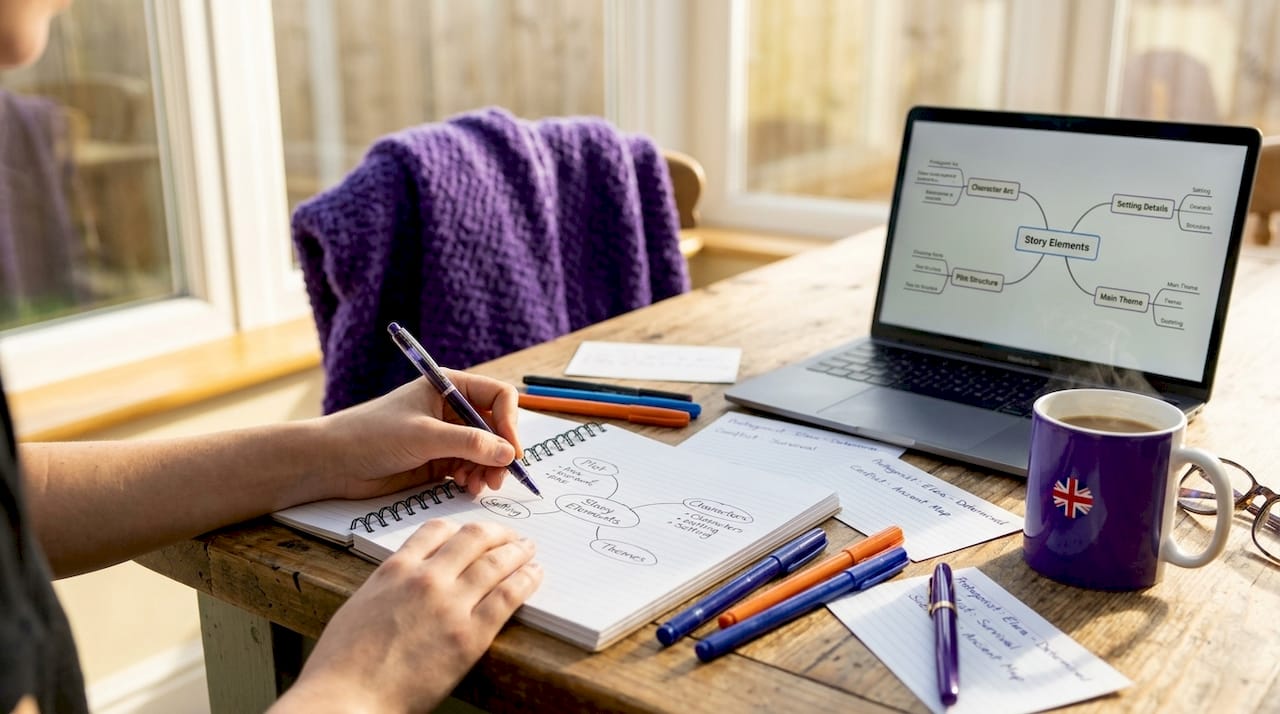
Not all prompt libraries are built the same. Volume, genre coverage, and organizational structure determine whether a collection actually helps you write or just gives you more tabs to open.
| Collection | Prompt Volume | Best For | Standout Feature |
|---|---|---|---|
| Reedsy | 2,400+ prompts | Habit-building writers | Weekly contests with community feedback |
| Writers Online | 101 prompts | Focused, targeted practice | Organized by story element category |
| No Film School | 100 genre prompts | Broad genre exploration | Fresh annual release for new-year momentum |
| ThinkWritten | 365 prompts | Daily writing routines | One prompt per day for a full year |
| Writers.com | 36 exercises | Craft improvement | Skill-grouped exercises, not just ideas |
Reedsy's directory stands out because it pairs volume with structure. Writers receive weekly themed prompts alongside contests and community engagement, which builds both habit and confidence over time. That combination of accountability and variety is rare in free prompt resources.
Writers Online takes the opposite approach. Its 101 prompts are tightly organized by category, making it the better choice when you need a specific creative fix rather than open-ended exploration. No Film School releases its pack at the start of each year, which makes it a strong reset tool for writers who want fresh story prompts for writers without committing to a subscription or platform.
3. How prompt-based exercises differ from simple idea lists
A list of creative writing ideas tells you what to write about. A writing exercise tells you how to write it, and that distinction changes everything about the quality of your output.
Exercises combined with prompts improve storytelling craft rather than just generating ideas. Writers.com groups its 36 exercises by skill type, covering literary devices, perspective shifts, sensory writing, and dialogue construction. Each exercise pairs a scenario with a constraint that forces a specific technique. That constraint is the key ingredient most prompt lists skip entirely.
Consider the difference between these two approaches. A standard prompt says: "Write about a character who loses something irreplaceable." An exercise version says: "Write about a character who loses something irreplaceable, told entirely through dialogue with no internal monologue or description." The second version trains a specific skill. The first version generates an idea.
Pairing prompts with short constraints yields higher quality drafts than prompts alone. Constraints like dialogue-only scenes or sensory detail quotas focus practice and push writers past their default habits. Freewriting from a bare prompt is useful for warming up, but it rarely produces the kind of deliberate skill growth that makes you a noticeably better writer over six months.
Pro Tip: Take any prompt from your current list and add one constraint before you start writing. Limit yourself to 300 words, write only in present tense, or ban all adjectives. The restriction forces creative problem-solving that open-ended prompts cannot.
4. Story prompts for writers by genre and format
Genre shapes everything about how a prompt should be written and used. A horror prompt that works for a short story will feel flat in a romance context. Matching prompt format to your genre saves time and produces more usable material.
For fiction writers: Plot-based and character-conflict prompts work best. "A stranger arrives in a small town with a secret that threatens everyone" is a classic structure that works across thriller, literary fiction, and fantasy. The best short story prompts give you a situation with built-in tension rather than a setting or mood alone.
For genre fiction (sci-fi, fantasy, horror): World-building and "what if" prompts generate the most traction. "What if memory could be extracted and sold?" opens a science fiction story. "What if the forest at the edge of town has been slowly moving closer for a decade?" opens a horror story. These prompt ideas for fiction work because they embed a rule change into the world itself.
For personal essay and memoir writers: Sensory memory prompts are the most productive. Verywell Mind's approach of listing ten unusual uses for everyday objects, or responding to prompts with drawings before writing, reflects a broader truth: mixed media responses unlock creative exploration that purely verbal prompts sometimes block.
For journaling and self-discovery: Prompts that ask "what do you believe about X that most people disagree with?" or "describe a moment when you changed your mind" produce the most honest and usable material. These overlap with story-driven journaling, which applies narrative structure to personal reflection.
5. Daily writing prompts and how to build a consistent routine
Consistency separates writers who improve from writers who stay stuck. Daily writing prompts are the most practical tool for building that consistency, but only if you use them with intention rather than as a daily obligation to check off.
Here is a four-step approach that works:
- Choose a fixed time. Morning writing before email and social media produces the least resistance. The brain has not yet accumulated the day's noise.
- Select one prompt category per week. Repeatedly writing from similar prompt types builds deep creative focus and habit formation rather than scattered output. Spend a full week on character prompts before moving to setting prompts.
- Set a word count floor, not a ceiling. Write at least 200 words from each prompt. Do not stop at 150 because the idea feels thin. Pushing through thin ideas is where the real writing practice happens.
- Review one piece per week. Writing without reviewing is practice without feedback. Pick your strongest piece from the week and identify one thing you would change. That single observation compounds over months.
Regular engagement with prompts paired with contests and community boosts motivation and discipline. Reedsy's weekly contest model works because external accountability adds a layer of commitment that solo practice often lacks.
Pro Tip: Keep a dedicated notebook or digital file for your prompt responses. Reviewing three months of entries reveals your default patterns, the character types you always return to, the settings you avoid, and the themes you cannot stop writing about. That self-knowledge is more useful than any single prompt.
6. How to select the right prompt from a large list
Large prompt libraries are only useful if you can navigate them without losing an hour to browsing. Using prompt categories as selection tools to solve the specific missing element in a story reduces writer's block efficiently and gets you writing faster.
The most common mistake writers make with big prompt collections is treating them like a buffet. They scroll, sample, and move on without committing. The fix is to arrive with a question rather than an open mind. Ask: "What is the weakest element in my current project?" Then go directly to the category that addresses it.
If your protagonist feels passive, use a character conflict prompt. If your third act stalls, use a situation prompt that forces a reversal. If your prose feels flat, use a sensory atmosphere prompt and write a single scene with no plot movement, only physical detail. This targeted approach turns a creative writing exercises list into a diagnostic tool rather than a distraction.
For writers without a current project, the same logic applies. Pick one category and write three responses from it before moving to another. Depth beats breadth at every stage of creative development.
Key takeaways
A targeted creative writing prompts list, organized by story element and paired with skill constraints, produces better writing faster than random idea browsing ever will.
| Point | Details |
|---|---|
| Use category-based selection | Choose prompts by story element (character, setting, dialogue) to solve specific creative problems. |
| Pair prompts with constraints | Adding a rule like dialogue-only or 300-word limit turns an idea into a craft exercise. |
| Prioritize depth over volume | Writing three responses from one prompt type beats skimming fifty unrelated prompts. |
| Build a daily routine | Fixed time, one category per week, and weekly review compounds skill growth over months. |
| Use community for accountability | Platforms like Reedsy offer contests that add external motivation to solo writing practice. |
Why I think most writers use prompt lists backwards
Most writers treat a prompt list like a search engine. They arrive with no specific need, scroll until something feels interesting, and write a single response before moving on. That approach produces occasional sparks but almost no lasting improvement.
What actually works is using prompts the way a musician uses scales. You return to the same type repeatedly, not because it is exciting, but because repetition in a focused area builds real skill. I have found that spending two weeks exclusively on dialogue prompts does more for voice and character than two months of mixed random prompts. The constraint of staying in one lane forces you to solve the same problem in different ways, and that problem-solving is where craft develops.
The other thing most writers underestimate is the value of pairing a prompt with a physical object. A journal or a dedicated notebook changes the writing experience in ways that a screen does not. There is something about the commitment of ink on paper that reduces the internal editor's volume and lets stranger, more honest ideas surface. Munkterproducts carries journals and notebooks built for exactly this kind of focused creative practice, and I have seen writers use them to build routines that stick in ways that apps rarely do.
The writers I have watched improve fastest are not the ones with the longest prompt lists. They are the ones who pick fewer prompts, add constraints, and review their own work honestly. Less browsing, more writing, and one hard look at what you actually produced.
— Mark
Explore curated writing tools from Munkterproducts
If you are ready to move from browsing prompts to building a real writing practice, the right physical tools make a measurable difference.

Munkterproducts offers a range of journals and notebooks designed for writers who want to develop consistent creative habits. Whether you are working through daily writing prompts, building a story idea catalog, or pairing exercises with a dedicated practice space, having a quality journal changes how seriously you treat the work. Munkterproducts also carries activity books and creative stationery that support writers at every level, from first-draft exploration to structured storytelling development. Browse the full collection and find the tools that fit your writing routine.
FAQ
What is a creative writing prompts list?
A creative writing prompts list is a curated set of ideas, scenarios, or questions designed to spark imagination and reduce blank-page friction. The best lists organize prompts by category, such as character, setting, or dialogue, so writers can target specific story elements.
How many prompts should I use per writing session?
One prompt per session is the most effective approach. Writing multiple responses from a single prompt builds deeper creative focus than cycling through several unrelated ideas in the same sitting.
What is the difference between a prompt and a writing exercise?
A prompt gives you a starting idea. A writing exercise pairs that idea with a specific skill constraint, such as writing in second person or using only sensory detail, which trains craft rather than just generating content.
Which prompt collection is best for beginners?
Writers Online's 101 categorized prompts work well for beginners because the organization by story element makes it easy to identify where to start. Reedsy's weekly contest model adds community accountability, which helps newer writers stay consistent.
How do daily writing prompts improve storytelling skills?
Daily prompts build writing habits by reducing the decision cost of sitting down to write. Over time, consistent practice with targeted prompt categories develops instincts for character, pacing, and voice that transfer directly to longer projects.