

TL;DR:
- Literary journaling combines creative writing techniques with reflection to deepen self-awareness and engagement with literature. It includes three core forms: reflective journaling, book journaling, and marginalia, each serving different purposes and fostering personal growth. Regular, structured practice enhances writing skills, emotional well-being, and active reading, making it a valuable lifelong habit for curious minds.
Most people think journaling means writing what you had for lunch or processing a bad day. Literary journaling is something else entirely. What is literary journaling, really? It is a practice that uses the tools of creative writing, such as craft, observation, and honest reflection, to engage with both literature and your inner life at the same time. This guide breaks down every form, benefit, and technique you need to know, whether you have never filled a journal page before or you just want to take your writing somewhere deeper.
Table of Contents
- Key takeaways
- What is literary journaling and how it differs from regular journaling
- The three core forms to know
- Why literary journaling is worth your time
- Practical techniques and structures that actually work
- How to build a practice that lasts
- My take on what literary journaling actually does
- Start your literary journaling journey with the right tools
- FAQ
Key takeaways
| Point | Details |
|---|---|
| More than a diary | Literary journaling uses creative craft and reflection, not just daily event recording. |
| Three core forms | Reflective journaling, book journaling, and marginalia all serve different but connected purposes. |
| Real wellness benefits | Studies link regular journaling to measurable improvements in happiness and reduced depression. |
| Structure helps | A date, context, feelings, analysis, and next steps format keeps entries useful and retrievable. |
| Both styles are valid | Record-keeping and release-style journaling serve different goals. Neither is wrong. |
What is literary journaling and how it differs from regular journaling
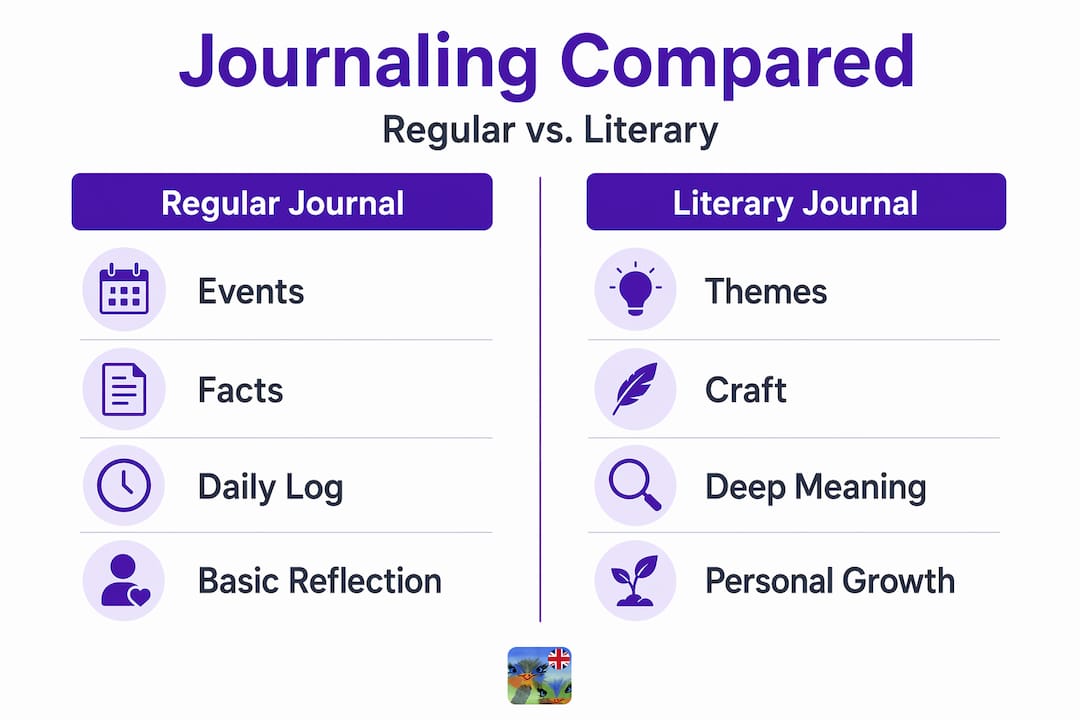
Regular journaling records what happened. Literary journaling asks why it mattered and what it means. The shift sounds small, but it changes everything about how you write and what you get from the page.
Literary journaling uses craft and reflection beyond simply logging daily events. It borrows techniques from creative writing, such as scene-setting, sensory detail, and voice, and applies them to personal reflection. You are not just noting that a conversation upset you. You are writing into the feeling, examining it, and drawing meaning from it the way a novelist would shape a character's interior world.
This practice also extends outward to the books, essays, and poems you read. Instead of treating literature as content to consume and forget, literary journaling turns reading into a two-way conversation. You bring your own experience to the page. The text brings its patterns and questions. Something new and personal comes out of that exchange.
The result is a creative writing journal that doubles as a record of your intellectual and emotional growth over time. That combination is what makes the practice distinct from both a standard diary and from academic literary analysis.
The three core forms to know
Literary journaling is not one fixed practice. It shows up in at least three forms, and most practitioners use all of them in different combinations depending on what they are reading or thinking through.
Reflective journaling is the most inward-facing form. Rather than summarizing your day, reflective writing builds self-awareness through mindful observation of your inner thoughts, reactions, and patterns. Think of it as writing to understand yourself rather than writing to remember an event.

Book journaling sits at the intersection of reading and self-expression. A book journal is not a Goodreads review. It is closer to a reader-response diary where you record emotional reactions, character insights, and the moments where a sentence stopped you cold. Book journaling emphasizes emotional reaction and meaningful personal connection over simple cataloging. That distinction matters because it keeps your writing tied to your real experience rather than a performance of what a "good reader" thinks.
Marginalia is the oldest form of literary engagement on this list. It means writing directly in the margins of a book, underlining phrases, asking questions, arguing back, making connections. Marginalia creates active dialogue with text through questioning and interaction that leads to deeper personal insight. It functions as a first draft of your thinking before you ever open a journal. Many writers use their margin notes as raw material for longer journal entries written later.
"Active dialogue with texts through marginalia transforms passive reading into a personalized discovery process that enhances creativity."
Pro Tip: If you feel intimidated by marginalia in books you love, keep a stack of sticky notes at your reading spot. Write your reactions on the notes and press them into the margins. Same result, no permanent marks.
These three forms support a story-driven self-discovery process that connects reading life to inner life. Together they make literary journaling one of the richest personal practices available to anyone who loves language.
Why literary journaling is worth your time
The benefits of literary journaling are not abstract. Research backs up what serious writers have known for centuries.
-
You build self-awareness. Writing inwardly to explore your reactions, assumptions, and patterns produces a kind of clarity that ordinary thinking rarely reaches. Reflective journaling for self-discovery works because putting words on paper forces specificity. Vague feelings become named things you can examine and understand.
-
Your writing improves. Book journaling trains you to notice how skilled authors construct sentences, build tension, and develop character. When you write about those techniques in your own words, they become part of your toolkit. This is one of the fastest ways to grow as a writer without taking a formal class.
-
Your mental health benefits. Journaling positive events reduces depression and improves happiness in studies following participants for up to six months. Creative expression adds another layer of benefit on top of simple emotional processing. When you combine reflection with craft, the psychological payoff goes further than venting ever will.
-
You create a record of intellectual growth. Looking back through a year of literary journal entries is like finding a map of who you were as a thinker. The books that moved you, the ideas you wrestled with, the moments when your perspective shifted. Those records become genuinely meaningful for personal wellness over time in ways that a photo album or social media history simply cannot match.
-
You become a more attentive reader. Knowing you will write about a book changes how you read it. You slow down, notice more, and engage with the text instead of rushing toward the ending.
Literary journaling prompts built around these five benefits give you immediate starting points. Try opening with "The moment in this chapter that surprised me was..." or "This character reminded me of a time when I..." Both prompts pull emotional response and personal meaning out of your reading in a single sentence.
Practical techniques and structures that actually work
Knowing you want to journal and knowing how to structure entries well are two different things. The gap between them is where most people quit.
A structured entry format improves clarity and future usability significantly. The five components to include are: date and context, your emotional state at the time, what you observed or read, your analysis or interpretation, and a note on next steps or open questions. Not every entry needs all five. But having the structure available stops you from staring at a blank page.
The table below compares the three main journaling formats so you can choose the right fit for your current goal.
| Format | Best for | Time needed | Depth level |
|---|---|---|---|
| Daily mini-entries | Building consistency and capturing fresh reactions | 5 to 10 minutes | Surface to moderate |
| Prompted reflections | Deeper self-examination and creative development | 15 to 30 minutes | Moderate to deep |
| Revision challenges | Improving writing craft by rewriting a passage your own way | 20 to 45 minutes | Deep |
Two common pitfalls trip up new literary journalers. The first is over-detailing. You spend so long summarizing the plot that you never get to your actual response. Give yourself a rule: one paragraph of context, then straight to your reaction. The second pitfall is emotional overload. Some entries will surface big feelings. Write them, but also write what you plan to do with what you discovered. That forward step keeps journaling from becoming a loop of rumination.
Pro Tip: Use your margin notes as journal entry starters. Copy the phrase you underlined at the top of a fresh page, then write freely for ten minutes about why it stopped you.
For those curious about creative journaling formats, having a dedicated notebook for each type of practice, one for book responses, one for reflective writing, makes it easier to go back and find specific threads of thought.
How to build a practice that lasts
Starting a literary journal is easier than sustaining one. The writers who stick with it treat the practice less like a creative luxury and more like an intellectual workout.
Scheduling consistent journaling sessions and treating them as fixed appointments rather than optional extras is the single most reliable way to build the habit. This does not mean journaling every day. It means deciding when you will write and protecting that time.
Here are practical strategies for keeping the practice alive:
- Match journaling to your reading. Write a short entry whenever you finish a chapter that moves you. Keep the journal physically next to your book so the habit is tied to an existing one.
- Rotate your journal types. If you keep a poetry journal, a philosophy journal, and a book response journal, you always have a relevant entry point. One will always fit your current mood or reading.
- Embrace release-style journaling when you need it. Not every entry needs to be a polished reflection for future rereading. Some entries exist only to get something out of your head. That is valid and useful. The benefit happens at the moment of writing.
- Keep the bar low for bad weeks. One sentence in a journal is infinitely better than no sentence. "Today I read three pages and felt nothing" is still a data point about your inner life.
- Treat old journals as raw material. Going back through entries from six months ago often reveals patterns, obsessions, and growth you had no idea were happening. Those discoveries become new entry prompts all on their own.
Pro Tip: Set a recurring calendar reminder with a simple title like "Book pages." The low-stakes label removes the pressure that comes with "Write in journal" and makes it easier to actually sit down.
The writers who sustain a literary journaling practice the longest are not necessarily the most talented. They are the most curious. If you stay curious about your own responses to what you read, the practice feeds itself.
My take on what literary journaling actually does
I have watched a lot of people start journaling with big ambitions and give it up within a month. Most of them made the same mistake. They treated the journal as a performance. They tried to write well before they had written honestly.
In my experience, the real value of literary journaling lives in the mess of the early entries. The half-formed thoughts, the circling back to the same sentence three times, the moment you write something you did not know you believed. That is where the practice does its actual work. The polished reflection comes much later, if it comes at all.
What surprised me most about sustained literary journaling was how it changed the way I read. I stopped being a passive audience for other people's ideas and started being a genuine participant in the conversation. A character's choice would remind me of a decision I had avoided making. A metaphor would unlock something I had been struggling to name for months. That is the dialogue that makes this practice worth returning to.
I also want to name something the articles rarely say plainly. You do not need to be a "good writer" to keep a literary journal. You need to be a curious one. Craft develops naturally when you write regularly and pay attention to language you admire. The journal is where that development happens, not a place you go after you have already developed it.
— Mark
Start your literary journaling journey with the right tools

The right journal makes a real difference to how often you actually write in it. A notebook that feels good to hold, opens flat on a table, and has pages that accept your pen without bleeding through is not a luxury. It is a practical tool that makes the habit easier to keep. Munkterproducts carries a curated selection of creative writing journals and specialty notebooks designed specifically for reflective and literary writing. Each one is handcrafted or carefully sourced with the serious journaler in mind. Browse the full collection and find the format that fits your practice, whether you want a compact daily journal, a larger book-response notebook, or a beautifully designed step-by-step book journaling companion. Your words deserve a home worth returning to.
FAQ
What is literary journaling in simple terms?
Literary journaling is the practice of using creative writing techniques to reflect on your reading, ideas, and inner life rather than simply recording daily events. It combines the tools of craft with personal reflection to deepen both self-understanding and engagement with literature.
How do you start literary journaling for beginners?
Start with a simple prompted entry: write the date, note what you are currently reading, and describe one moment from the book that sparked a reaction in you. That single structure gives you enough to work with without requiring a blank-page start.
What is the difference between a diary and a literary journal?
A diary typically records what happened in your day. A literary journal uses those events, along with your reading and ideas, as material for deeper creative reflection and analysis, often borrowing techniques from fiction, poetry, or essay writing.
How often should you write in a literary journal?
Consistency matters more than frequency. Research supports scheduling journaling like a workout with fixed times rather than writing every day without a plan. Even two or three focused sessions per week produce significant growth over time.
Do you have to reread your literary journal entries?
No. There are two valid styles: record-keeping journals meant for rereading and release journals where the benefit comes from writing rather than reviewing. Both are legitimate, and many people use both depending on what they need.