
The evidence says yes, with real caveats: regular puzzle habits are linked to measurably slower memory decline, better cognitive scores at scale, and even outperformed computerized brain games in a head-to-head trial. A cohort of older adults, a large survey study, and a 78-week clinical trial all point the same direction. The practical takeaway is simple: puzzles work best as a frequent, varied habit inside a broader routine, not as a one-off fix.
TL;DR:
- Frequent puzzle habits can delay memory decline by an average of 2.54 years in people at risk of dementia, according to long-term studies.
- Doing puzzles more than once a day correlates with higher scores across multiple cognitive measures, especially processing speed, in a large population sample.
- In a controlled trial, crosswords outperformed digital cognitive games in improving cognitive scores and showed indications of preserving hippocampal volume in mildly impaired adults.
- Different puzzle types target specific brain functions: crosswords for verbal memory, jigsaws for visuospatial skills, and digital puzzles for attention and processing speed.
- Maintaining a consistent practice over at least eight to twelve weeks, with increasing difficulty and variety, maximizes cognitive benefits and habit formation.
Table of Contents
- Do Puzzles Improve Memory? What the Research Actually Shows
- Which Puzzle Types Train Which Parts of Memory
- How Often You Need to Do Puzzles for It to Matter
- Building a Puzzle Routine That Actually Sticks
- What Puzzles Won't Do (and Where the Research Is Still Thin)
- Why Printed Puzzle Books Fit This Research Better Than You'd Think
- Editorial Perspective: Enthusiasm Without the Overselling
- Shop: Curated Puzzle Books Built for a Daily Habit
- Sources
Do Puzzles Improve Memory? What the Research Actually Shows
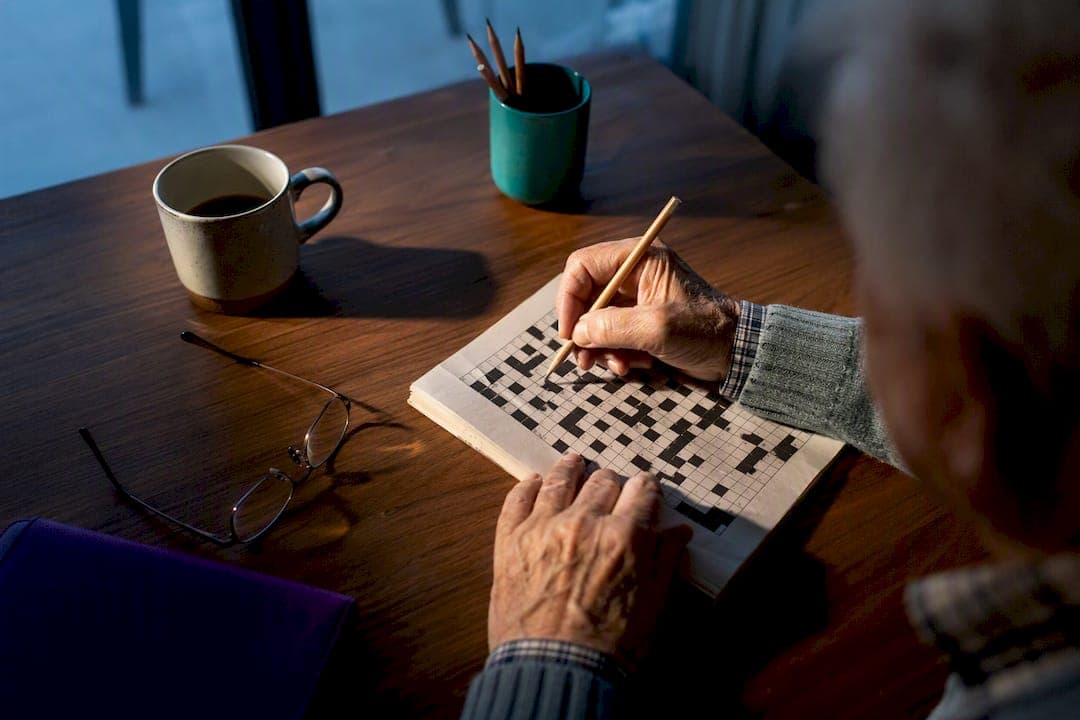
The strongest signal comes from a study following 488 cognitively healthy older adults over years, tracking who eventually developed dementia and when their memory started to slide. Among the 101 participants who went on to develop dementia, those who did crossword puzzles saw the onset of accelerated memory decline pushed back by an average of 2.54 years compared to those who didn't. That's not a cure. It's a delay, but a delay of two and a half years in cognitive decline is the kind of thing that changes a person's independence, their driving privileges, their ability to live alone.
Scale matters too, and this is where the PROTECT study comes in. Researchers surveyed 19,078 adults between the ages of 50 and 93, asking how often they engaged with word puzzles, then tested them across 14 different cognitive measures. Higher frequency of puzzle use tracked with better performance across nearly all of them, and processing speed showed the largest differences between frequent and infrequent puzzlers. People who did puzzles more than once a day scored meaningfully higher than people who said they never touch them.
Someone who does crosswords daily might also read more, sleep better, or have started with sharper cognition to begin with. That's why the randomized controlled trial published in NEJM Evidence carries so much weight. Researchers split 107 people with mild cognitive impairment into two groups: one trained on computerized crossword puzzles, the other on computerized cognitive games, both delivered through the same platform for consistency. Over a prolonged period, the crossword group showed slightly better outcomes on the ADAS-Cog scale, the standard tool for tracking Alzheimer's-related cognitive change. MRI scans in that trial also suggested smaller decreases in hippocampal volume among the crossword group, though that finding needs replication before anyone treats it as settled.
Here's what those three studies, taken together, actually establish:
- Puzzle habits correlate with delayed memory decline in people who go on to develop dementia.
- Frequency of use predicts cognitive performance across a large, diverse sample of older adults.
- In a controlled trial with random assignment, crosswords beat a comparable computerized game on a validated cognitive scale.
The evidence at a glance: A 2.54-year delay in memory decline onset, a 19,078-person sample confirming frequency effects, and a long randomized trial favoring crosswords over computer games. Three different study designs, three different populations, one consistent direction.
None of this means puzzles are a substitute for medical care or that everyone who does a daily crossword is protected from dementia. Effect sizes in this field tend to run small to medium, and they vary by population. A systematic pattern across reviews and population studies suggests complex mental activities like reading, games, and crosswords associate with lower dementia risk, but the underlying evidence is genuinely mixed, and a lot of it is observational. Treat puzzles as one lever among several, not a single dial you can crank to guarantee results.
Which Puzzle Types Train Which Parts of Memory
Not every puzzle exercises the same mental muscle, and picking the wrong format for your goal wastes effort you could spend better elsewhere.
Crosswords lean hardest on verbal retrieval and semantic memory, the network of word associations and general knowledge you draw on to fill in a clue. That's precisely the domain the Bronx Aging Study and the NEJM Evidence trial measured, and it's why crosswords showed up so consistently in the strongest studies. If your goal is language recall, name retrieval, or general verbal sharpness, crosswords hit that target directly.
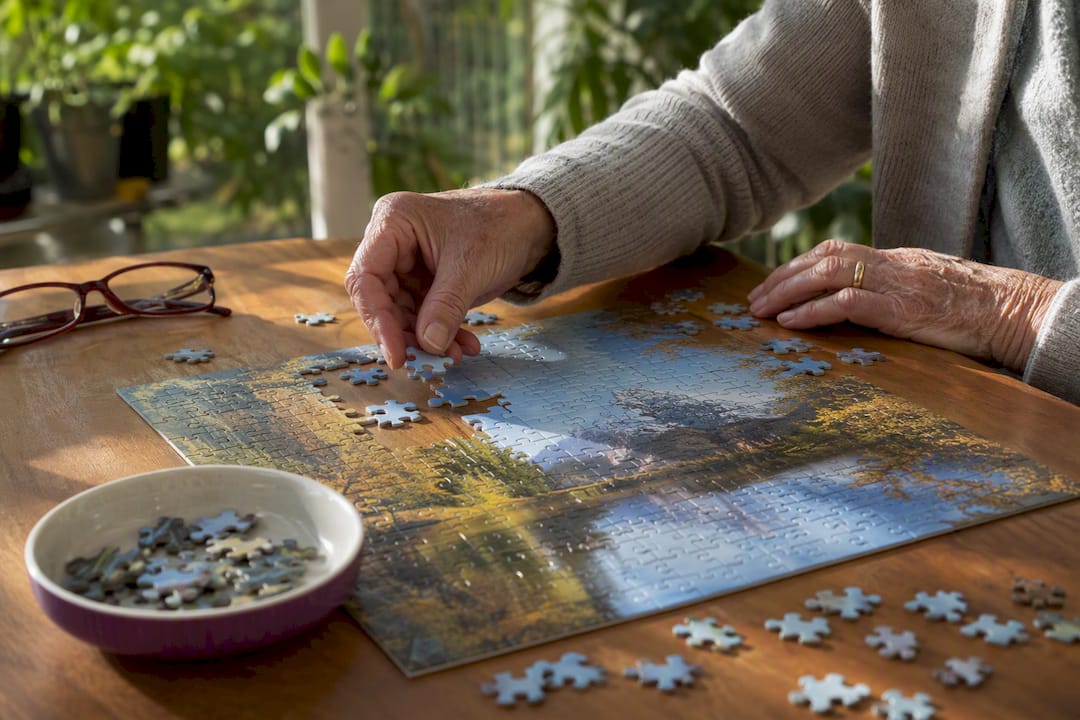
Jigsaw puzzles work a different system entirely. A PMC review found jigsaw puzzling engages visuospatial processing, fine motor control, and pattern recognition simultaneously, which is why researchers have proposed it as a potential protective factor for cognitive aging distinct from word-based puzzles. You're not retrieving facts. You're mentally rotating shapes, tracking spatial relationships, and holding a partial image in mind while you search for the next piece.
Digital and adaptive puzzle games occupy their own niche. A small pilot trial of 12 adults aged 46 to 75 tested an adaptive tablet-based puzzle game over eight weeks and found improvements in visual attention and visuospatial measures. The sample is tiny, so treat this as a promising signal rather than proof, but it does suggest digital formats can target attention and processing speed in ways paper puzzles don't emphasize as directly.
Word searches, Sudoku, and logic puzzles sit in a murkier evidence zone. They plausibly tax working memory and executive control since you're holding multiple targets in mind while scanning or reasoning, but the research base here is thinner than for crosswords or jigsaws. That doesn't mean skip them. It means don't expect the same weight of proof behind claims made about them.
The practical guideline: match the puzzle to the skill you actually want sharper.
- For verbal recall and word-finding speed, crosswords are beneficial.
- For spatial reasoning and pattern recognition, jigsaws are helpful.
- Digital adaptive puzzles may enhance sustained attention and processing speed.
- Sudoku, logic puzzles, and word searches may offer some working-memory benefits, though evidence is thinner.
One more wrinkle worth knowing: novelty matters. A puzzle you've mastered stops training much of anything because your brain has already automated the task. Rotating formats, covered in more detail in our guide to best puzzle types for adults, keeps the challenge live instead of letting it flatten into routine.
How Often You Need to Do Puzzles for It to Matter
Frequency is where the PROTECT data gets genuinely useful, because it doesn't just show puzzles help. It shows a dose relationship. Participants who used word puzzles daily or more often scored higher across most of the 14 cognitive measures tested than those who did them occasionally or never. That gradient is the strongest argument against treating puzzles as an occasional weekend activity.
The NEJM Evidence trial adds a second dimension: duration. Gains in that study emerged over 78 weeks, not 78 hours. Nobody in that trial saw dramatic change after a week of crosswords. The improvement showed up gradually, tracked over a year and a half of sustained practice.
Put those two facts together and a practical dose range starts to take shape:
- Aim for daily or near-daily sessions. Even 20 to 30 minutes counts, based on how the frequency effect scaled in the PROTECT data.
- Commit to a minimum of eight to twelve weeks before judging results. Shorter windows in pilot studies showed early attention and visuospatial gains, but the trials with the clearest memory effects ran far longer.
- Scale session length to 20 to 45 minutes, depending on puzzle difficulty and how much time you realistically have. Consistency beats marathon sessions done sporadically.
- Increase difficulty every few weeks. A puzzle you finish without friction has stopped challenging the systems you're trying to train.
Pro Tip: Set a recurring daily slot, like right after coffee or right before bed, rather than "whenever I have time." Habit researchers and the puzzle studies agree on one thing: frequency beats intensity, and frequency depends almost entirely on whether the activity has a fixed place in your day.
Ceiling effects are the quiet killer of long-term puzzle habits. Once you can finish Tuesday's crossword in ten minutes flat, that puzzle has stopped training much of anything, because a task you've mastered no longer demands new mental effort. That's part of why researchers running the adaptive tablet trial designed the difficulty to scale with performance instead of staying fixed. You don't need software to replicate that idea. Move up a difficulty tier, switch puzzle books, or alternate formats before boredom sets in and effort quietly drops to zero.
Building a Puzzle Routine That Actually Sticks
Knowing the research is one thing. Building a habit around it is another, and this is where most good intentions quietly die by week two.
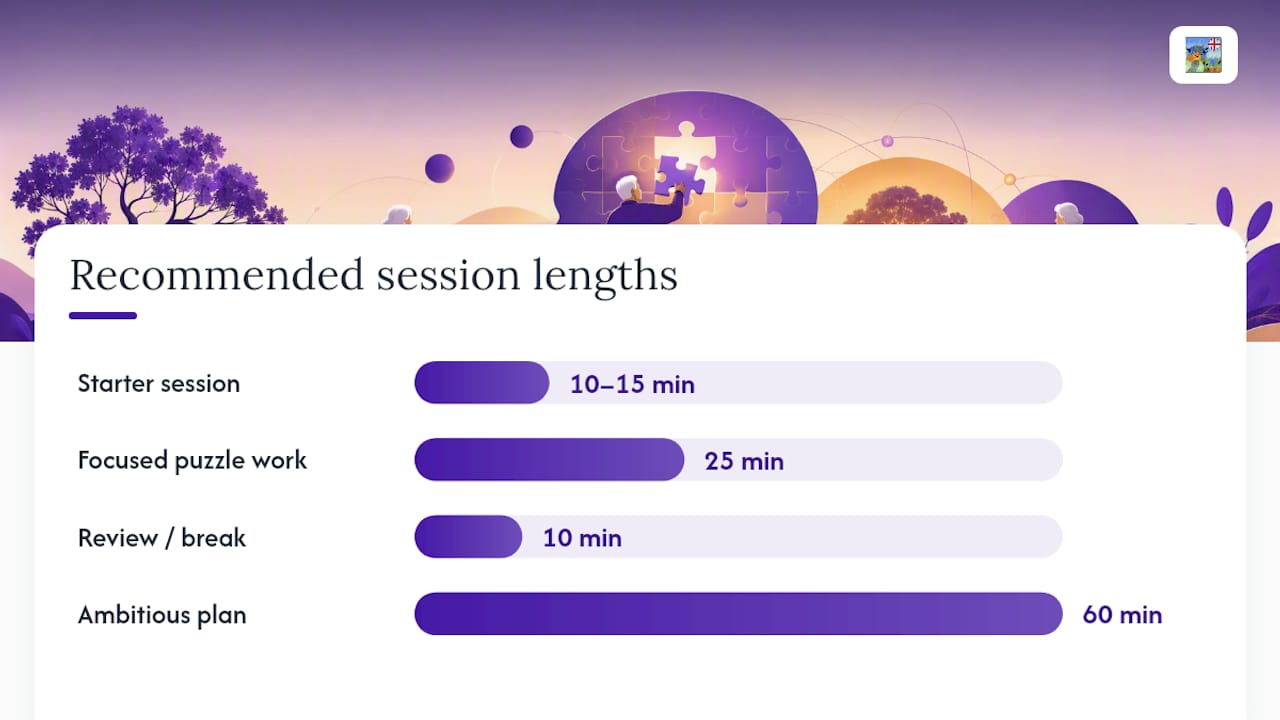
Start smaller than you think you need to. If you're currently doing zero puzzles, don't commit to 45 minutes daily starting Monday. Begin with a 10 to 15 minute session, most days of the week, and build from there. The PROTECT frequency data rewards consistency over intensity, so a short daily habit that survives a busy month beats an ambitious hour-long plan that collapses after ten days.
Mix your formats across the week instead of running the same puzzle type every day. A workable weekly split looks like this:
- Monday, Wednesday, Friday: Crosswords, for verbal retrieval and semantic recall.
- Tuesday, Thursday: Jigsaw or visuospatial puzzles, for pattern recognition and planning.
- Weekend: A timed digital puzzle or a logic puzzle, for attention and working memory.
That rotation keeps multiple cognitive domains engaged rather than over-training one system while neglecting the rest. Our guide on the advantages of puzzle books for brain health walks through how format variety supports adherence over months, not just weeks.
Progression matters as much as variety. Every two to four weeks, bump up the difficulty tier, move to a bigger jigsaw, or tackle a harder crossword grid. Track two simple metrics if you want objective feedback: how long a puzzle takes you and how many errors or hints you need. A downward trend in time and a stable or improving accuracy rate over a couple of months is a reasonable sign the habit is doing something.
Puzzles don't work in isolation, and no honest reading of the evidence claims otherwise. The same reviews that support cognitive benefits from puzzling also point toward exercise, sleep quality, and social engagement as additive factors. A daily crossword paired with a walk and a phone call to a friend is doing more for your brain than the crossword alone ever could.
A session template that works for a lot of people: 25 minutes of focused puzzle work, no phone, no television, followed by a 10 minute break where you mentally review what you just solved or missed. That short review window forces active recall, which is itself a memory-strengthening exercise layered on top of the puzzle.
Pro Tip: Keep a puzzle book on your nightstand or kitchen table instead of buried in a drawer. Visibility is half of habit formation. If you have to go looking for it, you'll skip it on your busiest days, which are exactly the days the habit needs to survive.
What Puzzles Won't Do (and Where the Research Is Still Thin)
Puzzles train what researchers call near transfer far more reliably than far transfer. That means a crossword habit will make you noticeably better at crosswords, and probably better at related verbal tasks like word retrieval in conversation. It will not reliably make you better at unrelated skills like remembering where you parked or managing your finances. The specificity of the benefit is one of the most consistently underappreciated points in this entire field.
Effect sizes across the strongest studies run small to medium, not dramatic. A 2.54-year delay in memory decline onset is meaningful at a population level, but it's an average across a cohort, not a guarantee for any one individual. Puzzles are a complementary strategy that stacks on top of other habits, not a standalone intervention with outsized power.
The transfer problem in plain terms: Puzzles reliably strengthen the specific skill they train. Evidence for broad, real-world cognitive protection is real but modest, and it strengthens when puzzles are combined with exercise, sleep, and social contact rather than used alone.
Population differences complicate the picture further. Trials in people with mild cognitive impairment, like the crossword-versus-games study, show promising but genuinely mixed results. Some outcome measures favored crosswords; others showed no significant difference between groups. Claims that puzzles prevent dementia outright go beyond what any current trial has demonstrated. The honest version of the claim is narrower: certain puzzle habits associate with slower decline and better cognitive scores, and one trial shows a modest edge for crosswords over a comparable digital alternative in a clinical population.
Here's what the field still doesn't know:
- Long-term randomized trials beyond 78 weeks, and across more diverse populations than the mostly Western, mostly educated samples used so far.
- A clearer dose-response curve. We know daily beats occasional, but the exact ceiling where added puzzle time stops helping isn't mapped.
- Imaging studies that track the mechanism directly rather than inferring it from cognitive test scores alone.
Anyone selling puzzles as a guaranteed dementia-prevention tool is overselling the data. Anyone dismissing puzzles entirely because effect sizes are modest is ignoring three separate, well-designed studies pointing the same direction.
Why Printed Puzzle Books Fit This Research Better Than You'd Think
The studies behind these findings share something worth noticing: none of them relied on exotic technology. A pencil, a grid, and a consistent habit produced the strongest results in the field, including a randomized trial that beat a purpose-built computerized game. That's the philosophy behind how Munkterproducts curates its puzzle collections.
Adherence, not access, is usually the real barrier to a cognitive routine. A tablet app buried in a folder of forty other apps competes with notifications, screen fatigue, and the temptation to open something else entirely. A printed puzzle book sitting on the coffee table has none of that friction. It's harder to abandon a habit you can physically see.
A few things worth checking before buying a puzzle book, if you're building the routine described above:
- Graduated difficulty. A book that stays flat from page one to page two hundred won't push you past the ceiling effect problem covered earlier.
- Thematic interest. You'll actually open a puzzle book on a topic you enjoy far more often than a generic one, and frequency is the variable the research cares about most.
- Enough pages for daily use. A slim 30-page book runs out in a month; a book built for sustained practice should last considerably longer.
- Format variety within the collection, mixing crosswords, word searches, or logic puzzles rather than repeating one format 200 times.
Our complete guide to puzzle book formats breaks down these categories in more depth if you're deciding where to start.
Editorial Perspective: Enthusiasm Without the Overselling
I don't think the most interesting outcome of a daily puzzle habit is even the memory benefit, though that's real and worth chasing. It's that puzzling gives people a small, reliable win every single day, and that alone changes how someone's week feels. The research backs cognitive gains, but the enjoyment and structure a habit provides matter as their own outcome, not just a means to a cognitive end.
Where I'd push back on the popular framing: puzzles get sold as a standalone fix, and that's not what any study here actually supports. The 2.54-year delay, the PROTECT frequency effect, the crossword trial in MCI patients, all of them sit inside broader lives that include sleep, movement, and social contact. Pair puzzling with a walk or an unrelated hobby like learning guitar, which carries its own documented cognitive and mood benefits, and you're stacking small, evidence-backed habits rather than betting everything on one.
If you want a real test, don't take my word for it. Run an eight to twelve week routine yourself, track how puzzles feel and whether your speed or accuracy shifts, and judge from there. That's a more honest experiment than any marketing claim you'll read, including this one.
— Mark
Shop: Curated Puzzle Books Built for a Daily Habit
If the research above convinced you that consistency beats intensity, the easiest way to protect that habit is having the right book already on your table. Puzzle collections are designed around a page-a-day structure suited for building a consistent routine, with postage included and checkout kept simple.

The catalog includes themed word search and puzzle collections built for graduated difficulty, so you're not stuck on the same challenge level for months, along with artistic and adult-focused puzzle books for readers who want something more visually engaging than a standard grid. For a lighter entry point into the mixed format habit described earlier, a themed option like the Fairies coloring book works well alongside a crossword rotation, giving you a lower-effort creative task for days when a full puzzle feels like too much. Readers who want a more adult, playful theme in their rotation can check the Anime Beauty collection, which fits the same daily-practice structure the studies point toward.
Every order ships with postage already included, and checkout takes a couple of minutes from product page to confirmation. If you're building the eight to twelve week routine outlined above, start by picking one book that matches your interests and let the habit build from there.
This article is general information, not a substitute for advice from a qualified doctor. Consult a qualified healthcare professional about your own circumstances before acting on anything here.
Sources
- Association of Crossword Puzzle Participation with Memory Decline in Persons Who Develop Dementia
- An online investigation of the relationship between the frequency of word puzzle use and cognitive function in a large sample of older adults
- Computerized Games versus Crosswords Training in Mild Cognitive Impairment | NEJM Evidence