
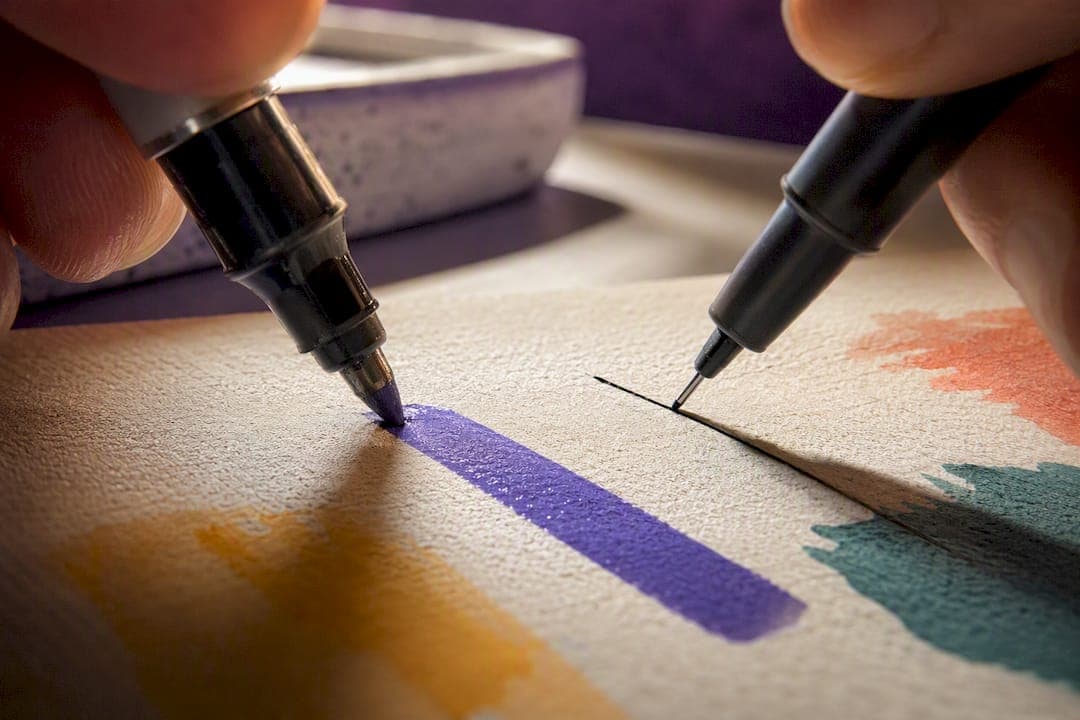
Use fineliners when you need crisp, archival lines that won't smear or fade, especially for technical drawing, planners, and detail work. Use gel pens when you want vibrant, opaque color, metallic highlights, or a smoother glide for everyday writing. Always test both on your actual paper first. Thin, low-GSM pages will betray either pen with bleed-through or ghosting.
TL;DR:
- Using pigment-based fineliners on paper at least 90 GSM ensures lasting, lightfast lines, especially for archival purposes or long-term storage.
- Gel pens are best for vibrant, opaque colors and metallic effects, but require heavier paper of 100 GSM or more to prevent bleed-through and feathering.
- Fineliners provide the most consistent, fine details under 0.3mm, while gel pens typically range from 0.3mm to 1.2mm and produce bolder lines.
- For left-handed or fast writers, fineliners dry quicker and are less prone to smearing, especially on coated or glossy paper.
- Proper storage—horizontal for gel pens, capped for fineliners—and priming gel pens improve performance and prolong usability.
Table of Contents
- Gel Pens vs Fineliners: What Actually Separates Them
- Which Pen Fits Your Project: Journaling, Planning, Coloring, or Drawing
- Paper, Tip Size, and Anti-Smear Techniques That Actually Work
- Keeping Your Pens Working Longer
- Your 60-Second Decision Guide
- Why Munkterproducts Knows Paper and Pens
- The Real Lesson Buried in This Comparison
- Sources
Gel Pens vs Fineliners: What Actually Separates Them
The difference comes down to chemistry, not marketing. Gel pen ink is a thick, water-based gel that suspends pigment particles, sometimes including carbon black or copper phthalocyanine, thickened with xanthan gum. That viscosity is why gel ink sits on the page as a bold, often opaque line, and why manufacturers can load it with metallics, glitter, and pastel tones that dye-based inks simply can't replicate. Fineliners work the opposite way: a fibrous or plastic tip wicks a thin, fast-drying liquid ink (dye or pigment based) through capillary action, producing a consistent, fine line with almost no texture variation.
That structural gap explains almost every practical trade-off you'll run into.
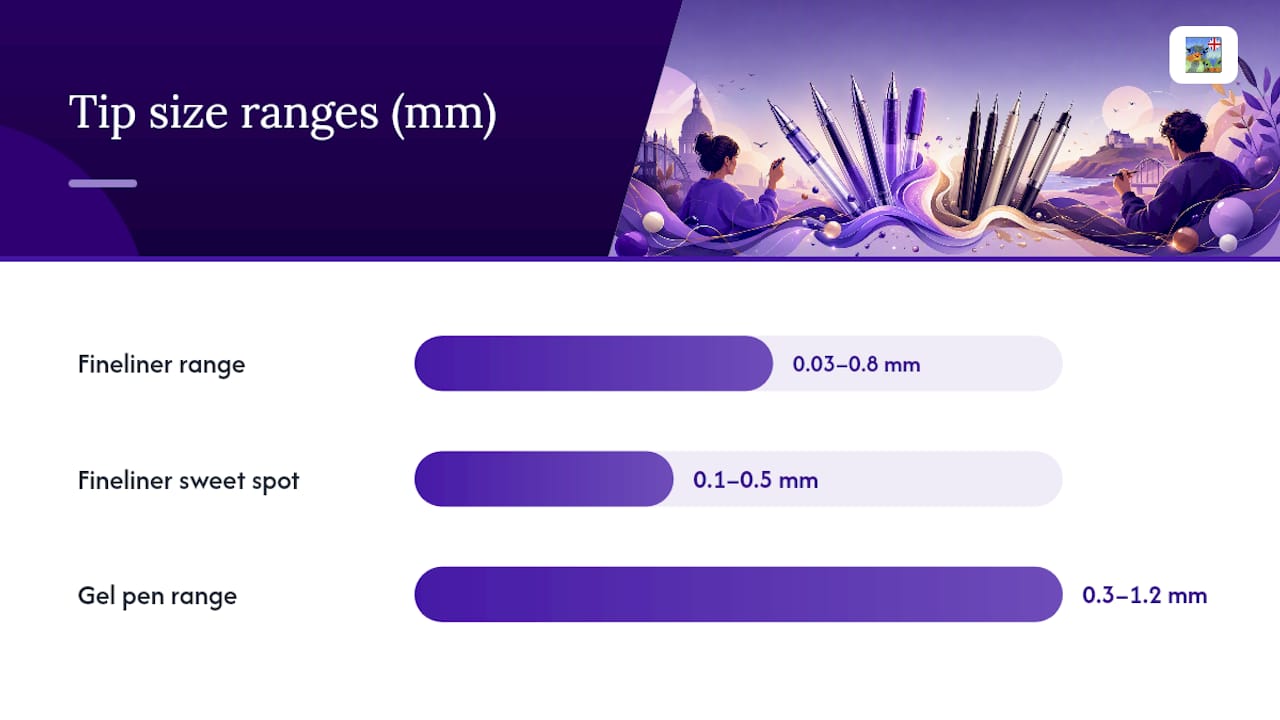
Tip sizes and line width vary more than most people expect. Fineliners commonly range from 0.03mm up to about 0.8mm, with the sweet spot for detail work sitting around 0.1 to 0.5mm. Gel pens run chunkier, typically 0.3mm to 1.2mm, which is why a gel pen line always reads bolder even at the same nominal size as a fineliner. If you've ever wondered why a "0.5mm" gel pen looks noticeably thicker than a "0.5mm" fineliner, this is the answer: the ink volume and delivery mechanism differ as much as the tip itself.
Drying time and smear risk is where gel pens lose ground. Because the ink is thick and sits on the surface rather than absorbing into it, gel ink typically needs 20 to 60 seconds to set fully. Drag a hand across it too soon, especially if you're left-handed and naturally pull your palm over what you just wrote, and you'll smear it. Fineliners dry faster in most cases because the ink is thinner and partially absorbs into the paper fibers, though pigment-based formulas can still sit wet for a few seconds on coated or glossy stock.
Permanence and archival quality is genuinely more complicated than pen packaging suggests. Analytical work on gel inks shows they're harder to characterize than traditional dye inks because formulations vary so much between brands, and that same variability affects real-world water resistance and fade resistance. Some gel pens hold up fine over years; others shift or fade depending on the pigment load and binder used. Fineliners, particularly ones marketed as pigment-based (as opposed to dye-based), tend to be the safer bet for anything you want to survive sunlight, humidity, or decades in a drawer.
Here's how the two stack up on the factors that matter most day to day:
- Opacity: Gel pens win, especially on dark or toned paper where dye inks disappear.
- Line consistency: Fineliners win, since the tip doesn't vary output with pressure the way a gel pen's ball can.
- Water resistance: Depends on formulation for both, but pigment-based fineliners are generally more predictable.
- Color range: Gel pens win by a wide margin, including metallics, pastels, and glitter finishes unavailable in fineliner ink.
- Fine detail: Fineliners win, particularly anything under 0.3mm.
Pro Tip: Don't assume "pigment-based" automatically means "permanent." Check the packaging for archival or lightfast claims specifically. A pigment ink with no lightfast rating can still shift color under UV exposure over a few years.
The most common failure mode for gel pens is skipping or "gooping," where ink either refuses to flow or blobs out unevenly after sitting unused. Fineliners fail differently: heavy hand pressure splays the fibrous tip permanently, and leaving one uncapped for even twenty minutes can dry out the reservoir for good. Neither failure is really about product quality; both come down to how you store and use the pen, which matters more with these two categories than with a standard ballpoint.
Which Pen Fits Your Project: Journaling, Planning, Coloring, or Drawing
Matching the pen to the task saves you from redoing pages, and it's the fastest way to stop wasting money on the wrong pack. Here's how the two options split across the projects most journalers and hobbyists actually work on.
-
Daily journaling. Fineliners are the safer everyday choice if you write a lot and hate smudging your own sentences. The fast-drying ink means you can move your hand across the page seconds after writing without a streak. Gel pens work too, but budget a beat of drying time between lines, especially in bullet journal layouts where you're stacking rows close together.
-
Planners and calendars. This is where color-coding matters, and gel pens genuinely earn their keep for category labels, highlights, and small icons that need to pop against a grid. The catch is bleed-through: planner paper tends to run thinner than journal paper, so a fine tip (0.3mm or under) and a light hand matter more here than in any other use case.
-
Adult coloring and decorative work. Fineliners handle the linework and outlines; gel pens handle the finishing accents. Illustrator resources consistently point to pairing pigment fineliners for outlines with gel pens for metallic or white highlights, particularly on darker paper where a white or metallic gel pen can add detail a colored pencil never could. If you work through pieces in one of Munkterproducts' adult coloring books, this combination is worth having ready before you start a page, not halfway through it.
-
Technical drawing and archival work. Fineliners win outright here. Consistent line width, predictable ink flow, and the availability of true archival, pigment-based formulas make them the standard choice for anything meant to last: sketches, technical illustrations, or documents you're filing away for years.
-
Left-handed and fast writers. Fineliners are the more forgiving option because of drying speed alone. If you're committed to gel pens anyway, look for quick-dry formulas and get in the habit of writing at a slight angle to reduce hand drag across fresh ink.
Paper, Tip Size, and Anti-Smear Techniques That Actually Work
Most gel pen and fineliner complaints trace back to paper choice, not the pen. Thin, uncoated paper under roughly 80 GSM will bleed through with gel ink and often ghost (show a shadow on the reverse side) with fineliners too. For gel pens specifically, heavier paper, 100 GSM or above, is the single biggest fix for both bleed and feathering, and it's also what lets metallics and glitter finishes show up properly instead of soaking in unevenly.
- Journaling and note-taking: 90 to 120 GSM paper with a smooth (not glossy) finish handles both pen types well.
- Planners with color-coding: stick to 0.3mm or finer tips to avoid overwhelming small grid boxes.
- Headers and titles: 0.5 to 0.8mm gel pens or fineliners give you bold presence without bleeding into body text below.
- Micro detail and fine linework: 0.1 to 0.3mm fineliners are the only realistic option; gel pens can't match that precision.
- Highlights and metallic accents: 0.5mm to 1.0mm gel pens on paper 100 GSM or heavier.
Drying time deserves its own habit, not just an afterthought. Give gel ink a full 30 to 60 seconds before touching it, and if you're left-handed, consider writing at a slight rotation to keep your hand trailing behind rather than dragging across fresh lines. Fineliners are more forgiving but not immune, particularly with pigment-heavy formulas on coated stock.
Layering the two is a real technique, not just a coloring-book trick. Lay down your fineliner outline first, let it fully cure (a minute is plenty), then add gel highlights on top once the base layer won't smear under pressure. Reverse that order and you'll drag fineliner ink through half-dry gel pigment, which ruins both lines at once.
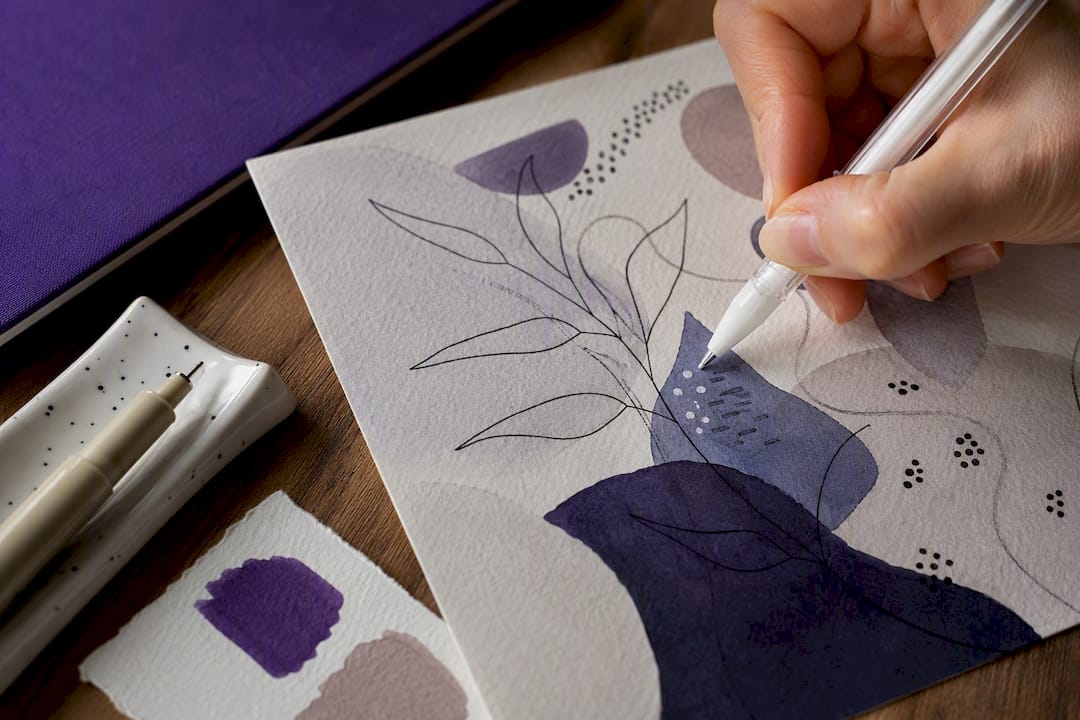
Pro Tip: Prime a new or long-unused gel pen by scribbling in tight circles on scrap paper for five to ten seconds before you commit to your actual page. This clears air bubbles and dried ink from the tip and prevents that first frustrating skip.
Keeping Your Pens Working Longer
Storage habits matter more with gel pens and fineliners than with basic ballpoints, since both rely on ink chemistry that's sensitive to air exposure and temperature.
- Store gel pens horizontally when possible, and always recap them immediately after use. This keeps the gel from settling unevenly or drying at the tip.
- Cap fineliners the second you set them down. Even a short stretch uncapped dries out the fine tip permanently, and there's no reviving it.
- Skipping or gooping in gel pens usually means it needs priming (scribble on scrap paper) or the tip has dried ink buildup that needs a gentle wipe.
- Splayed or frayed fineliner tips come from pressing too hard. Once the fibers spread, the line width changes permanently, so lighten your grip early rather than replacing pens constantly.
- Refillable barrels cost more upfront but pay off if you're using premium ink daily; disposable pens make more sense for occasional colored accents you won't burn through fast.
Watch for a scratchy, inconsistent line on either pen type. That's your signal to test on scrap paper before it ruins a page you actually care about.
Your 60-Second Decision Guide
Run through this before you pick up either pen for a project that matters:
- Need archival lines that won't fade? Grab a pigment-based fineliner, 0.3 to 0.5mm, on paper 90 GSM or heavier.
- Need vibrant color, highlights, or metallic effects? Gel pen, 0.5mm or larger, and don't go below 100 GSM paper.
- Left-handed or a fast writer? Default to fineliners unless you've got a quick-dry gel formula and a habit of angling your hand.
- Taking exam notes or writing under time pressure? Fineliners again. You don't have 30 to 60 seconds of drying time to spare per line.
- Still unsure? Test both on a scrap sheet of your actual paper before starting the real page, and keep a backup pen on hand. Nothing derails a coloring session or a planner spread like a pen dying mid-line.
Why Munkterproducts Knows Paper and Pens
Choosing the right pen only pays off if the paper underneath can handle it. Munkterproducts builds and curates coloring books, journals, planners, and puzzle books with paper weight and finish chosen specifically for pen-and-ink work, not just print quality. That's a distinction most stationery retailers skip entirely.
If you're working through detailed illustrations, the guidance in Creative Workflow for Adult Coloring That Actually Works walks through combining fineliner outlines with gel pen accents step by step. For journalers weighing paper options, 6 Unique Notebooks for Creative Expression in 2026 breaks down GSM and finish across different notebook styles. And if you want the broader case for why the right tools change your output, Why Stationery Inspires Creativity: The Science Behind It covers the research side of that connection.
- Product range spans coloring books, journals, planners, and puzzle books built for ink-based work.
- Blog coverage addresses paper weight, pen pairing, and workflow, not just product listings.
- Store pages point you toward journal types matched to your pen preferences before you buy.
For a journal built to handle daily pen use without bleed-through, the travel journal uses paper weight suited to both fineliner detail and gel pen accents, and it's a solid starting point if you're rebuilding your kit around this comparison. If coloring and puzzle work is more your focus, the activity and puzzle books category has options sized for the pairing techniques covered above.
The Real Lesson Buried in This Comparison
Most advice on this topic treats gel pens and fineliners as competitors, and that framing is backwards. The research consistently points the other way: illustrators pair pigment fineliners for structure with gel pens for finishing accents because neither tool does both jobs well. Conventional wisdom oversells the "just pick one" mentality, when the actual skill worth building is knowing which tool to reach for at which stage of a project.
Where most guides fall short is paper. They'll compare tip sizes and drying times in detail, then treat paper choice as an afterthought. It isn't. A 0.5mm gel pen on 80 GSM paper will bleed regardless of how good the pen is, and a $30 fineliner set can't save a page that ghosts through to the next sheet. If you take one thing from this comparison, prioritize paper weight before you spend another dollar on pens. Get that right, and the pen choice mostly takes care of itself.
— Mark