
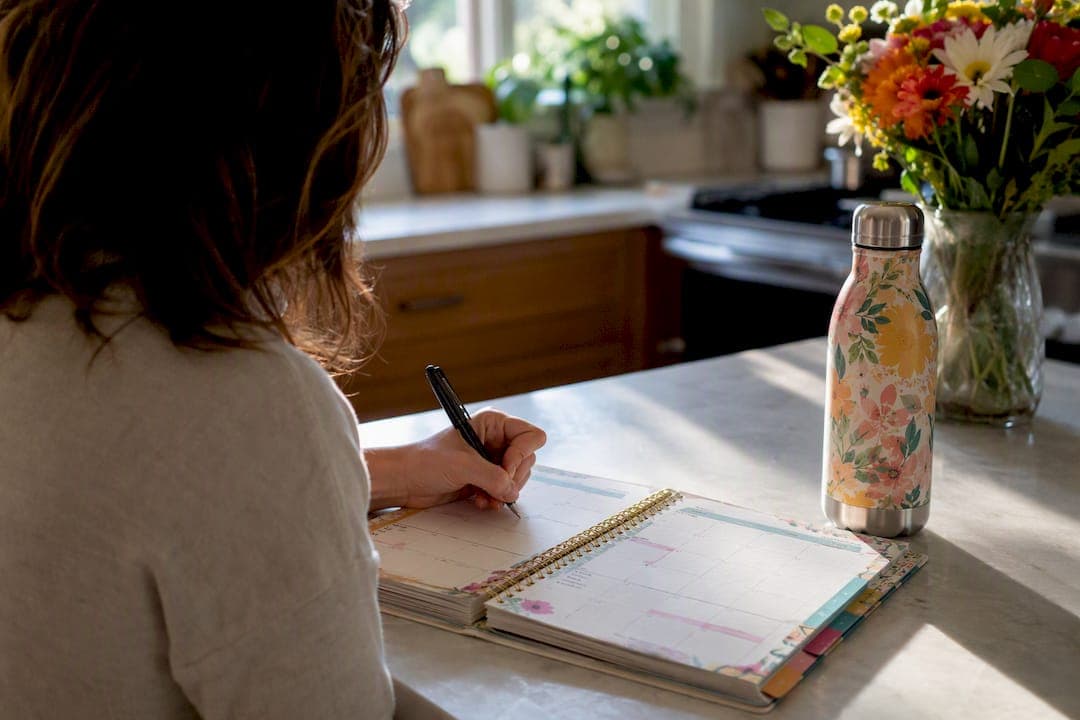
Use a parent-focused paper planner with dedicated family pages for daily routines, paired with a shared digital calendar for logistics. That combination cuts the mental load of tracking meals, school notes, and appointments better than either tool alone. Pick the paper format first, since it shapes how much setup you'll actually do this week.
TL;DR:
- Choosing a planner with quick setup time and features you will actually use weekly helps prevent abandonment and keeps you organized long-term.
- Flexible formats like undated or refillable binders suit parents who want customization and less waste, while small daily planners are ideal for frequent, brief check-ins.
- Prioritizing essential features such as meal planning, school contacts, chore trackers, and budget pages can significantly reduce mental load without unnecessary clutter.
- A hybrid system combining digital shared calendars with paper family pages offers the most effective balance for busy parents managing multiple logistics.
- Test simple pages like meal grids, chore charts, and contact sheets before investing in a full planner to find what works best for your family's routines.
Table of Contents
- Best Planners for Parents: A Quick Shortlist
- Daily, Weekly, Undated, or Binder: Which Planner Format Fits You?
- What Features Actually Reduce a Parent's Mental Load
- How to Choose a Planner: 8 Questions to Ask Before You Buy
- Paper, Digital, or Both: The Hybrid Setup That Actually Works
- Seven Planner Pages You Can Build This Week
- Why Trust This Guide on Planners for Parents
- A Parent's Honest Take on Planner Systems
- Find the Right Munkterproducts Planner for Your Family
- More Planner Resources Worth Bookmarking
- Sources
Best Planners for Parents: A Quick Shortlist
Not every parent needs the same planner, and that's the whole problem with most "best planner" roundups. They treat a single working mom juggling two kids' school schedules the same as a stay-at-home parent managing four kids' activities, three meal plans, and a part-time babysitter rotation. Here's a shortlist built around actual parenting situations instead of generic feature lists.
The compact daily family planner works for parents who check their planner multiple times a day and need something that fits in a bag or on a kitchen counter without eating up desk space. Look for daily spreads with a "top three priorities" box, a small meal note, and space for one kid-specific reminder per line. Setup time: under 10 minutes, since there's little to personalize beyond writing in the first week's appointments.
The refillable family binder suits parents who want to build a system over months rather than buy a new planner every year. GGC Planners' undated Mom System is a good example of this format done well. It's a start-anytime, add-anytime setup, which matters if you're the type who begins a new planner in March and doesn't want six blank months staring back. Setup runs closer to 30 minutes the first time, since you're choosing which inserts to include.
The undated starter mom planner is the right call for anyone easing into planning for the first time. You skip the guilt of unused January pages and start on whatever Tuesday you actually decide to get organized. Munkterproducts designs its planner and journal line with this exact reader in mind: someone who wants structure without a rigid calendar staring them down. The self-help journals and planners in the Munkterproducts catalog lean into flexible, undated layouts with family-relevant prompts rather than forcing a fixed start date.
The printable and digital hybrid fits parents who already live on their phone for scheduling but still want a physical page for meal plans or a chore chart taped to the fridge. Twinkl's weekly planner template is a solid free starting point if you want to test the format before committing to a bound planner. Setup time here is close to zero. Print, fill it out Sunday night, done.
The full-featured dated system is for parents who want everything in one place and don't mind a thicker planner. The Mum Planner from The Organised Mums is a substantial planner covering meal planning, budgeting, and routines in a single bound book. That's a lot of planner to commit to, but if you're the type who wants one object to hold your whole family's operating system, it earns its size. Expect 20 to 30 minutes of setup to map out the front-matter pages before daily use clicks into place.
A quick summary of how these stack up:
- Compact daily planner: fastest setup, best for pocket or bag use, thinnest feature set
- Refillable binder: most flexible long-term, moderate setup, requires you to choose inserts
- Undated starter planner: lowest commitment, good for first-time planners, Munkterproducts' core strength
- Printable/digital hybrid: free or near-free entry point, zero physical commitment
- Full-featured dated planner: most comprehensive, heaviest and slowest to set up, best for parents who want one master document
The pattern across all five: the planner that gets used isn't the one with the most pages. It's the one whose setup time matches how much energy you have left after the kids are in bed.
Daily, Weekly, Undated, or Binder: Which Planner Format Fits You?
Format decides whether you'll actually open the planner after week two, which is the real failure point for most systems.
A daily planner gives each day its own page or half-page, with room for hour-by-hour scheduling. Pick this if your days vary wildly and you need granular time blocks for school drop-offs, work calls, and after-school activities that shift constantly.
A weekly planner shows seven days on a two-page spread. Pick this if your family runs on a fairly repeatable rhythm and you'd rather see the whole week at a glance than flip pages constantly.
An undated planner has no pre-printed dates, so you write them in yourself. Pick this if you don't want to waste pages on a slow month or if you're buying mid-year and don't want six unused months of a dated system.
A binder or refillable system uses loose-leaf pages in a ring or disc binder. Pick this if you like swapping sections in and out. Add a budget section during tax season, remove it after.
Printables and digital templates are PDF or app-based pages you print or fill out on a tablet. Pick this if you want to trial a layout before spending money on a bound book, or if you need a single page (like a meal plan) without buying a whole planner.
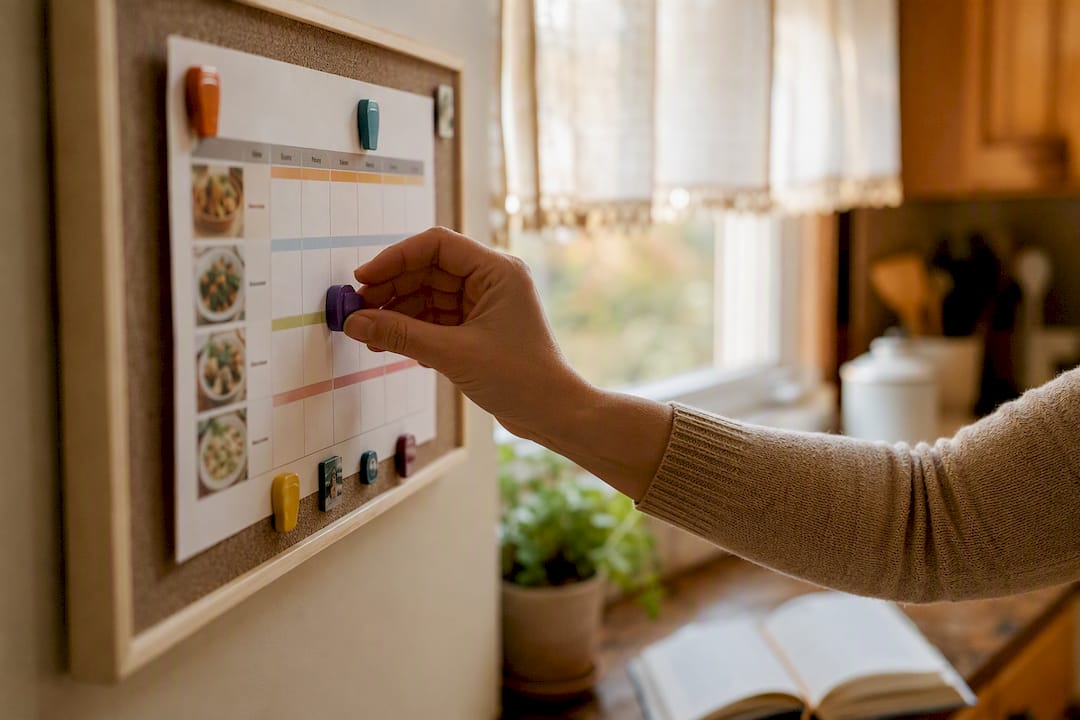
On portability: daily and weekly planners in a smaller trim size (around 5x8 inches) slide into a diaper bag or work tote. Binders and the 300-plus-page full-featured planners tend to live on a kitchen counter or desk rather than travel with you. If you need something bag-friendly, prioritize size over page count.
Expect these format-specific spreads:
- Daily: hour blocks, top-three priorities, one meal note
- Weekly: seven-day grid, weekend project space, errand list
- Undated: monthly overview you fill in, flexible habit tracker
- Binder: swappable meal planning, budget, and chore sections
- Printable: single-purpose sheets like a school contact card or babysitter info page
What Features Actually Reduce a Parent's Mental Load
Most planner features are filler. A handful actually make your week easier, and those are the ones worth paying attention to when you're comparing options.
- Meal planning pages. A simple version gives you seven boxes and a grocery list column. A full-featured version, like the meal and budgeting spreads in The Mum Planner, adds a pantry inventory and a "leftovers" tracker. Families with picky eaters or multiple dietary needs benefit from the full version; smaller households often do fine with the simple grid.
- School and babysitter pages. The Dailee's 2026 to 2027 Mom Planner includes dedicated spreads for school contact info and babysitter notes, which matters the moment you need to hand your phone-free planner to a sitter and walk out the door.
- Chore trackers. A grid with kids' names across the top and days down the side works for almost any family size. Bigger households benefit from color-coding by child.
- Budget and expense pages. Even a single monthly snapshot page helps you catch subscription creep or unplanned school fees before they pile up.
- Self-care or reflection prompts. A short daily gratitude line or weekly reflection box goes a long way toward making the planner feel like it's for you, not just your family's logistics.
Prioritize by family stage: parents of toddlers lean hardest on chore and meal pages, while parents of school-age kids need the school and babysitter spreads more. Larger families (four or more kids) benefit most from color-coded chore trackers and expanded meal grids.
Pro Tip: Choose a planner with three or four features you'll actually use every week over one with a dozen half-baked sections you'll skip past. A crowded planner is often abandoned faster than a simple one.
How to Choose a Planner: 8 Questions to Ask Before You Buy
Run through these questions while you're browsing product pages, whether that's a retailer site or a marketplace listing.
- Does the layout match how I already think? If you plan hour-by-hour, a weekly grid will frustrate you. If you think in weeks, a daily planner feels like overkill.
- Dated or undated? Dated systems (like The Dailee's 2026 to 2027 edition) work if you're starting near the calendar year. Undated systems work anytime.
- Is the paper quality good enough for your pen? Thin paper bleeds with fountain pens or thick markers. Check reviews for ghosting complaints before buying.
- Is it refillable? If you want to keep using the same cover for years, a disc or ring-bound system beats a bound book.
- Does it have printable or digital backup? Some planners, like Planner Mum's digital library, offer printable versions so you can replace a lost page without buying a whole new planner.
- What does it actually cost? Physical planners on marketplaces commonly range from budget paperback pricing up to premium hardcover systems, so compare against your actual budget rather than assuming higher price means better fit.
- Will it ship and arrive on time? Check delivery estimates before you buy, especially if you're ordering ahead of a school term start.
- How long will setup realistically take? If a product page shows dozens of sections with no sample images, assume a longer setup than advertised.
Red flags to watch for: no interior photos on the product page, vague "over 100 pages" claims with no breakdown of what's included, and reviews mentioning paper quality issues without any response from the seller.
Paper, Digital, or Both: The Hybrid Setup That Actually Works
Paper planners give you a tactile, low-distraction space for reflection and daily chores, but they can't send a push notification to your co-parent. Digital tools, like the Notion-based system behind The Real Mom Planner, sync instantly across devices and handle shared logistics well, but they add another screen to a day that's already full of them.
The fix most experienced parents land on is a hybrid. Here's a three-step version to try this week:
- Put shared logistics on a digital calendar. Anything that involves another adult (co-parent, sitter, carpool partner) goes here, since it updates in real time for everyone.
- Keep a paper planner for personal and family pages. Meal plans, chore grids, and reflection prompts stay on paper, where you're less likely to get distracted by a notification.
- Run a 10-minute Sunday sync. Compare both systems once a week and move anything that's drifted to the wrong place.
Test it for one week: pick one digital calendar, one paper planner, and commit to the Sunday sync before judging whether the system works for you.
Seven Planner Pages You Can Build This Week
You don't need to buy anything to test whether a page style works. Try these first, either on paper or as a quick printable.
- Meal plan grid: seven boxes plus a grocery list column. Setup: 5 minutes.
- Weekly overview: one page, seven days, three lines each. Setup: 5 minutes.
- School contact page: teacher names, pickup times, emergency contacts. Setup: 15 minutes the first time.
- Babysitter notes sheet: routines, allergies, bedtime, emergency numbers. Setup: 20 minutes.
- Chore grid: kids' names across the top, days down the side. Setup: 5 minutes.
- Budget snapshot: one page, monthly totals by category. Setup: 10 minutes.
- Self-care prompt page: one line a day for a mood or gratitude note. Setup: 1 minute per day.
Print blank versions from Twinkl's weekly planner resource if you'd rather test before committing to a bound planner.
Why Trust This Guide on Planners for Parents
Munkterproducts builds its planner and journal catalog around the same problem this guide addresses: parents need structure that doesn't require an hour of setup to feel useful. The catalog spans self-help journals, activity books, and planners designed for flexible, low-friction use, backed by ongoing blog coverage of planner organization habits and activity planning for kids.
Parent-focused planners that work tend to share one trait: they reduce invisible mental load through ready-made prompts, not blank pages waiting for you to design a system from scratch.
. Reader feedback on product pages, including notes on paper quality and page layout, directly informs how future planner editions get built.
A Parent's Honest Take on Planner Systems
Most planner advice assumes you have twenty spare minutes to build a custom system. You don't. The one habit worth stealing: a five-minute Sunday ritual where you fill in next week's meals and one line per kid before Monday hits. It's not a full planning session. It's just enough to feel ahead instead of behind. Try one recommended planner format from this guide for two weeks and see what sticks. That's a fair trial for any system.
— Mark
Find the Right Munkterproducts Planner for Your Family
Munkterproducts is the direct route to a ready-made parent planner without spending a weekend building your own system from loose printables and spreadsheets. Where fully custom digital systems ask you to configure every page yourself, Munkterproducts' planners and journals arrive with family-relevant structure already built in, so setup takes minutes instead of hours.

Browsing the Munkterproducts catalog, you'll find undated planners suited to the "starter mom planner" category from earlier in this guide, alongside self-help journals that add the reflection and self-care prompts busy parents often skip when relying on a bare digital calendar. Product pages show page counts and sample layouts up front, and orders ship with postage included. If you've been putting off buying a planner because you couldn't decide on a format, start with the self-help journals and planners collection and pick the layout that matches how you already think about your week. For a lighter gift option alongside a planner purchase, the fairies coloring book makes a easy add-on for a child's quiet time while you fill in your own pages.
More Planner Resources Worth Bookmarking
- Munkterproducts blog: ongoing organization tips and a kids activity planning guide.
- Atlas Kings: practical ideas for organizing a busy household that pair well with any planner setup.