

TL;DR:
- Artistic notebooks serve as dedicated creative workspaces where artists develop ideas through sketches, notes, and visual experimentation. Selecting the right notebook depends on media compatibility, binding durability, size, and budget to support effective creative workflows. A well-chosen notebook enhances cognitive engagement and facilitates artistic growth rather than simply serving as a display piece.
Artistic notebooks are dedicated creative workspaces where artists, writers, and visual thinkers develop ideas through sketches, rough notes, and visual experimentation rather than finished work. In the industry, these are most commonly called sketchbooks or artist journals, though the term "artistic notebook" captures the full range of formats that blend aesthetic design with practical function. Brands like Moleskine, Rhodia, and handcrafted makers have built entire product lines around this concept. Whether you are a hobbyist looking to build a daily practice or searching for a thoughtful gift, understanding what separates a true creative notebook from a generic spiral pad will save you money and frustration.
What are artistic notebooks and what features define them?
An artistic notebook is defined by its paper, binding, and layout working together to support a specific creative medium. Generic notebooks ignore these variables. Artist-grade notebooks do not.
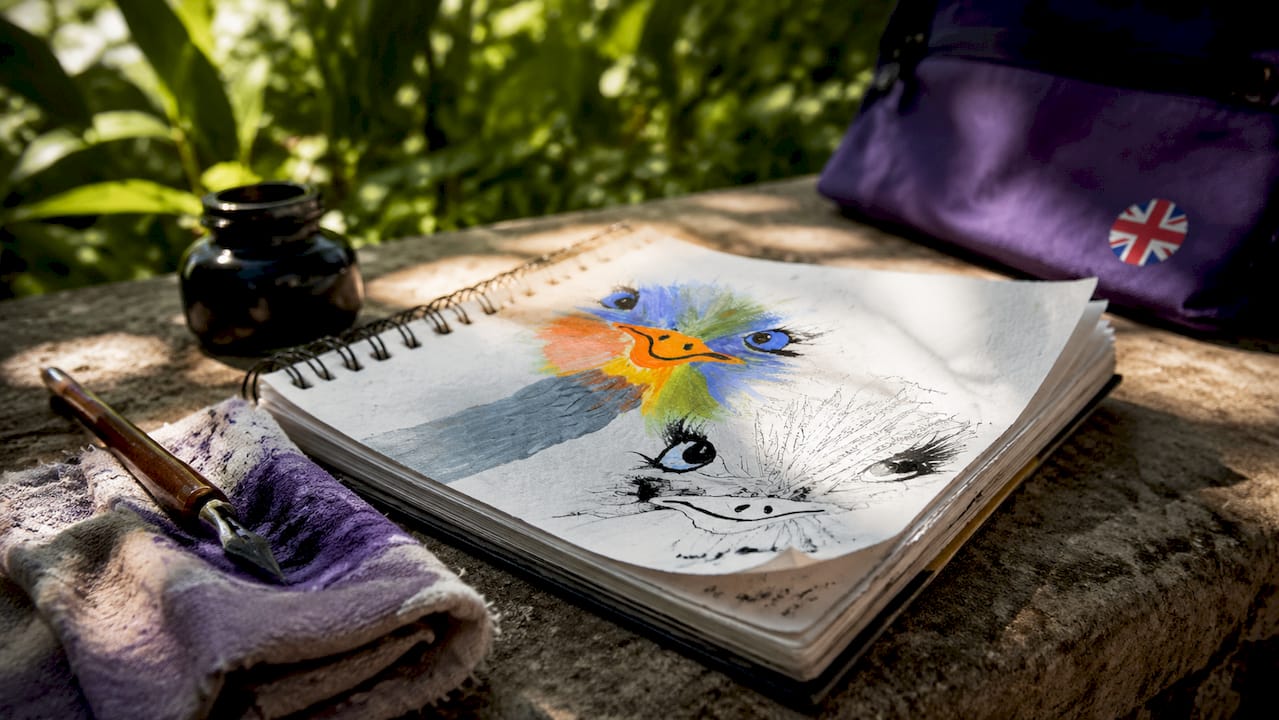
Paper weight and media compatibility
Paper weight is the single most important spec to check before buying. Paper weight by media breaks down like this: below 100gsm for dry media like pencil and ink, 160–200gsm for mixed media, and over 200gsm for watercolor. The 160gsm threshold is considered the professional standard for mixed media notebooks because it resists buckling when wet media is applied. Choosing the wrong weight does not just affect quality. It ruins the page entirely.
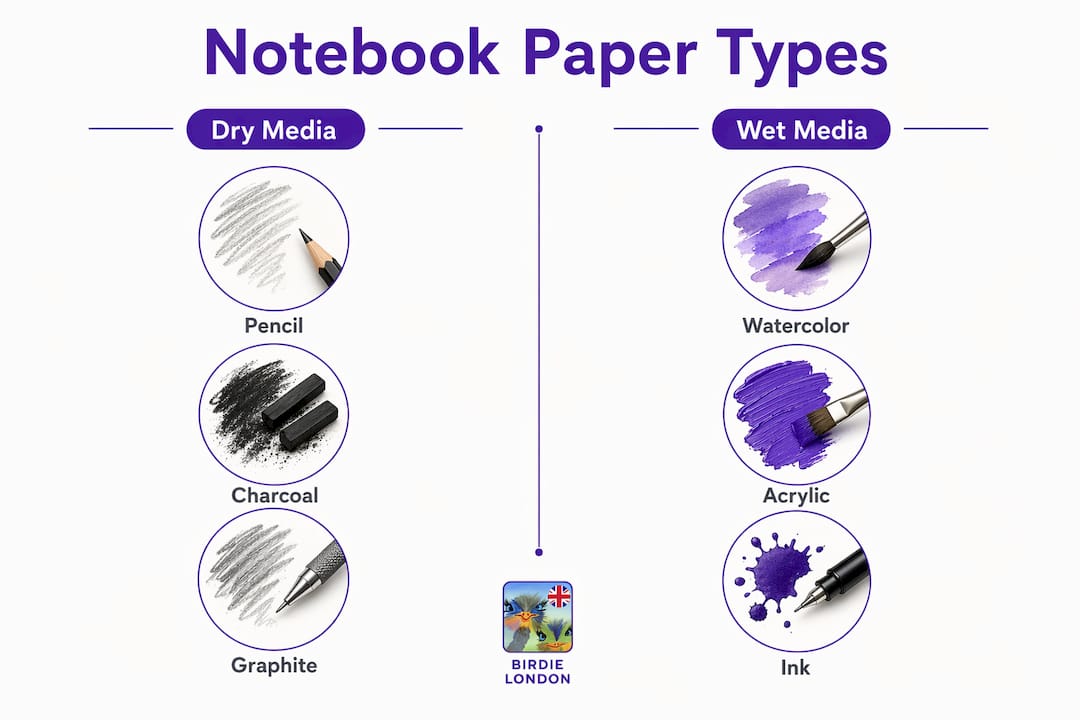
Paper texture and surface finish
Smooth paper is ideal for detailed pencil work and fine-line ink drawing. Medium texture suits charcoal, graphite, and mixed media techniques because the tooth grips the medium without fighting it. Rough or cold-press surfaces work best for watercolor washes. Matching texture to your tools is not a preference. It directly affects how your medium performs on the page.
Binding types
Binding determines how the notebook behaves in your hands. The most common options are:
- Spiral-bound: Lays flat, pages tear out cleanly, great for daily practice
- Smyth-sewn hardcover: The most durable option, lay-flat design allows full-spread work without the spine fighting you
- Perfect-bound softcover: Compact and lightweight, but does not lay flat and can crack at the spine
- Coptic or hand-bound: Opens fully flat, often used in artisan and handmade journals
Page layouts
Page format choices each serve a different creative purpose. Blank pages offer maximum freedom for sketching and painting. Lined pages suit writers who combine text with imagery. Dotted and grid pages help designers and architects organize compositions and maintain proportion. Many mixed-media users prefer blank or dotted layouts because they impose the least visual interference on the work.
Pro Tip: Never use paper below 100gsm with watercolor markers or brush pens. The ink bleeds through immediately, ruins the page beneath it, and wastes the entire spread.
What are the common types of artistic notebooks?
The term "artistic notebook" covers several distinct formats. Each one suits a different working style, budget, and creative goal.
- Spiral sketchbooks are the most accessible entry point. They lay flat, allow easy page removal, and cost under $15 for most standard sizes. Brands like Strathmore and Canson dominate this category.
- Artisan hardcover notebooks sit in the $15–$30 range and feature premium materials like vegan leather covers and gold-foil detailing that make them popular as gifts. They combine durability with visual appeal.
- Handmade journals with Smyth-sewn bindings are built for longevity. The binding allows the book to open completely flat, which matters when you are working across a full spread.
- Specialty notebooks are engineered for a single medium: watercolor paper blocks, toned paper sketchbooks for charcoal, or mixed-media journals with varied paper stocks throughout.
| Type | Best For | Price Range | Key Advantage |
|---|---|---|---|
| Spiral sketchbook | Daily practice, beginners | Under $15 | Lays flat, pages removable |
| Artisan hardcover | Gifts, studio use | $15–$30 | Durable, visually striking |
| Handmade journal | Long-term projects | $20–$50+ | Lay-flat, premium build |
| Watercolor block | Wet media painting | $15–$40 | Pages stay flat when wet |
| Mixed-media notebook | Versatile creative work | $15–$35 | Handles multiple media types |
The right type depends on how you work. A daily sketcher who fills a notebook every month needs a different tool than someone building a long-term visual journal.
How do artistic notebooks support creative workflows?
Physical notebooks do something digital tools cannot replicate. Physical marking allows artists to better process, notice, and understand their creative ideas compared to typing or tapping on a screen. Psychologist Jackie Andrade's research supports this directly: the act of drawing or writing by hand activates deeper cognitive engagement than digital input.
This is the concept of cognitive offloading. When you put a rough idea on paper, your brain is freed from holding that idea in working memory. You can then build on it, revise it, or connect it to something else. The notebook becomes an external thinking tool, not just a storage device.
Here is how that plays out in a practical creative workflow:
- Quick capture: Sketch a rough idea the moment it appears, without worrying about quality or finish
- Visual exploration: Develop the idea across multiple small thumbnails on the same page
- Written annotation: Add notes, measurements, or color references directly beside the sketch
- Cross-referencing: Flip back through earlier pages to connect new ideas with old ones
- Reflection: Review past entries to track how your thinking and style have evolved
"Crossed-out lines and abandoned ideas are not failures. They are evidence of active problem-solving and meaningful creative work." — Inkpause, Journaling for Artists
The messiness of a working notebook is a feature, not a flaw. A notebook full of clean, finished drawings is a portfolio. A notebook full of crossed-out lines, margin notes, and half-finished ideas is a thinking tool. The second one is far more valuable for creative growth.
Pro Tip: Date every entry in your artistic notebook. Six months from now, being able to trace the evolution of an idea from rough sketch to finished concept is one of the most motivating things you can do for your creative practice.
How to choose the best artistic notebook for your needs
Choosing the right notebook comes down to four variables: media, size, binding, and budget. Getting all four right means the notebook disappears into your practice. Getting one wrong means you fight the tool every time you open it.
- Match paper to your media first. If you use watercolor or alcohol markers, start at 160gsm minimum. For pencil and ink only, 90–100gsm works fine and keeps the notebook lighter and cheaper.
- Choose size based on where you work. A5 (roughly 5.5 x 8.5 inches) travels well in a bag. A4 or larger suits studio work where you need room to spread out. Pocket-sized notebooks like a 3.5 x 5.5 inch format are ideal for urban sketchers who work on location.
- Prioritize binding for your workflow. If you work across full spreads, Smyth-sewn or spiral binding is non-negotiable. If you mostly work on single pages, a perfect-bound softcover is lighter and more portable.
- Consider the cover design for gift purchases. Artisan notebooks with decorative covers, embossed designs, or premium materials read as thoughtful gifts. The stationery and creativity connection is real: a beautiful notebook signals that the creative work inside matters.
- Test before committing to a large format. Buy a smaller or cheaper version of a paper type first. One wasted $40 notebook teaches you more about your preferences than any review.
Budget is a real constraint, but the most expensive notebook is not always the best one for your practice. A $12 spiral sketchbook with 160gsm paper will outperform a $35 artisan journal with 80gsm paper every time you pick up a brush.
Key takeaways
Artistic notebooks work best when paper weight, binding type, and page layout are matched to the specific media and workflow of the user.
| Point | Details |
|---|---|
| Paper weight is non-negotiable | Use 160gsm minimum for mixed media; below 100gsm is for dry media only. |
| Binding affects daily usability | Smyth-sewn and spiral bindings lay flat; perfect-bound does not. |
| Notebooks are thinking tools | Messiness and rough sketches signal active cognitive work, not poor practice. |
| Type determines best use case | Spiral suits daily practice; artisan hardcovers work best as gifts or studio journals. |
| Test paper before buying large | A small test purchase prevents wasting money on incompatible paper stock. |
Why i think most people buy the wrong notebook first
I have gone through more notebooks than I can count, and the pattern I keep seeing is the same one. People buy based on cover design first, paper quality second, and binding last. That order is exactly backwards.
The most visually striking notebook I ever owned had 80gsm paper and a perfect-bound spine that cracked by page 30. I used it for dry pencil work only because anything wetter destroyed the page. The binding made working across spreads nearly impossible. It looked great on a shelf. It was a poor creative tool.
The notebooks that actually changed how I work were less photogenic. A spiral-bound Strathmore 400 series with 160gsm paper. A hand-bound journal from a small maker with Smyth-sewn binding that opened completely flat. Neither one would win a design award. Both of them got used until the covers fell off.
The unique notebooks for creative expression that hold up over time share one quality: they disappear. You stop noticing the tool and start noticing the work. That only happens when the paper handles your media without fighting you and the binding stays out of your way.
My honest recommendation is to treat your first artistic notebook as a test, not a commitment. Buy something mid-range with verified paper weight specs, use it hard for 30 days, and pay attention to what frustrates you. The answer to "what notebook should I buy next" is almost always written in the margins of the one you are currently using.
— Mark
Find your next creative notebook at Munkterproducts
Munkterproducts carries a curated selection of notebooks, journals, and creative stationery built for people who take their creative practice seriously.

Whether you are looking for a daily sketchbook with paper that handles mixed media without buckling, or a beautifully designed artisan journal to give as a gift, Munkterproducts has options across formats and price points. Every notebook in the creative notebooks collection is selected with paper quality, binding durability, and design in mind. Browse the full range at Munkterproducts and find a notebook that fits how you actually work, not just how it looks on a shelf.
FAQ
What is an artistic notebook used for?
An artistic notebook, also called a sketchbook or artist journal, is a dedicated workspace for developing creative ideas through sketches, rough notes, and visual experimentation. It functions as a thinking tool rather than a display portfolio.
What paper weight should an artistic notebook have?
Paper weight depends on your media. Use below 100gsm for dry media like pencil, 160–200gsm for mixed media, and over 200gsm for watercolor to prevent buckling and bleed-through.
What is the difference between a sketchbook and an artistic notebook?
Sketchbook is the standard industry term for what is broadly called an artistic notebook. The distinction is mostly marketing. Both describe bound books with artist-grade paper designed for creative work rather than writing or note-taking.
Are spiral-bound or hardcover notebooks better for artists?
Spiral-bound notebooks lay flat and allow easy page removal, making them better for daily practice. Hardcover notebooks with Smyth-sewn binding offer greater durability and are preferred for long-term projects and gift use.
How do i choose an artistic notebook as a gift?
Prioritize artisan hardcover notebooks in the $15–$30 range with decorative covers and verified paper weight specs. A notebook with 160gsm paper and a durable binding works for most media types and signals genuine quality to the recipient.