
TL;DR:
- Carefully chosen coloring books are suitable for most 1-year-olds, especially ones with large, bold illustrations and thick pages.
- The Munkterproducts curated children's coloring book is recommended for its safety, durability, and age-appropriate design.
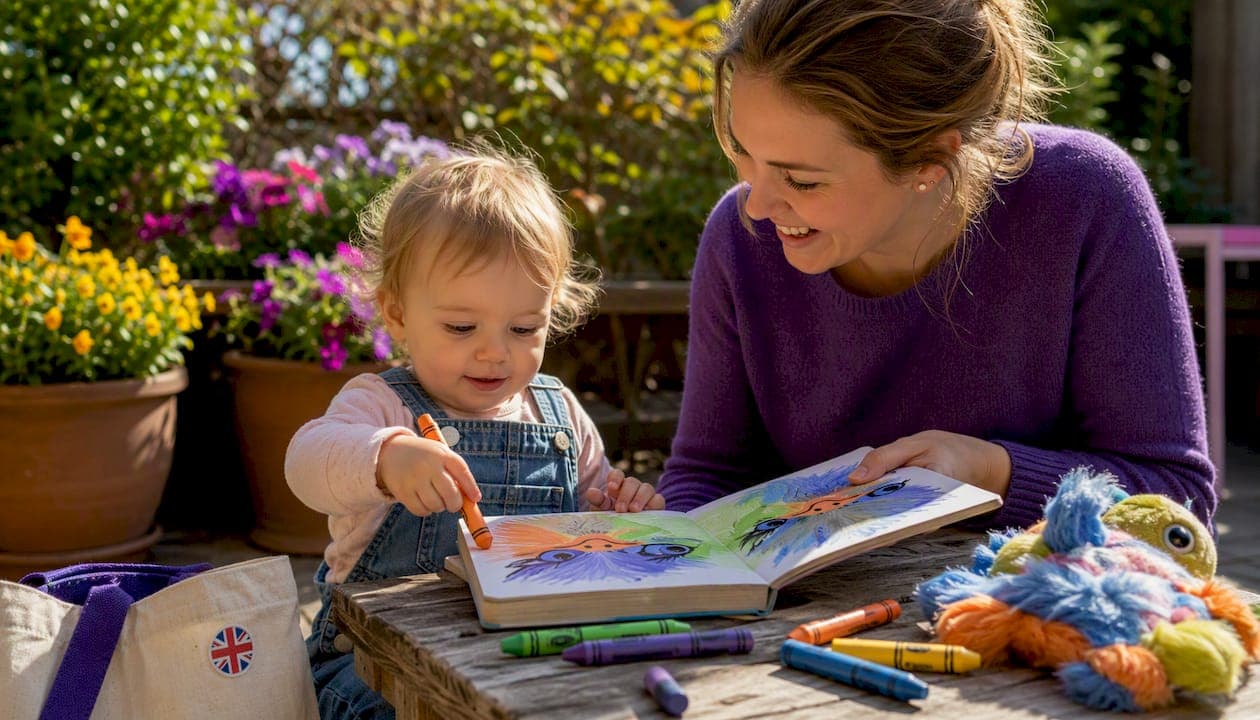
The short answer: yes, a carefully chosen coloring book is appropriate for most 1-year-olds, and the Munkterproducts curated children's coloring book is the single pick worth starting with. It checks every box parents actually need to verify: large, bold illustrations sized for tiny hands to scribble across, thick pages that survive enthusiastic toddler handling, and non-toxic, washable materials throughout.
Who this fits best: parents or caregivers who want one safe, durable, and genuinely simple coloring activity they can pull out today without worrying about mess, toxicity, or whether the book will survive the week.
- Top pick: Munkterproducts curated children's coloring book — age-appropriate design, thick pages, non-toxic materials
- Why it wins: built specifically for the 1–3 year developmental window, with bold single-object illustrations that match where a 1-year-old's recognition skills actually are
- Best for: parents who want a ready-to-go, safe option without comparing a dozen products
Table of Contents
- What should you look for in a first coloring book?
- Which supplies are actually safe for a 1-year-old?
- How does coloring actually help a 1-year-old develop?
- How do you introduce coloring to a 1-year-old?
- What safety checks matter most during coloring time?
- How much do toddler coloring books cost, and where do you buy them?
- Key Takeaways
- What parents often get wrong about coloring at this age
- Get the Munkterproducts curated coloring book for your 1-year-old
- Useful sources and further reading
What should you look for in a first coloring book?
Not every book labeled "toddler" is actually built for a 1-year-old. The gap between a book designed for a 3-year-old and one suited to a 12-month-old is significant, and the wrong choice usually ends in torn pages and a frustrated caregiver.
Here is what to check before buying:
- Age label on packaging: look for "1+" or "ages 1–3" printed on the cover or back. A book labeled 3+ will almost always have illustrations too small and complex for this stage.
- Illustration style: large, bold outlines focused on single objects — one animal, one shape, one fruit per page. Complex scenes with multiple characters overwhelm a 1-year-old's visual processing.
- Page construction: board book pages or extra-thick cardstock. Spiral binding keeps pages flat and makes it easier for small hands to work without the book flopping shut.
- Paper quality: bleed-proof or single-sided pages prevent marker seep-through, which matters more than most parents expect until they find a ruined table.
- Safety certifications: non-toxic labeling such as ASTM D-4236 or AP certification on both the book and any included accessories. Washable inks are non-negotiable at this age.
- Durability and cleanability: wipeable covers and pages that tolerate a light damp wipe. Avoid sticker add-ons with small peel-off pieces that become choking hazards.
- If your child is still mouthing everything: that is completely normal at 12 months. Choose a water-reveal or mess-free format and wait a few weeks before introducing crayons or markers directly.
Pro Tip: Check the educational coloring books roundup on the Munkterproducts blog for age-graded options sorted by developmental stage.
Which supplies are actually safe for a 1-year-old?
The coloring book matters, but the tools you pair with it matter just as much. A 1-year-old does not have the fine motor control to manage a standard crayon, and most standard markers are not designed for this age group.
- Chunky or triangular crayons: thick, ergonomic crayons help toddlers build grip strength and resist the improper fist-grasp that becomes a hard habit to break later. Triangular barrels naturally guide fingers toward a more functional hold.
- Washable, large-bodied markers: look for "washable" and "non-toxic" printed on the barrel, not just the packaging. Low-odor formulas are worth the small price premium for indoor use.
- Mess-free systems: water-reveal pads and color-with-water books are the highest-value choice for the youngest toddlers. The child explores independently, and cleanup is a damp cloth. Markers that only activate on special paper work the same way and are worth considering for travel.
- Avoid: thin felt-tip pens, markers with small detachable caps, any art supply not explicitly labeled for toddlers, and anything with pieces small enough to fit in a mouth.
- Cleaning tip: for washable marker on fabric, cold water and dish soap within the first few minutes removes most of it. On upholstery, blot rather than rub to avoid spreading the stain.
For Montessori-style drawing tools that support fine motor development alongside coloring, the Montessori Creative Drawing Toy Set from ToylandEU pairs well with a first coloring book.
How does coloring actually help a 1-year-old develop?
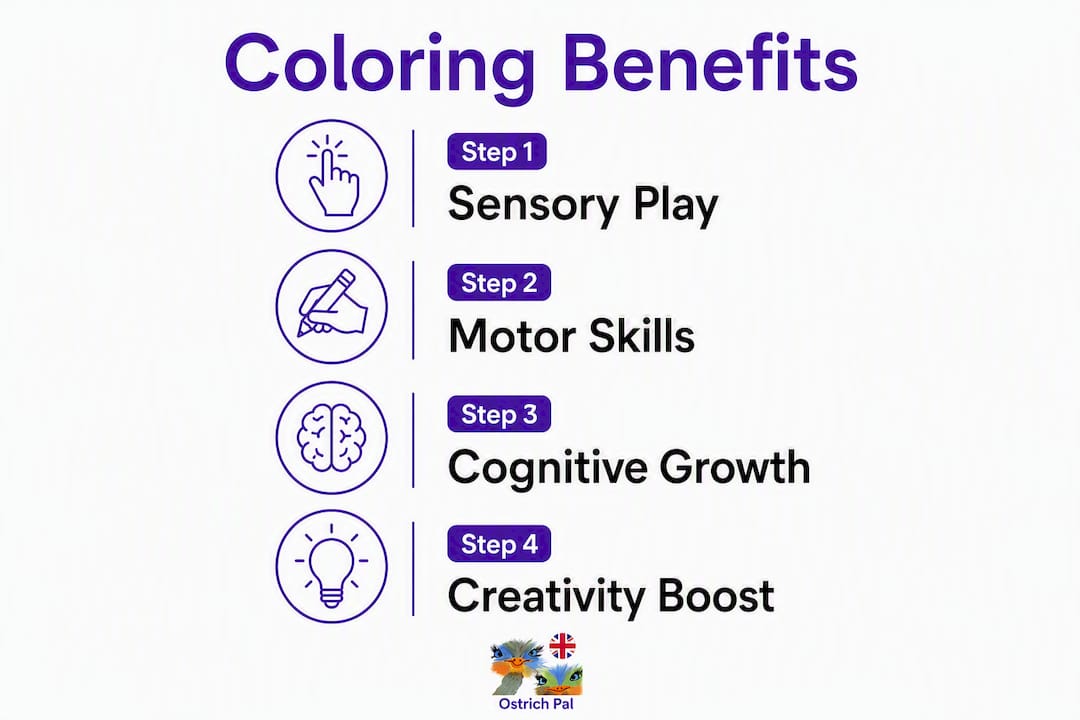
At 12 months, a child's hands are still learning to do what the brain wants. The grip needed to hold a crayon, the wrist rotation needed to make a mark, the eye-hand coordination needed to aim at a page — all of these are genuinely new skills. Regular brief engagement with age-appropriate coloring materials strengthens hand muscles and dexterity, helping toddlers move from spontaneous scribbles toward more controlled marks over weeks and months.
The cognitive gains are just as real. Naming the animal on the page, pointing to the color being used, and recognizing familiar objects all build vocabulary and object recognition simultaneously. Educators recommend treating coloring as sensory play and vocabulary-building rather than an art task — label objects and colors during the activity for language gains.
The meaningful metric at this age is progressive engagement over weeks, not precision on any single day. Expect wrist and finger stamina to build across repeated short sessions, with noticeable improvement over months rather than immediately.
The goal at this stage is cognitive and sensory exploration. Short exploration sessions are preferred over longer structured ones — a 5-minute session that ends on the child's terms does more developmental good than a 20-minute session that ends in tears.
How do you introduce coloring to a 1-year-old?
The setup matters more than most parents realize. A chaotic start usually means a short session and a reluctant child next time.
- Set up the space first. Lay down a silicone mat or a few sheets of newspaper under the book. Put out one or two crayons only — not the whole box. Fewer choices mean less overwhelm.
- Introduce the tool before the page. Let your child hold the crayon and feel its weight. Some children will immediately try to mark something; others need 30 seconds to examine it first.
- Open to a single bold image. Point to it and name it: "Look, a duck." Keep it simple. You are building recognition, not conducting a lesson.
- Let them explore without correction. Scribbling outside the lines is the point at this age. Resist the urge to guide the hand — it interrupts the sensory experience and can make the activity feel like a test.
- Scaffold briefly with a two-step prompt. Try "color the apple" while pointing. Simple two-step tasks support vocabulary and object recognition while the motor system develops at its own pace.
- Wrap up before interest drops. A short session is plenty. End while the child is still engaged rather than waiting for frustration to signal the stop.
Five quick activity variations to try:
- Parent-guided scribble time: you color alongside your child on the same page. Modeling the motion is more effective than instruction.
- Color-matching: hold up a red crayon next to a red toy and name the color. Simple, but it builds color vocabulary fast.
- Animal-spotting pages: point to the animal, make the sound, then color it together.
- Sticker and color pairing: place a sticker on the page and let your child scribble around it. The sticker acts as a visual anchor.
- Mess-free water-reveal play: ideal for travel, strollers, or car trips. No cleanup, full independence.
What safety checks matter most during coloring time?
- Choking hazards: avoid any crayon or marker with small detachable caps. Break crayons in half before use if they are still too long for a small fist. Sticker add-ons in coloring books are a common overlooked risk — check that any included stickers are large enough not to be swallowed.
- Non-toxic certification: look for ASTM D-4236 or the AP (Approved Product) seal from the Art & Creative Materials Institute on both the book and the coloring tools. These are the two certifications that actually mean something in the U.S. market.
- Marker caps: always account for caps as separate choking hazards. Store markers with caps secured and out of reach when not in use.
- Supervision: stay within arm's reach during any coloring session with a 1-year-old. If a crayon or marker goes in the mouth, remove it calmly and redirect. Most non-toxic washable materials pass through without harm, but supervision prevents repeated ingestion.
- Stain cleanup: act immediately. Cold water on washable marker, dish soap on crayon wax. For upholstery, a small amount of rubbing alcohol on a cloth lifts most washable marker without damaging fabric.
How much do toddler coloring books cost, and where do you buy them?
Most first coloring books for toddlers fall into three price bands:
- Under $8: basic paperback formats with simple black-and-white outlines. Pages are thinner, and bleed-through is common with markers. Fine for crayons.
- $8–$15: the sweet spot for most parents. This range covers books with thicker pages, better binding, and age-labeled content. Most well-reviewed toddler coloring books sit here.
- $15 and up: board book formats, specialty mess-free systems, or books bundled with crayons or stickers. Worth it if durability is the priority.
Major retailers carry a wide selection, but the age labeling and safety certifications vary significantly by product. Before checkout on any platform, confirm: the age label (1+ or 1–3), the non-toxic certification mark, and whether the pages are thick enough for the tools you plan to use.
The Munkterproducts curated children's coloring book is the pick this article leads with — handpicked for the 1–3 year developmental window, with large bold illustrations, thick pages, and non-toxic materials confirmed. Find it directly at munkterproducts.com and confirm the age label and certifications on the product page before checkout.
Key Takeaways
The single most important decision for a 1-year-old's first coloring book is page construction and illustration size — everything else follows from getting those two right.
| Point | Details |
|---|---|
| Choose bold images and thick pages | Large single-object illustrations and board-book-grade pages are the top criteria for 1-year-olds. |
| Use chunky, washable tools | Triangular or thick crayons build grip strength; washable non-toxic labeling is non-negotiable. |
| Keep sessions short | 3–8 minute sessions repeated often outperform longer, infrequent ones for motor and language gains. |
| Supervise and check certifications | Stay within arm's reach; confirm ASTM D-4236 or AP certification on both book and tools before use. |
| Munkterproducts curated pick | The Munkterproducts children's coloring book is recommended for parents who want one safe, durable, age-appropriate option. |
What parents often get wrong about coloring at this age
Most of the frustration parents feel during early coloring sessions comes from one misread: treating the activity as art practice rather than sensory play. A 1-year-old scribbling outside every line, ignoring the image entirely, or spending three minutes just holding the crayon is not failing at coloring. That child is doing exactly what the developmental stage calls for.
The books and tools that work best reflect this. Large, simple images are not a compromise for young children — they are the correct design for where recognition and motor skills actually are at 12 months. A book crammed with detail is not more educational; it is just harder to engage with, and harder to engage with means shorter sessions and less practice.
The other thing worth saying plainly: mess-free systems are not a shortcut or a lesser option. For the youngest toddlers, color-on-paper-only markers and water-reveal pads that only activate on treated surfaces let a child explore independently without constant caregiver intervention. That independence is developmentally valuable. A parent who is not hovering over a mess is a parent who can actually label colors and name objects — which is where the real language gains happen.
Start simple. Keep it short. Let the child lead the session's end.
Get the Munkterproducts curated coloring book for your 1-year-old
The Munkterproducts curated children's coloring book gives parents exactly what this age needs: thick pages that survive real toddler use, large bold illustrations matched to a 1-year-old's recognition level, and non-toxic washable materials confirmed before it ships. No searching through dozens of products with inconsistent age labels.

Head to munkterproducts.com to find the curated pick, confirm the age label and safety certifications on the product page, and complete your order at checkout. Postage is included, and the book ships ready to use.
Useful sources and further reading
- Coloring books: A balanced developmental perspective — Not Just Cute
- Best educational coloring books to boost kids' learning — Munkterproducts Blog
- Types of educational books that spark creativity — Munkterproducts Blog
- Munkterproducts curated children's coloring books — Munkterproducts