
TL;DR:
- Selecting educational books requires considering developmental appropriateness and engagement quality.
- Activity, story-based, and interactive books each target different learning styles and skills.
- Rotating multiple types of books and connecting them to children’s interests enhances learning and motivation.
Picking the right educational book for a child feels harder than it should. Shelves overflow with options, every cover promises something extraordinary, and the stakes feel real because the right book genuinely can shape how a child thinks, creates, and learns. Research confirms that playful learning books enhance cognitive, social, and academic skills in measurable ways. This guide cuts through the noise. You will walk away knowing the main types of educational books, what each one does best, and exactly how to match a book to your child's learning style and goals.
Table of Contents
- How to choose educational books: What matters most
- Activity and experiment books: Hands-on discovery
- Story-based educational books: Learning through narrative
- Interactive and playful learning books: Engagement first
- Comparison of educational book types and situational recommendations
- Our perspective: Making educational books truly work for your child
- Find top educational books at MunkterProducts.com
- Frequently asked questions
Key Takeaways
| Point | Details |
|---|---|
| Blend multiple formats | Combining story, activity, and interactive books keeps learning engaging and targets different skills. |
| Prioritize playfulness | Books that integrate playful learning activities boost vocabulary, problem-solving, and creativity. |
| Select by skill focus | Match the book type to the primary skill you want your child to develop, like math or empathy. |
| Consider age and interests | Choose books that fit your child’s developmental stage and natural curiosity for best results. |
How to choose educational books: What matters most
Before you browse a single title, it helps to know what you are actually evaluating. A beautiful cover and a glowing review are not enough. The books that genuinely move the needle share a few specific qualities, and once you know them, spotting the right pick becomes much faster.
Here are the core criteria worth checking for any educational book:
- Developmental appropriateness. Is the content pitched at the right age and ability level? A book that is too easy bores children quickly. One that is too advanced shuts them down.
- Engagement quality. Does the book invite the child to do something, think something, or feel something? Passive reading has its place, but books that spark curiosity deliver more lasting results.
- Format variety. The best collections mix stories, experiments, and interactive elements rather than relying on one delivery method.
- Alignment with learning goals. If you want to build math confidence, choose books that weave numbers into real scenarios. If social skills are the priority, look for narrative-driven content with relatable characters.
- Room for open-ended play. Books that leave space for a child's own ideas tend to outperform those with rigid, single-answer activities.
When choosing children's books, it also pays to think about the environment where reading happens. A classroom setting calls for different features than a quiet evening at home.
Pro Tip: Rotate between at least two or three different book types each month. Variety keeps learning dynamic and ensures you are building a wider range of skills rather than doubling down on just one.
The research backs this up. Guided play outperforms free play or direct instruction alone for vocabulary, math, and geometric reasoning. That means books designed around structured but joyful activities are not just more fun. They are measurably more effective.
Activity and experiment books: Hands-on discovery
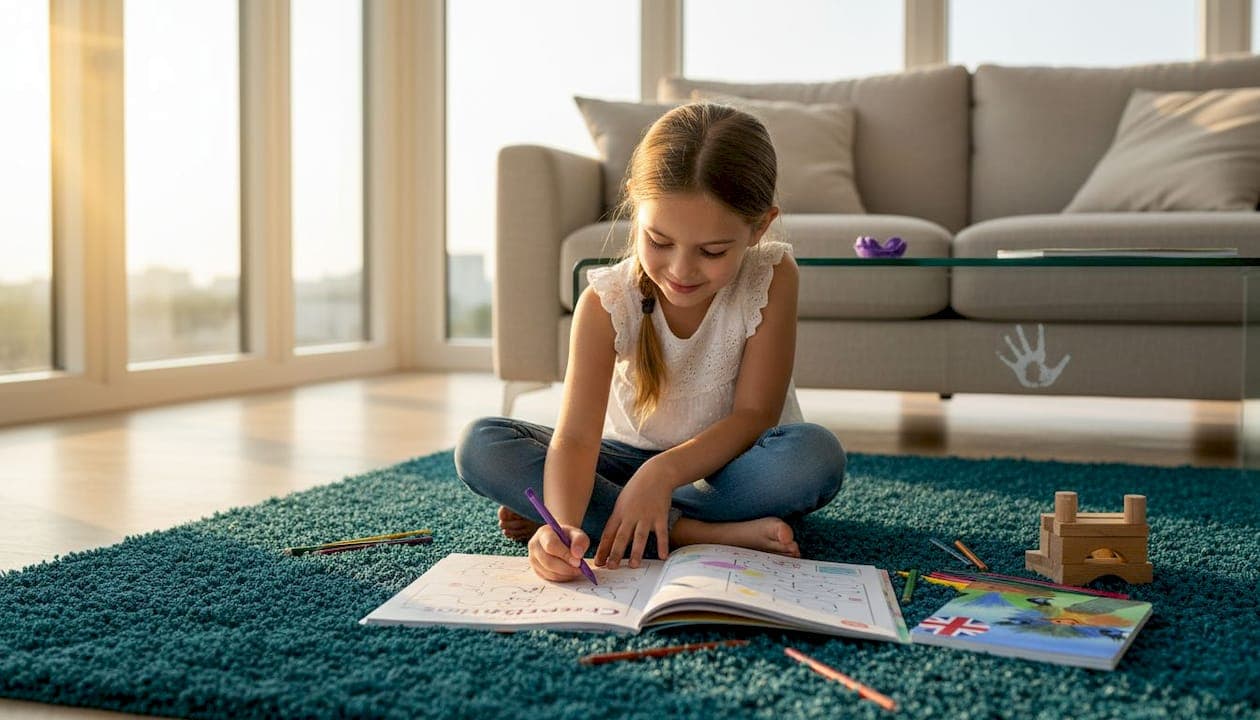
Activity and experiment books put the child in the driver's seat. Instead of reading about how volcanoes work, a child builds one. Instead of memorizing multiplication tables, they solve a puzzle that makes the pattern obvious. That shift from passive to active is where the real learning happens.
These books typically include:
- Science experiments with household materials
- Art and craft projects with step-by-step guidance
- Math challenges disguised as games or puzzles
- Logic problems that build sequential thinking
- Open-ended creative prompts that reward original ideas
Age progression matters here. For children aged three to five, look for books with large, simple activities and minimal reading required. Ages six to nine can handle multi-step experiments and basic data recording. Older children, ten and up, benefit from books that introduce hypothesis testing and reflective journaling alongside the activity itself.
"Guided play outperforms free play or direct instruction for vocabulary, math, and geometric reasoning" — The power of playful learning, NAEYC
When evaluating an activity book, check that instructions are genuinely clear, not just brief. Vague steps frustrate children and adults equally. Also confirm that any materials required are safe, affordable, and easy to source. The best activity books are designed so a child can work independently or with minimal adult support after the first read-through.
For a deeper look at what makes these books work, the guide on making activity books for kids breaks down the design principles behind effective formats. You can also use an activity book checklist to evaluate any title before you buy.
One often-overlooked feature: open-ended sections. Books that ask "what do you think would happen if..." after an experiment teach children to form their own questions. That habit of inquiry is one of the most transferable skills a child can develop.
Story-based educational books: Learning through narrative
Stories are one of the oldest teaching tools humans have. A well-crafted narrative wraps a lesson inside an experience, and the brain retains experiences far better than isolated facts. Story-based educational books use this to their advantage.
These books work across a wide range of subjects:
- History: Characters living through real events make dates and causes memorable.
- Science: Adventure stories set in ecosystems or space missions teach concepts through context.
- Social-emotional learning: Characters facing friendship challenges, loss, or new environments build empathy and resilience in young readers.
- Personal growth: Stories centered on persistence, curiosity, or courage give children a mental model to draw on in real life.
Playful interactions increase vocabulary and social skills like resilience and cooperation, and story-based books are one of the most natural ways to deliver that kind of interaction. A child who sees a character work through a problem is quietly rehearsing how to handle something similar.
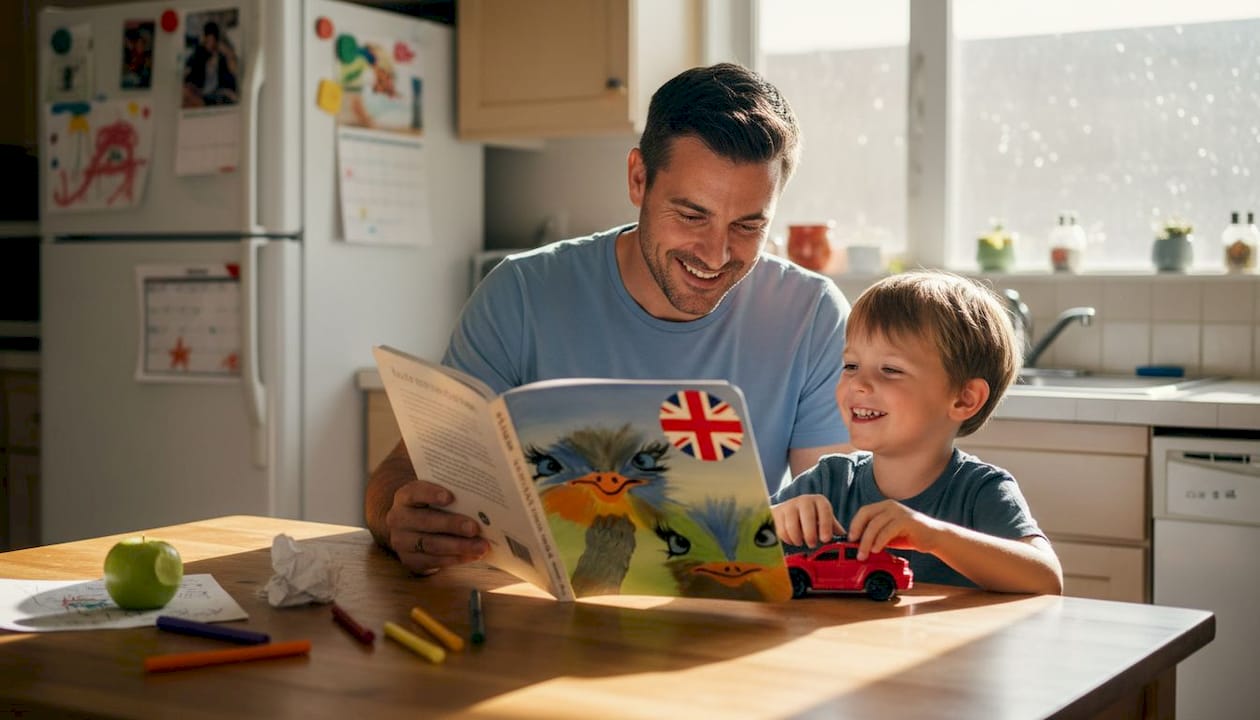
Story-based books are especially effective for auditory and reading-oriented learners. They also shine in classroom read-aloud settings, where a teacher can pause to ask questions and connect the narrative to real experiences. For ideas on how narrative supports creative development, the post on storytelling for creativity offers practical frameworks educators can use immediately.
If you want curated picks across subject areas, the top educational book picks guide covers a broad range of story-based titles organized by age and learning goal. The key quality marker for any story-based educational book is whether the lesson feels earned by the story, not bolted on. Children sense the difference immediately.
Interactive and playful learning books: Engagement first
Interactive books take engagement to a different level. These are books with lift-the-flap pages, movable pieces, embedded QR codes linking to videos, or app integration that extends the printed content into a digital experience. They are designed for children who learn best by touching, moving, and doing.
Here is how the main formats compare:
| Format | Key feature | Best use case | Ideal age |
|---|---|---|---|
| Lift-the-flap | Hidden content revealed by touch | Early concept learning | Ages 2 to 6 |
| Puzzle books | Interlocking problems and clues | Logic and spatial reasoning | Ages 5 to 12 |
| Augmented reality | App-linked 3D visuals | Science and geography | Ages 7 to 14 |
| QR-linked audio | Audio narration or video support | Language and reading | Ages 4 to 10 |
| Game-integrated | Rules and play built into pages | Math and strategy | Ages 6 to 12 |
Research on loose parts play shows it enhances problem-solving and predicts creative thinking and math skills over time. Interactive books bring that same spirit indoors and into a structured format, making them a strong bridge between home reading and classroom learning.
For a full breakdown of what to look for, the guide on interactive books for kids covers formats, age recommendations, and how to evaluate quality before purchasing.
Pro Tip: Use interactive books as a group activity whenever possible. Two or three children working through a puzzle book together naturally practice communication, negotiation, and collaborative thinking alongside the academic content.
Comparison of educational book types and situational recommendations
Now that you know what each type offers, here is a side-by-side view to help you decide which format fits your current situation.
| Book type | Primary skills | Best ages | Engagement style |
|---|---|---|---|
| Activity and experiment | Critical thinking, science, creativity | 3 to 14 | Hands-on, independent |
| Story-based | Vocabulary, empathy, memory | 3 to 12 | Listening, reading, discussion |
| Interactive and playful | Problem-solving, motivation, spatial skills | 2 to 14 | Tactile, visual, collaborative |
Choosing the right type does not have to be complicated. Follow these steps:
- Identify your primary goal. Is this about building a specific academic skill, supporting emotional development, or simply making reading more enjoyable?
- Consider the child's natural learning style. Does the child gravitate toward building things, listening to stories, or exploring with their hands?
- Check the environment. A classroom with 20 students calls for different books than a quiet reading corner at home.
- Start with one type and observe. Watch how the child engages. Boredom, frustration, or excitement are all useful data points.
- Rotate formats regularly. Guided playful learning balances child agency with structured support, and rotating book types replicates that balance naturally.
Use an activity book checklist to evaluate new titles quickly. For older children focused on self-development, personal growth educational books add another valuable layer to a well-rounded reading diet.
Our perspective: Making educational books truly work for your child
Here is something the category labels do not tell you: the type of book matters far less than whether the child actually wants to open it again tomorrow. We have seen beautifully designed activity books collect dust and simple story books read to pieces. The difference is almost never the format. It is the fit.
The most effective approach we have observed is one that stays flexible. Start with a child's current obsession, whether that is dinosaurs, space, cooking, or drawing, and find books in multiple formats that connect to that interest. A child who loves cooking will engage with a science experiment book framed around kitchen chemistry, a story about a young chef, and an interactive recipe puzzle book equally well.
The role of books in growth is not just academic. Books shape how children see themselves as learners. Keeping that experience joyful and pressure-free is the most important variable of all. Rigid adherence to any single format or method is the fastest way to make reading feel like a chore.
Find top educational books at MunkterProducts.com
Inspired to refresh your bookshelf? At MunkterProducts.com, you will find a curated range of children's educational books spanning activity formats, story-based learning, and interactive picks designed to engage curious minds at every age.

Whether you are a parent building a home library or an educator sourcing classroom materials, the collection makes it easy to find books matched to specific skills and age groups. Browse expert book recommendations to discover titles chosen for genuine educational value. Every purchase includes postage, so the only thing left to do is start reading.
Frequently asked questions
What type of educational book is best for preschoolers?
Hands-on activity books and interactive playful learning books are best for preschoolers because they build foundational skills through experimentation and active engagement. Guided play outperforms direct instruction alone for vocabulary and math at this age.
How do story-based educational books help children?
Story-based educational books improve vocabulary, empathy, and memory by wrapping lessons inside narratives children connect with emotionally. Playful interactions through stories also build resilience and cooperation over time.
Are interactive educational books effective for older children?
Yes, quality interactive books keep older children motivated and are shown to strengthen problem-solving and creative thinking. Playfulness predicts both convergent and divergent creative thinking as well as math skills over the long term.
How can I mix different types of educational books for the best results?
Rotate between story, hands-on, and interactive books so children build a variety of skills and stay genuinely engaged. Guided playful learning balances child joy and agency with enough structure to produce deeper learning outcomes.