
TL;DR:
- Confidence is a skill that can be learned and strengthened through evidence-based books.
- Active engagement with exercises and reflection enhances lasting self-confidence growth.
- Bibliotherapy is effective for mild to moderate issues and can complement professional therapy.
85% of people struggle with self-confidence at some point in their lives. That number is staggering, and it challenges the popular myth that confidence is a fixed personality trait you either have or you don't. The truth is, confidence is a skill. It can be learned, practiced, and strengthened over time. Confidence-themed books offer one of the most accessible and research-backed ways to start that process. This article breaks down how these books work, what the science says, who benefits most, and how to pick the right one for your unique situation.
Table of Contents
- What makes confidence-themed books effective?
- The science: How bibliotherapy builds real confidence
- Who benefits most and what are the limits?
- How to choose and use confidence-themed books for best results
- Why building confidence through books is misunderstood (and what truly works)
- Explore confidence-building resources with MunkterProducts.com
- Frequently asked questions
Key Takeaways
| Point | Details |
|---|---|
| Practical confidence tools | Confidence-themed books make psychology actionable, giving you habits and skills to boost self-esteem. |
| Science-backed results | Research shows bibliotherapy can reduce anxiety and build self-efficacy for all age groups. |
| Safe and flexible growth | Books are most effective for mild to moderate challenges and work best with active, mindful engagement. |
| Personalized application | Choosing the right book and using creative activities make the benefits last in everyday life. |
What makes confidence-themed books effective?
Not all self-help books are created equal, and confidence-themed books earn their place in a different category entirely. Rather than offering vague motivational advice, the best ones translate genuine psychology into daily, repeatable actions. Self-help books on confidence translate psychology into actionable practices that readers can apply immediately, making them far more useful than generic pep talks.
At their core, these books operate on a model that therapists sometimes call identification, catharsis, and insight. First, you recognize yourself in the material. Then you process the emotions that come up. Finally, you walk away with a new framework for thinking about yourself. It sounds simple, but that three-step cycle is genuinely powerful when a book is written well.
How traditional advice compares to evidence-based confidence books:
| Approach | Method | Outcome |
|---|---|---|
| Generic motivation | Inspirational quotes, vague goals | Short-term mood boost, low retention |
| Evidence-based books | Psychology frameworks, structured exercises | Lasting behavior change, measurable growth |
| Passive reading | Read only, no reflection | Limited impact |
| Active engagement | Journaling, exercises, reflection | Stronger self-efficacy, skill-building |
The habits these books build also matter. Top confidence books consistently encourage practices like daily affirmations grounded in real evidence, exposure exercises that help you face fears in small doses, and structured self-reflection that rewires negative thought patterns. These are not just feel-good exercises. They come from cognitive behavioral therapy, acceptance and commitment therapy, and positive psychology research.
- Cognitive reframing: Teaching you to challenge automatic negative thoughts
- Behavioral activation: Encouraging action before confidence feels natural
- Values clarification: Helping you understand what truly matters to you
- Self-compassion training: Reducing harsh self-judgment that stifles growth
Pro Tip: When reading a confidence book, keep a dedicated notebook beside you. Writing down one key insight per chapter forces your brain to process the idea more deeply than passive reading alone.
"Confidence is not about being the loudest in the room. It is about trusting yourself enough to act, even when doubt shows up uninvited." This distinction shifts the entire conversation from performance to identity.
Understanding the role of books in self-improvement means recognizing that the format itself matters. A good confidence book gives you a safe space to experiment with new ideas about yourself before you try them in the real world.
The science: How bibliotherapy builds real confidence
Bibliotherapy, which means using books as a therapeutic tool, is not a new idea. But the research supporting it has grown dramatically in recent years, and the results are more convincing than most people expect.
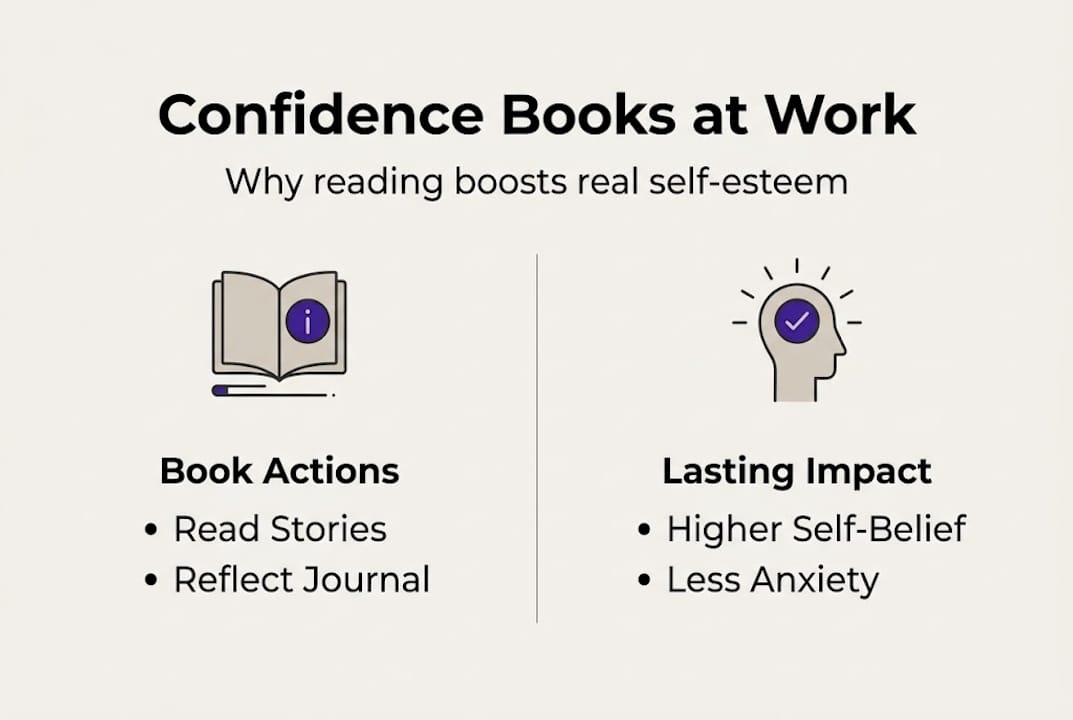
Structured bibliotherapy significantly reduces anxiety and depression scores while increasing self-efficacy in college students, according to peer-reviewed research. That is a meaningful triple effect from something as accessible as reading a book with intention.
Bibliotherapy outcomes compared to other common interventions:
| Intervention | Anxiety Reduction | Self-Efficacy Gain | Accessibility |
|---|---|---|---|
| Traditional therapy | High | High | Low (cost, availability) |
| Bibliotherapy | Moderate to high | Moderate to high | Very high |
| Mindfulness apps | Moderate | Low to moderate | High |
| Social media motivation | Minimal | Minimal | Very high |
Perhaps even more striking, bibliotherapy increases self-esteem in people of all ages at rates comparable to cognitive behavioral therapy (CBT), which is widely considered the gold standard for treating low self-esteem.
How you use these books as part of a real self-improvement plan matters enormously. Here is a practical process:
- Choose intentionally. Pick a book that targets your specific challenge, whether that is social confidence, professional assertiveness, or self-worth in relationships.
- Read actively. Highlight, annotate, and write responses. Passive reading cuts the benefit significantly.
- Apply one idea per week. Do not try to change everything at once. Pick one exercise and practice it consistently.
- Reflect regularly. At the end of each week, write a short paragraph about what shifted. This cements new self-perceptions.
- Revisit key chapters. Rereading specific sections during hard moments reinforces learning when you need it most.
Exploring books and personal wellness reveals that reading for growth is not just about the content. The act of reading itself reduces cortisol, lowers heart rate, and activates the parts of the brain responsible for empathy and self-regulation. Confidence grows in that calm, focused mental state.

Pro Tip: Pair each confidence book with a short journaling session immediately after reading. Even five minutes of reflection significantly increases how much of the material you actually internalize and apply.
Who benefits most and what are the limits?
Bibliotherapy and confidence-themed books are remarkably versatile, but they are not a one-size-fits-all solution. Understanding who gains the most from them helps you decide whether this approach fits your situation.
Bibliotherapy is especially effective for mild to moderate issues and works best with guided engagement. This means people dealing with everyday self-doubt, social anxiety, or general low self-esteem are ideal candidates. The research also points to specific groups who see strong results:
- Children and teens: Stories that feature relatable characters facing similar challenges build emotional vocabulary and coping skills early.
- Adults in transitions: Career changes, relationship shifts, and life milestones often trigger confidence dips that targeted books can address directly.
- People with mild to moderate anxiety: Books that teach cognitive tools offer practical relief without requiring clinical intervention.
- Creative individuals: Those who already connect with art and storytelling often respond strongly to narrative-based confidence building.
Collaborative reading amplifies the benefit. A parent reading with a child, a group of friends sharing a self-help book, or a therapist assigning chapters as homework all produce better outcomes than solo reading alone.
"The books we give children become the voices they hear inside their own heads for the rest of their lives." Choosing those voices carefully is one of the most confidence-building gifts an adult can offer.
That said, there are real limits here. Fiction can enhance self-confidence and empathy but may be risky for populations with specific triggers, particularly those dealing with trauma, acute mental health crises, or severe depression. In those cases, a professional therapist should guide any reading plan.
Books are also not a substitute for medication when that is clinically appropriate. If your low confidence connects to a diagnosable condition, books work best as a complement to professional care, not a replacement. Exploring adult activity books benefits shows how interactive formats can layer well on top of standard therapeutic support, adding creative outlets that pure talk therapy sometimes misses.
How to choose and use confidence-themed books for best results
With so many options available, knowing how to pick the right book saves time and delivers faster results. A few clear criteria separate genuinely useful books from those that just feel good.
Reading books boosts resilience, reduces stress, and supports executive functioning, especially in children, making the selection process particularly important for parents and educators. Here is how to evaluate any confidence book before committing:
- Check the foundation. Does it reference actual research, real case studies, or established psychological frameworks? If the entire book is personal anecdote with no evidence, approach it cautiously.
- Look for action steps. Every strong confidence book includes specific exercises, not just ideas. If you finish a chapter and cannot name one concrete thing to do differently, the book is not pulling its weight.
- Match it to your stage. A book designed for teenagers will not hit the same notes for a 45-year-old executive. Find one written for your actual life context.
- Mix fiction with nonfiction. Nonfiction teaches frameworks. Fiction lets you practice empathy and visualize different versions of yourself, both of which build confidence in distinct ways.
- Plan for creative expression. The books that stick are the ones paired with journaling, coloring, or other hands-on activities that translate insight into physical action.
For parents, the guide to choosing children's books offers specific frameworks for matching books to developmental stages, which matters enormously for confidence-building at younger ages.
Pro Tip: Start a small reading group with two or three friends using the same confidence book. Discussing your reactions out loud doubles the impact because articulating an idea forces your brain to own it.
Why building confidence through books is misunderstood (and what truly works)
Here is the part most self-help advice skips entirely. Reading a confidence book once, feeling inspired, and moving on does almost nothing for lasting change. The people who see real transformation treat books as training manuals, not entertainment.
The uncomfortable truth is that passive inspiration is seductive because it feels like progress. You finish a chapter, you feel good, and you mistake that feeling for growth. Real confidence comes from acting on what you read, repeatedly, in the messy moments of actual life.
Mixing nonfiction frameworks with fiction and adding creative practices like journaling or art is not a bonus feature. It is the core mechanism. Personal growth with books happens at the intersection of reading, reflection, and action. None of those three elements alone is enough.
What most self-help culture also gets wrong is the relationship between self-trust and identity. Confidence is not a feeling you wait to arrive. It is an identity you practice inhabiting, one small action at a time. The best books understand this and structure their entire approach around that truth.
Explore confidence-building resources with MunkterProducts.com
Ready to turn inspiration into action? The insights in this article point to one consistent truth: the right book, used intentionally, can genuinely shift how you see yourself.

At MunkterProducts.com, you will find confidence-building books and tools curated for real people at different stages of their growth journey. Whether you are looking for adult coloring books designed around confidence and self-expression, self-help journals that pair perfectly with your reading practice, or children's books that nurture resilience early, the collection is built with purpose. Browse the full range and find your next step toward a more confident version of yourself.
Frequently asked questions
What are confidence-themed books?
Confidence-themed books teach evidence-based strategies for building self-esteem and self-trust using lessons from psychology and personal development. These books translate psychology into practical, repeatable actions you can apply right away.
How does bibliotherapy differ from standard therapy for confidence?
Bibliotherapy often matches the benefits of traditional therapy for mild to moderate issues, providing flexible, self-paced growth. Bibliotherapy increases self-esteem at rates comparable to CBT, though it may lack the professional support needed for more severe cases.
Can fiction books help with confidence too?
Yes, reading fiction enhances self-confidence and empathy, though careful selection is important for readers who may have specific emotional triggers.
Are these books suitable for children and teens?
Absolutely. Reading boosts resilience especially in children, and confidence-themed books can support emotional well-being and self-belief when paired with positive adult involvement.