
Choose story-driven, high-illustration activity books paired with a couple of reusable sticker or water-reveal options. That combination covers the widest range of ages, keeps kids genuinely engaged rather than just occupied, and holds up across multiple uses. The American Academy of Pediatrics consistently links hands-on, creative play to cognitive and motor development, and Common Core standards for early literacy align naturally with the narrative and writing prompts built into the best formats. Munkterproducts curates exactly this kind of collection, which is why it appears throughout the picks below.
Quick scenarios where these formats shine:
- Travel and long waits: Reusable sticker books and water-reveal pads need no extra supplies and survive a car seat.
- Classroom backup or quiet time: Story-driven doodle-adventure books and puzzle compendiums work independently without teacher setup.
- Skill practice at home: Guided drawing books and labeled sticker scenes build fine motor control and early vocabulary simultaneously.
Key Takeaways
The strongest educational activity books combine high-quality illustration with varied prompts, match format to developmental stage, and are introduced strategically to preserve novelty.
| Point | Details |
|---|---|
| Illustration quality drives engagement | Books with expressive art and narrative prompts hold attention far longer than flat, repetitive formats. |
| Match format to age and goal | Reusable pads for toddlers, sticker-scene books for preschoolers, story-driven formats for early elementary and up. |
| Stockpile and rotate for novelty | Buy two to three books at once, keep some in reserve, and introduce each right before the occasion it's meant for. |
| Check paper weight and safety | Look for 60 lb+ paper, ASTM D-4236 non-toxic certification, and age-appropriate sticker sizes. |
| Munkterproducts curated sets | Handcrafted, high-illustration activity books with perforated pages and reusable elements, shipped with postage included. |
Table of Contents
- What are the best educational activity books right now?
- How do you pick the right activity book?
- What should you buy by age and learning goal?
- Which format fits which situation?
- How do you keep kids engaged with activity books over time?
- Where do you buy activity books, and what should you pay?
- How these picks were selected
- What materials and safety standards should you check?
- Why illustration quality matters more than page count
- Munkterproducts curated activity books: handcrafted picks worth owning
- Sources
What are the best educational activity books right now?
The table below covers eight formats worth knowing, mapped to age, skill focus, and price tier. Amazon's bestseller data confirms these are the formats parents actually buy, not just the ones that look good in reviews.
| Pick / Format | Best For (Age / Skill) | Why It Works | Price Tier |
|---|---|---|---|
| Munkterproducts curated activity books | All ages / creativity, literacy | Handcrafted, high-illustration, perforated pages; reusable elements | Mid–Premium |
| Hervé Tullet — Draw Here | Ages 4–8 / creative drawing | Story-driven prompts turn blank pages into narrative; no wrong answers | Mid |
| National Geographic Kids sticker activity books | Ages 5–10 / STEM, vocabulary | Labeled stickers double as vocabulary builders; durable cardstock | Budget–Mid |
| Usborne sticker / activity books | Ages 3–8 / fine motor, literacy | Wide format range; perforated pages; self-contained | Budget–Mid |
| Mike Lowery — Doodle Adventures series | Ages 6–10 / narrative, drawing | Choose-your-own-adventure doodle format builds storytelling skills | Mid |
| Julia Rothman — Nature Anatomy Activity Book | Ages 8–12 / STEM, illustration | Dense prompts, high illustration quality; holds older kids' attention | Mid–Premium |
| Mad Libs / Highlights / brainPLAY puzzle compilations | Ages 6–12 / literacy, logic | Variety of puzzle types in one volume; great for groups or solo | Budget–Mid |
| Reusable water-reveal / Water Wow pads | Ages 1–4 / fine motor, color recognition | No mess, no supplies, repeatable; ideal for toddlers and preschoolers | Budget |
How do you pick the right activity book?
A short checklist cuts through the noise faster than any review roundup. Work through these before you buy:
- Age-appropriateness. Check the publisher's recommended age range, then go one level up if your child reads ahead or one level down if they need confidence-building.
- Illustration and prompt variety. This is the single strongest predictor of how long a book holds attention. The Strategist's editorial review found that low-quality mass-market pads fail precisely here: thin line drawings and repetitive prompts lose kids within minutes.
- Paper quality and perforation. Thicker paper erases cleanly and survives repeated use. Perforated pages let you tear out finished work for display or classroom sharing without destroying the book.
- Reusability. Sticker books, water-reveal pads, and laminated dry-erase formats deliver more value per dollar for kids who need repeated practice.
- Skill focus. Match the format to the goal: fine motor (drawing, coloring), early literacy (labeled stickers, Mad Libs), STEM (puzzle compendiums, nature anatomy books), or narrative (story-led doodle adventures).
- Self-contained vs. supplies needed. Travel calls for self-contained books. Home or classroom use can handle colored pencils or markers.
- Price vs. longevity. A $4 newsprint pad is fine for a single flight. A $20 perforated, high-illustration book earns its cost over months.
- Safety and materials. Look for non-toxic ink certification (ASTM D-4236 or EN 71 for imported books) and check for small sticker pieces if buying for children under three.
For a deeper checklist, the children's activity book checklist on the Munkterproducts blog walks through each criterion with examples.
Pro Tip: Buy two or three books at once but only give one at a time. Introducing a fresh book right before a trip or a rainy afternoon preserves novelty far better than handing over a stack and letting kids burn through everything in a weekend.
What should you buy by age and learning goal?
Developmental stage shapes format choice more than any other factor. A water-reveal pad that delights a two-year-old bores a nine-year-old in under five minutes.
Reusable formats dominate the toddler and preschool years because they remove the need for extra supplies and allow repeated practice, which is exactly what builds fine motor control at that stage. Sticker-scene books become genuinely useful around age three, especially when stickers are labeled, since the labeling turns a placement activity into a vocabulary exercise. By early elementary, kids are ready for story-led formats that ask them to contribute to a narrative rather than just fill in a space.
| Age Group | Recommended Formats | Learning Goals | Sample Activity |
|---|---|---|---|
| Toddler (under 3) or toddler years | Water-reveal pads, chunky coloring books | Fine motor, color recognition | Reveal and name each color or animal |
| Preschool (3–5) | Labeled sticker-scene books, reusable paint pads | Vocabulary, fine motor, matching | Place stickers, say the word aloud |
| Early elementary (5–8) | Guided drawing books, story-led doodle adventures, sticker activity books | Literacy, narrative, creativity | Finish the character's story in three drawings |
| Older elementary (8 and up) | Puzzle compendiums, nature anatomy books, doodle-adventure series | Logic, STEM, extended narrative | Solve a puzzle set, then illustrate the solution |
Combining a story prompt with a drawing activity converts a passive coloring session into a narrative-building exercise. The storytelling workflow guide on the Munkterproducts blog shows exactly how to structure that kind of paired activity at home or in class.
Which format fits which situation?
Sticker books
Best for: travel, preschool vocabulary work, quiet time. Labeled stickers build word recognition passively. The downside is that once stickers are placed, the book is done, so budget accordingly.
- Pros: Self-contained, no mess, doubles as vocabulary practice
- Cons: Single-use, small pieces are a choking hazard under age three
Coloring and drawing books
Best for: focused skill practice, classroom downtime, creative expression. Guided drawing books (step-by-step prompts) work better than blank coloring pages for kids who freeze in front of open-ended tasks.
- Pros: Wide age range, builds fine motor control, calming
- Cons: Needs pencils or markers; thin paper bleeds with markers
Puzzle and maze compendiums
Best for: group activities, logic practice, older kids who need a challenge. Brightly's roundup highlights puzzle variety as a reliable screen-free option for travel and downtime.
- Pros: High replayability, builds problem-solving, works for mixed-age groups
- Cons: Less portable than sticker books; some formats need a pencil
Story-driven and doodle-adventure books
Best for: early readers building narrative skills, kids who get bored with repetitive formats. These are the formats that hold attention longest because the child is a co-author, not just a filler-in.
- Pros: Builds literacy and creativity simultaneously; high engagement
- Cons: Slightly higher price point; not ideal for very young children
Journals and diaries
Best for: ages eight and up, independent writers, classroom writing practice. Structured prompts prevent the blank-page paralysis that kills most open-ended journals.
- Pros: Builds writing habits, highly personal, reusable over time
- Cons: Low engagement for non-writers; needs more adult scaffolding at younger ages
For travel specifically, pairing a sticker book with a puzzle compendium covers both the "I want to do something creative" and "I want a challenge" moods without adding bulk.
How do you keep kids engaged with activity books over time?
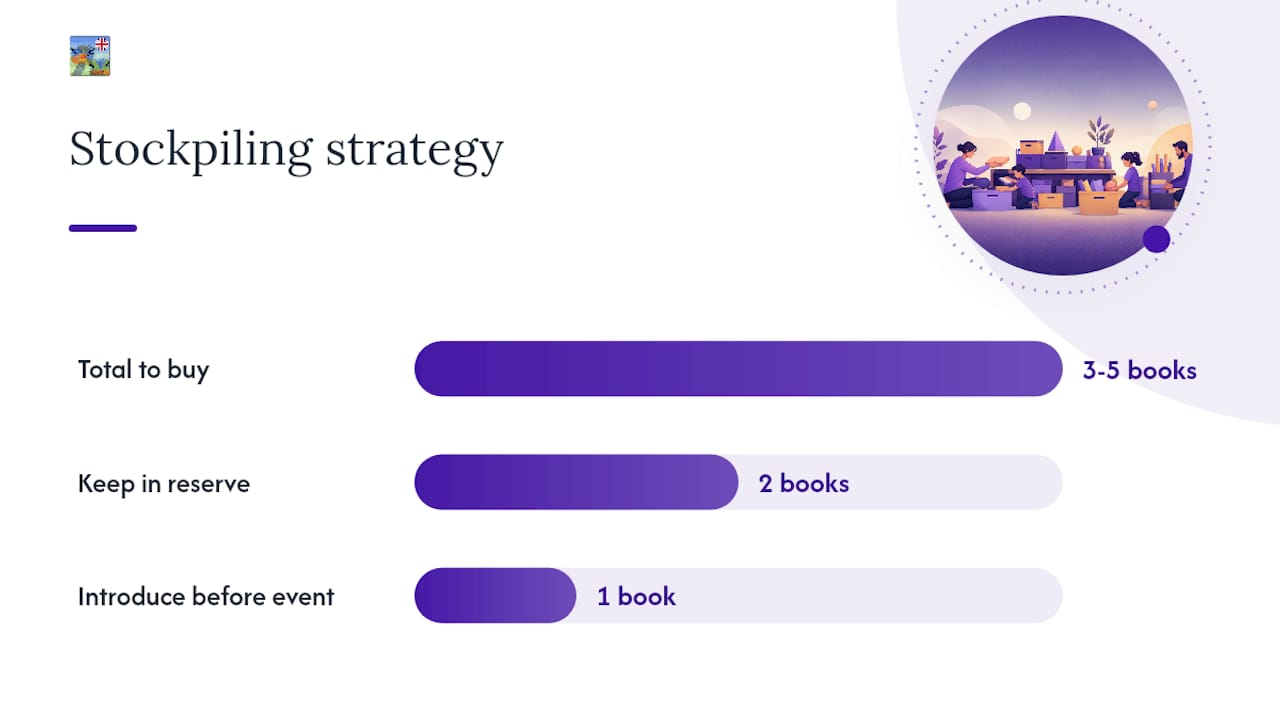
The stockpiling strategy is straightforward: buy three to five books, keep two in reserve, and introduce one right before the event it's meant for. Everyday Reading's parent-tested recommendations confirm that self-contained, reusable formats work best for trips precisely because novelty is intact when the book comes out.
A few tactics that consistently improve engagement:
- Introduce the book with a two-minute adult-led demo: flip through a few pages together, point out a funny prompt, then hand it over. Kids engage faster when they see what's possible.
- Use short sessions (15–20 minutes) for skill-practice books rather than marathon sittings. Attention holds better, and the book lasts longer.
- For classroom use, choose books with perforated pages so finished work can be removed and displayed without tearing the spine.
- Rotate formats: a sticker book one week, a puzzle compendium the next. Variety prevents the "I'm bored of activity books" response that sets in when kids see the same format repeatedly.
Pro Tip: Tear out two or three pages from a perforated drawing book before a trip and slip them into a folder with a small pencil case. It's lighter than the full book and feels like a special "travel kit" to a five-year-old.
Where do you buy activity books, and what should you pay?
Price tiers map fairly cleanly to quality and longevity:
- Under $5: Newsprint travel pads, single-theme maze books. Fine for one trip; paper quality is thin and erasability is poor.
- $5–$15: Most sticker books, guided drawing pads, standard puzzle compendiums. The sweet spot for everyday use.
- $15–$30: Story-driven doodle-adventure books, nature anatomy activity books, higher-quality reusable pads. Worth the price for books that will be used repeatedly.
- $30+: Premium handcrafted collections, classroom packs, curated gift sets. Illustration quality and paper weight justify the cost for gifts or long-term use.
Common buying channels and what to expect at each:
- Book retailers (Barnes & Noble, Target): Good selection in the $5–$20 range; you can check paper quality in person before buying.
- Specialty and independent publishers (direct-from-publisher): Higher illustration quality, often perforated; Munkterproducts ships direct with postage included.
- Museum and science-center stores: Strong STEM-focused titles; pricing tends toward mid-to-premium.
- Libraries: Free access to formats you haven't tried; useful for testing whether a child engages with a format before buying.
- Secondhand (ThriftBooks, local sales): Good for puzzle compendiums and coloring books that haven't been written in; check sticker books carefully since used stickers are usually gone.
Always check sample pages before buying online. Most publishers post interior previews; if they don't, that's a signal worth noting.
How these picks were selected
The recommendations here draw on editorial reviews from established parenting and book-review outlets, retail bestseller data, and hands-on educator feedback. Selection criteria, in priority order:
- Illustration and prompt variety: Does the book give kids something genuinely interesting to look at and respond to, or is it generic clip-art filler?
- Age fit: Does the content match the cognitive and motor stage, not just the age label on the cover?
- Paper quality and reusability: Thicker paper, perforated pages, and reusable formats score higher.
- Observed engagement: Formats that consistently hold attention in real use, not just in theory.
- Price and value: Does the book justify its cost relative to how long it will be used?
For deeper editorial context on what separates a genuinely good children's book from a mass-market filler title, the children's educational books guide on the Munkterproducts blog covers the selection process in detail.
What materials and safety standards should you check?
Paper quality affects both safety and usability. Thicker cardstock pages resist bleed-through from markers and hold up to repeated handling. For coloring and drawing books, look for paper rated at least 60 lb (90 gsm) if the child uses anything other than colored pencils.
Ink and material safety matters most for toddlers and preschoolers. In the U.S., look for the ASTM D-4236 certification on any book that includes crayons, markers, or paint. For imported books, EN 71 (the European toy safety standard) is the equivalent. Both certifications confirm non-toxic materials tested for child contact.
Sticker books carry a choking hazard for children under three. Small sticker pieces, particularly from books with intricate die-cut shapes, can detach. Check the publisher's age recommendation and inspect sticker size before buying for toddlers.
Allergy considerations are less common but worth noting for children with latex sensitivities. Some sticker backings use latex-based adhesives. Most major publishers have moved to latex-free adhesives, but if a child has a known latex allergy, confirm with the publisher directly before purchasing.
Why illustration quality matters more than page count
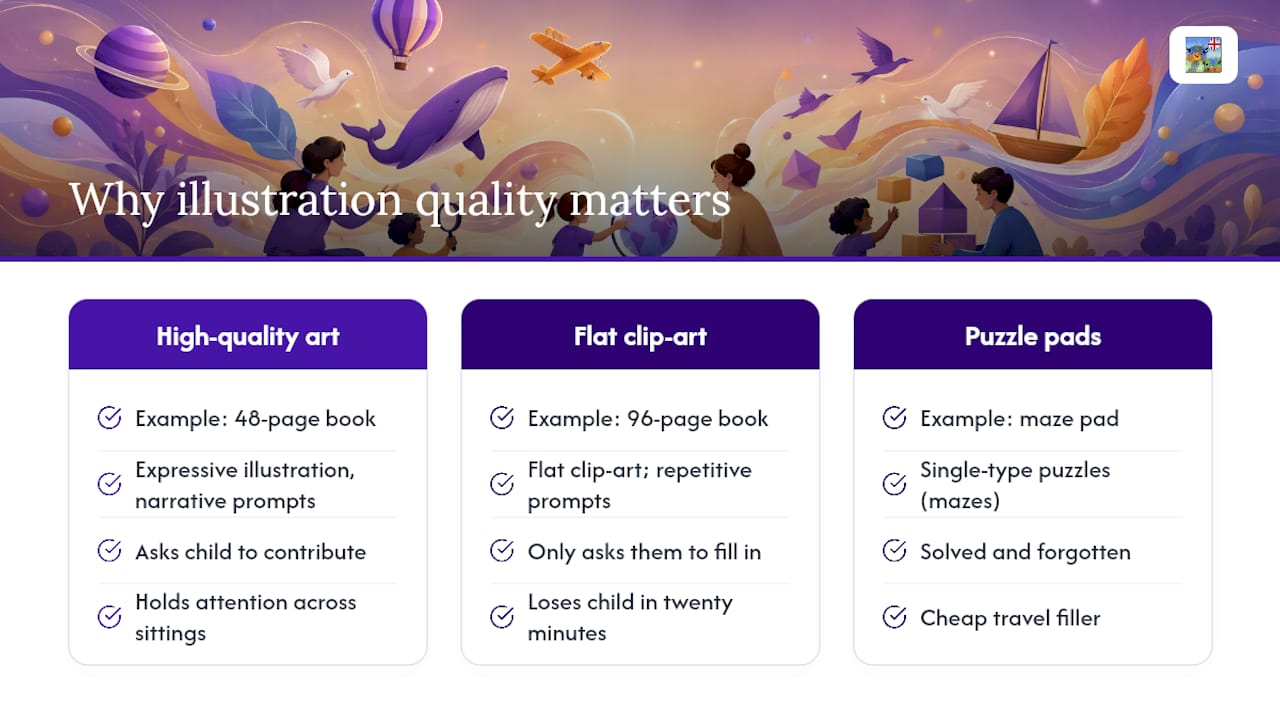
Most parents scan the back cover, check the page count, and decide based on price. That's the wrong order of operations. A 96-page book with flat clip-art and repetitive "color this shape" prompts loses a six-year-old in twenty minutes. A 48-page book with expressive illustration, narrative prompts, and varied activity types can hold the same child's attention across multiple sittings.
The pattern that shows up consistently is this: books that ask children to contribute something, whether finishing a character's face, deciding what happens next in a story, or adding their own creature to a scene, outlast books that only ask them to fill in. Story-led doodle-adventure formats and guided drawing books with narrative hooks are the clearest examples. A maze pad, by contrast, is solved and forgotten.
Mass-market puzzle pads have their place, especially as cheap travel fillers. But if you're buying something you want a child to return to, illustration quality and the variety of prompts are the factors that predict whether the book ends up in the car-seat pocket or the recycling bin.
Munkterproducts curated activity books: handcrafted picks worth owning
The difference between a book that gets used once and one that becomes a household staple usually comes down to how much care went into the illustration and the prompts. Munkterproducts curates and handcrafts activity books with exactly that standard: high-quality illustration, perforated pages for easy sharing, and reusable elements that hold up across multiple sessions.

Whether you're stocking up for a road trip, building a classroom library, or looking for a gift that actually gets used, the Munkterproducts collection covers the formats that work: coloring books, educational activity sets, holiday activity books, and puzzle-based titles for a range of ages. Postage is included on every order.
- Gift sets and multi-book packs available for parents and educators who want variety without hunting down individual titles.
Browse the full collection and place your order at Munkterproducts.
Sources
- Best Activity Books for Kids 2024 | The Strategist
- Boredom-Busting Activity Books for Kids | Brightly
- Activity Books for Kids: These are the best things to do on a long car ride! | Everyday Reading
- Amazon Best Sellers: Best Children's Activity Books