

TL;DR:
- First editions, especially with signatures and original dust jackets, are highly valuable in sci-fi collecting.
- Focused collection strategies and proper sourcing, grading, and preservation protect your investment.
- Building a library reflects personal passion and knowledge, not just monetary value.
Sci-fi book prices are climbing fast, and first editions of beloved classics now regularly sell for thousands of dollars at auction. For collectors at any level, knowing which books matter, where to find them, and how to evaluate what you're holding can feel overwhelming. The gap between buying random paperbacks and curating a library you're genuinely proud of comes down to knowledge and strategy. This guide walks you through every stage of the process, from identifying what makes a book truly collectible to organizing and protecting what you've gathered, so you can build something meaningful and lasting.
Table of Contents
- What makes a sci-fi book collectible?
- Building your collection: Preparation, sourcing, and tools
- Evaluating condition and authenticity
- Curating and maintaining your sci-fi library
- A collector's mindset: Science fiction books as both artifacts and passions
- Expand your collection with trusted resources
- Frequently asked questions
Key Takeaways
| Point | Details |
|---|---|
| Know what’s collectible | First editions, signed copies, and key issue points drive value in sci-fi books. |
| Source with strategy | Mix local finds, auctions, and trades to expand your library efficiently. |
| Condition matters most | A book’s grade can increase or decrease its worth by thousands. |
| Catalog and protect | Organize with digital tools and use archival methods to safeguard your investment. |
What makes a sci-fi book collectible?
Not every sci-fi novel on your shelf qualifies as a collector's item. The difference between a reading copy and a valuable edition often comes down to a handful of specific, verifiable details that most casual buyers overlook entirely.
The most important concept to understand is the first edition. In book collecting, a first edition refers to the initial print run of a title, and within that, the first printing is the most sought after. Publishers signal this on the copyright page. Identify first editions by checking for a "First Edition" or "First Printing" statement, a number line starting with 1, and publisher-specific points of issue that vary by house. Some publishers use the phrase "First published in..." while others rely entirely on number lines. Getting familiar with these details before you buy protects you from paying first-edition prices for a later printing.
Beyond printing status, several features push a book's value higher:
- Author signatures: A signed copy from a major author like Ursula K. Le Guin or Philip K. Dick can multiply value significantly.
- Original dust jackets: A pristine, unclipped dust jacket on a first edition is often worth more than the book itself.
- Limited print runs: Books produced in small quantities for specialty presses or conventions are inherently rarer.
- Original cover art: Certain iconic covers, especially from the Golden Age of science fiction, add visual and historical appeal.
Here's a quick look at what the market actually pays for landmark sci-fi titles:
| Title | Condition | Estimated value |
|---|---|---|
| Dune by Frank Herbert (1st HC) | Fine | $4,000+ |
| Foundation Trilogy by Isaac Asimov | Fine | $14,400 |
| Neuromancer by William Gibson (1st) | Near Fine | $1,500+ |
| The Left Hand of Darkness (1st) | Very Good | $800+ |
The Dune first edition value alone illustrates just how dramatically condition and edition status affect price. A reading copy of Dune might cost you $10. A fine first edition costs $4,000.
For a broader view of which titles deserve your attention, a sci-fi reading checklist can help you prioritize the most culturally significant works before you start spending.
Pro Tip: Before purchasing any book marketed as a first edition, cross-reference the copyright page details against a trusted bibliographic resource like Collected Books: The Guide to Values by Allen and Patricia Ahearn.
Building your collection: Preparation, sourcing, and tools
Once you know what to look for, here's how to strategically assemble your core library.
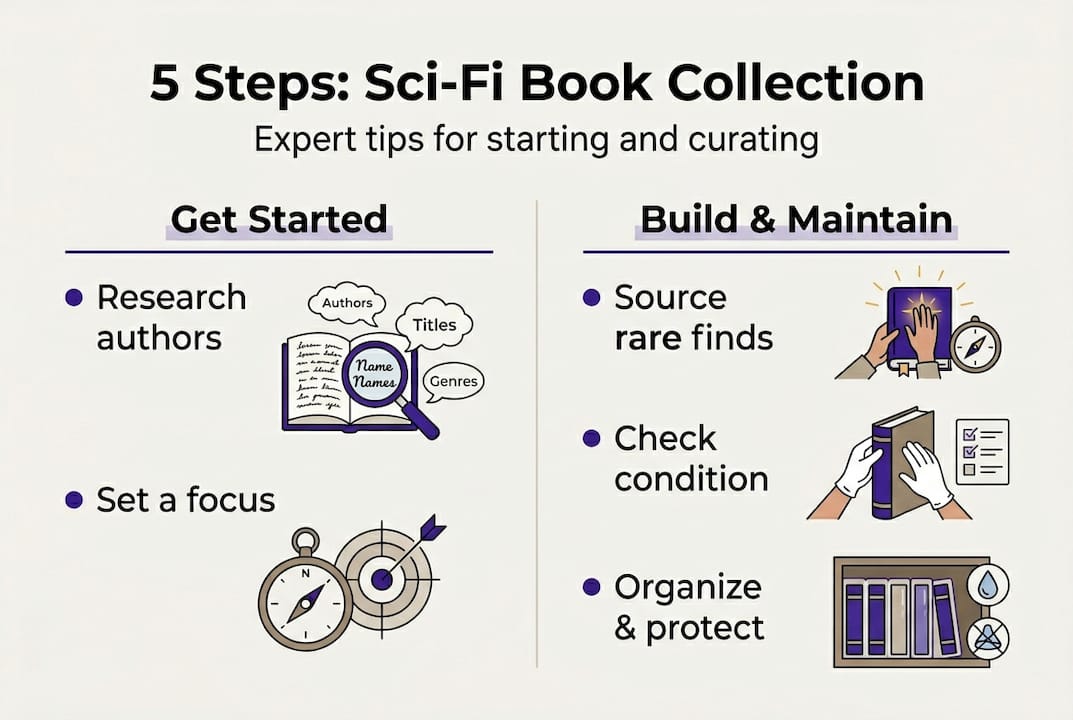
Start with preparation. Research your personal favorites and identify which authors or subgenres excite you most. Collecting works best when it's focused. A library built around cyberpunk first editions tells a more compelling story than a random pile of sci-fi paperbacks. Institutional benchmarks from Georgia Tech's science fiction special collection prioritize first editions of canonical works, author archives, and fanzines while actively avoiding duplicates and poor-condition copies. That's a smart model for any serious collector.
When it comes to sourcing, you have more options than you might think:
| Source | Pros | Cons |
|---|---|---|
| Local used bookstores | Affordable finds, hands-on inspection | Inconsistent inventory |
| Online auctions (eBay, AbeBooks) | Wide selection, competitive pricing | Can't inspect in person |
| Specialist rare book dealers | Expert grading, authenticated stock | Higher prices |
| Conventions and book fairs | Networking, unique finds | Seasonal, travel required |
Here's a responsible process for acquiring any new book:
- Identify the title and edition you want before shopping.
- Research current market value using sold listings on AbeBooks or eBay.
- Inspect the copyright page and dust jacket carefully.
- Ask the seller for additional photos or a condition report if buying online.
- Compare the seller's grading against standard collector definitions.
- Confirm return policies before finalizing the purchase.
Your toolkit matters too. Invest in mylar dust jacket protectors, a reliable bibliography for your target authors, and a book grading app or reference guide. These small investments pay off every time you evaluate a potential purchase.
Browsing a curated list of essential sci-fi novels is a practical way to benchmark which titles genuinely belong in a serious collection.
Pro Tip: Join online collector communities and local book clubs. Fellow collectors often trade duplicates, share sourcing leads, and flag underpriced finds before they hit the open market.
Evaluating condition and authenticity
With sources lined up, you need to evaluate every book before bringing it home.
Book grading uses a standardized vocabulary. Here's what the key terms actually mean:
- Mint: Essentially perfect, often unread. Extremely rare for older titles.
- Fine: No defects, minimal signs of handling. The benchmark for serious collectors.
- Near Fine: Very close to fine, with only the slightest imperfections.
- Very Good: Shows some wear but no major damage. A solid reading copy.
- Good: Heavy wear, possibly missing elements. Value drops sharply here.
Authenticity is a real concern, especially as prices rise. Counterfeit or misrepresented copies do circulate. Watch for these red flags:
- Facsimile dust jackets: Reproductions printed to mimic originals. They often feel slightly off in paper weight or color saturation.
- Modern re-binding: A book rebound after the fact loses significant value and may hide damage to the original boards.
- Incorrect paper weight or texture: Reprints sometimes use paper that feels noticeably different from period printing.
- Mismatched copyright page details: Any inconsistency between the stated edition and the bibliographic points is a warning sign.
Identifying first editions by points of issue and condition is the foundation of avoiding costly mistakes. Originality matters more than appearance alone.
Authentication warning: Professional authentication from a recognized dealer or service can cost $50 to $200 per book. For items valued above $500, that cost is almost always worth it. Never skip this step on high-value purchases.
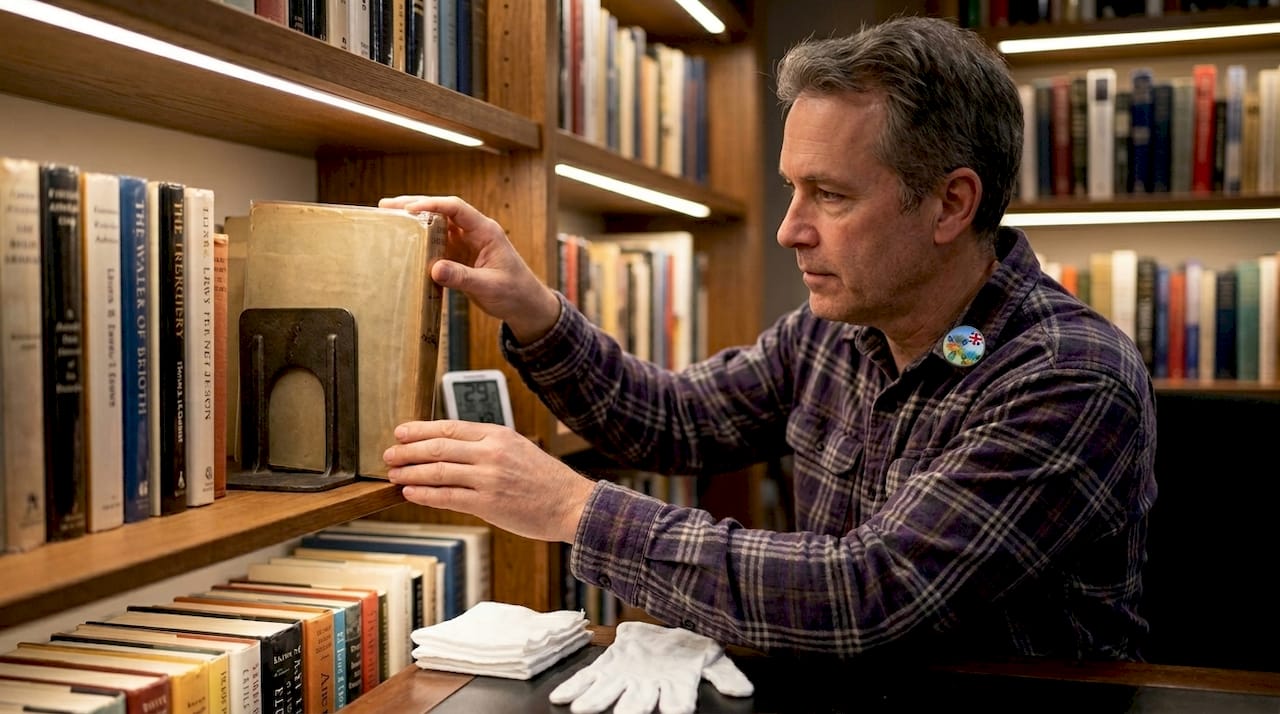
Once you own a book, protect it. Store volumes upright, away from direct sunlight, and in a climate-controlled space. Avoid touching pages with bare hands when possible. Understanding the role of dystopian themes in sci-fi can also deepen your appreciation for why certain titles carry such cultural weight, making their preservation feel even more meaningful.
Curating and maintaining your sci-fi library
After selecting prized additions, organization and stewardship become key.
Cataloging your collection is not optional if you're serious. A simple spreadsheet works for beginners: track title, author, edition, condition, purchase price, and estimated current value. As your library grows, dedicated software like LibraryThing or Collectorz offers more robust features including cloud backup, barcode scanning, and condition tracking. Regular backups protect years of research.
Display and storage best practices make a real difference in long-term preservation:
- Store books upright with proper support to prevent spine warping.
- Use acid-free archival boxes for the most valuable items.
- Keep humidity between 30 and 50 percent to prevent mold and brittleness.
- Avoid attics, basements, and garages where temperature swings are extreme.
- Use UV-filtering glass or acrylic in display cases to block light damage.
- Never stack books horizontally unless they are oversized and properly supported.
Institutional collection policies recommend avoiding duplicates and prioritizing rare or historically important works, which is advice worth applying to your personal library too. Owning three copies of the same title in similar condition dilutes your collection's focus without adding value.
For high-value items, look into scheduled personal property insurance. Standard homeowner's policies often cap coverage on collectibles at amounts far below actual market value. A separate rider or a specialty collectibles policy fills that gap.
Regular maintenance rounds out the picture. Inspect your collection at least twice a year. Look for signs of foxing (small brown spots caused by oxidation), pest activity, or shifting spines. Catching problems early is far cheaper than restoration later. Knowing what defines a sci-fi series can also help you identify complete sets worth collecting as unified groups rather than individual volumes.
A collector's mindset: Science fiction books as both artifacts and passions
Here's something most collecting guides won't tell you: chasing monetary value alone is the fastest way to lose your love for this hobby. We've seen collectors spend years hunting price-optimized acquisitions, only to end up with a shelf that feels more like a portfolio than a library.
The real reward in sci-fi collecting is knowing your niche so well that you can tell a stranger exactly why a specific 1953 Galaxy Science Fiction issue matters, or why a particular Le Guin first edition represents a turning point in speculative fiction. That kind of depth doesn't come from market reports. It comes from reading, connecting with other fans, and trusting your own taste.
Your library is a living archive. It should reflect where you've been as a reader and where you want to go. The books that sci-fi shapes culture through are the same books that spark real conversations when guests pull them from your shelf. Build toward that. Every great collection started with one book someone genuinely loved, not one someone calculated would appreciate in value.
Expand your collection with trusted resources
If you're ready to take your collection to the next level, the right resources make all the difference.

At MunkterProducts.com, you'll find a curated selection of science fiction titles, including the Noah series, alongside journals, notebooks, and collector-friendly accessories that complement any serious library. Whether you're tracking down your next great read or looking for tools to organize and protect what you already own, the platform is built for people who take their books seriously. Explore the catalog and find resources that match where you are in your collecting journey right now.
Frequently asked questions
How can I tell if a sci-fi book is a first edition?
Check the copyright page for a "First Edition" statement, a number line starting with 1, and publisher-specific indicators that vary by house. These three elements together confirm first-edition status.
Where are the best places to find valuable sci-fi books?
Specialty bookstores, online auction platforms like AbeBooks and eBay, book fairs, and conventions are all strong options. Networking with fellow collectors often surfaces the best deals before they reach public listings.
Does the condition of a sci-fi book really affect its value?
Absolutely. A fine first edition of Dune sells for $4,000 or more, while a worn copy of the same title might fetch under $50. Condition is one of the biggest price drivers in the market.
Should I focus on signed books or unsigned first editions?
Signed copies typically command higher prices, but unsigned first editions of scarce titles can be equally valuable depending on demand. Both are worth pursuing based on your budget and collecting focus.
How do I keep my collection organized and safe?
Use cataloging software or a detailed spreadsheet, and store books in climate-controlled, dust-free conditions away from direct light. High-value items deserve archival-quality protection and a dedicated insurance policy.