

TL;DR:
- A successful book club depends on well-structured meetings, diverse book choices, and effective moderation. Keeping groups small, fixed schedules, and rotating roles foster engagement and smooth coordination. Choosing controversial or complex books sparks lively discussions, ensuring members remain invested long-term.
Hosting a book club means creating a recurring space where a small group of people connect through shared reading and honest conversation. The difference between a club that thrives for years and one that quietly dissolves after three meetings comes down to three things: structure, book selection, and discussion facilitation. Get those right, and you have something genuinely worth showing up for. This guide covers every step, from how to launch a book club to running discussions that make members clear their calendars every month.
How to plan and organize your book club meetings
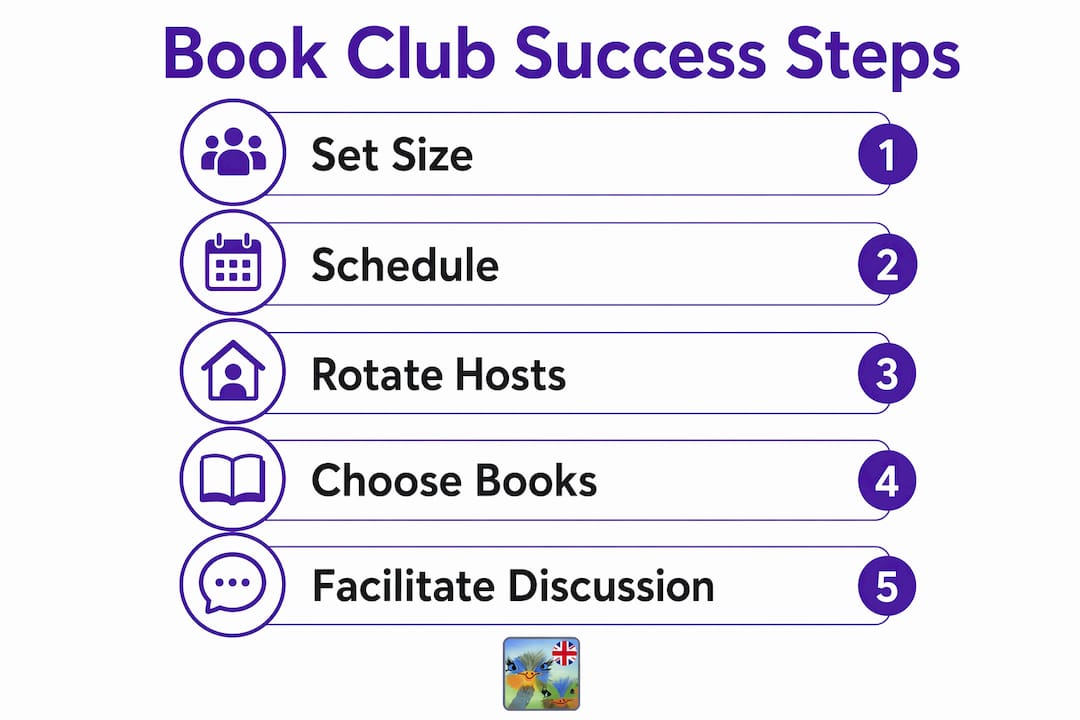
The foundation of any successful book club is a meeting structure that people can rely on. Before you send a single invitation, lock in four decisions: group size, meeting frequency, location, and who handles logistics.

Choosing the right group size
Keeping your group between 4 and 8 members produces the most engaging and manageable discussions. Fewer than four people and a single absence kills the conversation. More than eight and quieter members stop contributing because the room feels too crowded. Start with people you already know. Starting with friends or friends-of-friends builds the trust that makes members willing to share unpopular opinions about a book, which is exactly where the best discussions come from.
Setting a consistent schedule
Pick a recurring slot and never deviate from it. The phrase "last Thursday of the month" does more for attendance than any reminder app. A fixed recurring meeting day removes the monthly negotiation that kills momentum in most groups. Scheduling consistency functions as an anti-logistics tactic, making the club sustainable by eliminating calendar conflicts before they start.
For meeting length, 90 minutes is the sweet spot. It gives you enough time for real discussion without exhausting people who have work the next morning. Structure that time deliberately:
- Arrivals and light pleasantries (10 to 15 minutes)
- Focused book discussion (45 minutes)
- Informal social time and next meeting planning (30 minutes)
Deciding on location and roles
Rotating homes keeps the hosting burden shared and adds variety. A fixed location, like a local coffee shop with a private room, works well for groups where not everyone has hosting space. Virtual or hybrid formats via Zoom or Google Meet are legitimate options for geographically spread groups, though in-person sessions consistently produce livelier debate.
Assign a light admin role early to one member: sending reminders, booking venues, and tracking RSVPs. Without this, logistics fall onto whoever is most anxious about the club failing. That person burns out fast.
Pro Tip: Create a simple shared document in Google Docs or Notion listing the next three books, meeting dates, and the host for each session. One document prevents the "wait, where are we meeting?" texts.
| Setup element | Recommended approach |
|---|---|
| Group size | 4 to 8 members for active, manageable discussion |
| Meeting frequency | Monthly, fixed recurring day |
| Meeting length | 90 minutes with a timed agenda |
| Location | Rotating homes or a consistent neutral venue |
| Admin role | One assigned member handles reminders and logistics |
What makes a book worth reading for your club?
Book selection is where many clubs quietly fracture. One faction wants literary fiction, another wants thrillers, and someone always suggests a 600-page biography. The solution is a system, not a compromise.
Group consensus or rotating book picks increase member investment and produce more diverse reading lists than any single person's taste. A simple rotation where each member nominates one book per year gives everyone ownership. Alternatively, use a shortlist vote: each member suggests one title, the group votes, and the top pick wins.
When evaluating what to read for book club, prioritize books that generate disagreement. A novel where everyone agrees the ending was perfect produces a flat discussion. Books with morally complex characters, contested endings, or divisive themes, such as Normal People by Sally Rooney, Pachinko by Min Jin Lee, or The Sympathizer by Viet Thanh Nguyen, reliably produce the kind of debate that makes members text each other the next day.
Balance your reading list across formats and genres over the course of a year. A rough framework that works well:
- Four literary fiction titles
- Two nonfiction titles (memoir or narrative nonfiction works better than dense argument-driven books)
- One short story collection or novella for a lighter month
- One member wildcard pick with no genre restrictions
Preparing background research on the book or author before the meeting significantly enriches discussion quality. Even five minutes of context about an author's biography or the historical period a novel is set in helps members who were less engaged with the book find an entry point into the conversation. Think of it as giving everyone a reason to care.
Pro Tip: Prepare exactly three discussion questions, not ten. Fewer, focused questions generate better conversations than extensive prompt lists because they leave room for the group to take the discussion somewhere unexpected. Good book club discussion questions are open-ended: "What did this book make you believe that you didn't before?" beats "Describe the protagonist's arc."
How do you facilitate a lively book club discussion?
Running the discussion well is the skill that separates a host from a facilitator. The goal is not to lead the conversation. The goal is to create conditions where the conversation leads itself.
Open every meeting with the same ritual question. Something like "What did you love, and what frustrated you?" works because it gives every opinion equal standing from the start. A consistent opening ritual creates a safe space for opinions ranging from strong approval to dissent, which is exactly the range you want.
Use a timer to keep the meeting on track. Segmenting meetings into pleasantries, focused discussion, and informal social time keeps the conversation purposeful without feeling rigid. When the 45-minute discussion block ends, members who want to keep talking can do so in the social portion. This structure also helps members who need to leave early plan their participation.
Four facilitation moves that work in practice:
- Invite the quiet member directly. "Sarah, you haven't weighed in yet. What did you think of the ending?" This is not pressure. It is inclusion.
- Redirect the dominant voice. "That's a strong point. Does anyone see it differently?" You never shut someone down. You open the floor.
- Ask for evidence from the text. "What passage made you feel that way?" This grounds abstract reactions in something specific and keeps the discussion from drifting into pure opinion.
- Name the disagreement. "So we have two completely different readings of that character's motivation. Let's stay here for a minute." Conflict is the engine of a great discussion.
Accept that some members show up primarily for the social connection and read the book less carefully. That is fine. The mix of deeply engaged readers and casual participants actually produces better discussions because it forces the close readers to explain their interpretations to someone who experienced the book differently.
How do you keep a book club going long-term?
Most book clubs that dissolve do so not because members stop liking books. They dissolve because coordination becomes exhausting and no one feels ownership over the group's direction.
Finalizing the next meeting date before everyone leaves is the single most effective retention tactic available to a host. It costs 90 seconds and eliminates the two-week email thread that follows every meeting when you try to schedule the next one. Members who leave without a confirmed date are significantly more likely to drift.
Pro Tip: Build one tradition that has nothing to do with the book. Themed snacks tied to the setting of the novel, a shared reading tracker on Goodreads, or a "worst sentence in the book" award at the end of each meeting. Traditions create identity, and identity creates loyalty.
Other practices that sustain momentum over time:
- Rotate book selection so no single person carries the curatorial burden
- Send a one-paragraph recap via a group chat after each meeting to capture key points of debate
- Allow flexible attendance without guilt. A member who misses one month should feel welcome to return, not obligated to apologize
- Revisit the group's format every six months. What worked in month three may not work in month eighteen
| Approach | What it solves |
|---|---|
| Lock in next date at current meeting | Eliminates scheduling delays that cause member drop-off |
| Rotating book selection | Prevents one person's taste from dominating the list |
| Post-meeting recap message | Keeps absent members connected and reduces FOMO |
| Flexible attendance policy | Reduces pressure that causes members to quit entirely |
Key takeaways
A book club succeeds when structure, book selection, and discussion facilitation work together consistently from the first meeting onward.
| Point | Details |
|---|---|
| Optimal group size | Keep membership between 4 and 8 people for active, honest discussion. |
| Scheduling discipline | Fix a recurring monthly date to eliminate coordination friction permanently. |
| Book selection system | Rotate picks or use group votes to maintain member investment and reading variety. |
| Discussion facilitation | Use three focused questions and a timed agenda to keep conversation purposeful. |
| Retention tactic | Schedule the next meeting before the current one ends to prevent drop-off. |
What I've learned from years of watching book clubs succeed and fail
I have seen beautifully organized book clubs collapse by month four and loosely run groups thrive for a decade. The difference is almost never the books. It is almost always whether the host treats the club as a social contract or a personal project.
The clubs that last are the ones where the host gives away control early. Rotating book selection, shared hosting, and distributed admin roles signal to members that this group belongs to everyone. When one person carries all the weight, the club becomes dependent on their enthusiasm. And enthusiasm, even genuine enthusiasm, has a shelf life.
The other thing most guides get wrong is the discussion question advice. Three questions sounds too few until you try it. A single question like "Did this book change how you think about anything?" can carry 45 minutes if the group trusts each other enough to answer honestly. The question is not the engine. The trust is.
If you are starting a book club from scratch, resist the urge to over-engineer the first meeting. Pick a book that divides opinion, invite six people you already like, and show up with good snacks and one question. The structure can come later. The habit has to come first.
— Mark
Discover books and journals to enhance your meetings

The right materials make every book club meeting feel more intentional. At Munkterproducts, you will find handcrafted journals, notebooks, and curated books that work beautifully as discussion aids, host gifts, or personal reading companions. A quality notebook transforms passive reading into active annotation, which means richer contributions when your group sits down to talk. Explore the full range of books and journals at Munkterproducts, and check out the guide to unique notebooks for creative expression for ideas on how to bring more creativity into your meetings.
FAQ
How many people should be in a book club?
The ideal book club size is 4 to 8 members. This range keeps discussions active and manageable while absorbing the occasional absence without losing momentum.
How long should a book club meeting last?
Ninety minutes is the recommended meeting length. It allows time for focused discussion and social connection without exhausting members who have other commitments.
What are good book club discussion questions?
The best book club discussion questions are open-ended and specific to the book's themes. Prepare no more than three per meeting. Questions like "What did this book make you reconsider?" outperform plot-summary prompts every time.
How do you keep a book club from falling apart?
Schedule the next meeting before the current one ends, rotate book selection among members, and assign one person to handle reminders and logistics. These three practices address the most common causes of book club dissolution.
What are the best books for book clubs?
Books with morally complex characters, contested endings, or divisive themes produce the richest discussions. Titles like Pachinko by Min Jin Lee, Normal People by Sally Rooney, and The Sympathizer by Viet Thanh Nguyen consistently generate strong debate across different reading groups.