

TL;DR:
- Most successful reading habits are built by reducing friction and linking reading to existing routines. Clear goals, engaging materials, and creating an environment that makes reading effortless help sustain consistency. Enjoyment and ease, rather than discipline alone, drive long-term reading habits for all ages.
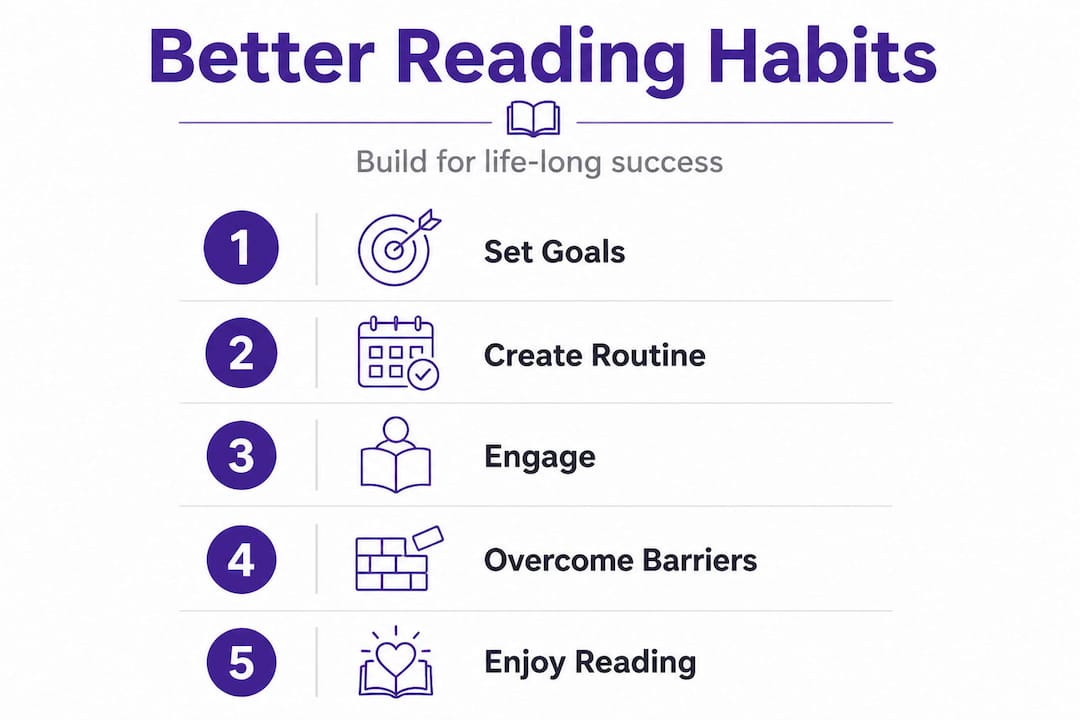
Most people genuinely want to read more. They buy books, download apps, and make promises to themselves every January. Then life happens: phones buzz, Netflix autoplays, and that book on the nightstand collects dust for three months. The good news is that tying reading to an existing routine is one of the most reliable ways to make it stick. This article walks you through science-backed, creative strategies that work for adults, parents, and children alike, so reading becomes less of a chore and more of a natural part of your day.
Table of Contents
- Pinpoint your motivation and reading goals
- Prepare your routine: Building habits that stick
- Make reading engaging: Creative techniques for all ages
- Overcoming barriers: Making reading easier and more consistent
- For struggling readers: Evidence-based support and what to avoid
- Why most advice about reading habits gets it wrong
- Ready to build better reading habits? Start with the right tools
- Frequently asked questions
Key Takeaways
| Point | Details |
|---|---|
| Build habits on routines | Attach your reading session to an already established daily habit for consistency. |
| Set small, clear goals | Start with realistic page or time targets to maintain momentum without stress. |
| Make reading creative | Use active reflection, questions, and interactive activities to engage both kids and adults. |
| Remove reading obstacles | Eliminate distractions and create a reading-friendly environment or routine. |
| Choose evidence-based support | For difficult cases, rely on structured, proven instruction rather than shortcuts or fads. |
Pinpoint your motivation and reading goals
Before you change any behavior, you need to know why you want to change it. Vague intentions like "I want to read more" rarely survive contact with a busy Tuesday. Specific, personal motivations do.
Ask yourself honestly: Are you reading for personal growth? To bond with your kids at bedtime? To build professional skills? To escape stress? Each of these calls for a different approach, and knowing your answer helps you choose the right material, the right time, and the right format. Adults who pick up books for self-improvement need a different strategy than a parent trying to spark a love of stories in a reluctant six-year-old.
Here are the key goal-setting principles that actually work:
- Start embarrassingly small. Ten minutes or ten pages per evening is a real goal. "Read every day" is not.
- Choose material you genuinely want to read, not what you think you should read. Keeping reading approachable with books you actually enjoy dramatically improves long-term adherence.
- For children, prioritize curiosity over achievement. A child who reads a silly joke book every night is building a better habit than one who forces through a "good for them" text twice a week.
- Use a reading tracker or journal. Visibility creates momentum. Checking off a day feels good, and that small reward keeps the streak alive.
- Avoid vague intentions. "I'll read when I have time" guarantees you won't. "I'll read 10 pages after I brush my teeth" actually works.
"Start with books you genuinely want to read and set concrete small goals, like a set number of pages or chapters, rather than vague intentions." This approach removes the psychological weight of reading as a task and turns it into a reward.
For deeper book enjoyment, the goal-setting phase is where most people skip ahead too quickly. Spend five minutes writing down your actual reason for reading more. That clarity will carry you through the nights when you'd rather scroll.
Pro Tip: Write your reading goal on a sticky note and place it inside your current book. Every time you open it, you'll see your own reason for being there.
Prepare your routine: Building habits that stick
With clear goals in mind, the next step is building the structure that makes reading automatic rather than optional. This is where behavioral science gives us a real edge.

The concept of implementation intention means pairing a new behavior with an existing one. Instead of "I'll read more," you say "When I sit down with my morning coffee, I will read for 15 minutes." That specific trigger makes the habit far more likely to happen. Tying reading to a daily cue is one of the most well-supported strategies in habit research.
Here's how to set up your reading environment for success:
- Place your book where the cue happens. Put it next to the coffee maker, on your pillow, or in your work bag. Out of sight really does mean out of mind.
- Reduce friction at every step. If getting to your book requires moving three things, charging a device, and finding your glasses, you won't do it. Make it effortless.
- Create a comfortable reading space. Good lighting, a comfortable chair, and reading comfort tips like proper eyewear can make a significant difference in how long you stay engaged.
- For families, build shared reading into existing rituals. Storytime after dinner or before bed works because the cue (mealtime, bedtime) already exists. You're just adding reading to a slot that's already there.
- Keep the next book ready. The biggest drop-off in reading habits happens between books. When you finish one, have the next one waiting.
| Habit trigger | Reading action | Who it works for |
|---|---|---|
| Morning coffee | Read 15 minutes before checking phone | Adults |
| Commute | Audiobook or e-reader on transit | Adults, teens |
| After dinner | Family storytime, 10 to 20 minutes | Families with children |
| Bedtime routine | Independent reading before lights out | All ages |
| Lunch break | Physical book, no screens | Adults |
For children, interactive books for engagement work especially well during these routine windows because they hold attention without requiring parental prompting.
Pro Tip: If you use a phone alarm to trigger your reading time, label the alarm "Book time" instead of just a time. That small label nudges your brain toward the right behavior.
Make reading engaging: Creative techniques for all ages
Embedding habits is only the foundation. The real secret to a lasting reading habit is making the experience genuinely rewarding, not just routine.
For children, structured reflection during storytime produces measurable results. Research shows that creative engagement within reading, like pausing to ask questions or predict what happens next, supports creative fluency in children, even if the effects vary across different outcomes like empathy. The key insight is that passive listening is less powerful than active participation.
Here's a comparison of passive versus active reading approaches:
| Approach | Example activity | Outcome |
|---|---|---|
| Passive reading | Read silently, no interaction | Lower retention, lower engagement |
| Predictive reading | "What do you think happens next?" | Higher curiosity, stronger memory |
| Annotating (adults) | Underlining, margin notes | Deeper comprehension |
| Retelling | Child explains the story back | Stronger narrative understanding |
| Book clubs or family discussion | Talk about characters and themes | Motivation, social connection |
For adults, annotation is one of the most underused tools available. Writing a single word in the margin, underlining a sentence that surprises you, or folding a corner to mark a passage you want to revisit transforms reading from consumption into conversation. You're engaging with the text rather than just absorbing it.
Creative techniques that work across all ages include:
- Story-based games. Act out a scene, draw a character, or invent an alternate ending. These work brilliantly with books that spark creativity.
- Reading challenges. A simple bingo card with categories like "a book with a blue cover" or "a story set in another country" adds playful structure.
- Activity books and creative prompts. For children especially, pairing reading with hands-on activities deepens engagement. An activity book checklist can help you choose the right materials.
- Family book clubs. Even informal ones, where everyone reads the same picture book and then talks about it over dinner, build both reading habits and family connection.
- Accountability partners. Tell someone what you're reading. That small social commitment increases follow-through significantly.
Pro Tip: After finishing a chapter, spend 60 seconds writing one sentence about what you just read. This tiny reflection step doubles retention and makes the next session easier to start.
Overcoming barriers: Making reading easier and more consistent
Even with the best intentions and creative tools, everyone hits walls. The most common ones are distractions, difficult material, and the feeling that you're not making progress.
The research is clear on this: reducing friction matters more than adding motivation. You don't need more willpower. You need fewer obstacles between you and the first page.
Here's a practical sequence for removing the most common barriers:
- Turn off phone notifications during reading time. Not silent mode. Off. The visual presence of a phone on a table reduces cognitive capacity even when it's not in use.
- Try a different format. If physical books aren't working, try an e-reader, audiobook, or graphic novel. Format loyalty is not a virtue. Getting the reading done is.
- Reread a favorite. When momentum stalls, returning to a book you already love removes the barrier of unfamiliarity and reminds you why reading feels good.
- Set a concrete cue for your next session. Place the book on your pillow before you leave the bedroom in the morning. Put a calendar reminder titled "Read tonight." Make starting the next session require zero decisions.
- Check your physical setup. Eye strain is a surprisingly common barrier, especially for adults. A proper guide to reading glasses can resolve discomfort that's been quietly killing your reading sessions.
"Reading improvement is often not about more effort, but about reducing friction. Eliminate the highest-distraction alternatives, especially phones, use distraction-resistant formats, and make the next reading session easy to start."
For families, holiday reading traditions offer a natural low-pressure entry point. Seasonal books carry built-in excitement and novelty, which lowers resistance for reluctant readers of any age.
For struggling readers: Evidence-based support and what to avoid
Some readers face steeper challenges, and it's important to separate what the evidence actually supports from what merely sounds plausible.
For children who struggle, explicit systematic instruction in phonics, phonemic awareness, and reading comprehension is the most well-supported approach. This means direct, structured teaching of how letters map to sounds, not hoping that exposure alone will do the job.
| Strategy | Evidence level | Notes |
|---|---|---|
| Explicit phonics instruction | Strong | Most effective for early and struggling readers |
| Repeated reading practice | Strong | Builds fluency and confidence |
| Colored overlays | Not supported | Popular but lacks research backing |
| Generalized "reading tips" | Weak | Too vague to produce consistent results |
| Active reading techniques | Strong | Previewing, questioning, paraphrasing all help |
What to focus on with struggling readers:
- Match material to skill level. A child reading text that's too hard is not building a habit; they're building anxiety. Choose educational book picks that align with where they actually are, not where you hope they'll be.
- Celebrate small progress visibly. A sticker chart, a reading log, or a simple verbal acknowledgment after each session builds the positive association that keeps kids coming back.
- Use active reading strategies. Previewing a book's pictures before reading, paraphrasing a paragraph aloud, or asking "what do I already know about this topic?" all outperform passive rereading.
- Avoid overwhelming texts. Frustration is the fastest way to kill a reading habit. Accessible, interest-driven material wins every time.
"Shortcuts that avoid core decoding practice often lack support. Explicit, systematic teaching of reading subskills is what consistently helps struggling readers make real progress."
For adults who struggle with reading stamina or comprehension, the same principles apply: active engagement, appropriate difficulty, and consistent low-pressure practice beat marathon sessions of difficult text.
Why most advice about reading habits gets it wrong
Here's the uncomfortable truth: most reading habit advice is built around the assumption that you just need more discipline. Read 50 books a year. Wake up at 5 a.m. to read. Never watch TV until you've hit your page count. This advice works for a small group of people who already have strong reading habits and just need permission to formalize them. For everyone else, it creates guilt and eventual abandonment.
The real driver of lasting reading habits is not willpower. It's environment design and genuine enjoyment. When reading is the easiest, most visible, most rewarding option in a given moment, people read. When it requires effort, sacrifice, and self-denial, most people eventually stop.
We've seen this pattern consistently: the readers who stick with it long-term are not the ones who push hardest. They're the ones who've made reading feel natural and low-stakes. They read what they actually enjoy. They master their reading habits by reducing friction rather than increasing pressure. They read for ten minutes instead of feeling bad about not reading for an hour.
The same is true for children. A child who reads for fun, even if it's a comic book or a joke collection, is building the neural pathways, vocabulary, and love of story that will serve them for life. Forcing "better" material on a reluctant reader almost always backfires. Joy is the mechanism. Everything else is just scaffolding.
The most honest advice we can offer: make reading the path of least resistance in your day, choose material that genuinely excites you, and stop measuring success by volume. A consistent ten-minute habit beats an occasional two-hour guilt session every single time.
Ready to build better reading habits? Start with the right tools
You now have the strategies, the science, and the perspective to build a reading habit that actually lasts. The next step is finding the right materials to make it enjoyable.

At Munkter Products, we've built a collection of books, activity books, journals, and creative tools designed to make reading and learning genuinely fun for all ages. Whether you're looking for educational books that spark curiosity in children, adult coloring books and self-help journals for your own growth, or engaging activity books that turn storytime into an adventure, we have something that fits your routine. Browse our full range of reading tools and guides and find the materials that make your next reading habit the one that finally sticks.
Frequently asked questions
What's the most effective way to build a daily reading habit?
Connect your reading time to an existing daily routine using an implementation intention, such as reading during your morning coffee or right after dinner, so the habit has a reliable trigger. Tying reading to a daily cue is one of the most research-supported strategies for building consistent behavior.
How can parents make reading more engaging for children?
Use interactive storytelling techniques like predictive pauses, questions, and retelling to keep children actively involved rather than passively listening. Structured reflection within story time supports creative fluency and makes the experience more memorable for kids.
What should I do if my child struggles to read?
Focus on explicit, systematic instruction in phonics and core reading subskills, and match reading material to your child's actual skill level rather than their age. Explicit, systematic teaching of reading subskills is the most consistently effective approach for struggling readers.
Are quick fixes like colored overlays effective for reading difficulties?
No. Despite their popularity, colored overlays lack research support as a treatment for reading difficulties and should not replace structured, evidence-based instruction.
How do I keep from getting distracted while reading?
Remove high-distraction alternatives, especially your phone, from your reading environment and use dedicated reading formats or spaces that make it easy to stay focused. Reducing friction and removing competing options is more effective than relying on willpower alone.