
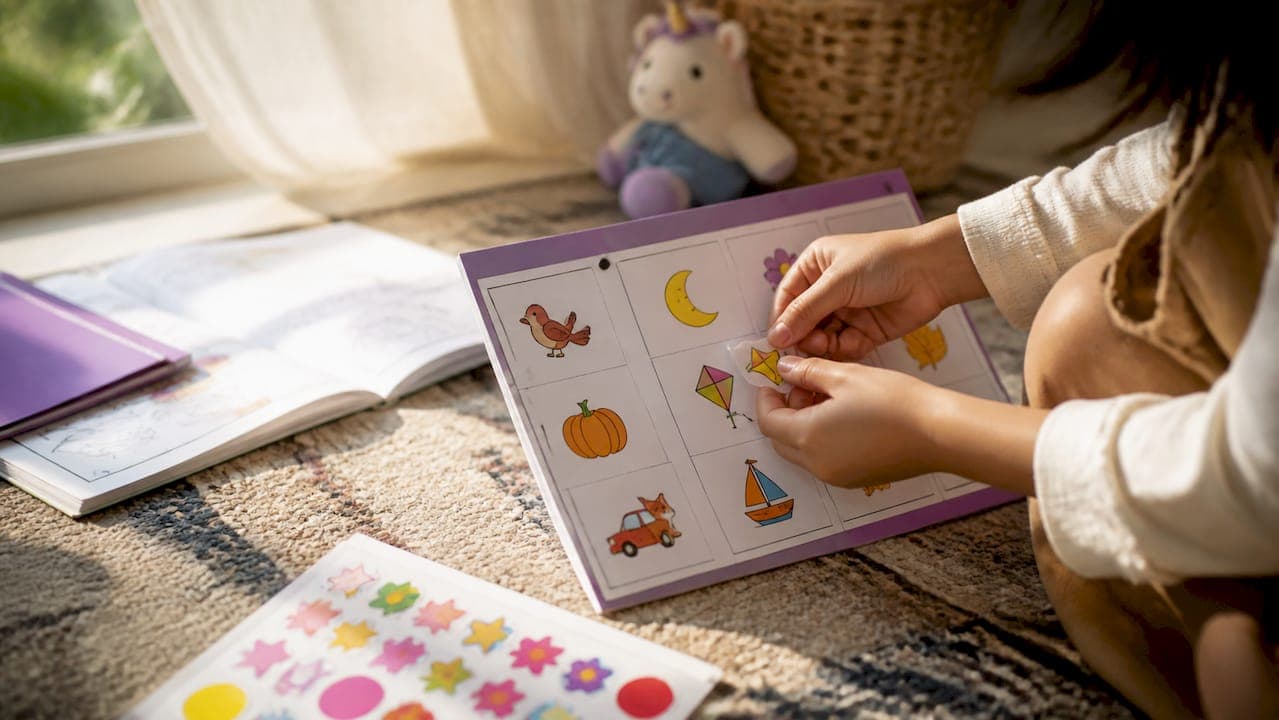
For most emergent readers between ages 3 and 6, the right choice is a staged, decodable-aligned activity book with multisensory tasks built in, not a generic coloring-and-letters workbook. That means the pages use stickers, actions, and simple games to reinforce the exact sounds your child is currently learning, rather than jumping around the alphabet at random. If your child is catching up or just starting out, the same principle holds: match the book to their current sound set before you buy.
Here's what to do right now:
- Check the book's stage label against what your child already knows (single letter sounds, digraphs, or vowel pairs).
- Pick one book, not a stack, and commit to 10 to 15 minutes a day.
- Watch for progress on the same three or four sounds before moving forward.
Key Takeaways
Choosing a phonics activity book that matches your child's current sound set, and using it in short daily sessions, drives faster decoding progress than any single feature or gimmick.
| Point | Details |
|---|---|
| Match the stage first | Confirm the book's labeled sounds match what your child is currently learning before buying. |
| Keep sessions short | Aim for 10 to 15 minutes daily rather than long, infrequent sittings. |
| Check for real decodable practice | Skim sample pages for 5 to 10 words containing the target sound before committing. |
| Avoid jumbled or vague books | Skip resources that mix unrelated sounds or rely on sight-word guessing instead of decoding. |
| Consider Munkterproducts | Its handcrafted activity books offer clear stage labeling and write-in prompts that fit the buying checklist above. |
Table of Contents
- What to Look for in Phonics Activity Books
- How to Use Phonics Activity Books at Home or in Class
- Matching Books to the Phonics Features You're Teaching
- What to Avoid When Choosing Phonics Activity Books
- Why This Advice Holds Up
- Benefits of Using Phonics Activity Books for Literacy Development
- How to Choose Based on Learning Goals and Child Preferences
- How Activity Books Differ From Other Reading Resources
- Fitting Activity Books Into a Broader Literacy Plan
- Munkterproducts: Handcrafted Activity Books You Can Start Using Today
- Sources
What to Look for in Phonics Activity Books
Not every activity book earns a spot on your shelf. Some are genuinely built around how children learn to decode; others are coloring books with letters slapped on top. Here's how to tell the difference before you buy.
- Multisensory tasks. Look for actions (clap the syllables), stickers (place the letter that completes the word), and small craft elements. These give a child three or four ways to encounter the same sound, which builds recall faster than reading alone.
- Decodable alignment. The best books follow a systematic order: CVC words first, then digraphs like "sh" and "ch," then vowel pairs and trickier patterns. If a book mixes "cat" and "though" on the same page, skip it.
- Clear age and stage labeling. A book should say, plainly, which sounds it covers. Vague marketing like "for early readers" tells you nothing useful.
- Parent or teacher prompts. Short facilitation notes ("ask your child to say the sound before blending") are a strong signal the book was written by someone who understands how phonics practice actually works.
- Write-in space sized for small hands. Wide-ruled handwriting lines matter more than they sound. Cramped practice boxes frustrate kids before they've even tried.
- Format and value. A single volume works for testing a stage. Boxed sets make sense once you know a child needs to move through several stages in sequence, and they're usually better value per page.
Pro Tip: Before buying, ask to see or preview two or three sample pages. If a publisher won't show you a page, that's usually because the book doesn't hold up under scrutiny.
How to Use Phonics Activity Books at Home or in Class
The book matters less than the routine you build around it. A well-designed activity book still fails if it's opened for 40 minutes once a week instead of 10 minutes daily.
Structure each session in three parts:
- Before: Do a picture walk through the page. Ask what sounds the child expects to see.
- During: Read together, pausing to hunt for words containing the target sound. Model blending out loud rather than just naming letters.
- After: Close with a short writing task or a word-building ladder (cat, hat, hot, hop) using letter tiles or the write-in space provided.
Pairing oral instruction with interactive word-building like this helps children apply phonics in real, repetitive contexts instead of treating it as an abstract drill. Techniques like word hunts and simple book building give kids a sense of ownership over their own reading, which tends to stick better than passive listening.
A few adjustments make this work across different settings:
- For small groups, rotate one child reading aloud while others hunt for target words on the same page.
- For independent centers, laminate a page and let kids use dry-erase markers for repeat practice.
- For children with shorter attention spans, split the three-part routine across two shorter sittings.
- For EAL or ESL learners, spend extra time on the picture walk before introducing the print, since vocabulary gaps often slow decoding more than the phonics itself.
Matching Books to the Phonics Features You're Teaching
"Decodable" means a book is written using mostly words a child can sound out with the phonics skills they already have, rather than words that require memorization or guessing from pictures. Decodables are the right choice when you're actively teaching a new pattern and need repeated exposure. Picture-rich, less controlled books earn their place once a child has some decoding confidence and needs to build fluency and enjoyment instead.
Matching a text to the phonics feature you're teaching, meaning choosing pages packed with words containing that specific pattern, is one of the more effective ways to make instruction stick, since it gives children real reading practice rather than isolated drills.
Before you commit to a book for a specific lesson, run this check:
- Flip through 3 to 4 pages and count words containing the target sound.
- Aim to find 5 to 10 clear examples before deciding the book fits your objective.
- If the target sound appears only once or twice per page, the book is likely too advanced or too general for this stage.
What to Avoid When Choosing Phonics Activity Books
Some books look appealing on a shelf and fall apart the moment you sit down to use them.
- Skip books that jumble unrelated sounds on the same page. Mixing "th," long "a," and silent "e" together confuses more than it teaches.
- Avoid resources labeled "phonics" that lean heavily on whole-word guessing or sight-word memorization instead of actual decoding practice.
- Watch for tiny fonts, overly complicated handwriting tasks, or activities that only make sense with constant adult explanation and no built-in prompts.
- Trust sample pages and clear stage labels over cover copy. "Boosts reading skills fast" tells you nothing; "Stage 2: short vowels and digraphs" tells you everything.
Why This Advice Holds Up
Mark has spent years reviewing how children's activity books are built and used, from classroom decodables to home practice sets, and the pattern is consistent: books that name their stage and give adults a script outperform books that don't.
The strongest activity books don't just entertain. They quietly teach an adult how to run the session, one prompt at a time, so the parent or teacher never has to guess what to say next.
Munkterproducts curates its activity books around that same principle: clear stage alignment, generous write-in space, and low-pressure tasks like sticker matching and simple word hunts. The goal is practice that feels like play but still tracks a real phonics progression, whether a child is building "cat" into "hat" or hunting for every silent "e" on a page.
Benefits of Using Phonics Activity Books for Literacy Development
A well-matched activity book does more than fill quiet time. It gives a child repeated, low-stakes contact with the same sound pattern across several different tasks, which is exactly how decoding becomes automatic rather than effortful.
Multisensory pages, meaning ones that combine coloring, stickers, and short writing tasks, create several entry points into the same skill. A child who struggles to blend sounds aloud might succeed at spotting the pattern in a sticker activity first, then transfer that confidence back to reading. This bridge between play and structured practice is precisely what makes the strongest phonics resources effective: they don't feel like drills, even though they function like one.
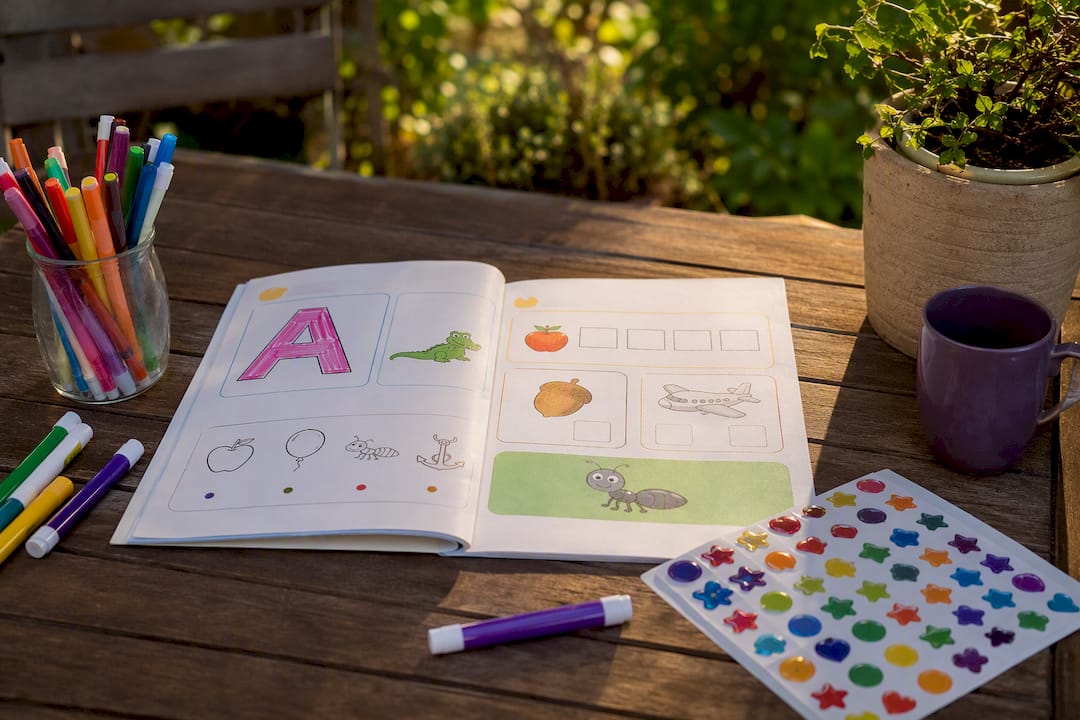
There's also a confidence effect that's easy to underestimate. A child who finishes a page independently, sticker placed correctly, word written out, gets a small win that makes the next page less intimidating. Over weeks, those small wins compound into a reader who approaches new words with curiosity instead of dread. None of this replaces guided reading with an adult, but it extends the practice window well beyond the ten minutes you might spend reading together each evening.
How to Choose Based on Learning Goals and Child Preferences
Start with the goal, not the cover art. If your child is stuck on short vowels, buy a book that drills short vowels heavily rather than one that touches on everything lightly. General "phonics fun" books are fine for review once a stage is mastered, but they rarely move a struggling reader forward on a specific skill.
Preference matters too, just second. A child who loves animals will engage longer with a decodable about a fox than an identical lesson wrapped in unrelated content. Look for books that let you match theme to interest without sacrificing the sound progression underneath. If your child responds better to physical activities than static pages, prioritize books with actions and crafts over ones built mostly around silent reading and worksheets. The right checklist makes this comparison faster when you're standing in a shop or scrolling through options online.
How Activity Books Differ From Other Reading Resources
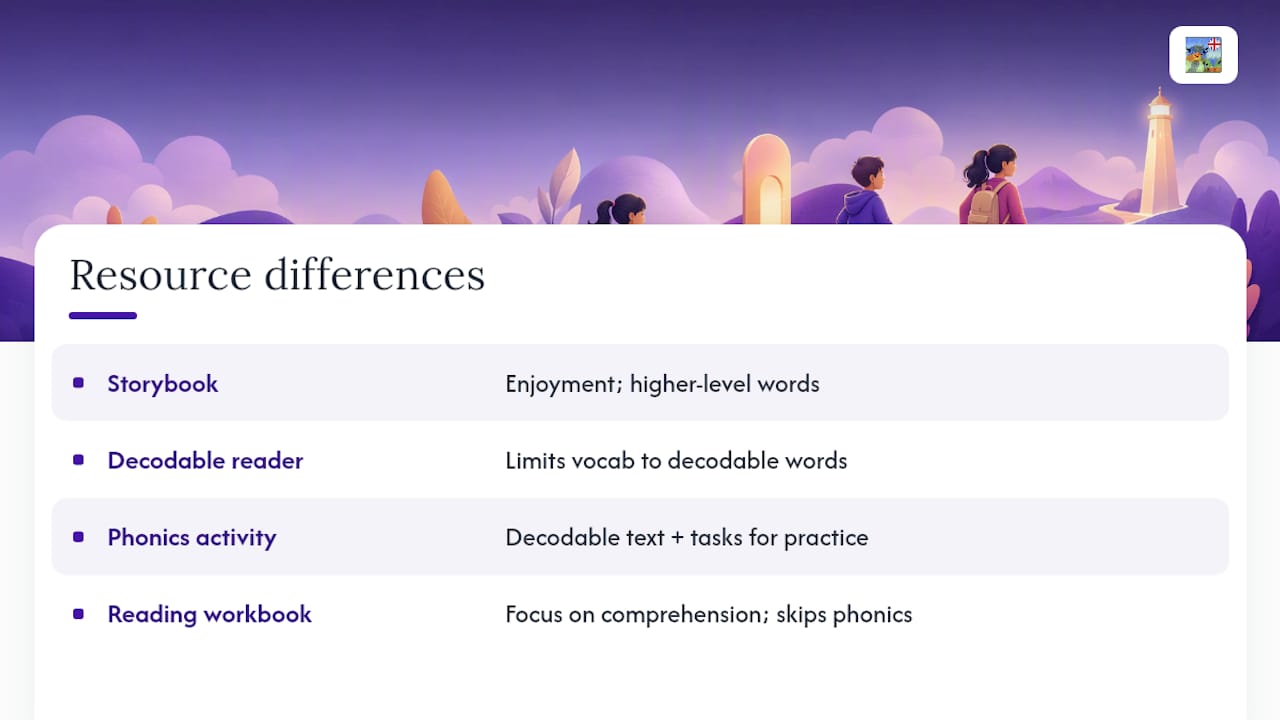
Phonics activity books aren't the same thing as storybooks, readers, or general workbooks, and mixing them up wastes both money and practice time.
A storybook is written for enjoyment and vocabulary exposure; it may contain words far above a child's decoding level, supported by pictures and adult reading aloud. A decodable reader, by contrast, deliberately limits vocabulary to what a child can sound out. A phonics activity book sits between the two: it usually includes a short decodable text or word list, then wraps it in tasks, stickers, write-in lines, games, that turn one page of reading into several minutes of active practice. Free decodable activity packs can turn a single simple reader into 10 to 12 pages of guided practice, which shows how much extra value the "activity" layer adds over a bare text.
General reading workbooks, meanwhile, often skip the phonics progression entirely and focus on comprehension or handwriting in isolation. They have a place later, but they're the wrong tool for a child still learning to decode.
Fitting Activity Books Into a Broader Literacy Plan
Activity books work best as one piece of a routine, not the whole plan. Pair them with read-aloud time using books slightly above your child's decoding level, since that's where vocabulary and listening comprehension grow. Save the activity book itself for the skill-building window, those focused 10 to 15 minutes where the child is actively decoding and writing, not just listening.
If you're teaching in a classroom or homeschool setting with multiple children at different stages, rotate activity books through small-group centers while you work directly with one group at a time. Authentic children's literature can also be pulled in to reinforce a pattern once it's been taught, since spotting a vowel generalization inside a story a child already loves tends to stick better than drilling it in isolation. Digital games and printables, such as those on phonics-focused sites like Starfall, can round out practice on days when a change of format helps keep a child engaged.
A quick note from Mark on what to try this week
I recently watched a child light up over a sticker-matching page that took maybe four minutes to finish. The lesson: keep sessions short, model the sound yourself first, and let the small wins pile up before reaching for the next book.
— Mark
Munkterproducts: Handcrafted Activity Books You Can Start Using Today
Munkterproducts is the direct alternative to hunting through generic workbook aisles for something that actually matches your child's stage. Every handcrafted activity book is built with the checklist above in mind: clear stage labeling, generous write-in space, and short parent or teacher prompts so you're never guessing what to say next.

The catalog includes themed activity books designed for early sound work through digraphs and vowel pairs, each one leaning on stickers, simple games, and write-in pages rather than passive reading alone. If you've been piecing together loose printables from a dozen sources, a single well-built book that already sequences the practice for you saves both time and money. For related guidance on building out a full activity-book routine, Munkterproducts also offers a step-by-step design guide worth reading alongside your purchase. Visit Munkterproducts to browse the current activity book selection and find the stage that matches where your child is right now.
Sources
- 3 phonics strategies that help kids retain skills
- Matching books to phonics features | Reading Rockets
- FREE Decodable Reader Activity Book | CVC Word Family Read Along | Kindergarten
- Phonic generalizations in Chrysanthemum | Read Write Think