

TL;DR:
- Novelty items activate the brain's reward and memory systems, enhancing focus and retention during learning.
- Properly connected to objectives, they sustain engagement by triggering curiosity and improving cognitive readiness.
Novelty items in learning are tools that use the brain's natural response to new and unexpected stimuli to improve focus, enhance memory, and stimulate creativity. The role of novelty items in learning goes far beyond making a classroom feel fun. These items activate specific brain systems, including the hippocampus and the mesolimbic dopamine pathway, that prime children to absorb and retain information more effectively. For educators and parents who want results, not just engagement, understanding the neuroscience behind novelty changes how you choose and use creative learning tools.
How do novelty items scientifically enhance learning and memory?
Spatial novelty activates the mesolimbic dopamine system and hippocampus, boosting motivation and focus for tens of minutes after the initial stimulus. That window is not accidental. It is a biological invitation to teach something that matters.
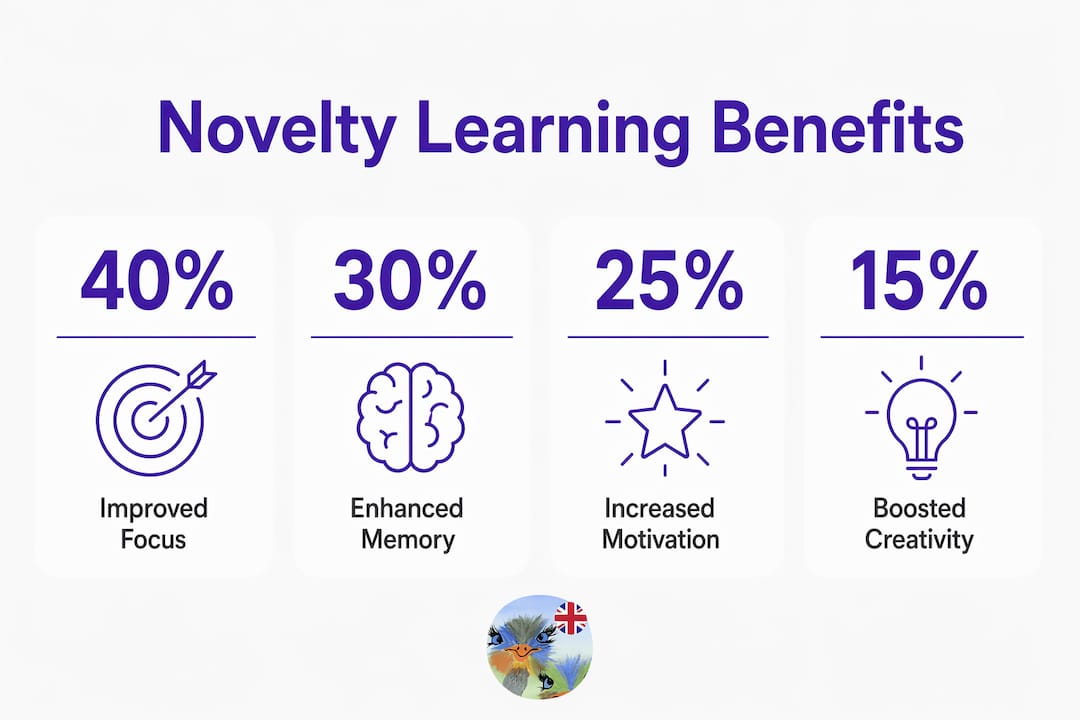
The brain treats unexpected stimuli as high-priority signals. When a child encounters something genuinely new, whether it is a textured puzzle, a themed activity book, or a rearranged workspace, the brain releases neuromodulators that sharpen attention and prepare memory systems for encoding. Novelty triggers neuromodulators that boost attention, motivation, and memory encoding, priming brains better than static conditions. This is not a gimmick. It is a biological driver.
A key mechanism here is the concept of prediction error. When reality deviates from what the brain expected, the reward pathway activates. Novelty triggering prediction error activates reward pathways that improve memory consolidation. Simple changes, like moving a lesson to a different room or presenting a familiar task in an unexpected format, can produce this effect without expensive materials.
"Novelty is a biological trigger, not a gimmick, critical for engaging reward-based learning systems. The brain does not just notice what is new. It prioritizes it."
The practical takeaway for educators and parents is clear. The benefits of novelty items are not limited to keeping children entertained. They create a measurable window of heightened cognitive readiness that skilled teachers and parents can fill with meaningful content.
Key neurological effects of novelty exposure include:
- Dopamine release that increases motivation and reward anticipation
- Hippocampal activation that strengthens memory encoding
- Heightened sustained attention lasting well beyond the initial stimulus
- Prediction error signals that flag new information as worth remembering
Why is meaningful novelty more effective than distraction?
Not all novelty is created equal. Meaningful novelty tied to learning objectives avoids cognitive load and distraction, while irrelevant novelty wastes cognitive resources. A flashing toy that has nothing to do with the lesson at hand pulls attention without directing it anywhere useful.
Cognitive load theory explains the problem clearly. Every brain has a limited processing capacity. When a novelty item introduces complexity that does not connect to the learning goal, children spend mental energy on the distraction rather than the content. The result is amusement without retention.
The distinction between meaningful and superficial novelty comes down to one question: does this item make the concept easier to grasp or remember? A themed coloring book that reinforces vocabulary through visual association is meaningful novelty. A fidget toy used during a reading lesson is not.
Curiosity follows novelty and acts as an engine sustaining learner persistence and effort without external rewards. That curiosity only develops when the novelty item connects to something the child wants to understand. Disconnected novelty produces a short spike of interest, then nothing.
Pro Tip: Before introducing any novelty item, write down the specific learning objective it supports. If you cannot name one, the item belongs in a free-play context, not a structured learning session.
Guidelines for selecting effective novelty items:
- Choose items that reinforce or introduce a specific concept
- Prioritize multisensory engagement over visual novelty alone
- Rotate items regularly to prevent habituation
- Match the complexity of the novelty to the child's current skill level
- Avoid items that require significant setup time that disrupts lesson flow
What are practical examples of novelty items that stimulate creativity?
Concrete tools make the theory real. The impact of novelty on student engagement becomes visible when educators and parents move from abstract principles to specific items placed in children's hands.
Novelty stationery and themed books
Novelty stationery breaks the monotony of standard school supplies without sacrificing function. Textured notebooks, unusually shaped erasers, and color-coded planners introduce sensory variety that keeps children physically engaged with their work. The act of writing in a journal that feels different from a standard composition book can shift a child's attitude toward the task entirely.
Interactive books for kids go further by embedding the novelty inside the learning content itself. A book that asks children to fill in answers, draw responses, or solve puzzles within its pages turns passive reading into active participation. Active participation deepens memory encoding in ways that reading alone does not.
Themed puzzles and environmental props
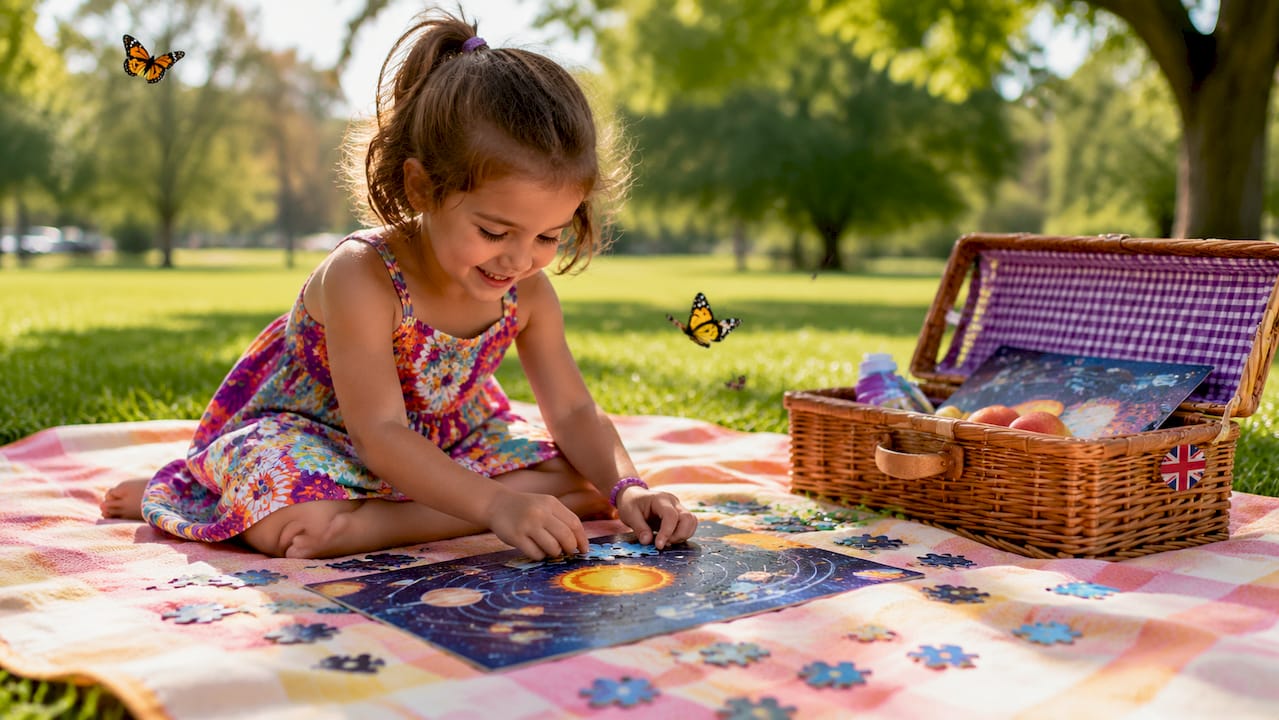
Themed puzzles combine spatial novelty with problem-solving demands. A child assembling a puzzle of the solar system is not just playing. They are building a spatial map of a concept while their hippocampus encodes the layout. The physical manipulation of pieces adds a tactile layer that purely visual learning lacks.
Environmental props, like bringing a globe into a geography lesson or using real coins during a math activity, trigger spatial novelty at low cost. Simple environmental shifts provide low-cost, effective ways to induce prediction errors that trigger memory encoding. You do not need expensive technology to produce a strong novelty effect.
Practical novelty items ranked by learning impact:
- Themed activity books that embed exercises within a narrative or visual theme
- Novelty stationery sets with varied textures, colors, and formats
- Tactile puzzles tied to curriculum topics like geography, biology, or math
- Coloring books built around educational content, such as anatomy or history
- Unusual writing instruments like scented markers or oversized pencils that change the physical experience of writing
| Novelty item type | Primary learning benefit | Best age range |
|---|---|---|
| Themed activity books | Concept reinforcement through narrative | 5–12 years |
| Novelty stationery | Sensory engagement with daily tasks | 6–14 years |
| Tactile puzzles | Spatial memory and problem solving | 4–10 years |
| Educational coloring books | Visual memory and fine motor skills | 5–12 years |
| Interactive journals | Reflective thinking and self-expression | 8–16 years |
Students prioritize diverse multisensory and extraordinary learning approaches to break monotony beyond simple gamification. That finding matters because it confirms children are not just looking for fun. They want variety that feels purposeful.
How can educators and parents sustain attention with novelty over time?
The biggest risk with novelty is habituation. When children see the same "new" item repeatedly, it stops being new. The brain stops releasing the dopamine signal. The attention window closes. Sustaining the impact of novelty requires deliberate strategy, not just a collection of interesting objects.
Timing novelty exposure immediately before critical tasks optimizes memory retrieval and creativity. A novel event right before a challenging lesson primes the brain for the work ahead. This is not about warming up with entertainment. It is about using a brief, well-chosen novelty stimulus to open the cognitive window at exactly the right moment.
A novel event immediately before a task improves memory retrieval and creative divergent thinking in school students. Divergent thinking, the ability to generate multiple solutions to a problem, is a skill that transfers across every subject. Novelty is one of the few tools that reliably activates it.
Strategies for sustaining novelty's impact over time:
- Rotate novelty items on a weekly or biweekly schedule to prevent habituation
- Introduce novelty at the start of a lesson, not mid-session, to prime attention
- Combine physical novelty items with changes in lesson format or location
- Use educational books with varied formats to maintain interest across subjects
- Pair novelty with active participation, such as writing, drawing, or building, to deepen encoding
Curiosity sustained by novelty reduces reliance on external rewards, promoting intrinsic motivation vital for deep learning. That shift from external to internal motivation is the long-term goal. Novelty items are the catalyst. Curiosity is the engine that keeps running after the initial spark fades.
Pro Tip: Keep a simple rotation log of novelty items used each week. Children who see the same item more than twice in a month show significantly reduced engagement responses. Variety is not optional. It is the mechanism.
Digital native students are driven more by pedagogical novelty and situational interest than by traditional performance expectancy. This finding applies equally to physical tools. Children engage with items because of their novelty and interactivity, not because they are told the tools are useful.
Key Takeaways
Novelty items work because they activate the brain's dopamine and memory systems, and their effectiveness depends entirely on how well they connect to specific learning goals.
| Point | Details |
|---|---|
| Novelty activates key brain systems | Dopamine and hippocampal activation create a focused window for learning after novelty exposure. |
| Meaningful novelty outperforms gimmicks | Items tied to learning objectives build curiosity; irrelevant novelty wastes cognitive resources. |
| Timing determines impact | Introducing novelty immediately before a task improves memory retrieval and divergent thinking. |
| Rotation prevents habituation | Cycling novelty items weekly sustains the dopamine response and maintains engagement over time. |
| Multisensory tools deepen encoding | Items that engage touch, sight, and action produce stronger memory consolidation than visual novelty alone. |
What I've learned from watching novelty work in practice
The research on novelty is compelling, but what convinced me most was watching a child who had stopped engaging with reading entirely pick up a themed activity book and spend 40 minutes on it without prompting. The book was not easier than what she had been given before. It was different. That difference was enough to reopen a door that had seemed closed.
The most common mistake I see educators and parents make is treating novelty as a reward rather than a tool. They bring out the interesting item after the work is done. That is backwards. The novelty should come first, right before the hard task, to prime the brain for what follows.
The second mistake is buying novelty items without a plan. A drawer full of interesting stationery does nothing if it is never rotated or connected to a specific lesson. The item itself is not the intervention. The timing, the connection to content, and the rotation schedule are the intervention.
My honest advice is to start small. Pick one novelty item this week, introduce it at the start of your most challenging lesson, and watch what happens to attention in the first ten minutes. Then rotate it out before it becomes familiar. Build the habit of deliberate novelty before you build the collection.
— Mark
Novelty learning tools from Munkterproducts
Educators and parents who want to put these strategies into practice need tools that are built for the purpose.

Munkterproducts offers a curated range of novelty learning supplies that includes themed activity books, novelty stationery, educational coloring books, and interactive journals designed for children and adults alike. Every item is selected to support multisensory and creative learning approaches, not just to look interesting on a shelf. The catalog also includes the back-to-school essentials covered in the BANZ® back-to-school guide, making it a practical starting point for building a novelty-rich learning environment at home or in the classroom. Postage is included, and the purchasing process is straightforward.
FAQ
What is the role of novelty items in learning?
Novelty items activate the brain's dopamine system and hippocampus, creating a window of heightened attention and memory encoding. They work best when tied directly to a specific learning objective rather than used as general entertainment.
How do novelty items enhance memory in children?
Novelty triggers prediction error signals in the brain, which activate reward pathways and flag new information as worth remembering. Items that combine sensory engagement with curriculum content produce the strongest memory consolidation.
How often should novelty items be rotated?
Rotating novelty items weekly or biweekly prevents habituation and maintains the dopamine response that drives engagement. Repeating the same item more than twice in a short period significantly reduces its cognitive impact.
What makes a novelty item educationally effective?
An educationally effective novelty item connects directly to a learning goal, engages multiple senses, and introduces an element of surprise without adding irrelevant complexity. Themed puzzles, interactive books, and novelty stationery all meet this standard when chosen deliberately.
When is the best time to introduce a novelty item during a lesson?
Introducing a novelty item immediately before a challenging task produces the strongest results. Research shows that a novel event right before a lesson improves both memory retrieval and divergent thinking in school-age children.