

TL;DR:
- Themed puzzles enhance cognitive, emotional, and social development by embedding meaningful visual and narrative content. They facilitate learning, reduce anxiety, and strengthen social bonds across all ages, especially when guided by educators or tailored to individual interests. Innovations like story-driven and immersive puzzles are expanding engagement and providing new opportunities for education and personal connection.
Themed puzzles are specialized puzzle activities that use visual or narrative frameworks to boost cognitive development, emotional engagement, and creative thinking across all age groups. Whether you are a parent selecting tools for a child's growth, an educator building a lesson plan, or an adult seeking meaningful leisure, the role of themed puzzles extends far beyond simple entertainment. Montessori classrooms, puzzle-based instruction research, and brands like Munkterproducts all point to the same conclusion: theme transforms a puzzle from a pastime into a purposeful learning experience.
What is the role of themed puzzles in cognitive development?
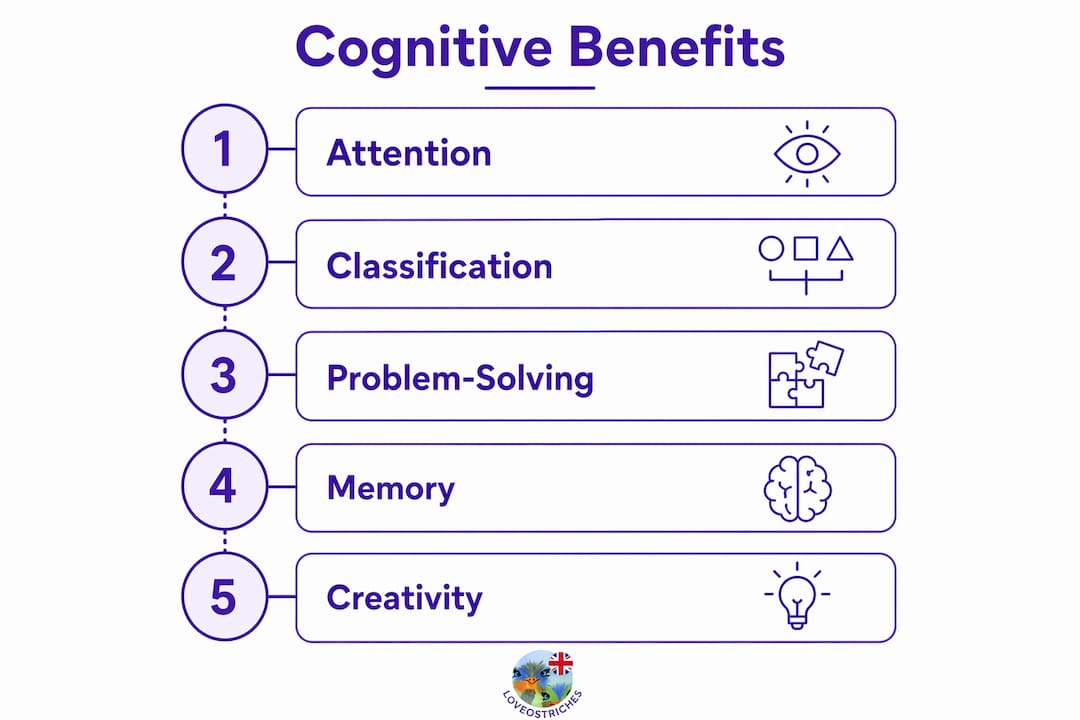
Puzzle-based instruction significantly improves core cognitive domains in early learners, including classification, symbol recognition, and spatial reasoning. This matters because these are the exact skills children need to read, solve math problems, and understand the world around them. A themed puzzle about ocean life, for example, does not just ask a child to match shapes. It asks them to recognize a dolphin, categorize it as a mammal, and place it within a visual ecosystem.
The theoretical foundation for this goes deep. Piaget's theory of concrete operational thinking, Vygotsky's zone of proximal development, Bruner's scaffolding model, and Montessori's hands-on learning philosophy all support puzzle-based activities as tools for conceptual understanding. Each theory arrives at the same practical point: children learn best when they physically manipulate objects that carry meaning. A themed puzzle gives that manipulation a context, which accelerates comprehension.
Teacher facilitation amplifies these benefits considerably. Puzzle-based learning is most effective when guided by an educator who promotes reflection and multiple solution paths rather than a single correct answer. A classroom activity using a world map puzzle, for instance, becomes a geography lesson, a conversation about culture, and a spatial reasoning exercise all at once when a skilled teacher asks the right questions.
Here is what effective thematic puzzle activities look like in practice:
- Nature and animal themes build vocabulary and classification skills in children aged 3 to 7.
- Alphabet and number themes reinforce symbol recognition and early literacy.
- Historical and cultural themes support social studies learning in older children.
- Science themes (solar system, human body) introduce abstract concepts through visual structure.
Pro Tip: When using themed puzzles in a classroom or home learning setting, ask open-ended questions like "Why do you think this piece goes here?" rather than simply correcting placement. This approach mirrors Vygotsky's scaffolding model and builds critical thinking alongside puzzle skills.
A 2026 study with 35 Iranian English Language Teachers found that puzzle-based instruction correlates positively with professional teaching success by engaging learners through problem-solving and critical thinking. The implication is clear: themed puzzles are not just tools for children. They are a pedagogical method with measurable outcomes at every level of education.
What emotional and social benefits do themed puzzles provide?
The importance of themed puzzles reaches well beyond the classroom. Themes carry emotional weight that plain puzzles simply cannot replicate. A puzzle depicting a 1950s American diner triggers memory, nostalgia, and conversation in ways that an abstract color-block puzzle never could.
For people living with dementia, this emotional dimension becomes genuinely therapeutic. Nostalgic puzzle themes reduce anxiety and trigger reminiscence, fostering social interaction and preserving dignity beyond any cognitive challenge the puzzle presents. A senior who cannot recall what they had for breakfast may light up at a puzzle depicting a familiar landscape from their childhood. The theme does the emotional work.
"The emotional value of themed puzzles often surpasses cognitive challenges for users with dementia, making puzzles a tool for dignity and social connection." — Onward Living HQ
Custom puzzles take this further. Personal photo puzzles with high-contrast images and lower piece counts anchor users to their own life stories while promoting positive engagement. This is a practical application of themed puzzles for accessibility that caregivers and family members can act on immediately.
The social benefits extend to all age groups. Themed puzzles act as conversation starters in ways that generic puzzles do not. Consider what happens when a family sits down to complete a puzzle of a famous painting, a beloved movie scene, or a map of a city they have visited together. The theme gives everyone something to talk about, which turns a solitary activity into a shared experience.
Key emotional and social benefits of themed puzzles include:
- Reduced anxiety through focused, repetitive activity with a clear goal.
- Increased confidence from completing a recognizable, meaningful image.
- Stronger social bonds formed through collaborative puzzle solving.
- Reminiscence and memory activation for older adults and those with cognitive decline.
- Accessibility gains when themes are adapted with large pieces and high contrast.
You can explore how puzzle books support brain health and shared positive experiences in more detail if you want to understand the full spectrum of emotional benefits.
Which puzzle themes are most effective and why?
Not every theme produces the same results. Popular themes like nature, architecture, and animals succeed because of visual usability, not just aesthetic appeal. A forest scene works well as a puzzle because it contains distinct color zones (sky, canopy, ground), recognizable shapes (trees, animals), and varied textures that give solvers clear organizational cues. An abstract painting with uniform color distribution is far harder to solve and far less satisfying, regardless of its artistic merit.

The principle at work here is that effective puzzle themes prioritize usability through clear visual cues. Color areas, geometric patterns, and structural lines allow solvers to organize pieces, reduce frustration, and experience the satisfaction of visible progress. This is why a puzzle of the Eiffel Tower outperforms a puzzle of a foggy gray cityscape every time.
| Theme type | Best for | Why it works |
|---|---|---|
| Nature and landscapes | All ages, beginners | Strong color zones and recognizable shapes reduce frustration |
| Animals and wildlife | Children and families | Familiar subjects build vocabulary and emotional connection |
| Architecture and cities | Adults and teens | Geometric patterns provide structural solving cues |
| Art and illustration | Adults | Detailed color variation rewards patient, experienced solvers |
| Maps and geography | School-age children | Educational content embedded in visual structure |
Theme appeal also shifts with age and complexity. Children respond most strongly to bold colors and familiar characters. Teenagers and adults gravitate toward detailed scenes with personal or cultural resonance. Seniors often prefer themes tied to specific eras or places from their own lives.
Pro Tip: When selecting a themed puzzle for a child, prioritize themes they already know and love over themes you think are educational. Engagement drives completion, and completion drives the cognitive benefits. A child who finishes a dinosaur puzzle learns more than a child who abandons a solar system puzzle halfway through.
Parents looking for guidance on matching themes to developmental stages will find the puzzle book checklist for parents a practical starting point.
How are themed puzzles evolving into immersive experiences?
The adult puzzle market is shifting away from static image completion toward narrative-driven formats that blend story and puzzle into a single experience. Mystery and spy puzzle books represent this shift most clearly. In these formats, the puzzle is not the product. The story is the product, and the puzzle is how you move through it.
This evolution matters because it addresses a real limitation of traditional puzzles: once you complete them, they are done. Narrative-driven puzzle formats create replayability, deeper engagement, and a reason to share the experience with others. The mental stimulation is also qualitatively different. You are not just recognizing shapes. You are reasoning, inferring, and making decisions within a fictional world.
Here is how the best immersive themed puzzle formats are structured:
- Narrative setup. The story establishes a world, a problem, and a character the solver cares about. This emotional investment drives persistence through difficult puzzle sections.
- Integrated challenges. Each puzzle is embedded within the story rather than appended to it. Solving the puzzle advances the plot, which means failure has narrative consequences that motivate re-engagement.
- Escalating complexity. Puzzles increase in difficulty as the story progresses, mirroring the pacing of a well-structured novel and preventing the boredom that comes from static difficulty.
- Resolution and reward. The story's conclusion depends on puzzle completion, which gives solvers a sense of authorship over the outcome. This is the emotional payoff that separates immersive formats from traditional ones.
- Collaborative potential. Many narrative puzzle formats are designed for groups, which adds a social dimension that single-image jigsaw puzzles rarely achieve.
Integrated mystery puzzle books create a unique entertainment medium that combines storytelling with puzzle challenges in ways that neither format achieves alone. For educators, this format also opens doors to project-based learning where students solve narrative puzzles as a class, building both literacy and logical reasoning simultaneously. You can read more about story-driven puzzles in learning to see how this approach is being applied in educational settings.
Key takeaways
Themed puzzles deliver cognitive, emotional, and social benefits that generic puzzles cannot match because the theme itself carries meaning that drives engagement, learning, and connection.
| Point | Details |
|---|---|
| Cognitive gains are theme-dependent | Themes aligned with learning goals (animals, maps, letters) produce measurable gains in classification and spatial reasoning. |
| Emotional value is highest for seniors | Nostalgic and personal photo themes reduce anxiety and trigger reminiscence in adults and those with dementia. |
| Visual usability determines theme success | Nature, architecture, and animal themes succeed because color zones and structural cues help solvers organize pieces effectively. |
| Facilitation multiplies educational impact | Guided puzzle activities with open-ended questions outperform unsupervised puzzle use in educational settings. |
| Narrative formats are the next frontier | Mystery and story-driven puzzle books create immersive experiences that extend engagement far beyond traditional image completion. |
Why themed puzzles deserve more credit than they get
I have spent years watching people underestimate puzzles. They see a box with a picture on it and assume the activity inside is passive, simple, or suitable only for rainy afternoons with nothing better to do. That assumption is wrong, and the research now backs that up clearly.
What strikes me most is how the theme does the heavy lifting that most people attribute to the puzzle mechanics. A child who struggles to sit still for ten minutes will spend an hour on a puzzle of their favorite animal. An elderly person who has withdrawn from social interaction will lean forward and start talking the moment a familiar landscape appears on the table. The theme is not decoration. It is the activation mechanism.
I also think we are underusing themed puzzles in adult education and workplace learning. The puzzle-based instruction research coming out of language teaching contexts shows that adults respond to puzzle formats just as strongly as children do, provided the theme and challenge level are calibrated correctly. A corporate training session built around a narrative puzzle format would almost certainly outperform a slide deck on the same material.
The emerging narrative puzzle formats are where I see the most untapped potential. When a puzzle is embedded in a story you care about, the motivation to persist through difficulty changes completely. You are no longer solving for completion. You are solving for meaning. That is a fundamentally different cognitive and emotional experience, and it is one that Munkterproducts is positioned to deliver through its curated selection of themed and story-driven puzzle books.
The practical advice I would give anyone reading this: stop selecting puzzles based on what looks impressive on a shelf. Select based on what theme will genuinely engage the person who will be solving it. Engagement is the variable that determines whether a puzzle delivers its benefits or sits unfinished in a closet.
— Mark
Explore themed puzzles at Munkterproducts

Munkterproducts curates a selection of themed puzzle books, activity books, and story-driven puzzle formats designed for both children and adults. Whether you are looking for educational thematic puzzle activities for a young learner or an immersive narrative puzzle experience for yourself, the catalog covers a range of themes, complexity levels, and age groups. Every product ships with postage included, and the selection reflects a genuine commitment to puzzles that do more than fill time. Browse the full range at Munkterproducts and find a themed puzzle that matches the engagement level and learning goals you are looking for.
FAQ
What is the role of themed puzzles in education?
Themed puzzles support cognitive development by embedding learning content within visual and narrative frameworks that increase engagement. Research shows that puzzle-based instruction improves classification, symbol recognition, and spatial reasoning in early learners when guided by a teacher.
How do themed puzzles benefit adults and seniors?
Themed puzzles reduce anxiety, trigger reminiscence, and promote social interaction, particularly for seniors and people with dementia. Nostalgic and personal photo themes are especially effective at anchoring users to positive memories and encouraging conversation.
Which puzzle themes work best for children?
Nature, animal, alphabet, and number themes work best for young children because they combine familiar subjects with strong visual cues that reduce frustration and build vocabulary. Theme familiarity drives completion, and completion is what produces the cognitive benefits.
What makes narrative puzzle formats different from traditional puzzles?
Narrative puzzle formats embed puzzle challenges within a story, so solving the puzzle advances the plot rather than simply completing an image. This structure creates deeper engagement, escalating difficulty, and a sense of authorship over the outcome that traditional jigsaw puzzles cannot replicate.
How should I choose a themed puzzle for a specific learning goal?
Match the theme directly to the skill you want to develop. Use map and geography themes for spatial reasoning, alphabet and number themes for early literacy, and science themes for conceptual understanding. Puzzle-based learning is most effective when the theme aligns with a guided learning objective rather than being selected at random.