

TL;DR:
- Publishing guides define standards, formatting rules, and submission expectations that authors must follow to ensure smooth publication. They serve as the primary communication between authors and publishers, reducing revisions and speeding up the acceptance process. Using guides strategically before drafting helps authors align their work with editorial priorities and ethical standards, improving quality and chances of acceptance.
Publishing guides are defined as structured editorial documents that set the standards, formatting rules, and submission expectations authors must meet before a manuscript reaches a publisher's desk. They function as the backbone of editorial infrastructure, used by major publishers like Wiley, Taylor & Francis, and IOP Publishing to communicate exactly what they need from writers. Without them, the submission process collapses into guesswork. For aspiring authors, understanding the role of publishing guides is the single fastest way to improve your odds of acceptance and cut the time between draft and publication.
What is the role of publishing guides in author success?
Publishing guides are the first real communication between an author and a journal or publisher. Before you ever speak to an editor, the guide tells you what the publication values, how it wants manuscripts structured, and what ethical standards it enforces. Author guidelines serve as editorial mentoring tools that reflect journal values and reduce inequities among authors. That last point matters more than most writers realize. Opaque or poorly written guides create an uneven playing field where experienced authors navigate the system and newcomers get rejected on technicalities.
The importance of publishing guides goes well beyond formatting checklists. They reduce the back-and-forth between authors and editorial teams, which directly shortens publication timelines. Effective guidance reduces improper submissions and editorial corrections, shortening publication timelines. Fewer errors at submission mean faster decisions, which means your work reaches readers sooner.
Here is what well-designed publishing guides accomplish for you as an author:
- Clarify scope and audience so you know whether your manuscript fits before you invest weeks in revision.
- Specify formatting requirements for references, figures, word counts, and file types, eliminating the most common rejection triggers.
- Communicate ethical standards around authorship, data sharing, and conflict of interest disclosure.
- Signal editorial priorities that experienced authors use to tailor their writing tone and argument structure.
- Reduce submission anxiety by replacing uncertainty with a concrete checklist you can work through systematically.
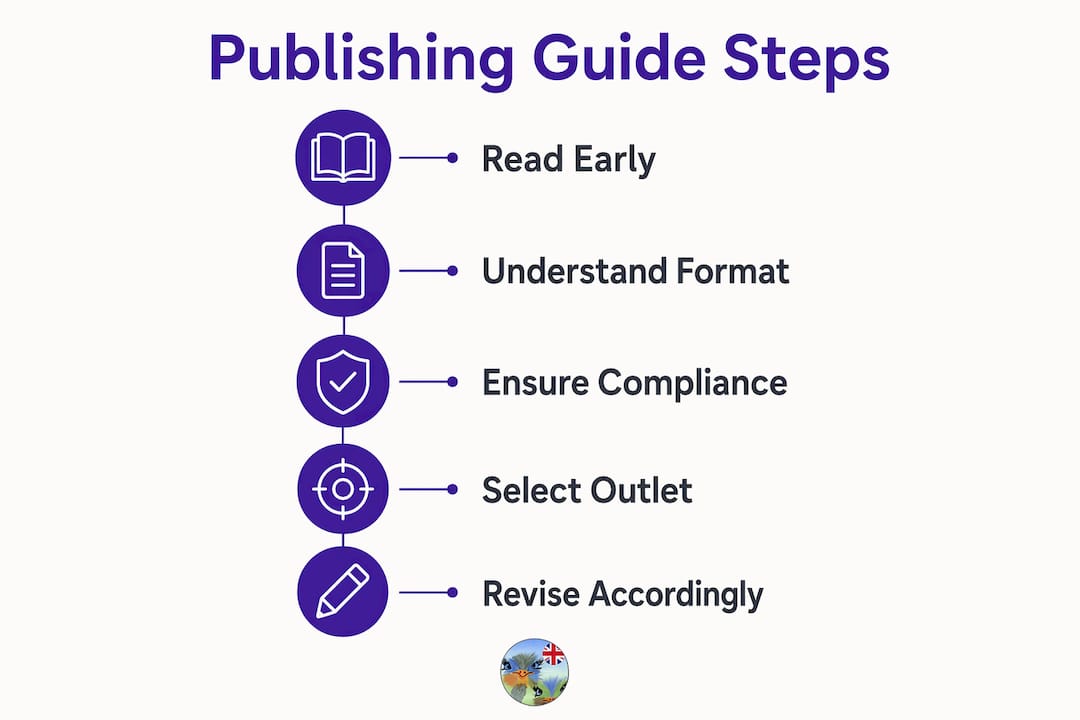
Pro Tip: Read the author guidelines of your target publication before you write the first draft, not after. You will save yourself at least one full round of revision.
Understanding the book publishing process from the start gives you a structural advantage that most first-time authors skip entirely.
Why do publishing guidelines matter for quality and ethics?
Reporting guidelines are standardized checklists that enforce research quality and ethical reporting across scientific and academic publishing. They enable peer reviewers to systematically assess manuscripts and meet open access mandates. This is not a bureaucratic formality. When a peer reviewer works from a structured manuscript that follows clear guidelines, they can assess methodology, data integrity, and conclusions far more accurately than when a manuscript arrives in an idiosyncratic format.
The benefits of publishing resources extend into compliance territory that is increasingly non-negotiable. Funders like the National Institutes of Health and the Wellcome Trust now require open access publication as a condition of grant funding. Publishing guidelines spell out exactly how to meet those requirements, which licenses apply, and how to deposit work in repositories like PubMed Central.
Consider how this plays out in health professions publishing. A clinical trial submitted to a medical journal without following CONSORT reporting standards will almost certainly be returned before peer review begins. CONSORT is a reporting guideline that specifies how to describe randomization, blinding, and participant flow. Following it is not optional. It is the price of entry.
Here is a structured view of how publishing guidelines support quality at each stage:
- Pre-submission: Guidelines confirm the manuscript fits the journal's scope, preventing wasted effort on both sides.
- Manuscript preparation: Structured instructions for methods, results, and discussion sections enforce methodological transparency.
- Peer review: A consistently formatted submission allows reviewers to focus on content rather than decoding structure.
- Post-acceptance: Guidelines covering proofing, licensing, and data sharing prevent delays at the final stage.
- Post-publication: Open access and archiving requirements specified in guides increase long-term discoverability.
"Well-maintained guides with clear language and accessibility features foster author confidence and reduce publishing friction." — Improving the Author Experience
How to use publishing guides for strategic publishing decisions
Experienced authors treat publishing guides as strategic intelligence, not administrative paperwork. Studying publishing guides allows authors to reverse-engineer editorial priorities and streamline manuscript transfers, reducing time from draft to publication significantly. This approach is the difference between authors who publish consistently and those who cycle through rejections without understanding why.

Strategic publishing starts with selecting the right outlet. Selecting journals with clear and coherent guidelines enhances research impact and visibility. A journal with vague or contradictory instructions signals editorial disorganization. That disorganization usually shows up later as slow peer review, poor communication, and long publication delays.
Standardized publishing guidelines also streamline the transfer process between journals, preventing repeated manuscript reformatting. If your paper is rejected at Journal A and you transfer to Journal B, a well-structured manuscript built on clear guidelines requires minimal rework. That saves days or weeks of reformatting time.
The table below compares two approaches to using publishing guides:
| Approach | What it looks like | Outcome |
|---|---|---|
| Reactive use | Read guidelines only after rejection | Multiple revision rounds, slower publication |
| Strategic use | Study guidelines before drafting | Fewer revisions, faster acceptance |
| Transfer-ready formatting | Follow transferable style standards from the start | Minimal reformatting when switching journals |
| Open access compliance | Check funding mandates in guidelines upfront | No post-acceptance licensing delays |
Open educational resources and publishing guides enhance content understanding and help authors save time. Users benefit from immediate feedback and remix permissions, increasing efficiency and professional growth. For authors working under open access mandates, this means you can share, adapt, and build on published work with confidence when the licensing terms are clearly spelled out in the guide.
Self-publishing authors face a parallel set of decisions. The self-publishing process has its own set of formatting standards, distribution requirements, and metadata guidelines that function exactly like traditional author guidelines.
What are the best practices for creating publishing guides?
Publishers who design poor guidelines create problems for themselves as much as for authors. Opaque guidelines increase cognitive burden and discourage some authors from submitting, which shrinks the pool of manuscripts a journal receives. That is a direct editorial cost, not just an author inconvenience.
The most common failures in publishing guide design include: burying critical formatting requirements in dense legal language, scattering instructions across multiple web pages with no clear navigation, and failing to update guides when editorial policies change. Each of these failures creates friction that costs authors time and costs editors correction cycles.
Centralized publishing guidance platforms improve consistency and quality in large-scale publishing environments. Platforms managing thousands of publishers show increased task completion and quality assurance. GOV.UK's 2026 content and publishing guidance launch is a direct example. By centralizing guidance in a single searchable location, the platform reduced inconsistencies across departments and gave content creators a reliable reference point.
Publishing guides prevent bottlenecks by standardizing technical formatting and taxonomy in institutional publishing, directly speeding internal review and publication workflows. The lesson for any publisher, whether a major academic journal or an independent press, is that investing in guide clarity pays off in editorial efficiency.
The best practices for guide maintenance come down to four principles. First, review and revise guidelines at least once per year to reflect policy changes. Second, write in plain language at a reading level accessible to non-native English speakers. Third, organize instructions by workflow stage rather than by topic, so authors can follow the guide in the same order they work. Fourth, test the guide with actual authors before publishing it, the same way a product team tests software with real users.
Pro Tip: If you are an author evaluating a journal, treat the quality of its author guidelines as a proxy for editorial professionalism. A clear, well-organized guide almost always signals a well-run editorial process.
Publishing in 2026 is changing fast. The evolution of book publishing includes AI-assisted formatting checks and accessibility standards that are beginning to appear in updated author guidelines across major publishers.
Key Takeaways
Publishing guides are the most underused tool available to authors, and treating them as strategic resources rather than administrative checklists is the single change that most consistently improves submission outcomes.
| Point | Details |
|---|---|
| Guides define editorial expectations | Author guidelines communicate journal values, scope, and standards before any editor interaction. |
| Quality control starts with guidelines | Reporting guidelines like CONSORT enable systematic peer review and enforce ethical transparency. |
| Strategic use shortens timelines | Reading guides before drafting reduces revision rounds and speeds time from submission to publication. |
| Centralized guides reduce bottlenecks | Platforms with unified, searchable guidance improve consistency and task completion across large publishing operations. |
| Guide quality signals editorial health | Clear, well-maintained author guidelines indicate a professionally run publication worth your submission. |
Why I think most authors are reading guides too late
I have worked with enough writers to see the same pattern repeat. An author finishes a manuscript, picks a journal, and then reads the guidelines to check formatting. That sequence is backwards. By the time you are checking word count limits and reference styles, you have already made the decisions that matter most: argument structure, methodology framing, and the level of technical detail in your discussion.
The authors who publish most consistently treat guidelines the way a contractor reads building codes before pouring a foundation. You do not check compliance after the work is done. You design to the standard from the start.
What I find most interesting is how much personality a well-written guide reveals about a publication. Taylor & Francis guides tend to be thorough and process-oriented. IOP Publishing's researcher guide reads more like a coaching document, walking you through not just formatting but how to think about your audience. That difference in tone tells you something real about how each editorial team will treat your work.
The anxiety new authors feel about submission is almost always a knowledge gap, not a skill gap. When you know exactly what a journal expects, the submission process becomes a checklist, not a gamble. That shift in confidence is what good publishing guides actually deliver, and it is why I think of them as mentorship documents rather than rule sheets.
— Mark
How Munkterproducts supports your publishing journey

Munkterproducts is built for writers who take their craft seriously. The catalog includes journals, planners, and self-help notebooks designed to support the drafting, revision, and planning stages of writing. Whether you are working toward your first submission or managing multiple projects, the right physical tools make the process more organized and more enjoyable. Visit Munkterproducts to explore the full range of writing resources, from structured planners that help you track submission deadlines to notebooks designed for manuscript development. Every product is curated with the working author in mind.
FAQ
What are publishing guides used for?
Publishing guides set the formatting, ethical, and submission standards authors must follow to get a manuscript accepted. They function as the primary communication channel between a publication and its contributors.
How do publishing guidelines improve submission quality?
Clear guidelines reduce improper submissions and editorial corrections, which shortens publication timelines. Authors who follow guidelines from the drafting stage submit manuscripts that require fewer revision rounds.
Why do reporting guidelines matter in research publishing?
Reporting guidelines like CONSORT act as standardized checklists that allow peer reviewers to systematically assess manuscripts for methodological rigor and ethical compliance. They also help authors meet open access and funding mandates.
How should authors use publishing guides strategically?
Read the author guidelines of your target journal before writing your first draft. Experienced authors use guides to reverse-engineer editorial priorities and adapt their manuscript's tone, structure, and argument to fit the publication's expectations.
What makes a publishing guide effective?
Effective guides use plain language, organize instructions by workflow stage, and are reviewed and updated at least annually. Centralized, searchable platforms that consolidate guidance across a publication's full catalog show the highest rates of author task completion and editorial consistency.