
TL;DR:
- Handcraft bookbinding involves manually sewing signatures and attaching them to a cover, producing durable and customizable books. Beginners can start with inexpensive kits, mastering techniques like kettle stitch or coptic binding to create long-lasting, flat-opening works. The craft emphasizes patience and precision, turning imperfections into part of the learning process and resulting in heirloom-quality objects.
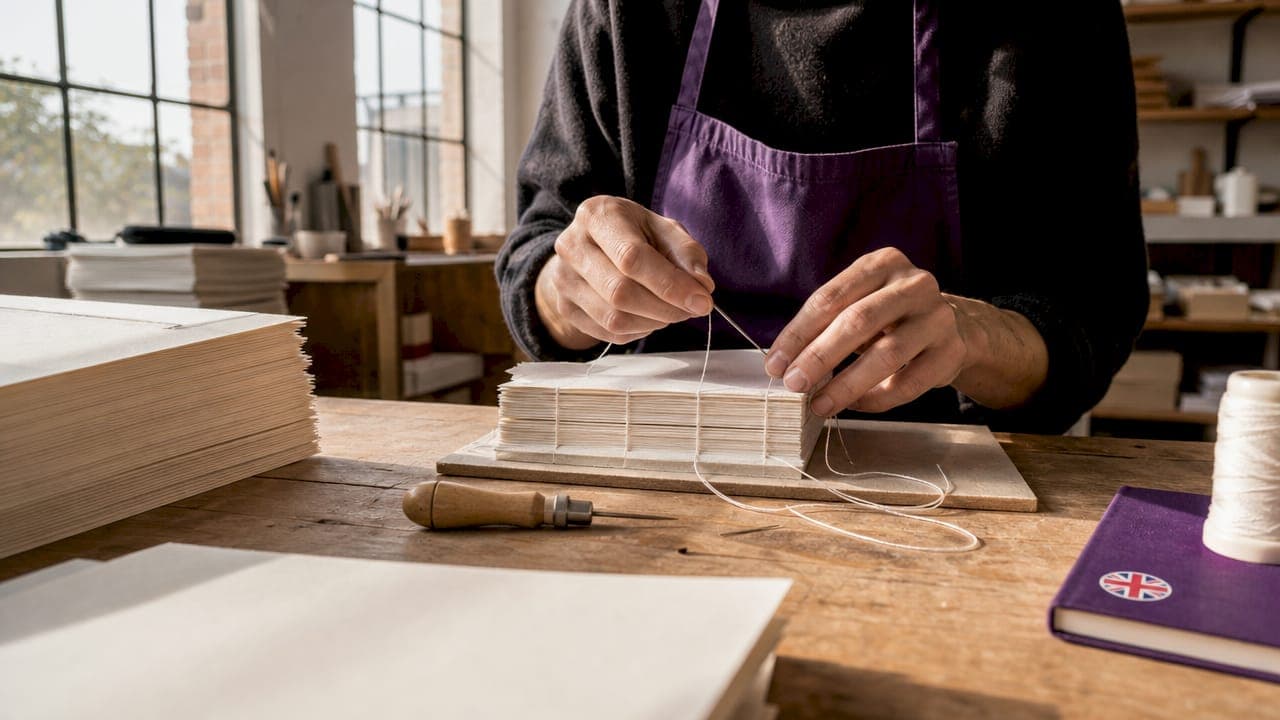
Handcraft bookbinding is the manual art of assembling pages and attaching them to a protective cover using sewing, adhesive, or a combination of both. Known in professional circles as hand bookbinding or craft bookbinding, this practice stands apart from factory printing by prioritizing durability, tactile quality, and personal expression over speed. A beginner can complete a simple 5x7 journal with three signatures in about 2 to 3 hours, while more complex leather-bound projects may take several days. Core materials include waxed linen thread, an awl, a bone folder, and greyboard covers. Popular binding styles range from coptic stitch to kettle stitch and Japanese stab binding, each producing a structurally distinct and visually striking result.
What is handcraft bookbinding and why does it matter?
Handcraft bookbinding is the process of manually folding paper into groups called signatures, sewing those signatures together, and securing them inside a handmade cover. The term "signature" refers to a small stack of folded pages, typically 4 to 8 sheets, that forms one section of the book's interior. Mastering signatures is the single most important conceptual step for any beginner, because understanding signatures simplifies the progression from simple pamphlet binding to complex multi-signature books.
What separates handcraft bookbinding from mass production is the intentional choice of materials and method. Factory-bound books use high-speed perfect binding, where pages are ground at the spine and glued in bulk. Handcrafted books use sewn structures that distribute stress across the entire spine, producing books that open flat and last decades longer. Experts distinguish craft bookbinding from mass publishing by focusing on longevity, choice of materials, and tactile experience. That distinction matters whether you are making a personal journal, a gift, or an art object.
What tools and materials do you need to start?
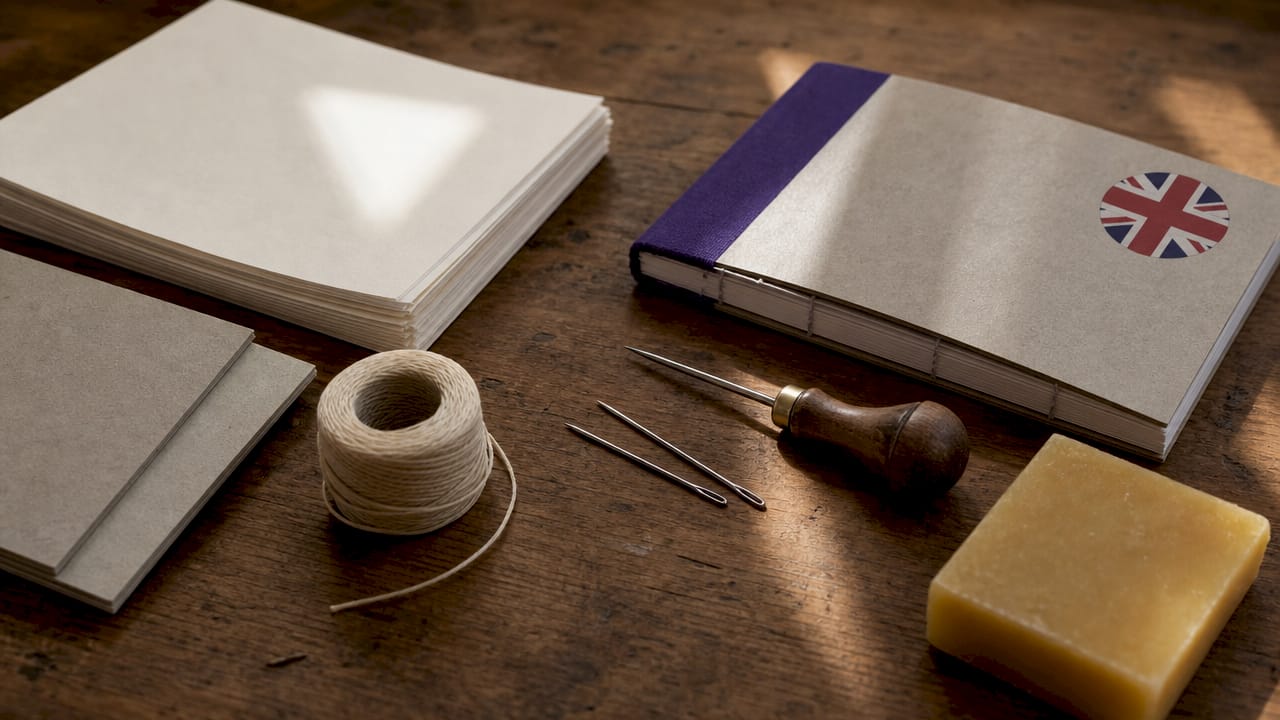
Beginner bookbinding starter kits generally include heavyweight paper, waxed linen thread, blunt-tip needles, awls, and greyboard for covers, totaling under $50. That price point makes this one of the most accessible craft disciplines you can pick up without a dedicated studio or expensive equipment.
Here is what belongs in your starter kit:
- Bone folder: Creates crisp, clean folds along paper and spine cloth. A bone folder produces a professional finish that glue alone cannot replicate.
- Awl or bookbinding needle: Punches clean holes through folded signatures for thread passage. A blunt-tip needle prevents tearing.
- Waxed linen or polyester thread: 3-ply waxed linen thread balances durability with ease of sewing through spine holes. Polyester thread works as a cost-effective alternative.
- Greyboard or bookboard: Forms the rigid cover panels. Greyboard is widely available at art supply stores and online retailers.
- PVA glue: A flexible, acid-free adhesive used for attaching covers and spine cloth. Avoid standard white glue, which dries brittle.
- Heavyweight paper (60 to 90 lb text weight): Forms the interior pages. Thinner paper tears at punch holes; heavier paper holds stitching cleanly.
- Ruler and cutting mat: Precision cutting is non-negotiable for clean, professional results.
When assessing material quality, check that paper is acid-free to prevent yellowing over time. For thread, waxed linen is the traditional choice because the wax coating reduces friction and prevents tangling mid-stitch. Greyboard thickness between 1.5mm and 2mm suits most journal-sized projects.
Pro Tip: Before purchasing a full kit, test paper grain direction by gently bending a sheet in both directions. The direction that bends with less resistance is the grain direction. Always fold parallel to the grain to prevent cracked spines.
Which binding techniques are best for beginners?
Three techniques dominate beginner handcrafted bookbinding: coptic binding, kettle stitch, and Japanese stab binding. Each produces a different structural and visual result, and each has unique benefits suited to different project types.
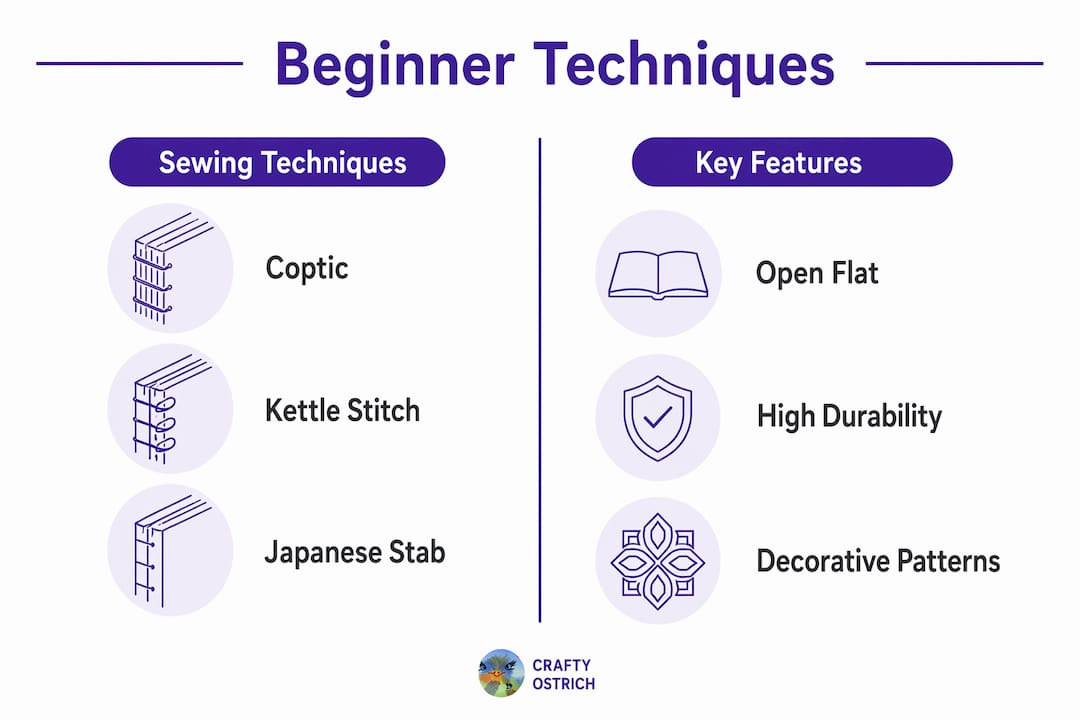
| Technique | Opens flat? | Durability | Best for | Difficulty |
|---|---|---|---|---|
| Coptic binding | Yes | High | Journals, sketchbooks | Intermediate |
| Kettle stitch | Yes | Very high | Notebooks, multi-signature books | Beginner to intermediate |
| Japanese stab binding | No | Moderate | Decorative notebooks, gifts | Beginner |
Coptic binding exposes the sewn spine, creating a visually striking pattern of interlocking loops. The book opens completely flat, making it ideal for sketchbooks and journals where you need full page access. The exposed spine is also a design feature, so thread color becomes a creative choice.
Kettle stitch binding is a durable hand-sewing technique that creates a flexible spine allowing books to open flat without glue. The interlocking loops at the head and tail of each signature give the spine its strength. This is the technique most bookbinding instructors recommend for a first multi-signature project because the stitch pattern is repetitive and easy to memorize.
Japanese stab binding sews through the entire book block from front to back using decorative patterns like the tortoiseshell or hemp leaf stitch. The book does not open flat, but the visual result is striking. This method suits thin notebooks and gift items where aesthetics outweigh function.
Sewing-based methods consistently outperform glue-only methods in longevity. Glue-based perfect binding, common in mass-produced paperbacks, becomes brittle and pages fall out over years of use. Sewn bindings distribute tension across thread and paper, keeping the book intact even with heavy daily use.
How to start a DIY bookbinding project: step-by-step essentials
Starting your first handcraft bookbinding project requires no prior experience, only patience and attention to a few structural details. Follow these steps for a basic kettle stitch journal:
- Select and prepare your paper. Cut interior pages to your target size, keeping grain direction parallel to the spine. Test grain direction before cutting to avoid cracked folds.
- Fold signatures. Group 4 to 6 sheets per signature and fold them together along the grain. Use a bone folder to create a sharp, clean crease at the fold.
- Mark and punch holes. Stack all signatures and mark consistent hole positions along the spine fold. Use an awl to punch clean holes through each signature individually.
- Sew the signatures together. Thread a blunt needle with waxed linen thread and sew through each signature using your chosen stitch pattern. Maintain consistent thread tension throughout. Loose tension creates a sloppy spine; overly tight tension tears the paper.
- Prepare the cover boards. Cut greyboard panels slightly larger than your page block. Score a hinge gap between the spine and cover panel to allow the cover to flex without cracking.
- Case in the book block. Apply PVA glue to the outermost pages of the sewn block and press them against the cover boards. Burnish the hinge gap with a bone folder while the glue is slightly damp to create a flexible, durable hinge.
- Press and dry. Place the finished book under a flat weight for at least two hours. This prevents warping and ensures the adhesive bonds evenly.
Common beginner mistakes include ignoring grain direction, which causes the spine to crack on the first opening, and applying too much glue during casing-in, which stiffens the hinge and causes cover detachment over time. Selecting the correct grain direction and maintaining proper thread tension are the two variables that most directly determine whether a finished book lasts years or falls apart in months.
Pro Tip: Wax your thread by running it across a block of beeswax before sewing. This reduces friction through the punch holes and prevents the thread from knotting mid-stitch, saving significant frustration on your first project.
For more detailed technique walkthroughs and creative cover ideas, the DIY bookbinding guide at Munkterproducts covers both beginner and intermediate methods with practical examples.
What makes handcrafted books different from mass-produced ones?
Handcrafted books prioritize longevity and tactile quality over speed and cost-efficiency, often resulting in heirloom-quality pieces. The difference is not just aesthetic. It is structural. A sewn binding holds pages through mechanical interlocking of thread and paper fiber. A glued binding holds pages through surface adhesion alone, which degrades with heat, humidity, and repeated opening.
The qualities that set handcrafted books apart include:
- Durability: Sewn signatures with acid-free adhesives and premium paper create books that last generations without page loss or spine failure.
- Tactile experience: Handmade covers using bookcloth, leather, or decorative paper offer a sensory richness that printed cardstock cannot replicate.
- Personalization: Every element, from thread color to cover fabric to paper weight, reflects deliberate creative choices. No two handcrafted books are identical.
- Flat opening: Sewn structures allow the book to open completely flat, a functional advantage for journals, sketchbooks, and notebooks used during writing or drawing.
- Artistic expression: The exposed spine of a coptic-bound book or the decorative stitch pattern of a Japanese stab binding turns the binding itself into a visual element.
Use of acid-free adhesives and premium paper transforms handmade books into lasting works of art. This is the core argument for learning the craft rather than buying a mass-produced notebook. The object you create carries the evidence of your choices and your hands.
Key takeaways
Handcraft bookbinding produces durable, personalized books through sewn signatures and quality materials, making it a craft that rewards patience and attention to structural detail.
| Point | Details |
|---|---|
| Core definition | Handcraft bookbinding manually assembles signatures and attaches them to a cover using sewing and adhesive. |
| Starter cost | A complete beginner kit with thread, awl, bone folder, and greyboard costs under $50. |
| Best beginner technique | Kettle stitch binding offers the best balance of durability, flat opening, and learnable stitch pattern. |
| Critical skill | Grain direction and thread tension determine spine durability more than any other variable. |
| Heirloom quality | Acid-free materials and sewn structures produce books that outlast mass-produced alternatives by decades. |
Why imperfection is the point
I have watched beginners abandon their first bookbinding project because the spine was slightly uneven or the cover sat a millimeter off-center. That reaction misses what the craft actually teaches. Handcraft bookbinding is increasingly recognized as a slow craft that emphasizes meditative, intentional workflow over perfection. The imperfections in your first book are not failures. They are a record of what you learned.
What I find most underappreciated by new bookbinders is the relationship between thread tension and book structure. Most tutorials focus on stitch patterns, but tension is the invisible variable that determines whether a book opens smoothly or pulls apart at the spine. You learn tension through your hands, not through instructions. That is why the first project always teaches more than any guide can.
My honest recommendation: do not start with a decorative Japanese stab binding just because it looks impressive in photos. Start with a kettle stitch notebook using plain paper and inexpensive greyboard. Build the structural understanding first. Once you feel how a well-tensioned spine behaves when you open the book, every other technique becomes easier to understand. The mindful creativity that comes from working slowly and deliberately with physical materials is genuinely difficult to find in other hobbies.
The craft also scales in interesting directions. Once you understand signatures and casing-in, you can move into decorative paper covers, bookcloth spines, or even simple leather work. The tools stay the same. The principles stay the same. Only the materials and ambition change.
— Mark
Start your first bookbinding project with the right supplies

Getting the right materials before your first project makes a measurable difference in the result. Munkterproducts carries a curated selection of journals, notebooks, and creative stationery that reflects the same values driving the handcraft bookbinding community: quality materials, intentional design, and objects worth keeping. If you are building toward creating your own handmade books, exploring the Munkterproducts catalog gives you a clear reference point for what well-made, thoughtfully designed books look and feel like. You can also find beginner-friendly guidance on stamp carving and craft supplies to complement your bookbinding toolkit with custom decorative elements.
FAQ
What is handcraft bookbinding in simple terms?
Handcraft bookbinding is the manual process of folding paper into signatures, sewing them together, and attaching the sewn block to a handmade cover. It produces durable, personalized books using tools like an awl, bone folder, and waxed linen thread.
How long does a handcraft bookbinding project take?
A simple 5x7 journal with three signatures takes about 2 to 3 hours to complete. More complex projects with leather covers or decorative stitching can take several days.
What is the easiest bookbinding method for beginners?
Japanese stab binding is the simplest to learn because it requires no multi-signature sewing. Kettle stitch binding is the best choice for beginners who want a durable, flat-opening book.
Do I need expensive tools to start bookbinding?
A complete beginner kit including heavyweight paper, waxed linen thread, blunt-tip needles, an awl, and greyboard covers costs under $50. Most professional-grade tools like bone folders are inexpensive and widely available at art supply retailers.
What makes handcrafted books last longer than store-bought ones?
Handcrafted books use sewn signatures and acid-free adhesives that distribute stress mechanically across thread and paper fiber. Mass-produced books rely on surface adhesion alone, which degrades with heat, humidity, and repeated use.