
TL;DR:
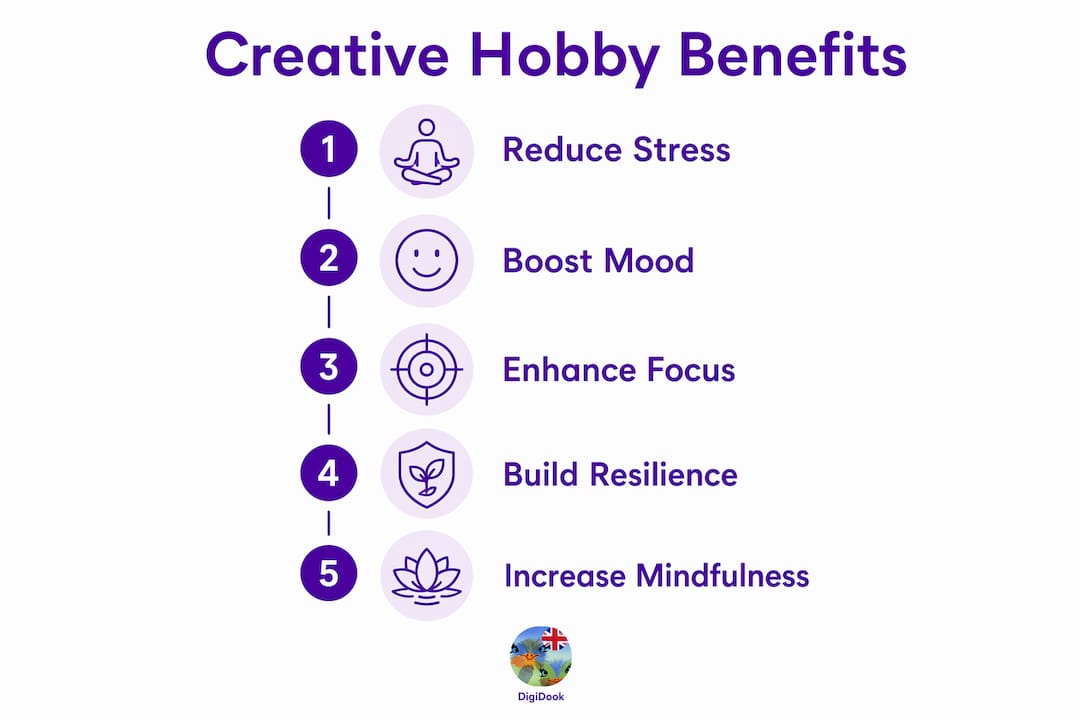
- Creative hobbies are effective, accessible tools that improve mental health by reducing stress and boosting resilience.
- Engaging in arts, crafts, or journaling triggers brain processes linked to emotional processing and increased life satisfaction.
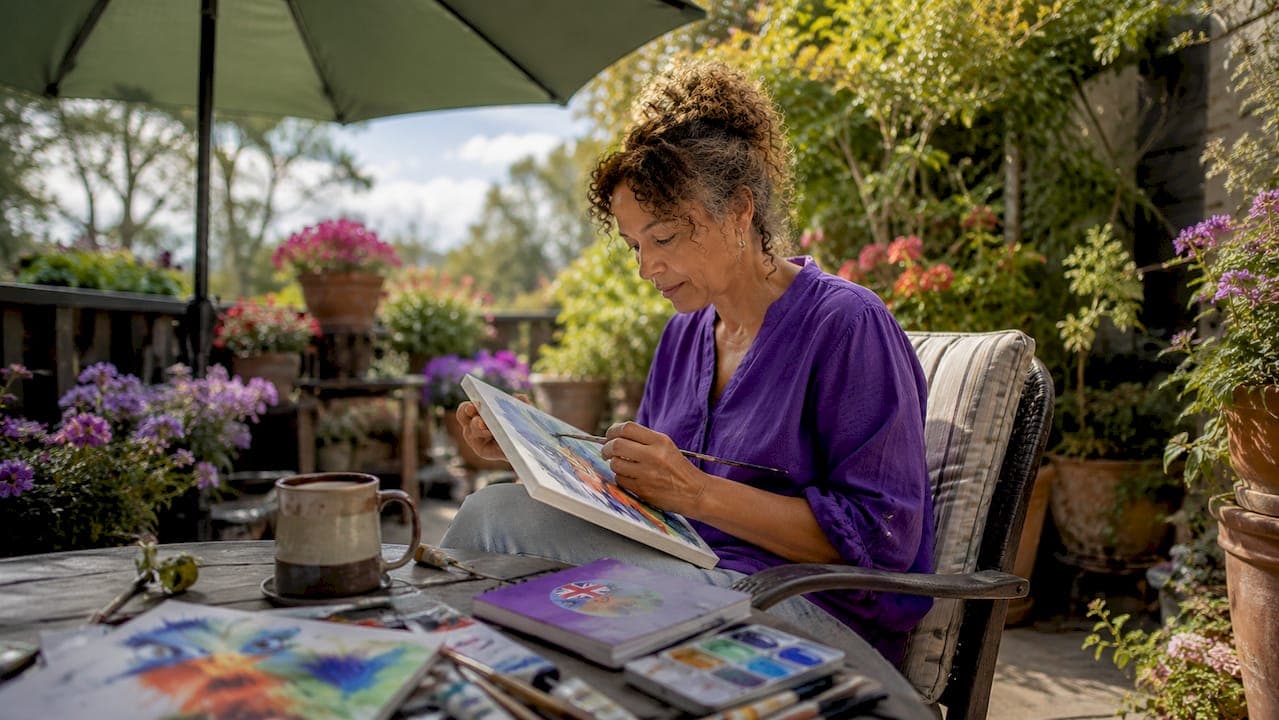
Creative hobbies are among the most accessible wellness tools available, and the evidence behind them is hard to ignore. Dr. Frank Clark describes creative engagement as a "cathartic antidote" that restores mental balance and meaning, while research consistently links arts and crafts to reduced stress, sharper emotional processing, and greater life satisfaction. Whether you reach for a journal, a puzzle, a coloring book, or a fresh pack of stationery, you are doing something genuinely good for your brain.
Here is why creative hobbies are worth your time:
- They lower stress hormones and quiet mental noise
- They build emotional resilience through expressive, non-verbal outlets
- They trigger dopamine release and rewarding flow states
- They create small wins that help improve motivation and reduce self-doubt
- They connect you to meaning, identity, and sometimes community
- Products like journals, coloring books, and puzzles make starting easy and affordable
Table of Contents
- 1. Creative hobbies deliver real mental and emotional benefits
- 2. Which creative hobbies suit books, journals, puzzles, and stationery lovers?
- 3. How creative hobbies build mindfulness and keep you coming back
- Key Takeaways
- Munkterproducts makes starting a creative hobby genuinely easy
1. Creative hobbies deliver real mental and emotional benefits
The science here is specific, not vague. Psychotherapist Joachim Lee explains that creative activities quiet the prefrontal cortex, the brain's self-critical center, which opens the door to flow states and dopamine release. That neurological shift is why an hour with a coloring book can feel more restorative than an hour of scrolling.
Key mental and emotional benefits backed by research:
- Stress reduction: A single 45-minute art-making session reduced cortisol levels in 75% of participants in one experiment
- Emotional processing: Creative work activates the brain regions that handle emotion, helping you work through feelings that resist words
- Mood lift: Creative activities right-brain function facilitates emotional expression and non-verbal communication
- Life satisfaction: Engaging in arts and crafts significantly predicted higher life satisfaction, happiness, and a sense that life is worthwhile, above and beyond sociodemographic factors
- Social connection: Hobbies reduce loneliness and contribute to relationships that improve overall life satisfaction
Associate Professor Daisy Fancourt adds an important nuance: diversity matters as much as frequency in arts engagement. Rotating between journaling, puzzles, and coloring, rather than sticking to one outlet, compounds the sensory and cognitive benefits over time. Art engagement, she argues, functions like diet, exercise, and sleep as a genuine health behavior.
2. Which creative hobbies suit books, journals, puzzles, and stationery lovers?
You do not need a studio or special talent. The hobbies most aligned with what Munkterproducts offers are low-barrier, tactile, and deeply satisfying:
- Journaling: Writing about positive experiences and goals improves mood in people with and without health conditions. A handmade journal turns the practice into a sensory ritual, not just a task
- Adult coloring: Coloring therapy decreases anxiety and depression and increases positive emotions when used alongside conventional care. Munkterproducts' adult coloring books, including confidence and self-expression themes, give you a structured creative entry point
- Puzzles: Puzzle books engage focused attention and problem-solving, providing the kind of absorbing mental challenge that crowds out rumination. The cognitive engagement from activity books supports both relaxation and mental sharpness
- Word search and artistic books: These sit at the intersection of language, pattern recognition, and play, offering a lighter creative lift on days when you have less energy
- Stationery and paper crafts: Notebooks, planners, and novelty stationery items invite you to slow down and write by hand, a practice that stationery science links to clearer thinking and creative momentum
- Reading fiction: Reading almost every day is linked to lower depression risk, less loneliness, and better cognitive functioning. The Noah science fiction series from Munkterproducts pairs storytelling with the mental health benefits of deep reading
Choosing the right hobby comes down to honest self-assessment. If you want quiet focus, puzzles and coloring deliver it. If you want to process emotions, journaling is the more direct route. If you want both, alternate between them.
3. How creative hobbies build mindfulness and keep you coming back
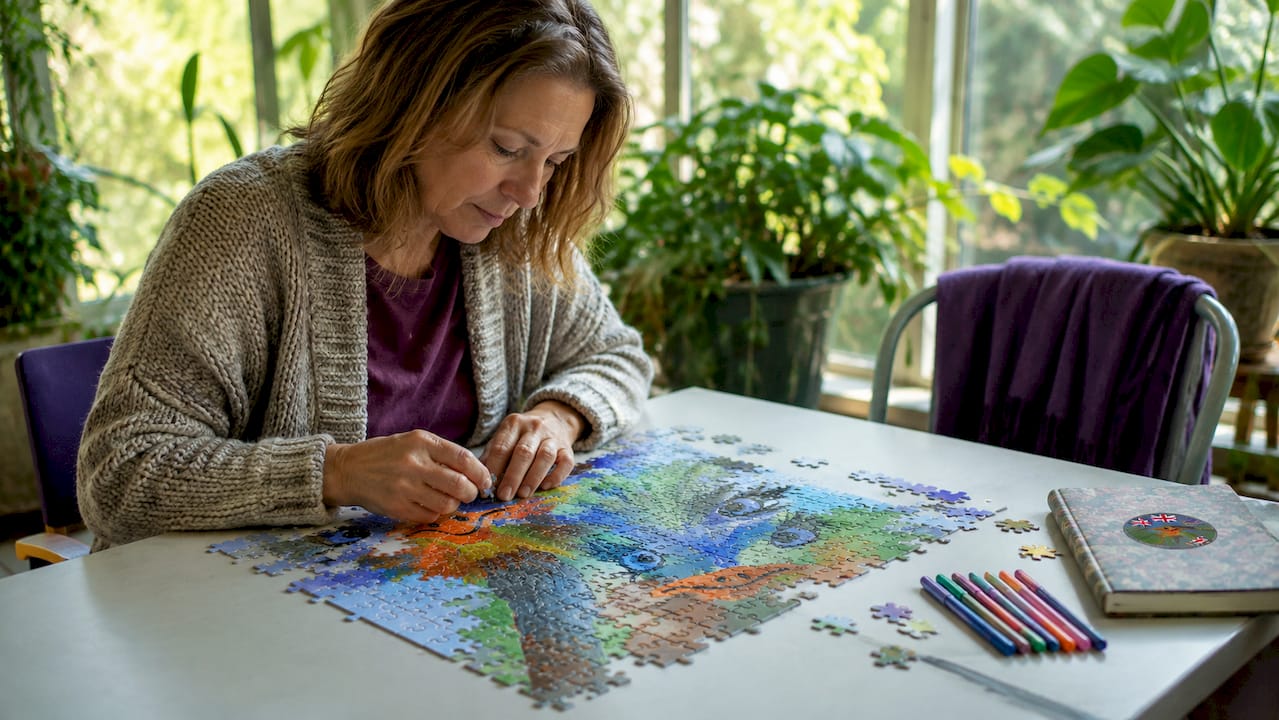
The reason creative hobbies stick, when they do, is flow. Joachim Lee's work shows that creative engagement quiets self-criticism and pulls you into a state of full absorption. That state is not just pleasant; it is a neuro-emotional reset that reduces stress and builds resilience over repeated sessions.
Therapists consistently point out that the benefits come from the process, not the product. Even destroying completed work can yield emotional relief. That reframe matters: you are not trying to make something beautiful, you are giving your nervous system a break.
Practical ways to make creative hobbies a real habit:
- Start with 10–20 minutes daily. Experts recommend small, achievable goals like completing one coloring page or writing a single journal entry to build momentum without pressure
- Create a no-phone zone. Device-free creative sessions break passive consumption cycles and deepen immersion, making flow far more likely
- Value process over product. A learner's mindset removes performance anxiety, the single biggest barrier to sustained creative engagement
- Rotate your hobbies. Diversity in creative activities compounds the benefits, per Daisy Fancourt's research
Pro Tip: Set a physical creative kit on your desk or nightstand, a journal, a puzzle, or a coloring book, so the barrier to starting is zero. Visibility beats willpower every time.
Art engagement treated as a health behavior akin to diet and sleep is not a stretch. It is where the research is pointing.
Key Takeaways
Creative hobbies are evidence-backed wellness tools that reduce stress, build emotional resilience, and improve life satisfaction through consistent, process-focused engagement.
| Point | Details |
|---|---|
| Mental health impact | Arts and crafts significantly predict higher life satisfaction and happiness, above sociodemographic factors. |
| Neuroscience of creativity | Creative activities quiet the prefrontal cortex, enabling flow states and dopamine release. |
| Process over product | Benefits come from the act of creating, not the outcome, so a learner's mindset outperforms perfectionism. |
| Habit formation | Short creative sessions within device-free zones help build sustainable creative routines. |
| Munkterproducts | Journals, coloring books, puzzles, and stationery from Munkterproducts give you ready-made tools to start. |
Munkterproducts makes starting a creative hobby genuinely easy
Most people know they should spend less time scrolling and more time creating. The gap is not motivation; it is friction. Munkterproducts removes that friction with a curated range of handcrafted journals, adult coloring books, puzzle books, word search titles, planners, and novelty stationery, all shipped with postage included.

Every product is chosen to support the kind of mindful creativity the research points to: tactile, focused, and low-pressure. The adult coloring books address confidence and self-expression directly. The self-help journals give structure to emotional processing. The puzzle and activity books deliver the absorbing focus that crowds out stress. If you are looking for an art gift that doubles as a genuine wellness tool, these titles fit that purpose too.
Browse the full collection at munkterproducts.com and pick one product to start with this week. One journal page or one coloring session is enough to feel the difference.