
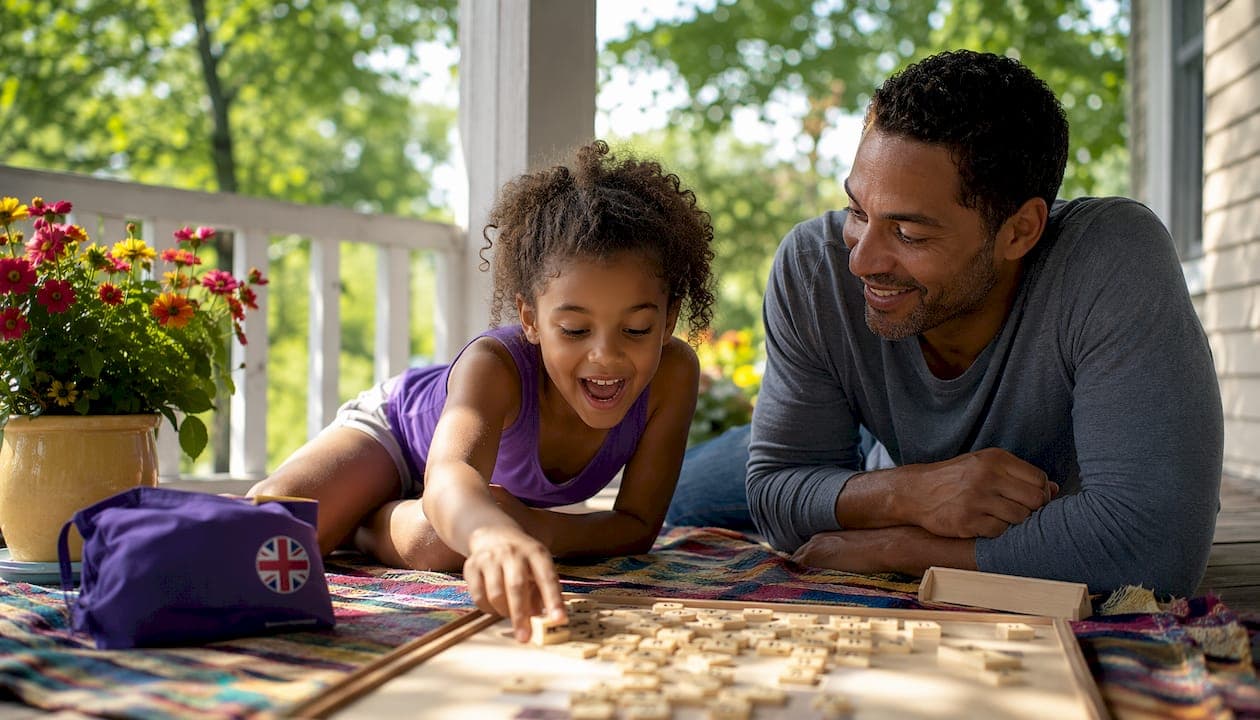
Word games are one of the most cost-effective tools in early literacy, reliably building vocabulary, phonemic awareness, spelling, and reading confidence when paired with phonics instruction. Start with short daily sessions using an age-appropriate word-search or puzzle book, then layer in a simple dictionary app for word lookup. Research from Reading Rockets confirms that activities requiring children to physically segment and manipulate words strengthen the critical bridge between spoken and written language. Munkterproducts' curated word-search and puzzle books are designed with exactly this in mind, offering scaffolded difficulty, clear artwork, and replayability across age groups.
What you get from word games:
- Stronger vocabulary through repeated, contextual word exposure
- Phonemic awareness through rhyming, onset-rime, and word-sorting tasks
- Improved spelling via listen-and-spell and word-ladder formats
- Better reading fluency and working memory through timed and category-based play
- Higher engagement, especially for hands-on learners who tune out worksheets
Table of Contents
- How do word games actually change the way kids learn to read?
- What specific skills do word games improve?
- What formats of word-game products can you actually buy?
- How do you choose the right word-game book for your child?
- How do you build a word-game routine at home?
- How do you make word games work for ESL learners and kids with reading differences?
- What does the research actually say, and how much should you trust it?
- Key Takeaways
- Why the "just play more games" advice misses the point
- Munkterproducts' word-search and puzzle books for children
How do word games actually change the way kids learn to read?
Active retrieval, repetition in context, and multisensory engagement drive measurable word learning. When a child hunts for a word in a grid, says it aloud, and writes it down, three separate memory pathways fire at once. That overlap is why game-based practice sticks in a way that flashcard drills often don't.
A foundational concept here is concept of word, the ability to match a spoken word to its written form on a page. Reading Rockets explains that activities requiring children to segment sentences into individual words and use manipulatives to represent each one directly build this speech-to-print mapping. Without it, early readers guess at words by context rather than decoding them.
Short, focused word-game interventions can produce large vocabulary gains in young children. Evidence summaries report kindergarten interventions with very large effect sizes, suggesting that even brief, well-designed play sessions can move the needle significantly on early vocabulary.
Spaced, short sessions matter too. Spreading practice across multiple days rather than cramming it into one long sitting gives the brain time to consolidate new words. That's the core logic behind the 10–15 minute daily routine most literacy specialists recommend.
Pro Tip: If your child misreads a word during a game, don't correct it immediately. Ask "Does that sound right?" first. That one prompt activates self-monitoring, a skill that transfers directly to independent reading.
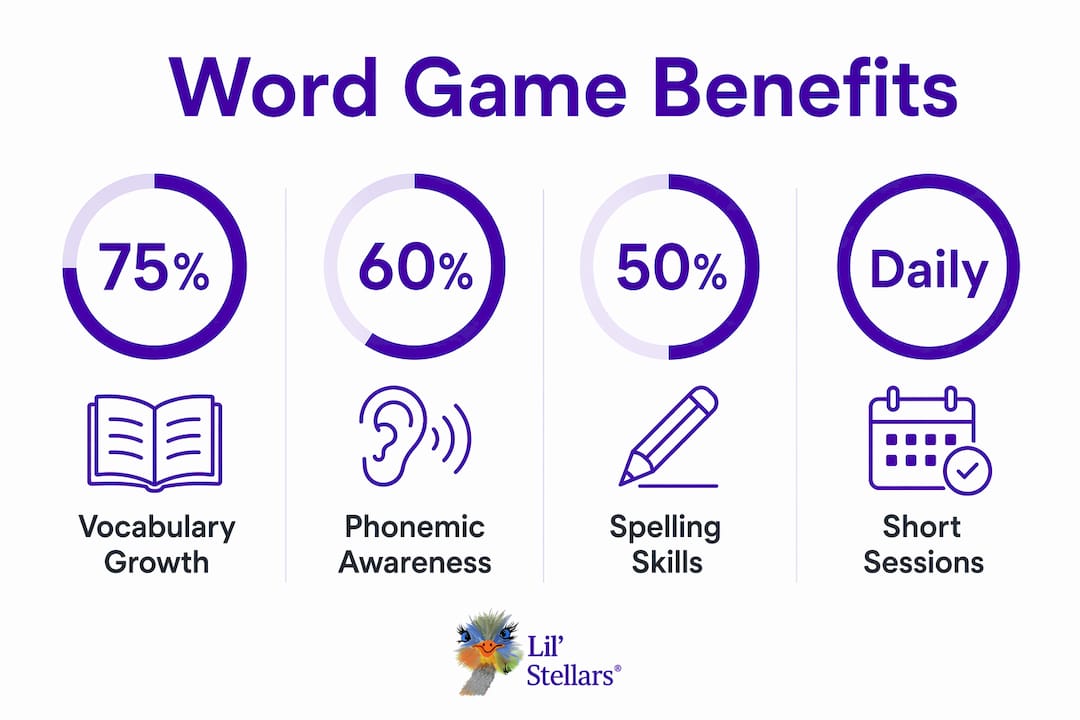
Games work best once a phonics foundation is in place. They reinforce and extend decoding skills, but they are not a substitute for direct phonics instruction. Think of them as the practice reps after the lesson, not the lesson itself.
What specific skills do word games improve?
The benefits of word games for children span several distinct skill areas, and the right game targets the right skill for the right age.
- Vocabulary (all ages): Category games and themed word searches expose children to clusters of related words, building semantic networks rather than isolated definitions.
- Phonemic awareness (pre-readers, ages 3–5): Rhyming games and onset-rime activities train children to hear and manipulate individual sounds before they can read a single letter.
- Decoding and spelling (early readers, ages 5–8): Word ladders and listen-and-spell formats build the sound-symbol connections that make independent reading possible.
- Reading fluency (school-age, grades 2–5): Timed word searches and word-a-round games push children to recognize words quickly, reducing the cognitive load of decoding so comprehension can improve.
- Working memory and category thinking (grades 1–5): Sorting games and themed lists require children to hold multiple words in mind simultaneously and organize them by meaning.
One controlled study summarized by Lexiloot reported a very large effect size for a kindergarten vocabulary intervention, suggesting that short, targeted game play can produce gains well above what typical classroom instruction alone achieves. That said, effect sizes from single studies should be read as promising signals, not guarantees. Long-term retention data is still limited.
What formats of word-game products can you actually buy?
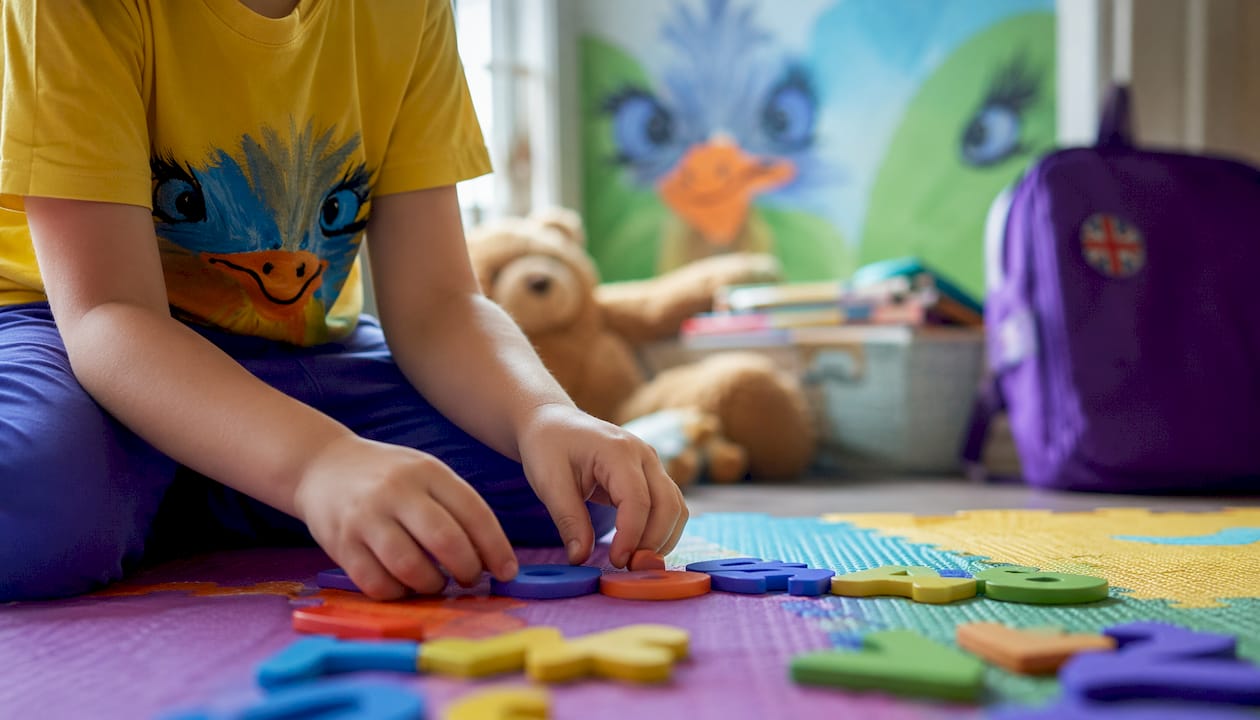
Word games for families come in more formats than most parents realize, and each one supports learning differently.
| Format | Best for | Key trade-off |
|---|---|---|
| Word-search/puzzle books | Ages 5–12, phonics reinforcement | Tactile, replayable, no screen time |
| Themed activity books | Ages 3–5, vocabulary by topic | Contextual learning, limited adaptability |
| Mini-crosswords | Ages 5–8, spelling and definitions | Builds persistence; harder for struggling readers |
| Card and board games | All ages, family play | Social and verbal; less writing practice |
| Listen-and-spell apps | Ages 3–5, audio learners | Instant feedback; skip tactile motor practice |
| Hybrid bundles (book + app) | Ages 5–10, mixed learners | Best of both; higher upfront cost |
Physical books offer slower pacing and tactile engagement that multisensory learners need. Adaptive apps provide instant feedback and difficulty scaling, but they can skip the motor-patterned spelling practice that physical writing reinforces. The strongest approach pairs both: use a puzzle book for the hands-on session, then a dictionary or speaking app for word lookup when a child gets stuck.
For bilingual households or ESL learners, multilingual educational toys and bilingual word-card sets add a layer of native-language support that speeds vocabulary transfer.
Pro Tip: Before buying an app, check for COPPA compliance and a no-ads guarantee. A child interrupted by an ad mid-session loses the retrieval moment the game was building.
Themed word-search books are particularly strong for contextual learning. Themed word searches group vocabulary by topic, so a child searching for ocean animals encounters "tentacle," "current," and "bioluminescent" in one sitting rather than in isolation.
How do you choose the right word-game book for your child?
Pick by skill target first, then by format and engagement model. A pre-reader needs phonemic awareness games; a third-grader needs vocabulary expansion and fluency practice. Matching the cognitive target to the product is more important than price or brand.
Buyer checklist:
- Age and grade level (look for explicit grade markers on packaging)
- Phonics readiness (is your child decoding simple CVC words yet?)
- Replayability (can the book be used more than once, or does it fill in permanently?)
- Scaffolded difficulty (does it start easy and get harder, or is every page the same level?)
- Multisensory features (writing space, cut-out cards, color coding)
- Price range varies depending on product type.
- COPPA compliance and no-ads for any digital component
- Educator endorsement or curriculum alignment noted on the product
For a deeper look at formats, educational book types covers the full range from activity books to structured readers.
Pro Tip: Buy one low-cost word-search book before committing to a subscription app. If your child engages with the physical format for two weeks, they're ready for a hybrid set.
How do you build a word-game routine at home?
Short, consistent sessions with a clear learning goal produce measurable gains. Three routines cover most home situations:
- Preschool emergent reader (ages 3–5): 10 minutes after dinner. One rhyming game or picture-word matching activity. Parent reads the words aloud; child points and repeats.
- Early elementary phonics practice (grades K–2): 12 minutes before school. One page of a word-search book targeting the week's spelling list. Child writes each found word in a notebook.
- Grades 3–5 vocabulary expansion: 15 minutes after homework. One crossword or themed word-search page, followed by two minutes of "use it in a sentence" conversation.
Simple progress tracker:
Fill one row per session. After two weeks, patterns emerge: which formats hold attention, which skill areas need more work, and when energy is highest.
Pro Tip: When a child gets a word wrong, turn it into a 30-second dictionary moment rather than a correction. "Let's look that one up together" builds the habit of checking, which is a lifelong literacy skill.
Mixing formats across the week, a physical book Monday through Thursday and a group card game on Friday, produces broader engagement than single-format repetition. For structured reading routines that pair well with game sessions, the Munkterproducts blog has ready-made templates.
How do you make word games work for ESL learners and kids with reading differences?
Word games can be highly inclusive when product features match the learner's needs. The key is choosing tools with visual supports, audio playback, adjustable pacing, and simple fonts rather than adapting after the fact.
Accessibility checklist when buying:
- Audio playback or slow-speech mode (critical for ESL and dyslexic learners)
- Large print and dyslexia-friendly fonts (OpenDyslexic or similar sans-serif)
- Picture supports alongside written words
- Bilingual word lists or native-language glosses
- Scaffolded hints rather than immediate answer reveals
- Turn-taking rules that reduce time pressure
For ESL learners specifically, pairing a new English word with an image and a native-language gloss speeds vocabulary transfer significantly. Montessori talking flash cards are one example of a multisensory tool that combines audio, image, and tactile input in a single product.
Low-cost home adaptations work too. Write target words on index cards with a small drawing on the back. Use a highlighter to mark word boundaries in a word search. Read each found word aloud together before moving on.
Pro Tip: For a child with dyslexia, avoid word-search grids with diagonal or backward words in the early stages. Horizontal-only grids reduce visual tracking demands and build confidence before adding complexity.
What does the research actually say, and how much should you trust it?
Short, focused play increases vocabulary and decoding efficiency, with the strongest evidence coming from interventions that follow phonics instruction rather than replace it.
| Study / Source | Learner group | Outcome | Intervention length |
|---|---|---|---|
| Kindergarten vocabulary intervention (Lexiloot summary) | Kindergartners | Very large effect size on vocabulary post-test | Short-term |
| Digital Snakes and Ladders (Springer Nature) | Primary school EFL learners | Significant vocabulary score gains | Short-term |
| Concept of word activities (Reading Rockets) | Early readers | Improved speech-to-print mapping | Ongoing classroom use |
A large effect size means the intervention produced gains well above what chance or typical instruction would predict. One strong study is a promising signal, not a mandate. The Lexiloot summary itself notes that long-term retention studies are still limited, which is an honest caveat worth keeping in mind.
Watch for motivation shifts. When a game becomes about points or leaderboards rather than words, children optimize for scoring rather than learning. Keep the focus on the words themselves: ask "What does that word mean?" more often than "How many did you find?"
Key Takeaways
Word games reliably build vocabulary, phonemic awareness, and spelling when used in short daily sessions alongside phonics instruction, not instead of it.
| Point | Details |
|---|---|
| Start with phonics first | Games reinforce decoding skills but cannot replace direct phonics instruction for early readers. |
| Session length matters | Short, consistent sessions produce better retention than occasional long ones. |
| Match format to learner | Physical books suit tactile and multisensory learners; apps add adaptive difficulty and instant feedback. |
| Accessibility is a buying filter | Look for audio playback, large print, and bilingual supports when buying for ESL or dyslexic learners. |
| Munkterproducts as a starter | Munkterproducts' word-search and puzzle books offer scaffolded difficulty and replayability as a low-cost entry point. |
Why the "just play more games" advice misses the point
The conventional wisdom around educational word games tends to flatten into one message: more play equals more learning. The research tells a more specific story. Games produce strong gains when they target a defined cognitive skill, run in short focused sessions, and follow rather than precede phonics instruction. A child who hasn't yet cracked the alphabetic code won't get much from a crossword. A child who has will get a lot.
What parents underestimate is the importance of the conversation around the game. The moment a child asks "What does that word mean?" mid-session is worth more than ten completed puzzle pages. That question is vocabulary acquisition happening in real time. The game created the context; the conversation did the teaching.
Physical books have a specific advantage that rarely gets mentioned: they slow the pace down. An app that auto-advances after a correct answer doesn't give a child time to say the word, write it, or use it in a sentence. A puzzle book just sits there, patient, while a child works through it at their own speed. For early spellers especially, that slower loop between seeing a word, finding it, and writing it builds motor-patterned memory that fast-paced digital games skip entirely.
The best home routine isn't the most elaborate one. It's the one that happens consistently, at the same time each day, with a parent nearby to catch the teachable moments.
Munkterproducts' word-search and puzzle books for children
Parents who've read this far know what to look for: scaffolded difficulty, replayability, clear artwork, and age-appropriate vocabulary. Munkterproducts' children's word-search and puzzle books are built around exactly those criteria, with titles spanning early emergent readers through upper elementary.

Each book targets a specific age range and skill level, uses clean layouts that work for a range of learners, and is designed to be used more than once. Postage is included with every order, and the product range covers themed activity books, word-search collections, and holiday puzzle sets that double as gifts. Price points start low enough to try before committing to a full bundle.
Browse the full range and place an order at munkterproducts.com. Customer support is available directly through the site for questions about age suitability or product selection.