
TL;DR:
- Holiday-themed books help prevent children's reading skill loss during school breaks.
- Consistent short daily reading creates lasting family traditions and emotional connections.
- Physical print books are more engaging and beneficial for deep learning than digital alternatives.
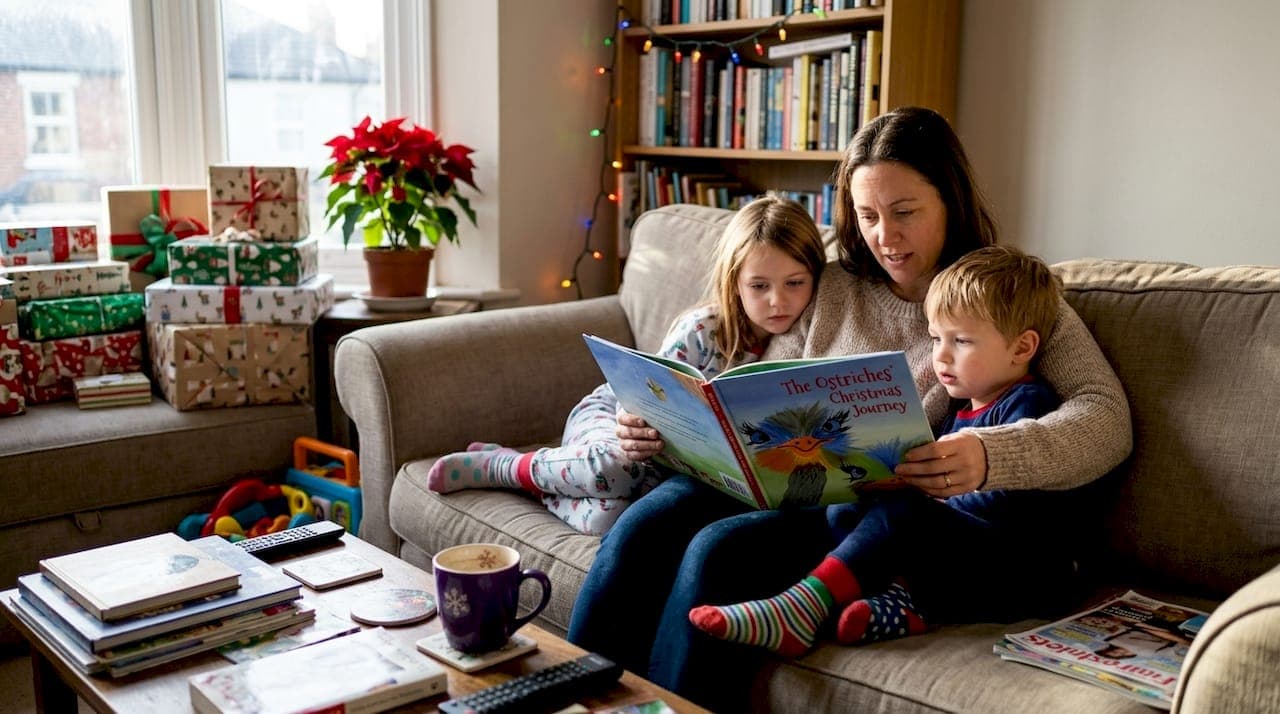
Most parents don't realize how quickly children lose ground during school breaks. Kids can lose up to 20% of their reading progress over a typical holiday period, a pattern that quietly sets them back before the new school year even begins. Holiday-themed books are one of the simplest, most enjoyable ways to stop that slide in its tracks. They keep vocabulary sharp, comprehension active, and reading routines alive, all while wrapping learning inside stories children actually want to hear. This guide walks you through the real benefits, practical strategies, and the surprising emotional value of making holiday books a family staple.
Table of Contents
- How holiday-themed books prevent learning loss
- Fostering family traditions and seasonal joy
- Print vs. screen: Why physical books matter more
- How to build a holiday reading habit that lasts
- The real secret: Connection, not perfection
- Find your next holiday reading tradition with MunkterProducts.com
- Frequently asked questions
Key Takeaways
| Point | Details |
|---|---|
| Prevents learning loss | Holiday-themed books keep kids’ reading skills sharp during school breaks. |
| Builds family traditions | Regular holiday reading creates memorable rituals and strengthens family bonds. |
| Print books are best | Physical books foster more engagement and learning than screens. |
| Consistency matters | Just a few minutes of daily reading adds up to lasting benefits. |
How holiday-themed books prevent learning loss
With the stakes set, let's explore exactly why holiday-themed books are such effective tools for parents during school breaks.
School breaks feel like a well-earned pause, but for young readers, they can quietly undo months of hard work. Researchers have found that 20 to 30% of reading gains can disappear without regular reading during breaks. This is sometimes called the "holiday slide," a close cousin of the more widely known summer slide. The good news is that it doesn't take a structured curriculum to prevent it.
Holiday-themed books work so well because they meet children where their excitement already lives. When a story features snowflakes, festive traditions, or seasonal characters, kids are naturally more motivated to pick it up. That motivation is the engine behind real skill-building. Vocabulary grows when children encounter new words in context. Comprehension strengthens when they follow a plot and predict what comes next.
Here's what consistent holiday reading actually does for your child:
- Maintains vocabulary built up during the school year
- Keeps comprehension habits active so kids don't lose their reading stamina
- Reinforces phonics and fluency through repeated, enjoyable reading
- Builds listening skills during shared read-alouds
- Creates a positive association with books outside of school pressure
One of the most important insights from child literacy research is that short, frequent sessions beat long, occasional ones every time. Fifteen minutes of reading each evening during a two-week holiday break adds up to over three hours of active skill practice. That's a meaningful amount of time.
"Reading together during the holidays doesn't just protect learning gains. It also calms routines, anchors children emotionally, and gives families a shared language around stories."
If you're wondering where to start, an activity book checklist can help you match books to your child's current reading level and interests. And if you want to extend the value beyond the holidays, exploring personal growth with books shows how reading habits built early create lifelong benefits.
Fostering family traditions and seasonal joy
Beyond academic benefits, holiday books offer something deeper: the chance to make memories and create unique traditions.
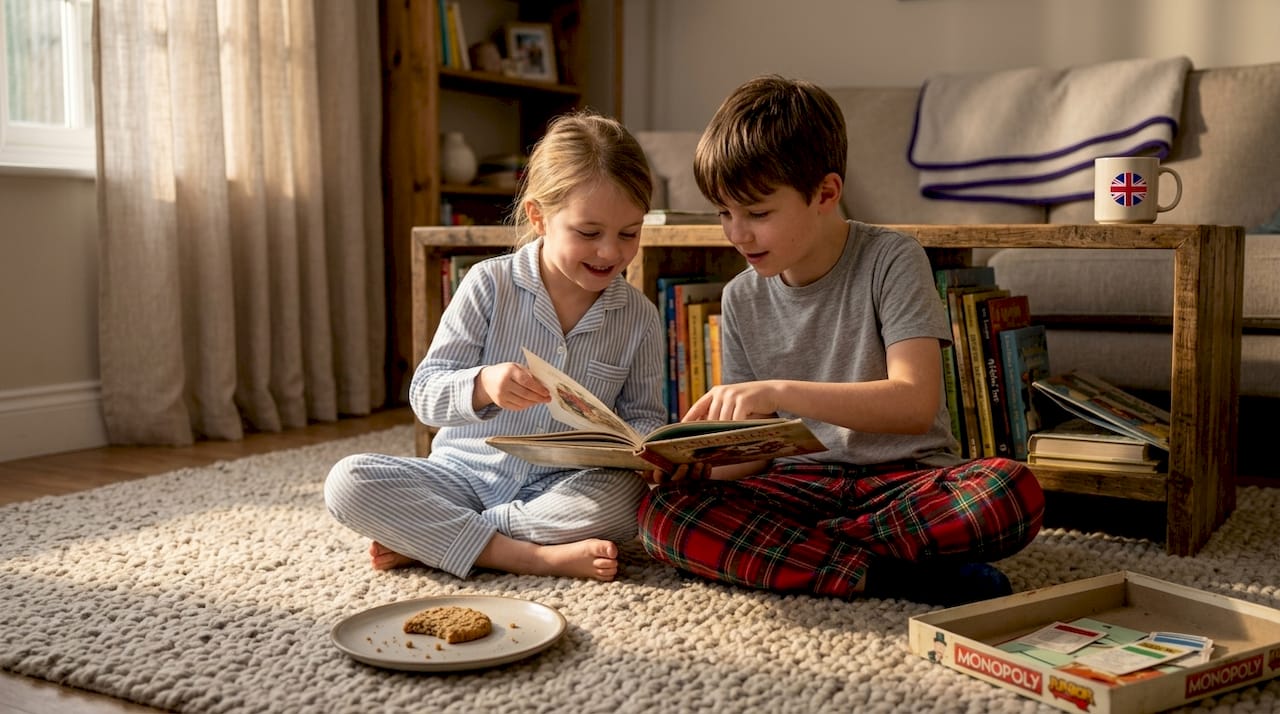
Think about the rituals you remember most from childhood. Chances are, they involved repetition, anticipation, and togetherness. Holiday books can anchor exactly that kind of experience. When a child knows that every December brings a new story, or that bedtime during the holidays always means one special chapter, that predictability becomes something they look forward to all year.
Building a reading tradition doesn't require a big plan. It just requires consistency and a little creativity. Some families that love holiday activity books use them as part of a nightly countdown, reading one story or completing one activity per evening leading up to a celebration. Others let each child pick a new book as part of their holiday gift, making the book itself part of the occasion.
Here are some simple rituals that families swear by:
- Nightly story countdown: Read one holiday book per evening in the weeks before a celebration
- Annual new book tradition: Each child receives one new holiday book every year to keep
- Interactive read-alouds: Take turns reading pages, doing voices, or acting out scenes
- Holiday book basket: Fill a basket with seasonal titles available only during the holiday period
- Post-dinner storytime: Replace screen time after dinner with a shared reading session
Holiday books also connect children to something larger than the story itself. They carry cultural meaning, family values, and the emotional texture of what a celebration is really about. A well-chosen book can open conversations about generosity, gratitude, or togetherness in ways that feel natural rather than forced. You can find guidance on making those choices well in this holiday book selection guide.
For families who want to extend the joy further, holiday gift bundles can pair books with other seasonal items to create a richer gifting experience.
As research confirms, holiday reading acts as a calming anchor for children during what can otherwise be an overstimulating season.
Pro Tip: Move storytime to right after dinner or just before bed. That consistency signals to your child's brain that reading is a normal, expected part of the day, not a chore.
Print vs. screen: Why physical books matter more
Now that you know how to build holiday traditions, let's break down a common parent dilemma: print or digital books?
Digital books have their place. They're convenient on long car trips, easy to store, and often interactive in ways that feel exciting. But when it comes to the kind of deep engagement that builds reading skills and family connection, print books consistently come out ahead. Print books outperform screens for interactivity and retention, particularly when reading is done together.
Here's a direct comparison to help you decide:
| Feature | Print books | Digital books |
|---|---|---|
| Interactivity | High (touch, point, flip) | Medium (tap, swipe) |
| Retention | Stronger for comprehension | Can be lower due to distraction |
| Family bonding | Excellent for shared reading | Less natural for group reading |
| Distraction level | Very low | Higher (notifications, apps) |
| Practicality for travel | Moderate | High |
| Sensory experience | Rich (texture, smell, weight) | Minimal |
The sensory experience of a physical book matters more than most parents expect. Turning pages, pointing at illustrations, and holding a book together are small physical acts that reinforce memory and attention. Children who read print books with a caregiver tend to ask more questions and engage more deeply with the story.
"Even five to twenty minutes of daily reading with a print book outperforms infrequent digital reading sessions for skill development and emotional connection."
For parents exploring what makes books truly engaging for children, interactive books for kids offers a deeper look at what features drive real learning. And if you're still navigating the selection process, choosing children's books provides a practical framework. There's also an interesting lens on how book publishing and e-commerce have shaped the way families access quality titles today.
The bottom line: use digital books when convenience genuinely demands it. But for your core holiday reading tradition, print is the better investment.
How to build a holiday reading habit that lasts
Once you've chosen format and books, the next challenge is sticking with it. Here's how to make holiday reading a lasting tradition.
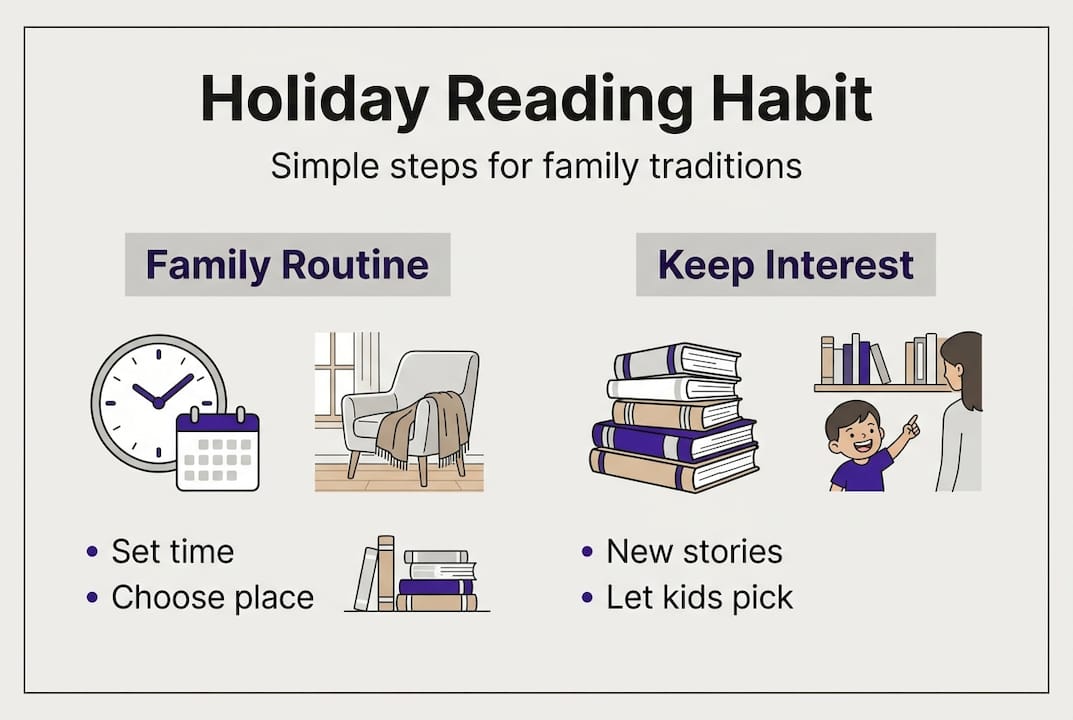
Building a habit is easier when the structure is simple and the stakes feel low. You don't need a reading log or a reward chart. You just need a consistent time, a comfortable spot, and books your child actually wants to open. Even 5 to 20 minutes daily outperforms sporadic longer sessions for building real reading stamina.
Here's a step-by-step approach to setting up your family reading ritual:
- Pick a consistent time. Right after dinner or just before bed works best for most families.
- Create a cozy reading spot. A blanket, good lighting, and no screens nearby make a big difference.
- Let your child choose the book. Ownership drives motivation. If they picked it, they'll want to finish it.
- Start small. Ten minutes is enough. Don't pressure yourself or your child to read longer than feels natural.
- Make it a two-way experience. Ask questions, share reactions, and let the story spark conversation.
- Keep a small holiday book collection. Having books visible and accessible removes friction.
Here's a simple sample schedule you can adapt:
| Time of day | Activity | Duration |
|---|---|---|
| After dinner | Parent reads aloud | 10 minutes |
| Before bed | Child reads independently | 5 to 10 minutes |
| Weekend morning | Family storytime with discussion | 15 to 20 minutes |
Reluctant readers are often reluctant because they haven't found the right book yet. Holiday themes can be a powerful hook. A child who resists reading on a regular Tuesday might eagerly pick up a story about a mischievous elf or a snowy adventure. Use that seasonal enthusiasm as your entry point.
Pro Tip: Let your child be the one to add a book to the family's holiday collection each year. That sense of ownership turns a parent-led routine into something they genuinely claim as their own.
For more ideas on making reading stick beyond the holidays, reading habit tips offers practical guidance that works year-round.
The real secret: Connection, not perfection
With all these strategies in hand, one core truth remains. Here's what most guides won't tell you about holiday reading.
The families who build the most lasting reading traditions aren't the ones with the most organized systems. They're the ones who show up imperfectly, consistently. A rushed ten-minute read on a chaotic holiday evening still counts. A story read in a silly voice while everyone's tired still counts. The memory your child carries isn't "we always read for exactly fifteen minutes." It's "we always read together."
Holiday books are tools for connection, not performance. They give you a reason to sit close, slow down, and share something. That's the real value, and it doesn't require a perfect routine to deliver it. Focus on enjoyment and togetherness rather than hitting benchmarks, and the habit will take care of itself.
If you want a thoughtful starting point, thoughtful holiday book selection can help you find titles that genuinely resonate with your family's values and your child's personality. The best tradition is simply the one your family actually looks forward to.
Find your next holiday reading tradition with MunkterProducts.com
Feel inspired to start or grow your family's holiday reading tradition? Here's the easiest way to begin.
At MunkterProducts.com, we've curated a collection of children's holiday books and activity resources designed to make reading feel like a celebration, not a chore. Whether you're looking for a festive read-aloud, an interactive activity book, or a thoughtful gift that doubles as a learning tool, our selection is built with families like yours in mind.

Every title in our range is chosen to spark curiosity, support skill-building, and give parents and children something genuinely worth sharing. Browse our holiday-themed books and find the perfect addition to your family's seasonal routine. Postage is included, so getting started is as simple as it should be.
Frequently asked questions
How do holiday-themed books benefit my child's learning?
Holiday-themed books prevent reading loss during school breaks by keeping vocabulary and comprehension skills active in a context children find naturally engaging.
Is reading for short periods every day better than longer sessions?
Yes, 5 to 20 minutes daily is more effective than occasional long sessions because consistency builds reading stamina and reinforces skills over time.
Why choose print books over digital for holiday reading?
Print books outperform digital options for interactivity, retention, and parent-child bonding, especially when read together during a shared routine.
How can I make holiday reading a fun family tradition?
Create simple rituals like choosing a new holiday book each year, holding nightly read-alouds, or letting your child pick the story to build excitement and ownership around the habit.
Recommended
- Top holiday activity books for kids in 2026
- The ultimate guide to thoughtful holiday book selection
- Children's educational books: top picks & expert guide
- Why interactive books for kids boost learning and engagement
- Children's Books | Mark Watson Books
- Why read ghost stories: benefits for readers and kids