
TL;DR:
- Genre fiction is a dominant, commercially successful form that emphasizes plot, familiar tropes, and reader satisfaction over literary experimentation. It operates through unspoken genre contracts, delivering structured stories with predictable resolutions across various categories like romance, sci-fi, and mystery. Its rich history, evolving boundaries, and cultural influence demonstrate that genre fiction is a vital and sophisticated storytelling tradition, not a lesser form of literature.
Genre fiction gets dismissed as lightweight reading by critics who have clearly never watched a romance novel outsell every Booker Prize winner on the shelf. Genre fiction, also known as commercial or formula fiction, covers works written to fit specific categories like mystery, romance, science fiction, and fantasy, prioritizing plot momentum and reader satisfaction over experimental prose. It accounts for the overwhelming majority of books sold worldwide, yet it still carries an undeserved reputation for being somehow less serious than literary fiction. That gap between reputation and reality is exactly what this article sets out to close.
Table of Contents
- Defining genre fiction: Core traits and why it matters
- A brief history of genre fiction: From pulp to powerhouse
- Genre fiction vs. literary fiction: Understanding the differences
- Genre fiction today: Cultural influence, market trends, and new horizons
- A fresh perspective: Genre fiction is not "lesser," it's the engine of storytelling
- Explore more with MunkterProducts.com
- Frequently asked questions
Key Takeaways
| Point | Details |
|---|---|
| Genre fiction dominates sales | Genre fiction consistently outpaces literary fiction in both sales volume and cultural influence. |
| Defined by genre contracts | Each genre operates on a set of shared expectations, which creates a satisfying reader-writer connection. |
| History fuels popularity | From pulp magazines to today's hybrids, genre fiction has adapted to readers' changing tastes. |
| Boundaries are blurring | Hybrids and upmarket fiction now mix literary and genre elements for new creative possibilities. |
Defining genre fiction: Core traits and why it matters
Genre fiction is built on a simple but powerful idea: readers come to a book with expectations, and the book delivers on them. According to Wikipedia, genre fiction emphasizes plot, entertainment, familiar tropes, and reader expectations rather than character depth or artistic innovation as its primary goals. That does not mean genre fiction lacks depth. It means depth is delivered through a different set of tools.
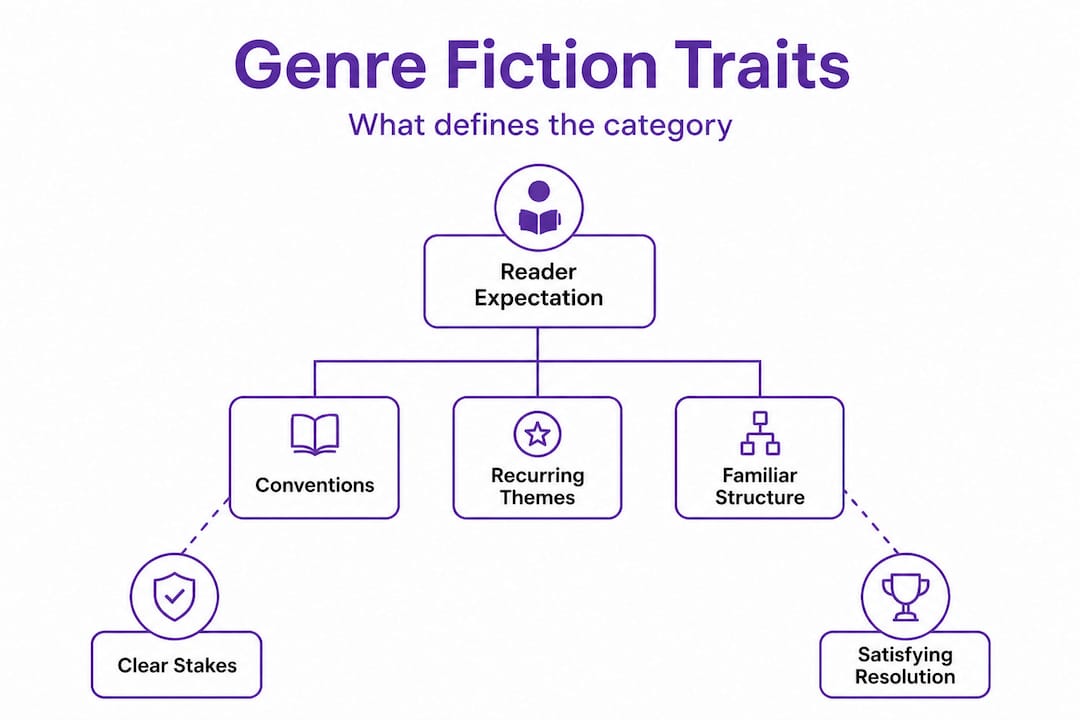
The most important concept here is the genre contract. This is the unspoken agreement between writer and reader that the story will follow a recognizable structure and arrive at a satisfying conclusion. As Creative Writing Authority explains, genre fiction operates through promises of specific structures including an inciting premise, escalation, reversal, and a mandatory resolution. In a romance novel, that means a happy ending. In a mystery, it means a fair-play solution where all the clues were available to the reader. Breaking this contract without good reason frustrates readers deeply.
Here are the core features that define genre fiction across categories:
- Plot-driven structure: Events move at a pace designed to keep readers turning pages.
- Familiar tropes: Recurring story elements that readers recognize and enjoy, such as the "chosen one" in fantasy or the "meet-cute" in romance.
- Category conventions: Each genre has its own rules. Horror must generate fear. Thrillers must sustain tension. Cozy mysteries must avoid graphic violence.
- Reader satisfaction: The ending fulfills the emotional promise made at the start of the book.
- Repeatability: Readers often consume dozens of books within a single genre because the formula itself is the pleasure.
The distinction between genre and literary fiction often comes down to what the writer prioritizes. Genre fiction puts plot at the top of the hierarchy. Literary fiction tends to prioritize language, thematic complexity, and psychological interiority. Neither approach is wrong. They serve different reader needs.
Pro Tip: If you are new to a genre, read the top-selling titles first. They will teach you the genre contract faster than any writing guide can.
"Genre fiction is not a lesser form of storytelling. It is a different contract, one that millions of readers actively choose every single day."
Understanding these traits helps you read genre fiction more critically and enjoy it more fully. If you want to see these principles in action, explore the key traits of sci-fi novels or look at the traits of sci-fi series to see how one genre applies these conventions across long-form storytelling.
A brief history of genre fiction: From pulp to powerhouse
Now that you know the foundations of genre fiction, let's look at how it took shape historically and why it's everywhere today.
Genre fiction did not appear out of nowhere. Its roots stretch back to the 18th and 19th centuries, when Gothic novels like Horace Walpole's The Castle of Otranto (1764) and Ann Radcliffe's atmospheric romances established the idea that fiction could be sold to a specific type of reader seeking a specific type of thrill. Detective fiction arrived in the 19th century with Edgar Allan Poe's C. Auguste Dupin stories and later Arthur Conan Doyle's Sherlock Holmes. These were not just popular stories. They were the first signs of a publishing category taking shape.
The real explosion came in the 20th century. Pulp magazines from the 1920s through the 1950s defined science fiction as a distinct genre, with Amazing Stories launching in 1926 as the first magazine dedicated entirely to what editor Hugo Gernsback called "scientifiction." These cheap, mass-produced magazines created loyal readerships who came back month after month for more stories in the genres they loved. The pulp era essentially trained the modern genre reader.
| Era | Key development | Impact |
|---|---|---|
| 18th century | Gothic novels, sentimental romances | Established category-based reader appeal |
| 19th century | Detective fiction, early sci-fi | Created genre conventions still used today |
| 1920s to 1950s | Pulp magazines, Amazing Stories | Mass readership and genre standardization |
| 1960s to 1980s | Mass-market paperbacks | Made genre fiction affordable and widely available |
| 1990s to present | Online retail, e-books, self-publishing | Explosive growth and genre diversification |
The numbers today are staggering. Romance alone generates roughly $1.4 billion in annual US sales, representing 22.3% of the global book market share. Science fiction and fantasy hold 15.7% of the market with year-over-year growth of 3.2%. Romance accounts for approximately 39 million print units sold per year in the US alone. These are not niche figures. They represent the backbone of the entire publishing industry.
Key milestones that shaped genre fiction's rise include:
- 1926: Amazing Stories launches, formalizing science fiction as a category.
- 1950s: Harlequin begins publishing romance novels in mass-market format.
- 1970s: Fantasy explodes following the paperback success of Tolkien's works.
- 1990s: Amazon's launch transforms genre fiction distribution and discoverability.
- 2010s: Self-publishing platforms allow genre authors to bypass traditional gatekeepers entirely.
For a deeper look at how this history plays out in specific titles, check out classic and modern sci-fi novels or learn about building a sci-fi collection that spans the genre's full timeline.
Genre fiction vs. literary fiction: Understanding the differences
With history and context in hand, it helps to see how genre fiction compares to its literary counterpart.
The comparison between genre and literary fiction is one of the most misunderstood debates in reading culture. People treat it as a quality ranking when it is really a description of different goals. Literary fiction prioritizes language, character, and theme over plot hierarchy, while genre fiction builds its structure around tension, fulfillment, and emotional payoff. Both approaches require genuine craft. They just apply that craft differently.
Here is a side-by-side comparison of the key differences:
| Feature | Genre fiction | Literary fiction |
|---|---|---|
| Primary focus | Plot and reader satisfaction | Language, theme, character depth |
| Structure | Defined genre conventions | Open, experimental |
| Ending | Satisfying resolution expected | Ambiguity is acceptable |
| Pacing | Fast, momentum-driven | Can be slow and reflective |
| Market positioning | Commercial, category-shelved | Awards-focused, prestige |
| Reader expectation | Predictable pleasures | Surprise and challenge |
The numbered steps below show how a genre novel typically delivers its contract compared to a literary novel:
- Establish the genre promise early. A thriller opens with danger. A romance opens with the meet-cute. The reader knows what they signed up for within the first chapter.
- Escalate through the middle. Stakes rise, obstacles multiply, and the reader's investment deepens.
- Deliver the reversal. The darkest moment arrives before the resolution, testing the protagonist and the reader's faith in the contract.
- Fulfill the promise. The ending satisfies the emotional expectation set at the beginning.
Literary fiction does not follow this map. It may end without resolution, prioritize voice over event, or leave the reader unsettled rather than satisfied. Neither approach is superior. They serve readers who want different things from the reading experience.
The most exciting space in contemporary fiction is where these two traditions meet. Hybrid forms and upmarket fiction blur the lines constantly. "Romantasy" combines romance and fantasy conventions. "Sci-rom" merges science fiction with romantic structure. Authors like Margaret Atwood and Colson Whitehead write within genre conventions while receiving literary recognition, proving that the boundary is more of a marketing distinction than a creative one.
Pro Tip: When you pick up a book labeled "upmarket fiction," expect both a satisfying plot and literary-quality prose. It is the sweet spot between the two traditions and often produces the most rewarding reads.
For a closer look at how one genre handles this tension, explore dystopian themes in sci-fi and see how science fiction has always pushed against its own genre boundaries.
Genre fiction today: Cultural influence, market trends, and new horizons
Finally, let's look at where genre fiction stands right now and what's new on the horizon.
Genre fiction is not just surviving in 2026. It is setting the cultural agenda. The stories dominating television, film, video games, and social media conversation are almost entirely drawn from genre fiction. Superhero narratives come from comics and fantasy. Prestige TV dramas adapt crime fiction and thrillers. Streaming platforms have turned romance novels into must-watch series. Genre fiction is the source material for modern popular culture.
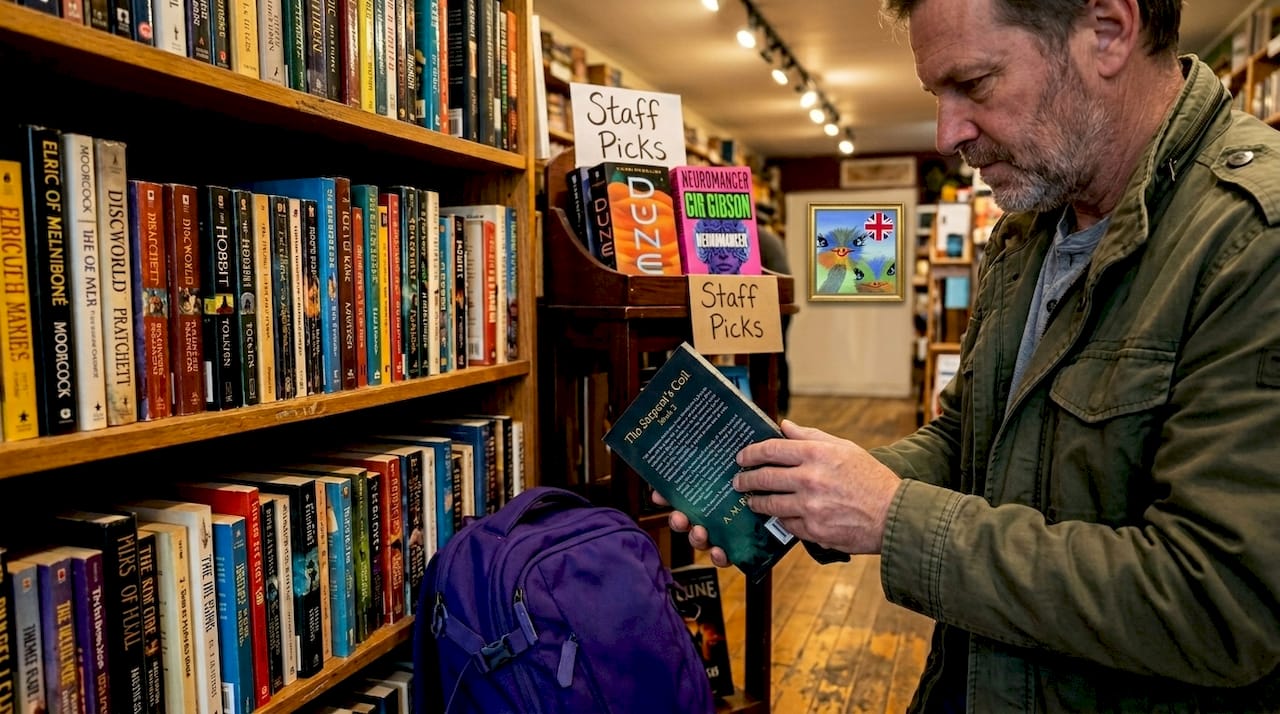
The market data confirms this dominance. Romance and sci-fi/fantasy together account for nearly 38% of global book sales, and that share continues to grow. Self-publishing platforms have amplified this further, allowing genre authors to publish directly to readers without waiting for traditional gatekeepers. Some self-published romance and fantasy authors now earn seven-figure incomes annually.
Key trends shaping genre fiction right now include:
- Genre hybrids are mainstream. "Romantasy" titles like Sarah J. Maas's A Court of Thorns and Roses series have sold tens of millions of copies by combining romance and fantasy conventions into a single satisfying package.
- Literary authors are embracing genre. Genre-bending by authors like Atwood and Whitehead has normalized the idea that serious writers can and should work within genre frameworks.
- Reader communities drive discovery. BookTok and Bookstagram have replaced traditional review channels for genre fiction, with reader recommendations carrying more weight than critical reviews.
- Serialized fiction is booming. Platforms like Kindle Vella and Wattpad have revived the pulp magazine model of serialized storytelling for a new digital audience.
- Diverse voices are reshaping genre conventions. Authors from underrepresented backgrounds are rewriting the tropes of fantasy, romance, and science fiction to reflect broader human experiences.
Pro Tip: Follow genre-specific reader communities on social media before choosing your next book. The readers who consume 50 or more books a year in a single genre know its landscape better than any critic does.
The rise of e-commerce trends in book publishing has also transformed how genre fiction reaches readers, making personalized recommendations and niche genre communities more powerful than ever before.
A fresh perspective: Genre fiction is not "lesser," it's the engine of storytelling
The idea that genre fiction is a lesser form of literature is one of the most persistent and least defensible positions in literary culture. It usually comes from people who have not read much of it. The truth is that genre fiction's formulas are not shortcuts. They are the result of a century of reader-writer collaboration, refined commercially into structures that reliably produce emotional satisfaction.
The craft distinction between literary and genre fiction is real but it is not a ranking. It is a description of where the writer puts their energy. Genre fiction writers master pacing, tension, and the delivery of emotional payoffs. Literary fiction writers master sentence-level language and thematic complexity. Both require serious skill. Neither is easy to do well.
What often gets missed is that genre fiction's mechanics rely on a sophisticated collaboration with readers through conventions refined over more than a century of commercial publishing. When a romance reader picks up a new book, they bring decades of genre knowledge with them. The writer is not writing for a passive audience. They are writing for an expert one.
The boundary between "literary" and "genre" is increasingly a marketing and shelving decision rather than a creative one. Publishers use these labels to reach specific buyers. The labels do not describe the quality of the writing or the depth of the ideas inside. Some of the most profound explorations of sci-fi's impact on culture have come from books shelved in the genre section of a bookstore, not the literary fiction aisle.
Genre fiction continues to evolve, absorb literary techniques, and produce work that challenges, moves, and changes readers. It is not a static form. It is a living conversation between writers and the millions of readers who choose it every single day.
Explore more with MunkterProducts.com
If this look at genre fiction has sparked your curiosity, the next step is finding the right books to put in your hands. MunkterProducts.com brings together curated reading experiences, from science fiction novels in the Noah series to creative journals, activity books, and stationery that make the reading life richer.

Whether you are building a genre fiction collection, looking for a companion journal to track your reading, or searching for a thoughtful gift for the reader in your life, MunkterProducts.com offers a carefully selected range of books and creative materials that celebrate storytelling in all its forms. Explore the catalog and find your next great genre read alongside the tools that make reading even more rewarding.
Frequently asked questions
What are some examples of genre fiction?
Popular examples include mystery novels, romance books, science fiction epics, and fantasy series, all of which fit specific literary genres designed to appeal to readers who enjoy familiar structures and satisfying resolutions.
Is genre fiction less valuable than literary fiction?
Genre fiction is not inherently lesser. As the literary vs. genre debate shows, the distinction is often a marketing one, and genre fiction dominates sales while shaping broad cultural trends.
How are genre boundaries changing in recent years?
Hybrids and genre-bending works are growing rapidly, with authors like Atwood and Whitehead merging conventions from multiple genres, as documented in genre fiction analysis, making the old boundaries increasingly hard to draw.
What is a "genre contract" in fiction?
A genre contract is the implicit promise between writer and reader that the story will follow certain structures and deliver a satisfying resolution, such as the mandatory resolution structure of a mystery's fair-play ending or a romance's happy conclusion.