

TL;DR:
- A literary zine is a small, self-published booklet that features poetry, stories, and essays outside traditional publishing channels. It operates on a DIY ethos with limited print runs, no commercial identifiers, and direct distribution within communities. Zines amplify underrepresented voices, preserve authorial intent, and foster tight-knit literary communities.
A literary zine is defined as a small, self-published booklet featuring poetry, short fiction, personal essays, and other creative writing produced outside traditional publishing channels. Unlike commercial literary magazines or books, a literary zine operates on a DIY ethos, prioritizing voice and immediacy over editorial polish. Creators print them in tiny quantities, distribute them directly, and answer to no publisher. That independence is exactly what makes them matter. If you want to understand self-publishing at its most raw and democratic, the literary zine is where that story begins.
What is a literary zine, and how does it differ from a magazine?
A literary zine is a self-published, small-circulation publication that sits outside the commercial publishing system entirely. The word "zine" is short for "magazine" or "fanzine," but the resemblance to mainstream magazines ends at the name. Where a commercial literary magazine carries an ISSN, pursues advertisers, and targets mass readership, a literary zine carries none of those markers.

Library guides explicitly contrast zines with magazines and books through their lack of ISSN or ISBN and their limited print runs. That distinction matters practically. No ISBN means no bookstore distribution system. No ISSN means no subscription database. The zine exists entirely on its own terms.
The format varies widely. A literary zine can be a folded single sheet, a stapled pamphlet, a hand-sewn booklet, or a digitally assembled PDF. Zine formats range widely in physical structure while maintaining a recognizable cultural identity. What holds them together is not format but intent: a single creator or small collective sharing literary work directly with readers.
Key characteristics of a literary zine
- Print run size: Typical print runs stay under 1,000 copies, and many zines print fewer than 100. That scale targets a specific community, not a mass market.
- No commercial identifiers: No ISBN, no ISSN, no barcode. Distribution happens through personal networks, not retail systems.
- DIY production: Creators use home printers, photocopiers, or print-on-demand services. The aesthetic often reflects the process, rough edges and all.
- Non-commercial intent: Zines prioritize sharing over profit, as writer Carolyn Yoo notes. The goal is readership, not revenue.
- Immediacy of voice: Non-commercial DIY status drives editorial decisions toward voice and physical presence rather than polished branding.
Pro Tip: If you are deciding whether your project qualifies as a zine, ask three questions: Did you make it yourself? Is it non-commercial? Is the print run small and targeted? Three "yes" answers and you have a zine.
Why do literary zines exist? Origins and cultural significance
Literary zines exist because mainstream publishing has always had gatekeepers. Traditional literary journals and book publishers select for marketability, genre fit, and platform. Zines reject that filter entirely.
Library guidance frames zines as democratic media communicating personal stories and themes of identity, community, and resistance. That framing is not academic abstraction. It describes a real function. Zines gave voice to punk communities in the 1970s, queer writers in the 1980s, and riot grrrl activists in the 1990s. The literary zine carries that same tradition forward.
"Zines resist traditional publishing norms to support voices and literary forms outside typical journals or houses. 'Literary' often relates to perspective and audience connection rather than strict genre labels."
The cultural significance of literary zines comes from four specific functions they serve:
- Amplifying underrepresented voices. Writers who do not fit commercial publishing molds, whether by subject matter, identity, or style, find a platform in zines that journals rarely offer.
- Preserving authorial context. A zine carries the creator's full intent without editorial mediation. The layout, the paper choice, the handwritten notes all communicate meaning.
- Building localized community. Zines circulate through specific networks, zine fairs, local shops, and mailing lists, creating tight reader relationships that large publications cannot replicate.
- Sustaining literary experimentation. Forms that commercial publishers consider unmarketable, prose poetry, hybrid essays, fragmented narratives, thrive in zines because there is no profit pressure to conform.
Academic scholarship highlights zines' raw nature and the importance of access in preserving authorial authenticity and community reach. That access is what separates zine culture from institutional publishing. Understanding why book publishing matters to culture helps clarify exactly what zines push back against.
How are literary zines created and distributed?
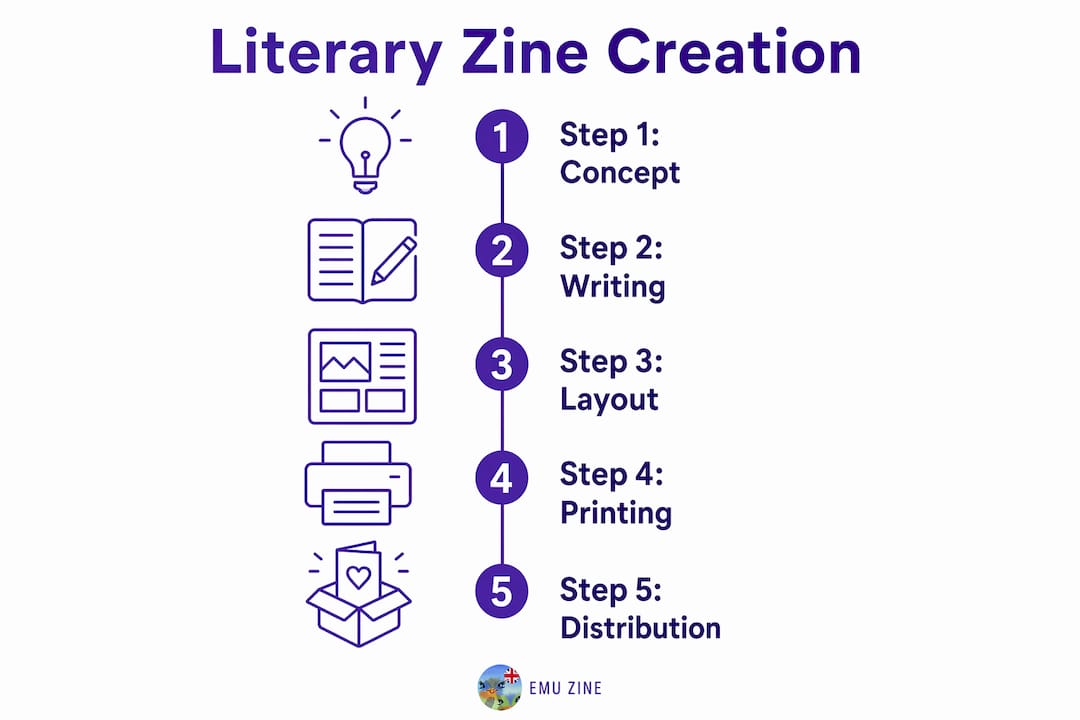
Creating a literary zine requires almost no budget and no institutional permission. That accessibility is the point. Most creators start with a concept, a theme, a voice, or a community, and build outward from there.
Production formats and methods
| Format | Production method | Typical use |
|---|---|---|
| Half-fold pamphlet | Home printer, folded by hand | Single-author poetry or flash fiction |
| Saddle-stitched booklet | Photocopier, stapled spine | Multi-contributor literary collections |
| Perfect-bound mini book | Print-on-demand service | Longer prose or anthology formats |
| Digital PDF zine | Desktop publishing software | Wide online distribution, zero print cost |
The choice of format shapes the reader's experience. A hand-stapled zine signals intimacy. A print-on-demand booklet signals slightly more permanence. Neither is wrong. The format should match the content's tone.
Pro Tip: Start with a half-fold, eight-page format. It requires only one sheet of paper folded twice, prints on a standard home printer, and gives you enough space for four to six short pieces. It is the fastest way to hold your first zine in your hands.
Distribution follows a different logic than commercial publishing. Zines are self-published in small quantities and not for profit, which means distribution happens through community channels rather than retail systems. The most common routes include:
- Zine fairs and festivals: Events like the Milwaukee Zine Fest and dozens of city-based equivalents draw creators and readers who specifically seek out independent publications.
- Direct mail: Many zine creators maintain a mailing list and send copies directly to subscribers, sometimes in exchange for a few dollars or a trade.
- Local independent shops: Bookstores, record shops, and coffee shops with community bulletin boards often stock small quantities of local zines.
- Online platforms: Digital storefronts and social media let creators reach readers beyond their immediate geography without abandoning the zine's personal character.
Niche communities, including subculture-driven markets, have long used zines as a way to build identity and sustain direct reader relationships. That model works because the audience is already self-selected and engaged.
Why literary zines matter in creative communities today
Literary zines fill a gap that no commercial publication can. They exist at the intersection of creative freedom and community accountability, answering only to the readers who actually care about the work.
Zines provide platforms for literary voices and forms that do not fit conventional publishing molds, emphasizing audience connection over strict genre categories. That function becomes more valuable as commercial publishing consolidates around proven formats and bankable authors. The literary zine is where risk-taking still lives.
The specific benefits literary zines offer creative communities include:
- No rejection gatekeeping. You write it, you publish it. The work reaches readers without a submission queue or editorial board.
- Faster publication cycles. A zine can go from concept to reader hands in days. Commercial literary journals often take 6–18 months from acceptance to publication.
- Direct feedback loops. Creators who distribute at zine fairs or through mailing lists hear directly from readers. That feedback sharpens the work faster than any workshop.
- Cross-community connection. Zines travel. A zine created in one city ends up in a reader's hands in another, building book fandoms and real connections that transcend geography.
- Archival value. Libraries and special collections actively acquire zines. The Pace University Zine Library and dozens of academic collections preserve zines as cultural artifacts, not ephemera.
The DIY and indie publishing movements have grown steadily, and literary zines sit at their core. How book publishing shapes e-commerce in 2026 reflects a broader shift toward creator-direct models, and zines pioneered that shift decades before it became a trend.
Key Takeaways
A literary zine is the most direct form of self-publishing available: no gatekeepers, no commercial identifiers, and no compromise on voice or content.
| Point | Details |
|---|---|
| Core definition | A literary zine is a small, self-published booklet of creative writing produced outside commercial publishing. |
| No commercial identifiers | Literary zines carry no ISBN or ISSN, which separates them structurally from books and magazines. |
| Small print runs | Most zines print fewer than 1,000 copies, often under 100, targeting specific communities directly. |
| DIY production | Creators use home printers, photocopiers, or print-on-demand services with minimal cost or infrastructure. |
| Cultural function | Zines amplify underrepresented voices, preserve authorial intent, and build tight community readerships. |
The intimacy that commercial publishing can't manufacture
I have spent years around books in every form, from mass-market paperbacks to hand-bound artist books, and nothing holds a reader's attention quite like a zine someone made themselves. There is something in the slightly crooked staple, the font choice that is clearly personal, the poem that would never survive a commercial editorial process. That rawness is not a flaw. It is the whole point.
What I find most underrated about literary zines is their speed. A poet who finishes a sequence on a Tuesday can have it in a reader's hands by Friday. No submission portal, no waiting period, no editorial note asking for revisions. The work goes out when the creator decides it is ready. That directness changes how writers relate to their own output.
The challenge I see most often is distribution anxiety. Creators make the zine, then freeze. My honest advice: start with ten copies and give them away. Trade them at a local event. Mail them to writers you admire. The audience for a literary zine does not need to be large. It needs to be real. Ten engaged readers beat a thousand passive ones every time.
Literary zines are not a stepping stone to "real" publishing. They are a complete form on their own terms. The writers who understand that early produce their best work in them.
— Mark
Creative tools for your first literary zine publication
Starting a literary zine is easier than most writers expect. The barrier is not technical skill or budget. It is the decision to begin.

Munkterproducts carries a range of journals, notebooks, and creative stationery that support every stage of the writing and self-publishing process, from drafting your first poems to assembling a finished zine. Whether you are building a single-author collection or gathering work from a small writing group, having the right physical tools makes the process more satisfying. Explore the full catalog at Munkterproducts and find what fits your creative practice.
FAQ
What is the definition of a literary zine?
A literary zine is a small, self-published booklet of creative writing, including poetry, fiction, and essays, produced outside commercial publishing with no ISBN or ISSN and a limited print run.
What goes in a literary zine?
Literary zines typically contain poetry, short fiction, personal essays, experimental prose, and visual art. The content reflects the creator's voice and community rather than any editorial formula.
How do you distribute a literary zine?
Creators distribute literary zines through zine fairs, direct mail, local independent shops, and online platforms. Distribution targets specific communities rather than mass retail channels.
How is a literary zine different from a literary magazine?
A literary magazine carries an ISSN, targets broad readership, and operates commercially. A literary zine has no commercial identifiers, prints in small quantities, and prioritizes voice and community over revenue.
Do you need money to create a literary zine?
A basic literary zine requires only a home printer, paper, and a stapler. Print-on-demand services offer a slightly more polished option at low per-unit cost, making self-publishing a literary zine accessible at almost any budget.