
TL;DR:
- Shared family reading enhances language, empathy, and emotional security, supporting children's long-term development. Regular, even brief, reading routines build vocabulary, foster family bonds, and promote inclusivity across diverse circumstances. Making reading enjoyable and accessible ensures that all children and families can benefit from this invaluable activity.
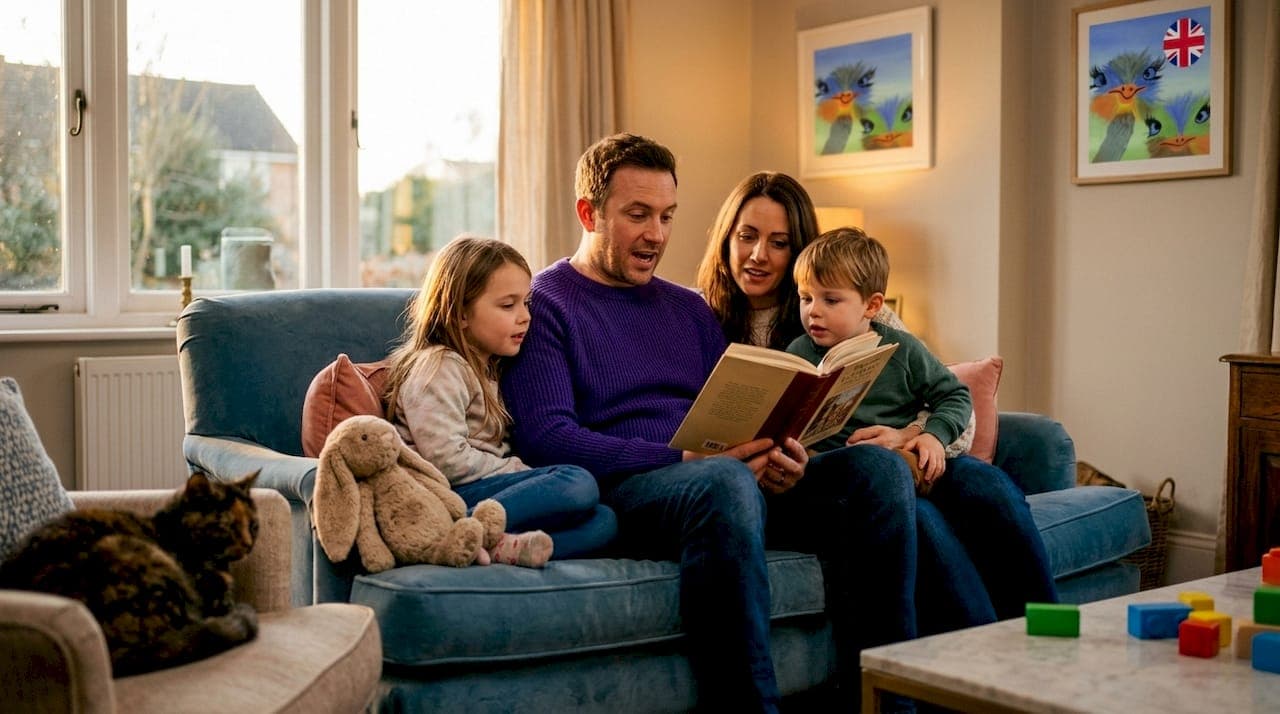
Finding quality time as a family is genuinely hard. Between school pickups, work deadlines, and the constant pull of screens, meaningful connection can feel like something that only happens on weekends, if at all. Shared reading cuts through that noise in a way few other activities can. Frequent shared storybook reading is positively associated with overall developmental progress in early childhood, including a 5.5-point boost in communication scores by age 3. That is not a small number. And the benefits do not stop there.
Table of Contents
- Why reading together matters: Evidence and expert consensus
- Top benefits of reading together: What families actually gain
- How to make reading time engaging: Formats, routines, and hacks
- Breaking down barriers: Accessibility and inclusion in family reading
- A modern take: Rediscovering family time through books
- Start your family reading journey today
- Frequently asked questions
Key Takeaways
| Point | Details |
|---|---|
| Research-backed growth | Shared reading improves communication, empathy, vocabulary, and academic skills for children of all ages. |
| Stronger family bonds | Reading together strengthens family relationships and creates lasting routines and traditions. |
| Flexible and inclusive | Even short or adapted sessions give big benefits, making shared reading possible for every family. |
| Practical engagement | Utilize expressive reading, interactive formats, and easy routines to boost enjoyment and outcomes. |
Why reading together matters: Evidence and expert consensus
The research on shared reading is striking in both its consistency and its depth. Scientists, pediatricians, and educators agree: reading together as a family is one of the highest-value activities you can build into your week. The gains span language development, cognitive growth, empathy, and even the emotional security children carry into adulthood.
A large meta-analysis on shared reading outcomes found that home-based shared book reading shows large positive relationships with developmental outcomes (r=0.303), language (r=0.381), and vocabulary (r=0.314). To put that in plain terms, children who are regularly read to at home show measurably stronger language skills than those who are not. These are not marginal differences. They are the kind of gaps that show up in school performance, social confidence, and long-term learning ability.
"Reading aloud to children is the single most important thing adults can do to help children succeed in reading." — Becoming a Nation of Readers, National Institute of Education
The AAP recommends shared reading from birth through at least kindergarten, specifically because it creates language-rich, nurturing environments that support healthy development. Pediatricians are not just recommending it as a nice idea. They are prescribing it as a core component of a child's health routine.
Here is what the evidence says shared reading consistently builds:
- Language and vocabulary growth at a pace that outstrips screen-based learning
- Phonological awareness, the ability to hear and work with sounds in words, which is the foundation of reading fluency
- Narrative comprehension, or the ability to follow and understand stories, which feeds into writing and critical thinking
- Empathy and emotional intelligence, developed through exposure to diverse characters and situations
- Creativity and imagination, sparked by rich, descriptive storytelling
Building reading habits that stick early sets children up for a lifetime of curiosity and academic success.
Top benefits of reading together: What families actually gain
Now that the foundation is clear, let us get specific. These are the concrete, real-world gains families report and researchers confirm when shared reading becomes a regular practice.
-
Stronger vocabulary at every age. Children who are read to regularly encounter words they would never hear in everyday conversation. A story about a lighthouse keeper, a deep-sea diver, or a medieval castle introduces vocabulary that builds academic language skills long before formal schooling catches up. This matters enormously for reading comprehension in later grades.
-
Improved empathy and social skills. Two weeks of nightly shared reading improved cognitive empathy and creativity in children aged 6 to 8, regardless of whether parents paused to ask questions. Simply reading expressively and consistently was enough to move the needle. Children who regularly encounter fictional characters navigating real emotions develop a stronger ability to recognize and understand feelings in others.
-
Closing educational gaps. Families from low-income or low-education backgrounds face real barriers to literacy support. But shared reading interventions increased shared book reading frequency by 14% in low-educated households and improved vocabulary scores by 0.12 to 0.16 standard deviations. Small, consistent changes in routine produced measurable results. This is powerful evidence that the practice does not require expensive resources or advanced parenting skills.
-
Stronger family bonds and traditions. There is something deeply connective about sharing a story. The physical closeness of bedtime reading, the shared laughter at a funny character, the anticipation of what happens next in a chapter book. These moments build emotional trust between parent and child. Families that read together report feeling more connected, and children from these families show greater emotional security.
-
Boosted creativity and problem-solving. Stories expose children to scenarios, dilemmas, and solutions they would never encounter in daily life. This stretches their thinking, fuels imaginative play, and supports creative problem-solving in school and beyond.
Explore ideas for boosting family reading traditions that make shared reading a seasonal and year-round ritual your kids will look forward to.
Pro Tip: You do not need to carve out an hour. Even 10 to 15 minutes of focused, consistent reading each night produces measurable gains. Consistency matters far more than duration.
When choosing what to read, browsing top educational books for your child's age group can help you find titles that hold attention while building real skills.
How to make reading time engaging: Formats, routines, and hacks
Knowing why to read together is one thing. Making it actually happen in a busy household is another. Here are practical, tested strategies for keeping shared reading enjoyable, sustainable, and effective.
Print vs. digital: What works best
Parents often wonder whether reading on a tablet or e-reader counts the same as cracking open a physical book. The short answer is that both can be valuable, but they are not identical experiences.
| Format | Best for | Engagement style | Potential drawbacks |
|---|---|---|---|
| Print books | All ages, especially under 8 | Physical interaction, pointing, tactile engagement | Harder to travel with; can be lost or damaged |
| E-books/tablets | Older children (8-12); travel reading | Built-in dictionaries; adjustable text size | Screen distraction risk; less physical bonding |
| Audiobooks | Long car rides; reluctant readers | Passive listening; great for imagination | Less parent-child interaction possible |
Print books remain the gold standard for young children because they naturally encourage the kind of pointing, discussing, and physical closeness that drives developmental gains.
Building a routine that sticks
The secret to consistent shared reading is making it automatic rather than optional. Attach reading to an existing anchor in your day, and it becomes a habit almost effortlessly.
- Bedtime is prime time. A consistent bedtime story routine signals to children that the day is winding down, which also supports sleep quality.
- Alternate reading turns. For children aged 5 and up, letting them read a page or paragraph while you read the next builds confidence and fluency simultaneously.
- Use voice and expression. Reading with expression and pausing to point at pictures or interesting words keeps younger children fully engaged. You do not need to turn every page into a pop quiz. Just read with warmth and enthusiasm.
- Ask simple prediction questions. "What do you think will happen next?" is a one-sentence engagement tool that activates imagination and comprehension at the same time.
- Revisit favorites. Children often want to hear the same book repeatedly. This is not a problem. Repetition deepens comprehension and vocabulary retention.
For more inspiration on formats and styles, explore interactive books for kids that make every session feel like an event rather than a chore.
When you are ready to pick your next family read, a solid resource on choosing children's books can guide your decision-making based on your child's age, interests, and reading level.
Pro Tip: Keep a small basket of books near wherever you typically sit in the evening. Visibility drives habit. If the books are out and accessible, reading is far more likely to happen spontaneously.
Looking for ways to extend the experience beyond the page? Check out activity book ideas that complement shared reading beautifully.
Breaking down barriers: Accessibility and inclusion in family reading
Not every family starts from the same place. Time constraints, literacy challenges, financial limitations, and children with special needs are all real obstacles. The good news is that the research shows even modest, accessible interventions produce meaningful results.
| Barrier | Practical solution | Expected gain |
|---|---|---|
| Limited income or resources | Public library visits, community programs | Access to hundreds of books at no cost |
| Low parental literacy | Audiobooks or picture books with minimal text | Full empathy and bonding benefits remain |
| Children with developmental delays | Repetition-based books, sensory-friendly formats | Significant developmental support confirmed |
| Extremely busy schedules | 10-15 minutes during meals or before bed | Still produces measurable language gains |
| Language barriers at home | Bilingual books or books in family's native language | Literacy and emotional connection preserved |
The evidence on digital access is particularly encouraging. A digital library for shared reading improved low-income children's literacy skills by 0.29 standard deviations. That is a substantial effect, and it was achieved simply by giving families structured digital access to books.
For families navigating additional challenges, shared reading benefits have been confirmed even for NICU infants, preterm babies, children with developmental delays, and households with very low literacy levels. Even minimal intervention, specifically just 14 nights of consistent reading, produced measurable cognitive and language gains. This is the kind of research that should make every family feel like shared reading is genuinely within reach, regardless of circumstances.
Community programs make a real difference too. Programs like Reach Out and Read increase the number of books in the home, improve reading frequency, and strengthen language skills in children from underserved communities. If your local pediatrician participates, ask about it at your next visit.
Here are action steps any family can take right now:
- Visit your local library and sign up for a library card if you do not already have one
- Ask your child's pediatrician about reading programs at their practice
- Download a free digital reading app designed for children if books are temporarily out of reach
- Start with just two nights per week and build from there
Looking for creative educational books that work for a wide range of ages and ability levels? A good book selection can remove a lot of the guesswork.
A modern take: Rediscovering family time through books
Here is an honest observation worth sitting with: screens are not going anywhere. Neither are packed schedules, after-school activities, or the general noise of modern family life. But shared reading does something that no streaming platform or educational app has managed to replicate. It slows everything down.
When you sit next to your child with a book, you are not multitasking. You are not half-watching the TV or scrolling your phone. You are fully present, sharing an experience that only exists in that moment. That kind of focused, undivided attention is increasingly rare. And children feel the difference.
The decline in regular family reading is not a mystery. It is a predictable outcome of a culture that rewards speed, novelty, and convenience. Reading a chapter book together over two weeks feels slow compared to watching a 20-minute episode. But slow is exactly the point. The patience, the anticipation, the return to the same story night after night. These build something in children that fast content simply cannot.
We also tend to underestimate what children absorb during shared reading beyond the literal words on the page. They learn how to sit with discomfort when a character faces hardship. They learn that stories have structure and resolution. They learn that their parent values spending time with them enough to put the phone down. That message is more powerful than any vocabulary list.
Shared reading is not a nostalgic throwback. It is one of the most future-ready investments you can make in your child's emotional and cognitive development. Start with building consistent family reading habits and watch how quickly it becomes the part of the day your kids actually ask for.
Start your family reading journey today
You have got the research. You have got the strategies. The only thing left is choosing the first book.

At Munkter Products, we have curated a collection of children's books, educational activity books, puzzles, and creative journals designed specifically for families who want to make reading a joyful, lasting part of their routine. Whether you are looking for an engaging holiday activity book to read together, an illustrated story that sparks big conversations, or a creative journal that extends the magic of reading into hands-on learning, you will find it here. Browse the full collection and find your family's next favorite read, with postage included so you can focus on what matters: the story.
Frequently asked questions
How often should families read together for optimal benefits?
Regular, consistent sessions, even just a few nights a week, significantly boost language, empathy, and family bonds. Two weeks of nightly reading alone improved cognitive empathy and creativity in children aged 6 to 8.
Does reading digitally provide similar benefits as print books?
Both formats offer real gains, but print books are generally better for interactive parent-child engagement, particularly for children under 8. Print books are preferred for the kind of hands-on, pointing and discussing engagement that drives the strongest developmental outcomes.
What about families with very limited time?
Short, consistent reading, just 10 to 15 minutes nightly, still delivers measurable developmental and emotional benefits. Research confirms that even minimal intervention spanning just 14 nights produces real cognitive and language gains.
Are there added benefits for children with special needs?
Children with developmental delays, preterm infants, and those from low-literacy households gain substantial developmental support from consistent shared reading, making it one of the most accessible and inclusive early childhood interventions available.